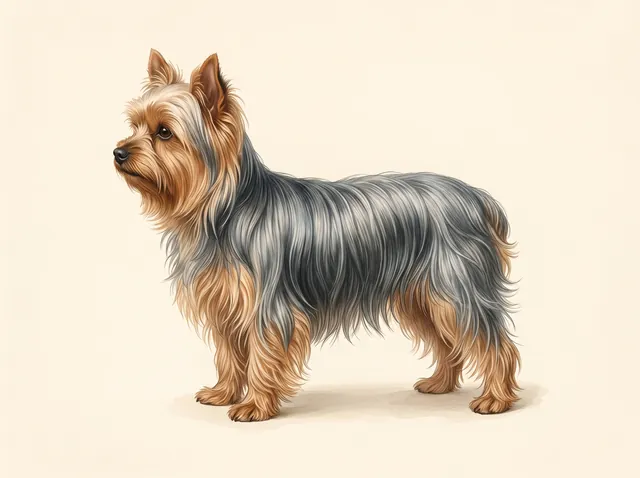
Where the Yorkshire Terrier comes from
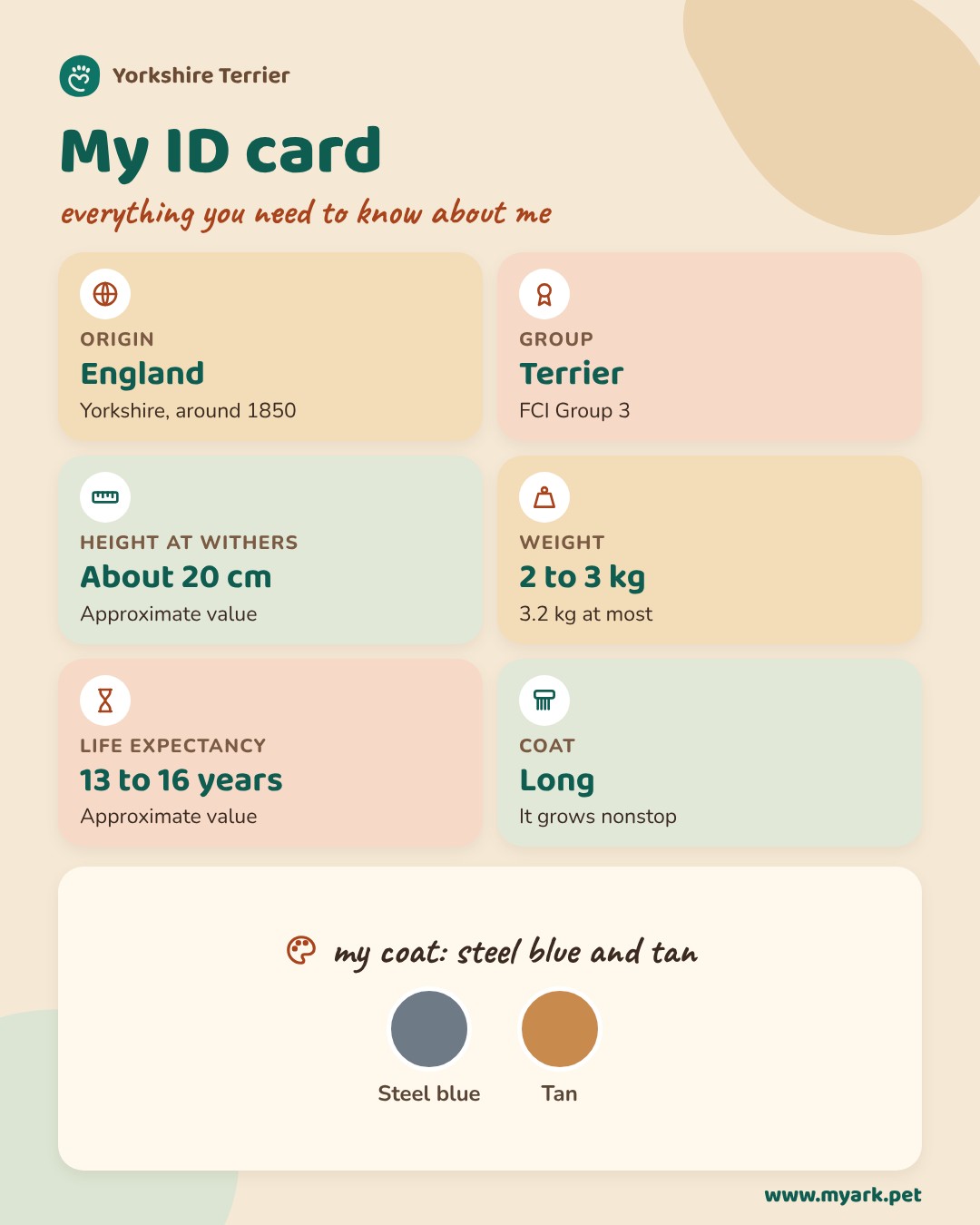
The breed appeared around 1850 in Yorkshire, descending mainly from the old Black and Tan Terrier, the Maltese and the Skye Terrier. Its ancestors hunted rats in the mills; its current name was adopted in 1870.
The FCI standard describes it as an alert, intelligent toy terrier, spirited and even-tempered.
Height at the shoulder (FCI standard): not set by the standard.
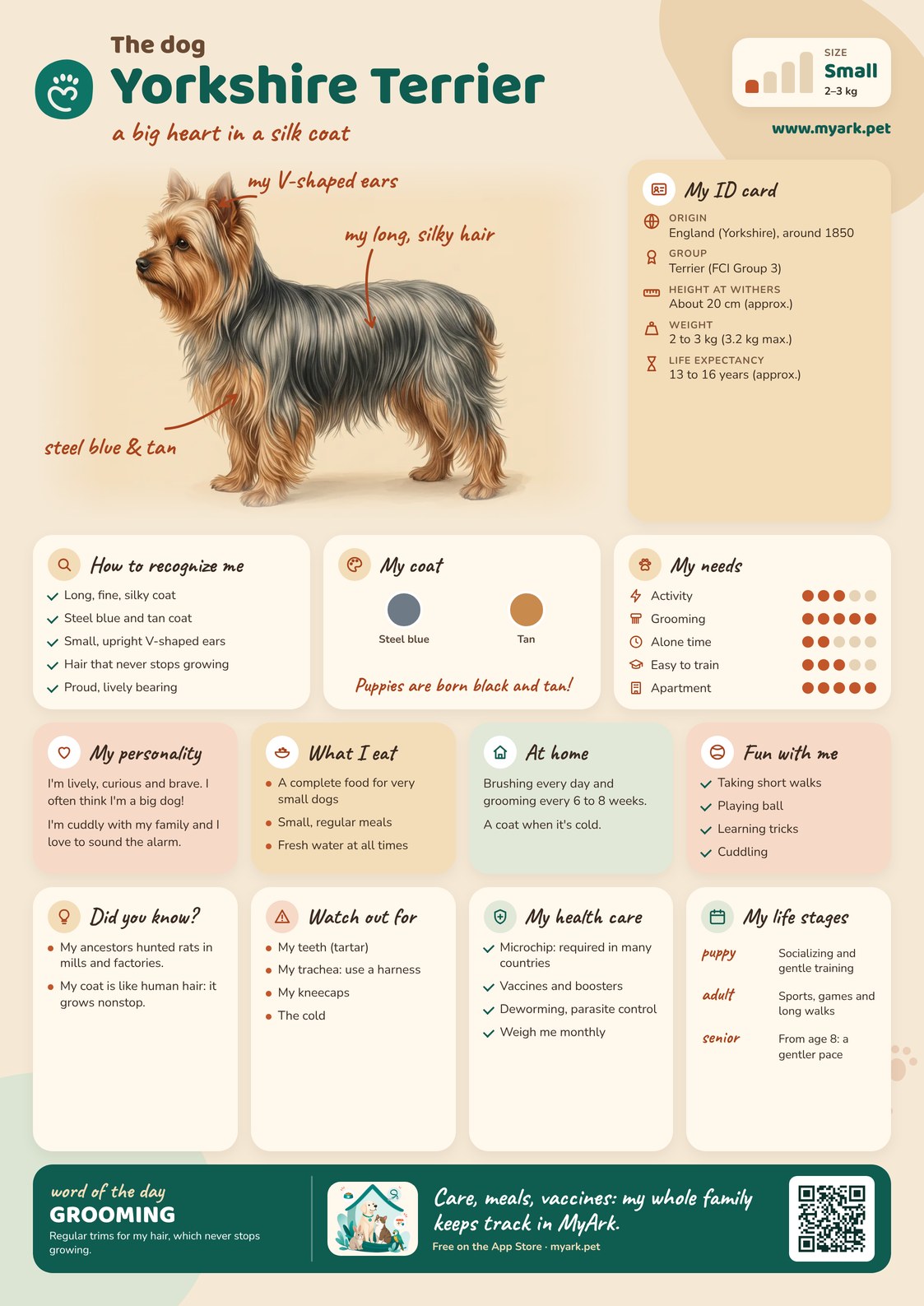
How to recognise me
- long, fine, silky coat
- steel-blue and tan colours
- small upright V-shaped ears
- hair that never stops growing
- proud, lively bearing
My colours
- Steel blue
- Tan
What a Yorkshire Terrier needs day to day
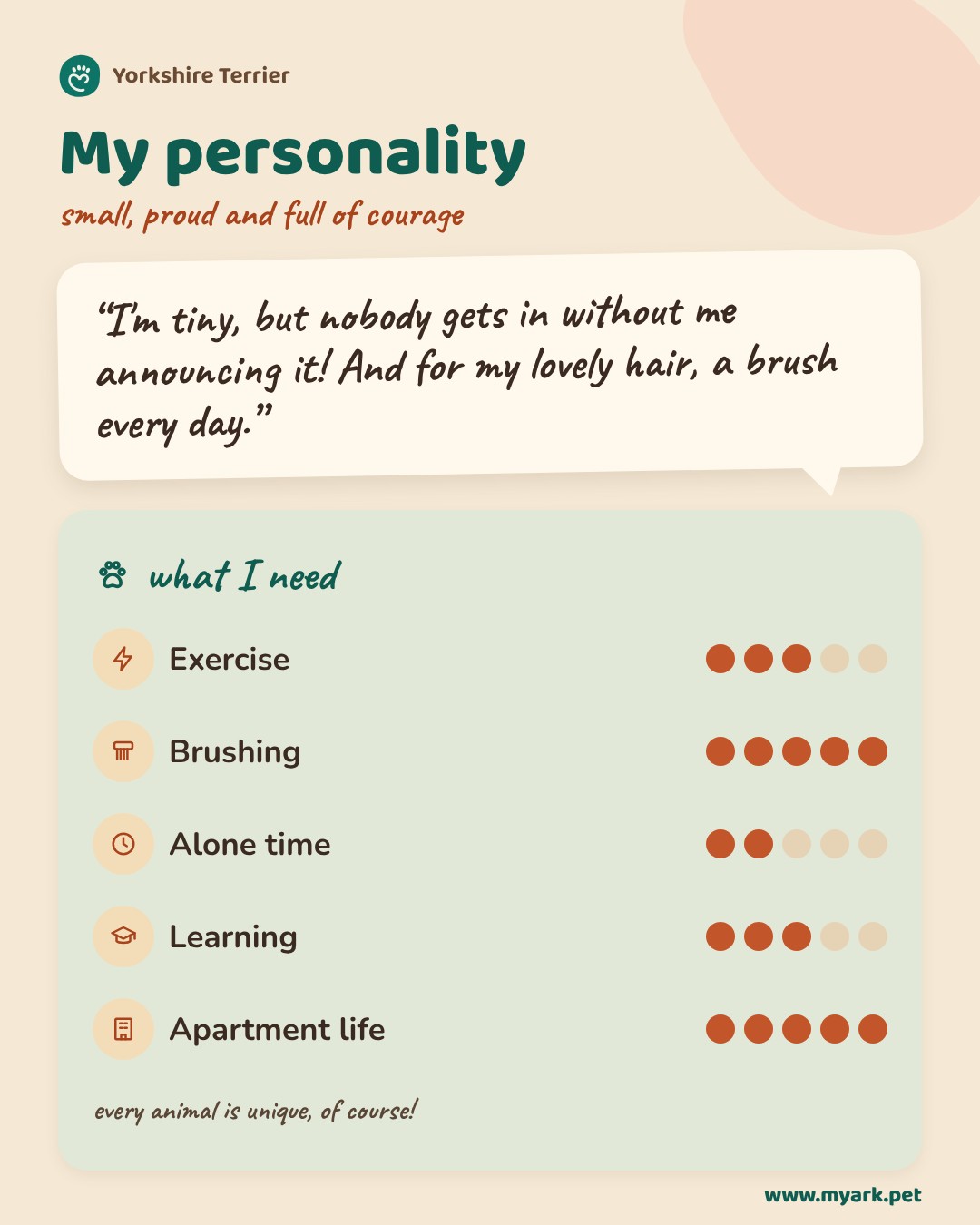
“I’m tiny, but nobody comes in without me announcing it! And for my lovely coat, a brush every day.”
Its exercise needs are moderate: daily walks and play. It is a real terrier, curious and lively, and enjoys learning.
At a glance
- Exercise
- 3 out of 5
- Grooming
- 5 out of 5
- Coping alone
- 2 out of 5
- Ease of training
- 3 out of 5
- Flat living
- 5 out of 5
every dog is unique, of course!
With me, we can go…
- short walks
- ball games
- learning tricks
- cuddles
Living with a Yorkshire Terrier: who does what
Most of a dog’s care is repeated, shared and easy to forget. Here is the Yorkshire Terrier’s routine at a glance, and how a household can split it without a single “did anyone…?” message.
The routine at a glance
- every day
- small, regular meals; two walks, on a harness; a full brush; tooth brushing.
- every week
- an eye and ear clean; a check for knots behind the ears.
- every month
- a weigh-in; flea, tick and worming treatment on your vet’s schedule; a nail check; a trim, or every six to eight weeks at the groomer.
- every year
- the vet check-up and vaccine boosters; a dental check.
Sharing it out
- Split the daily brush and the tooth brushing between two people, so neither gets skipped.
- A harness, never a collar: make sure every walker knows it.
- Book the groomer on a fixed rhythm and note who takes it.
Before it arrives, agree on…
- who brushes and who does the teeth
- the groomer rhythm and who books it
- harness only, for everyone
- barking rules at the window and door
- where it sleeps, warm and out of draughts
How MyArk helps the household keep track
Family pet chores
Brush, teeth and groomer visits on named people, not on goodwill.
See the featurePet health record
Dental checks, vaccinations and vet notes in one shared place.
See the featurePet weight tracker
Small dog, small margins: track its weight every month.
See the featurePet sitter instructions
Hand over the harness rule, grooming and contacts in one sheet.
See the featureFeeding, grooming and health routine
Coat care is a real commitment: frequent, sometimes daily brushing, and grooming appointments to budget from the start.
What I eat
- a complete food for very small dogs
- small, regular meals
- fresh water at all times
My health routine
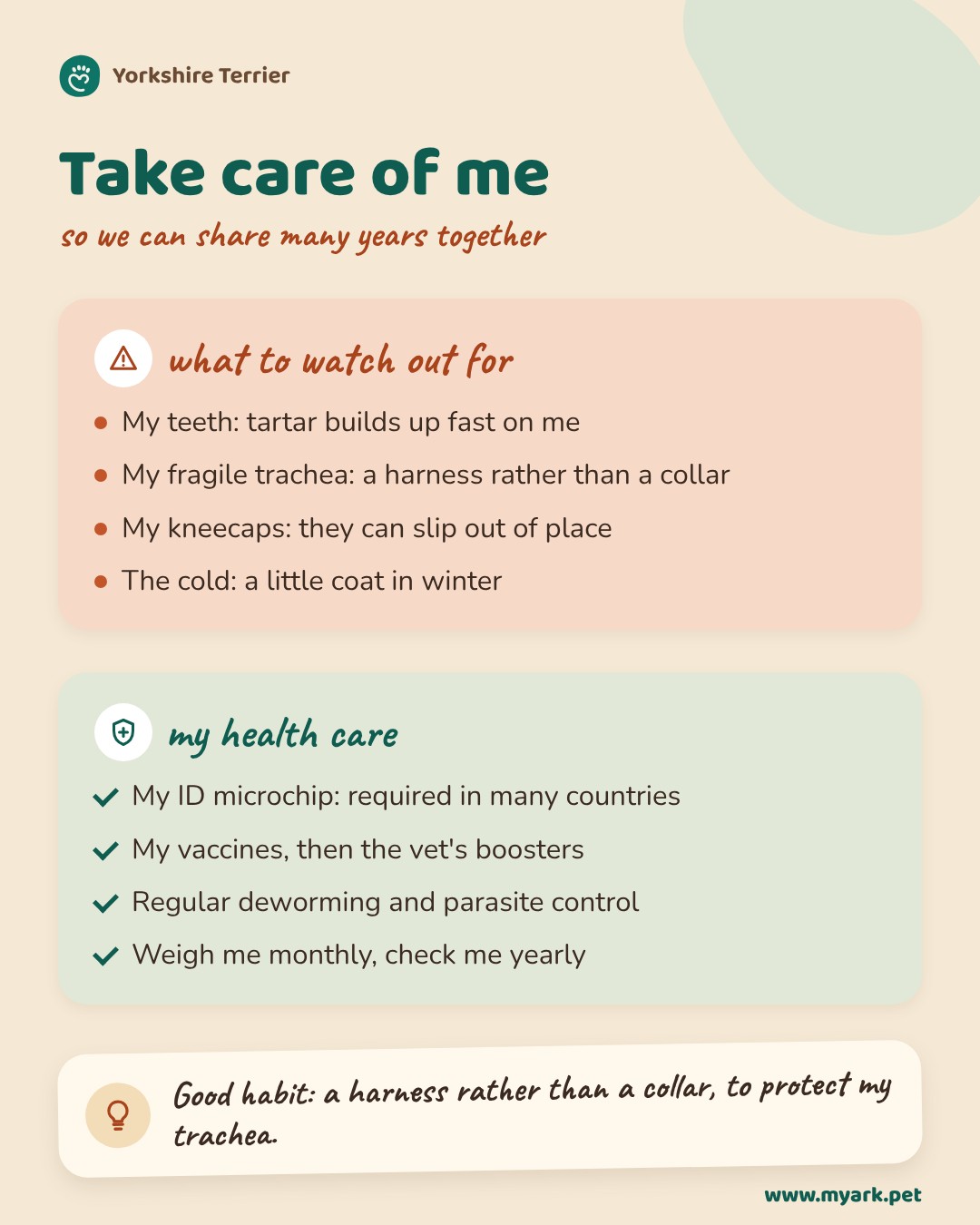
- a microchip registered with your details (a legal requirement in many countries, including the UK and France)
- core vaccinations, then boosters on the schedule your vet sets
- worming and flea and tick treatment on a regular schedule
- a weigh-in every month and a vet check-up every year
The stages of my life
- puppy
- Socialisation and gentle, reward-based training.
- adult
- Games, training and daily walks.
- senior
- From about 8 years old, a gentler pace.
What to keep an eye on
MyArk describes predispositions through visible body shape and simple checks rather than a list of diseases: it is what you can verify from the outside, and act on when choosing a breeder.
Teeth
Tartar builds up fast in small mouths: brush the teeth several times a week and have them checked every year.
Fragile windpipe
Use a harness rather than a collar, and mention any honking cough to your vet.
Kneecaps
In small dogs the kneecap can slip out of place: watch for skipping steps or a sudden lameness, and mention it at the check-up.
The cold
A small, short-coated or slight dog loses heat quickly: a coat for winter walks and a warm, draught-free bed.
And, as for every dog:
- weight: extra kilos strain the joints, heart and breathing
- teeth, ears and nails, checked regularly
- parasite prevention and the vaccination schedule, with your vet
Is it the right dog for your household?
A dog is a social animal that copes badly with long days alone: the real question is less the breed than the time your household has. Before committing, consider rescues and rehoming charities too.
- Home
- Ideal in a flat (5 out of 5).
- Young children
- Small and fragile: better with older children who handle it gently.
- Other pets
- Usually fine with calm animals; it can be bossy with other dogs.
- First dog
- A good first dog if the household accepts the daily grooming.
- Time alone
- Copes poorly with long absences (2 out of 5).
Yorkshire Terrier: straight answers
Does a Yorkshire Terrier shed?
Very little: its coat grows like hair. It needs daily brushing and regular trims instead.
Is a Yorkshire Terrier good for a flat?
Yes, very — as long as it gets its daily walks and play.
How big does a Yorkshire Terrier get?
The standard sets no height; an adult weighs roughly 2 to 3 kg.
What colours does the Yorkshire Terrier come in?
The usual colours are steel blue and tan.