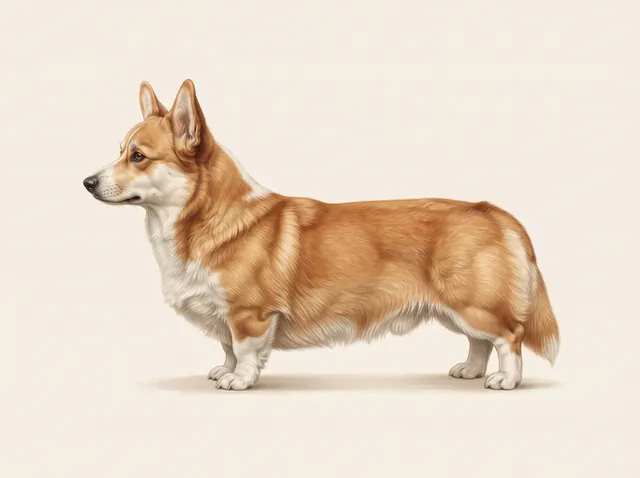
Where the Pembroke Welsh Corgi comes from
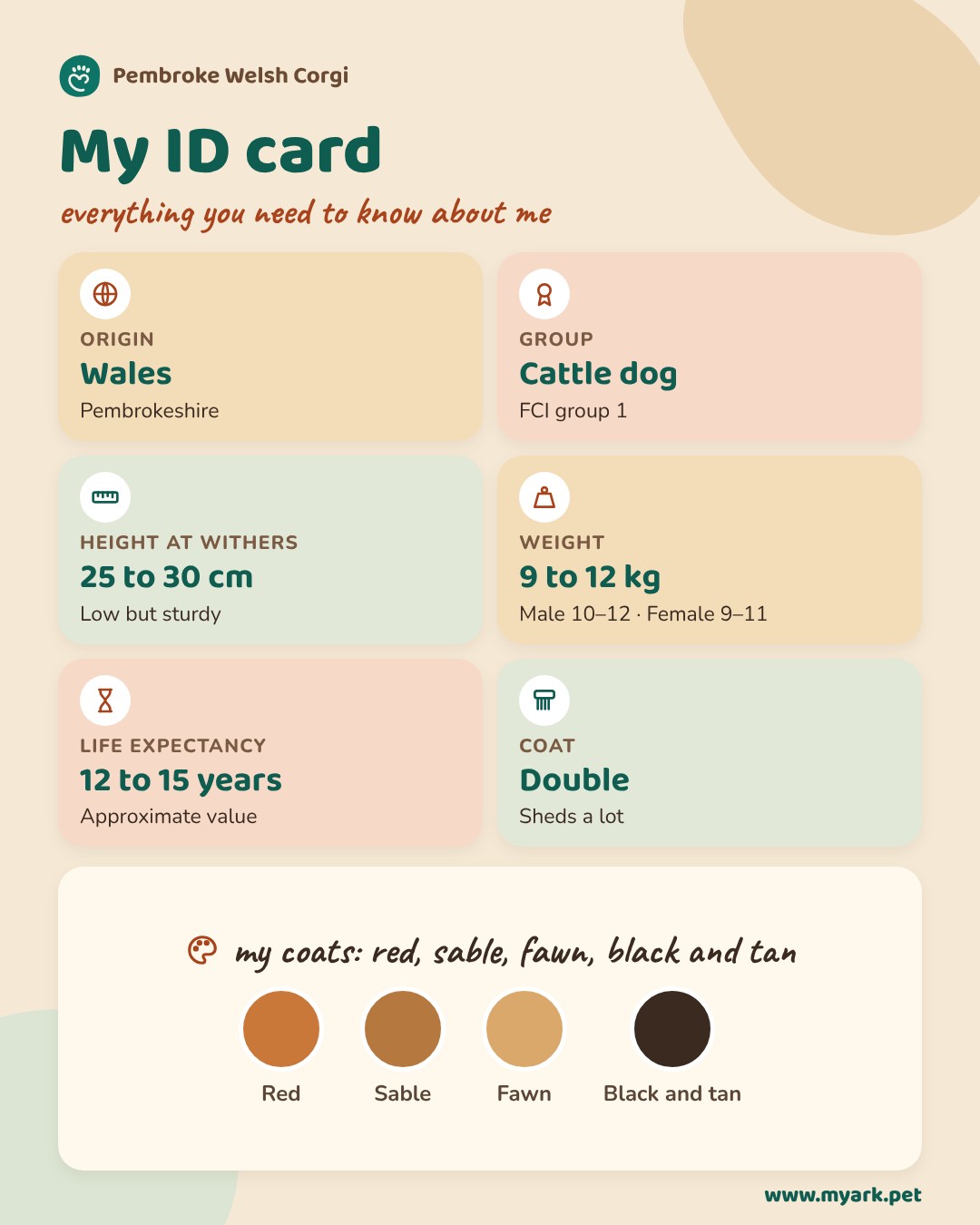
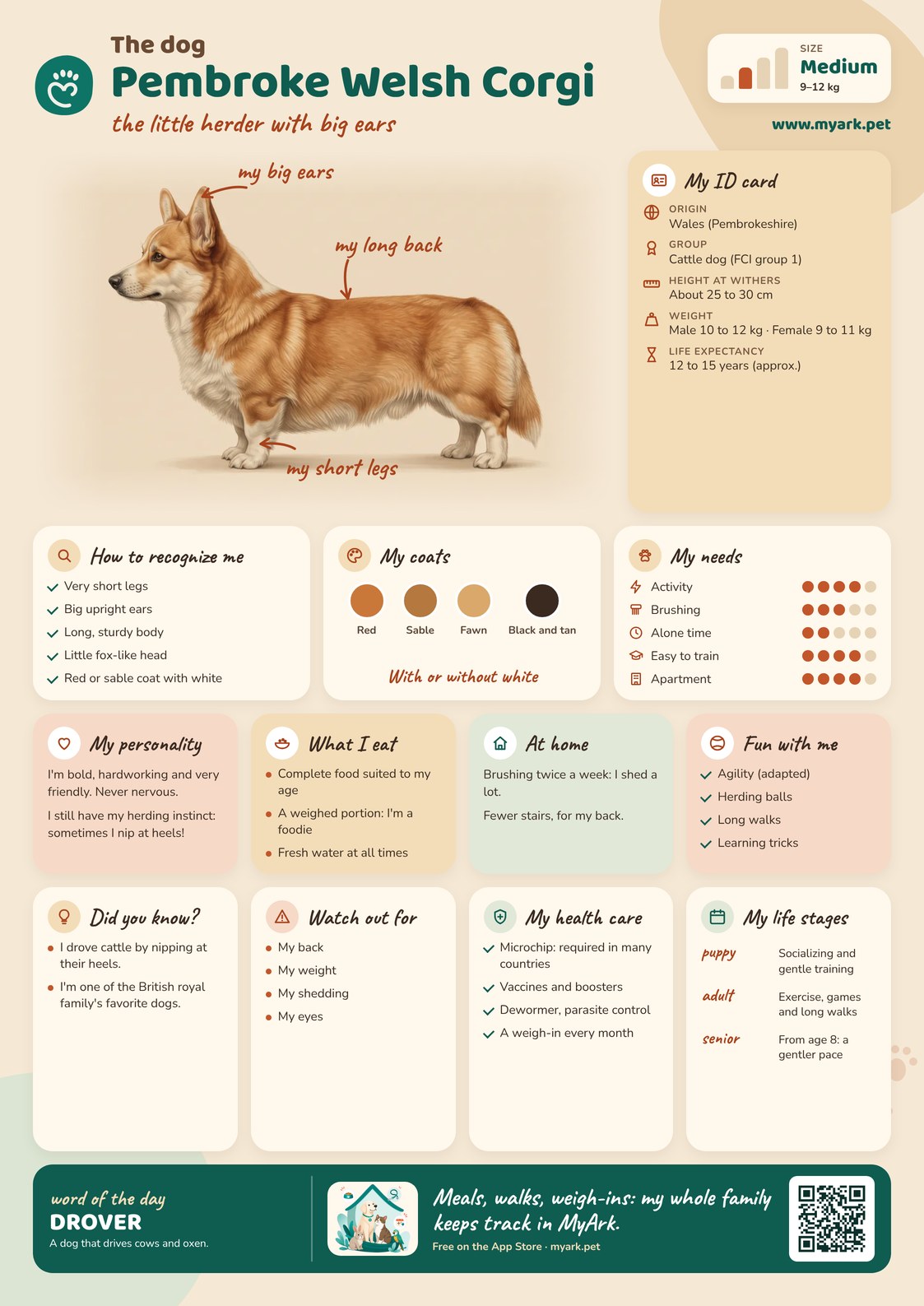
A cattle dog from Pembrokeshire, in Wales, that drove cattle by nipping at their heels. It is one of the favourite dogs of the British royal family.
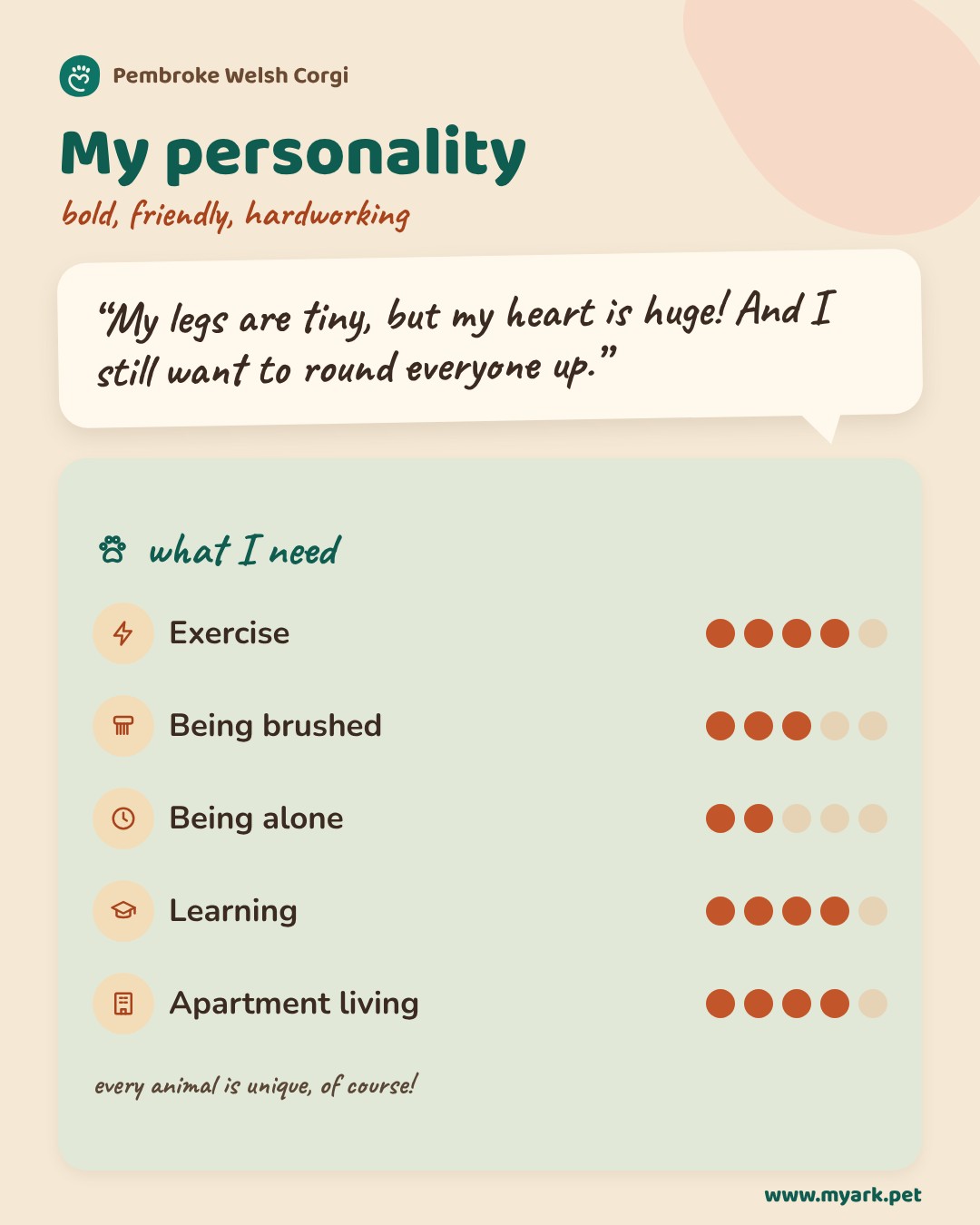
The FCI standard describes it as bold, hard-working, outgoing and friendly, never nervous or aggressive.
Height at the shoulder (FCI standard): about 25–30 cm (10–12 in).
How to recognise me
- very short legs
- large upright ears
- long, solid body
- fox-like head
- red or sable coat with white
My colours
- Red
- Sable
- Fawn
- Black and tan
What a Pembroke Welsh Corgi needs day to day
“I have tiny legs, but an enormous heart! And I still want to round everyone up.”
Its exercise needs are fairly high: brisk walks, games and training. Its back calls for few jumps and stairs.
At a glance
- Exercise
- 4 out of 5
- Grooming
- 3 out of 5
- Coping alone
- 2 out of 5
- Ease of training
- 4 out of 5
- Flat living
- 4 out of 5
every dog is unique, of course!
With me, we can go…
- brisk walks
- herding games
- obedience
- learning tricks
Living with a Pembroke Welsh Corgi: who does what
Most of a dog’s care is repeated, shared and easy to forget. Here is the Pembroke Welsh Corgi’s routine at a glance, and how a household can split it without a single “did anyone…?” message.
The routine at a glance
- every day
- a weighed ration — every kilo counts for its back; two brisk walks; a game or training session.
- every week
- two brushes (more during the moult); an ear and paw check.
- every month
- a weigh-in; flea, tick and worming treatment on your vet’s schedule; a nail check.
- every year
- the vet check-up and vaccine boosters; an eye check.
Sharing it out
- One treat rule for all: extra weight strains its long back.
- Lift it in and out of the car; limit stairs.
- Teach children not to run screaming: it may try to herd them by the heels.
Before it arrives, agree on…
- the treat rules
- how it gets in the car and up stairs
- how to redirect its herding
- who brushes it
- who walks it
How MyArk helps the household keep track
Pet weight tracker
Weight protects its back: track it monthly.
See the featurePet feeding tracker
Log meals so no one feeds it twice.
See the featureDog walk log
Log the daily walks.
See the featurePet sitter instructions
Back, stairs and weight rules for a sitter.
See the featureFeeding, grooming and health routine
The coat needs regular brushing, more often during the moult.
What I eat
- a complete food suited to its age
- a weighed ration every day
- fresh water at all times
My health routine
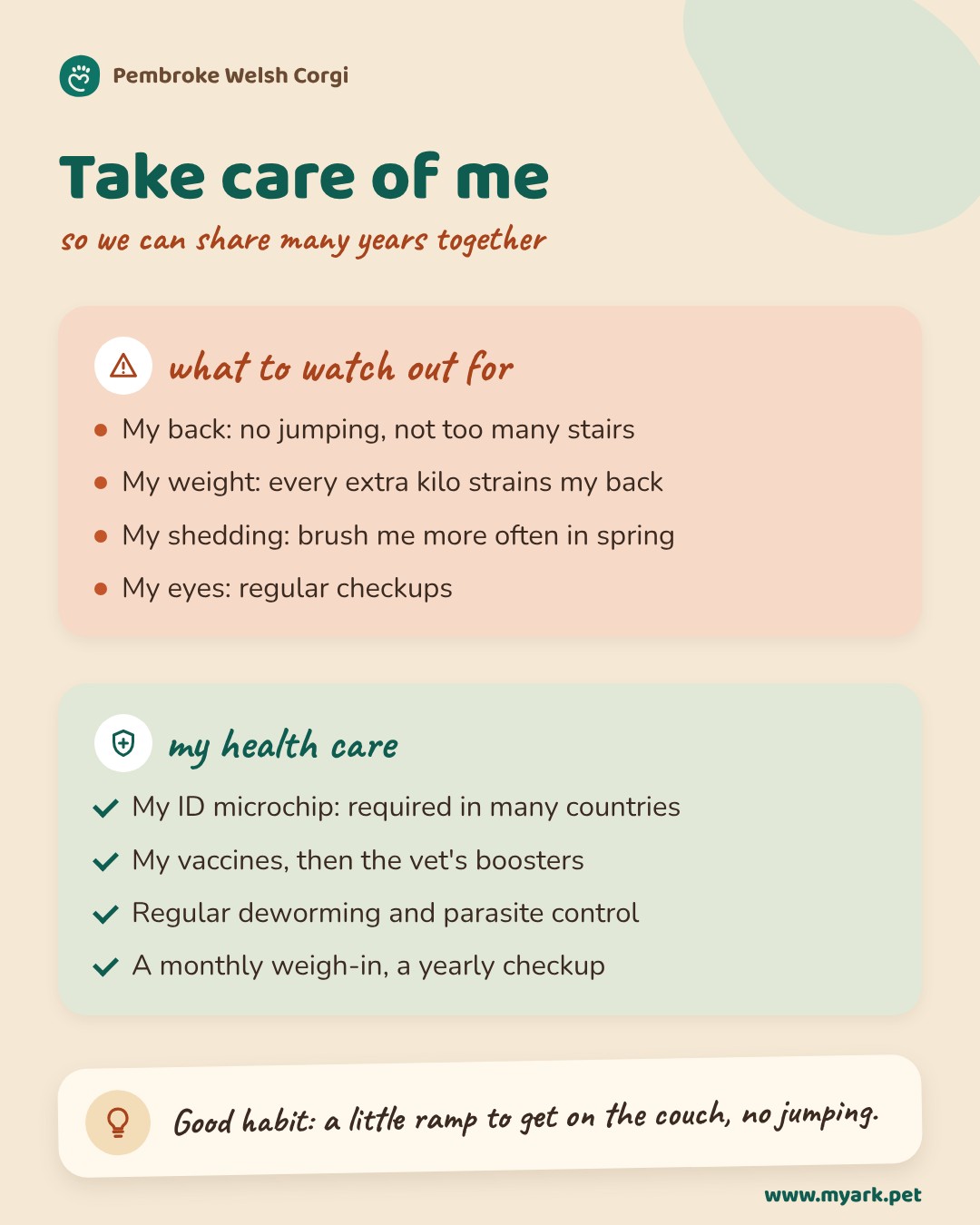
- a microchip registered with your details (a legal requirement in many countries, including the UK and France)
- core vaccinations, then boosters on the schedule your vet sets
- worming and flea and tick treatment on a regular schedule
- a weigh-in every month and a vet check-up every year
The stages of my life
- puppy
- Socialisation and gentle, reward-based training.
- adult
- Sport, games and long walks.
- senior
- From about 8 years old, a gentler pace.
What to keep an eye on
MyArk describes predispositions through visible body shape and simple checks rather than a list of diseases: it is what you can verify from the outside, and act on when choosing a breeder.
Back
No jumping and limited stairs.
Weight
Every extra kilo weighs on its back.
Moult
Brush more often in spring.
Eyes
Some lines carry inherited eye conditions: ask the breeder for the parents’ eye test results, and have the eyes checked at every visit.
And, as for every dog:
- weight: extra kilos strain the joints, heart and breathing
- teeth, ears and nails, checked regularly
- parasite prevention and the vaccination schedule, with your vet
Is it the right dog for your household?
A dog is a social animal that copes badly with long days alone: the real question is less the breed than the time your household has. Before committing, consider rescues and rehoming charities too.
- Home
- Copes well with a flat if walked daily (4 out of 5).
- Young children
- Friendly, but may herd running children: supervise.
- Other pets
- Usually sociable.
- First dog
- A good first dog for an active household.
- Time alone
- Copes poorly with long absences (2 out of 5).
Pembroke Welsh Corgi: straight answers
Is a Corgi a good family dog?
Yes: friendly and bold, for an active family that watches its weight.
Do Corgis shed?
Yes, quite a lot, especially in spring.
How big does a Pembroke Welsh Corgi get?
The FCI standard gives about 25 to 30 cm at the shoulder, for an adult weight of roughly 10 to 14 kg.
What colours does the Pembroke Welsh Corgi come in?
The usual colours are red, sable, fawn and black and tan.