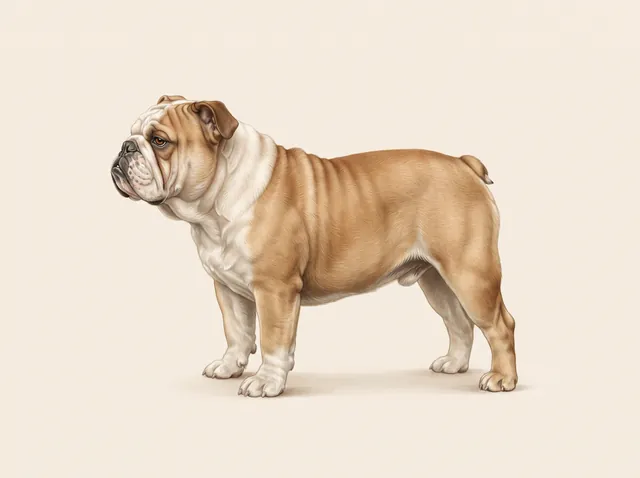
Where the English Bulldog comes from
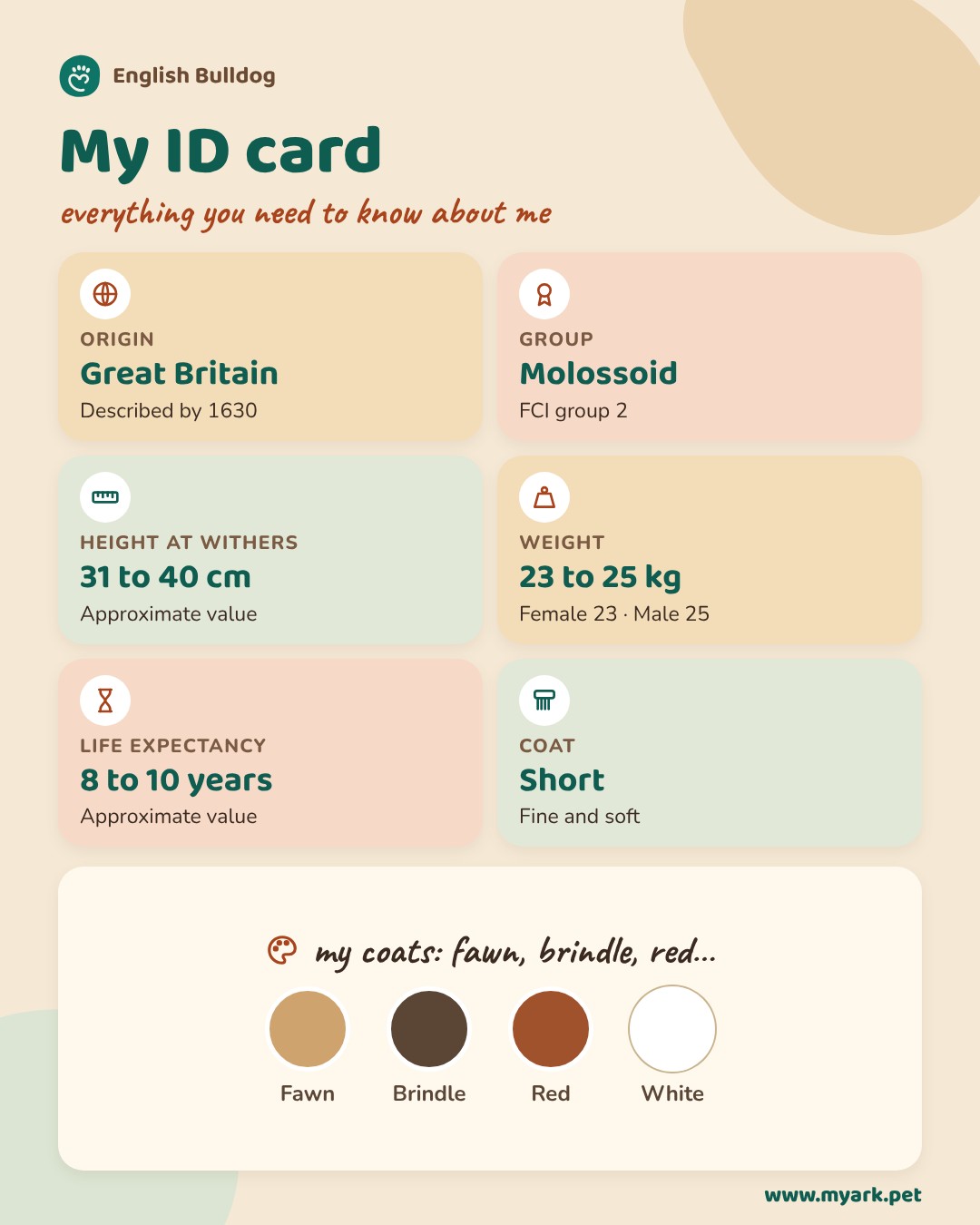
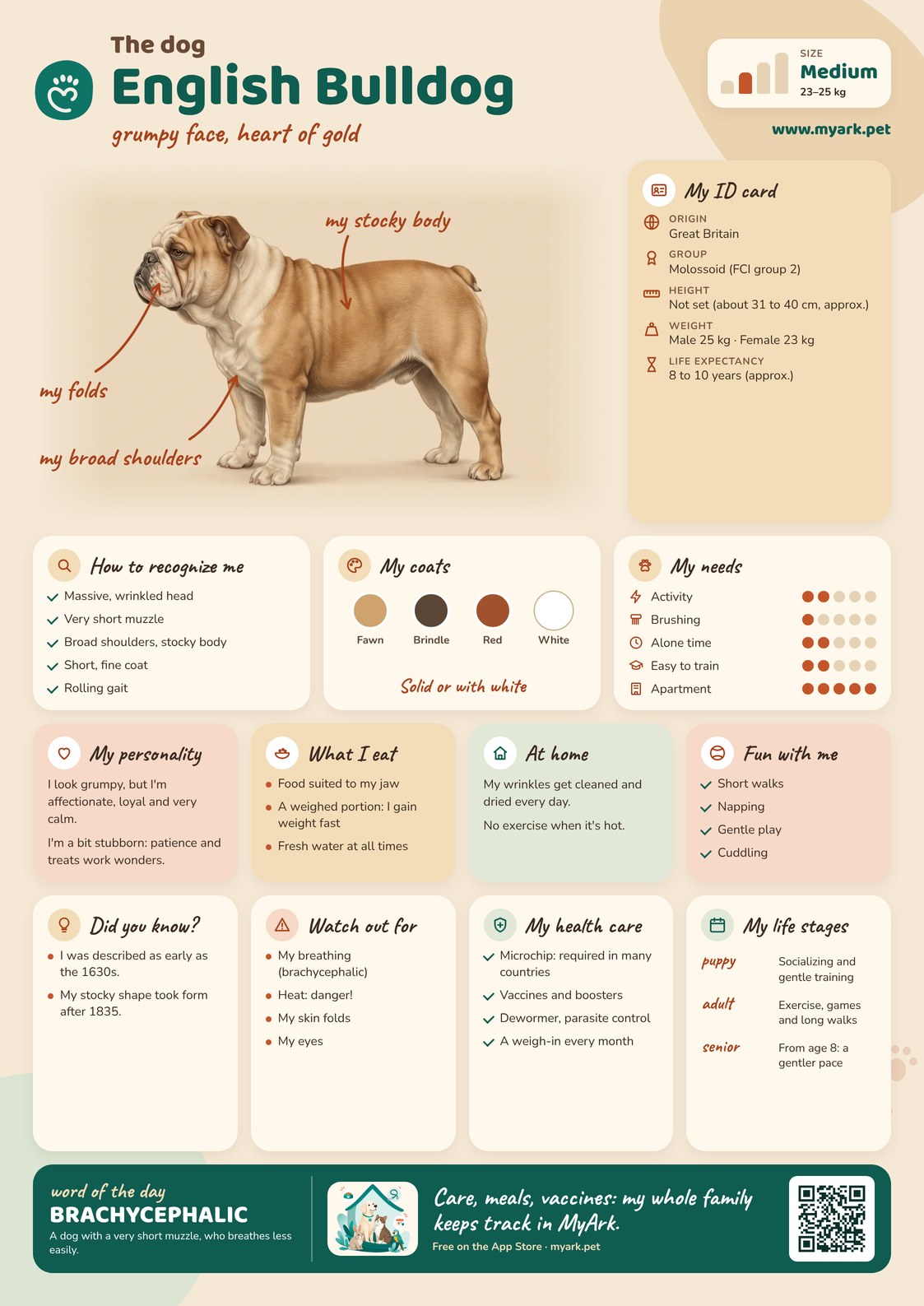
Described as early as the 1630s, it was used in bull-baiting. After the practice was banned in 1835, it evolved into the stockier, shorter-muzzled dog we know, entering the show ring in 1860.
The FCI standard describes it as determined, strong and active; alert, bold, loyal and courageous, fierce in appearance but affectionate by nature.
Height at the shoulder (FCI standard): not set by the standard.
How to recognise me
- massive, wrinkled head
- very short muzzle
- broad shoulders, stocky body
- short, fine coat
- rolling gait
My colours
- Fawn
- Brindle
- Red
- White
What a English Bulldog needs day to day
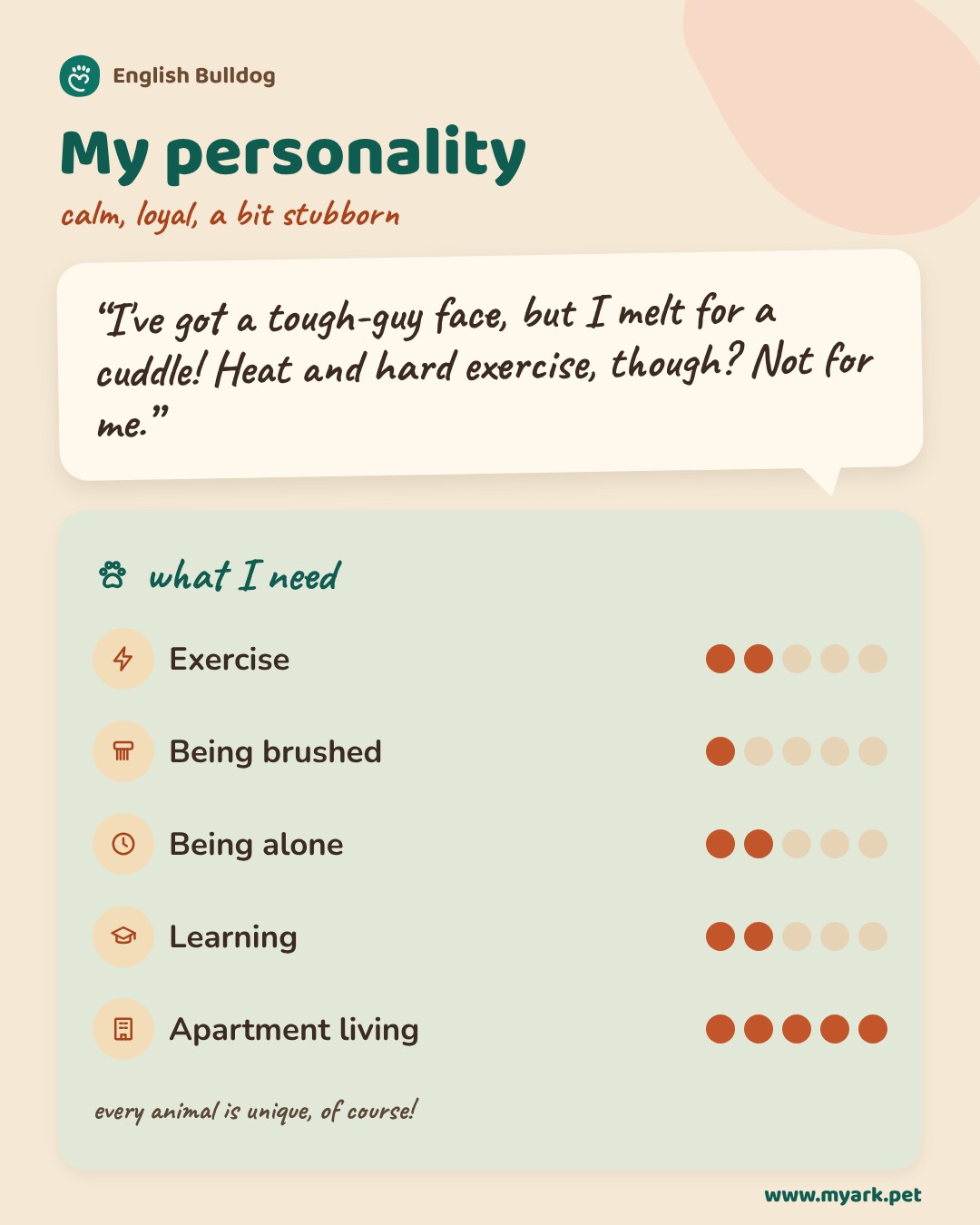
“I look tough, but I melt for a cuddle! Heat and hard exercise, though — not for me.”
Its exercise needs are low: short, calm walks every day, in the cool. Never hard exercise.
At a glance
- Exercise
- 2 out of 5
- Grooming
- 1 out of 5
- Coping alone
- 2 out of 5
- Ease of training
- 2 out of 5
- Flat living
- 5 out of 5
every dog is unique, of course!
With me, we can go…
- short walks
- naps
- gentle play
- cuddles
Living with a English Bulldog: who does what
Most of a dog’s care is repeated, shared and easy to forget. Here is the English Bulldog’s routine at a glance, and how a household can split it without a single “did anyone…?” message.
The routine at a glance
- every day
- a weighed ration; two short walks, in the cool; cleaning and drying the face folds.
- every week
- a quick brush; an eye and ear check; a tail-fold check.
- every month
- a weigh-in; flea, tick and worming treatment on your vet’s schedule; a nail check.
- every year
- the vet check-up and vaccine boosters; a breathing and eye check.
Sharing it out
- The daily fold clean goes on a name: skipped, it turns into infections.
- In summer: walks only early or late, never left in a car.
- One treat rule for all: extra weight makes breathing harder.
Before it arrives, agree on…
- who cleans the folds
- the summer walk times
- the treat rules
- what to do if it struggles to breathe
- who covers long days away
How MyArk helps the household keep track
Family pet chores
Daily fold care on a named person.
See the featurePet weight tracker
Track its weight to help its breathing.
See the featurePet health record
Breathing, eye and skin notes in one place.
See the featurePet sitter instructions
Heat rules and fold care for a sitter.
See the featureFeeding, grooming and health routine
The coat needs regular brushing, more often during the moult.
What I eat
- a complete food suited to its age
- a weighed ration every day
- fresh water at all times
My health routine
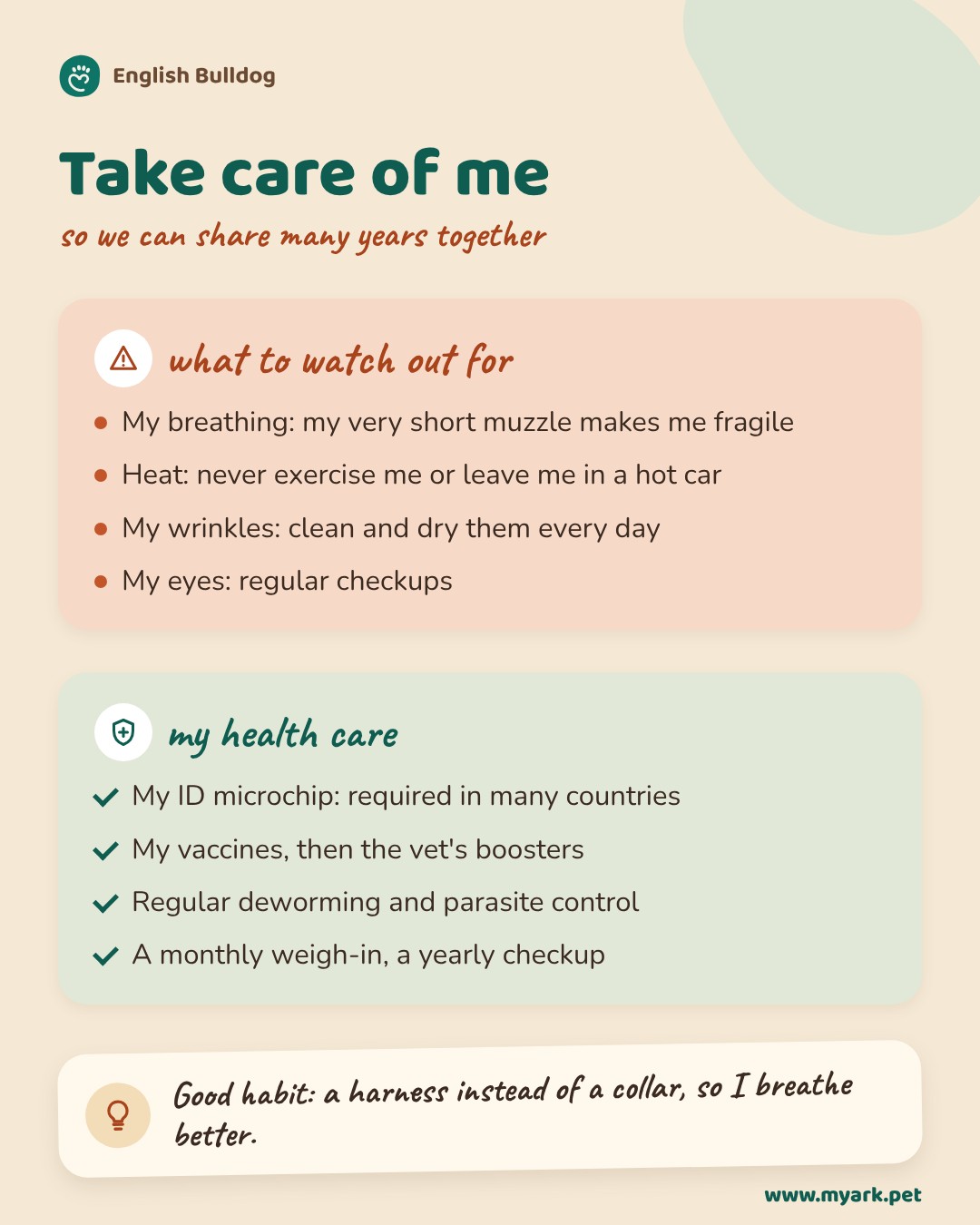
- a microchip registered with your details (a legal requirement in many countries, including the UK and France)
- core vaccinations, then boosters on the schedule your vet sets
- worming and flea and tick treatment on a regular schedule
- a weigh-in every month and a vet check-up every year
The stages of my life
- puppy
- Socialisation and gentle, reward-based training.
- adult
- Gentle games and short walks.
- senior
- From about 8 years old, a gentler pace.
What to keep an eye on
MyArk describes predispositions through visible body shape and simple checks rather than a list of diseases: it is what you can verify from the outside, and act on when choosing a breeder.
Breathing
Its very short muzzle makes it fragile: noisy breathing or effort intolerance needs a vet’s opinion.
Heat
No exercise and never left in a car in the sun.
Skin folds
Clean and dry them every day.
Eyes
Some lines carry inherited eye conditions: ask the breeder for the parents’ eye test results, and have the eyes checked at every visit.
And, as for every dog:
- weight: extra kilos strain the joints, heart and breathing
- teeth, ears and nails, checked regularly
- parasite prevention and the vaccination schedule, with your vet
Is it the right dog for your household?
A dog is a social animal that copes badly with long days alone: the real question is less the breed than the time your household has. Before committing, consider rescues and rehoming charities too.
- Home
- Ideal in a flat (5 out of 5).
- Young children
- Gentle and patient with children.
- Other pets
- Usually calm with other pets.
- First dog
- Possible, with careful attention to heat and health; stubborn to train (2 out of 5 for ease of training).
- Time alone
- Copes poorly with long absences (2 out of 5).
English Bulldog: straight answers
Is an English Bulldog a good family dog?
Yes: calm, loyal and gentle with children, for a household that manages heat and health care.
Can an English Bulldog live in a flat?
Yes, very well, with short daily walks in the cool.
How big does an English Bulldog get?
The standard sets no height; an adult weighs roughly 18 to 25 kg.
What colours does the English Bulldog come in?
The usual colours are fawn, brindle, red and white.