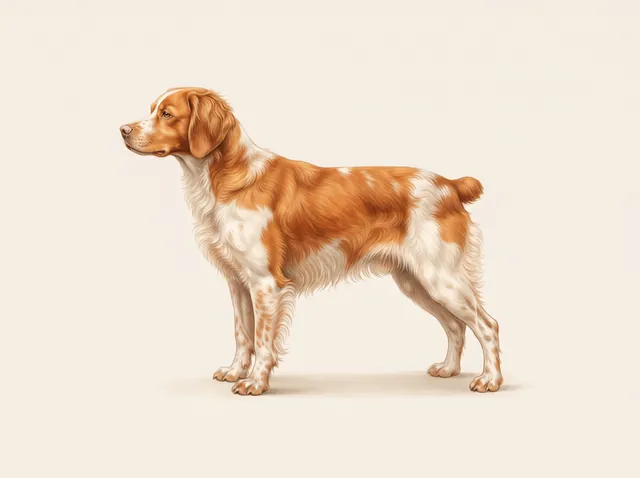
Where the Brittany comes from
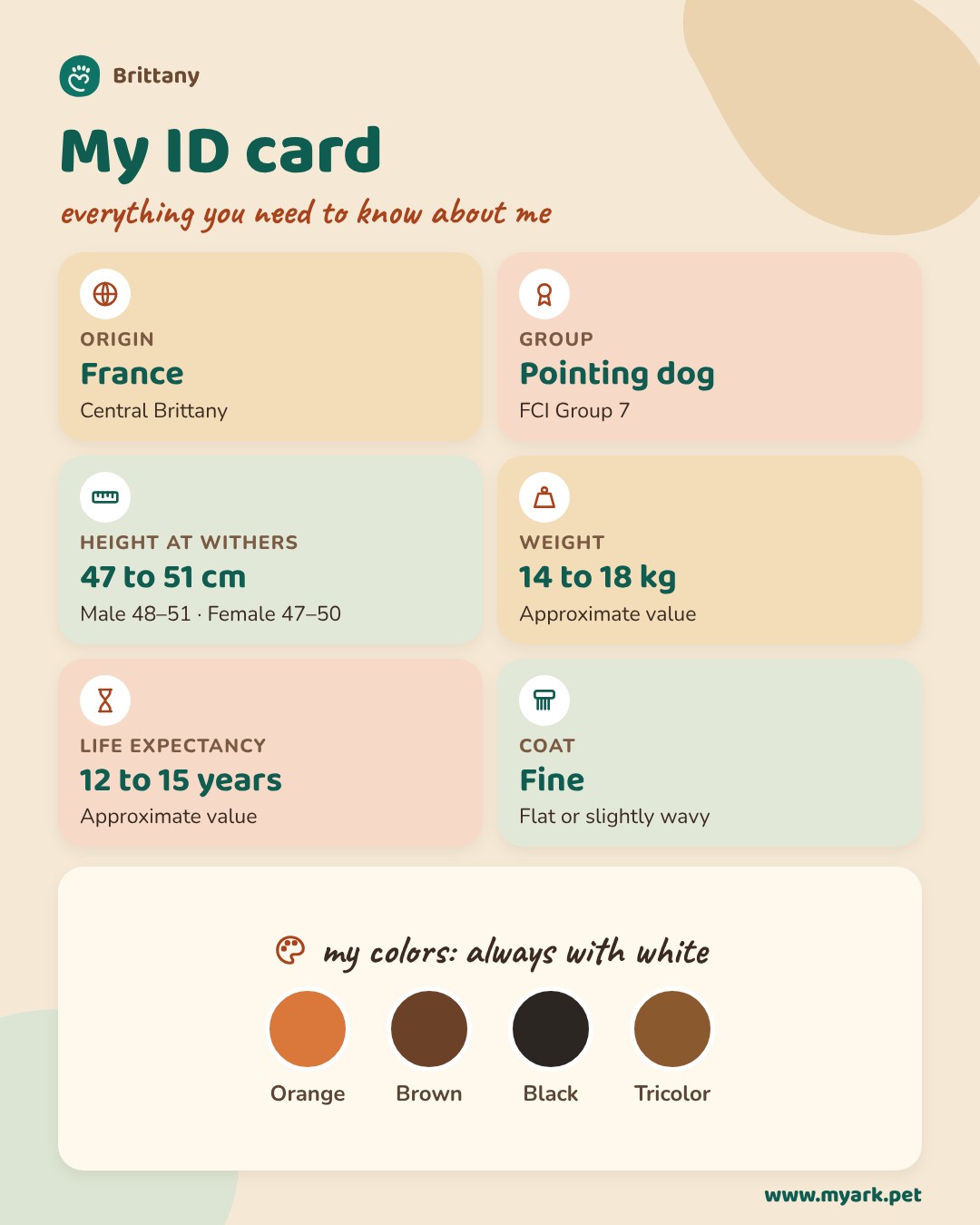
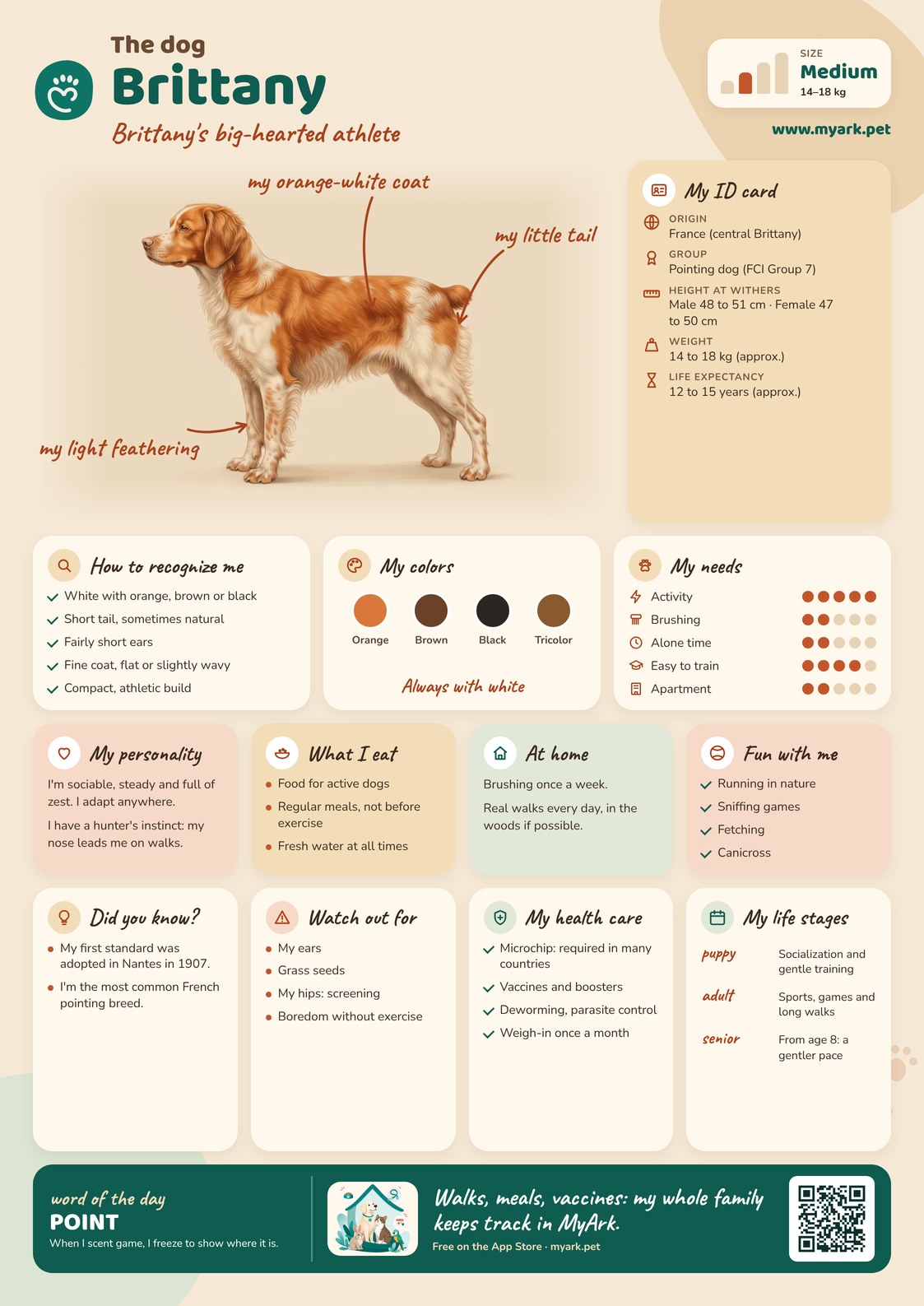
It comes from central Brittany and is probably one of the oldest spaniel-type dogs; a first standard was adopted in Nantes in 1907. It is now the most numerous French pointing breed.
The FCI standard describes it as adaptable to any setting, sociable and well-balanced: a versatile pointer on all game and terrain.
Height at the shoulder (FCI standard): 48–51 cm (19–20 in) for males, 47–50 cm (18.5–19.5 in) for females.
How to recognise me
- white and orange, liver or black coat
- short tail, sometimes naturally
- fairly short ears
- fine, flat or slightly wavy coat
- compact, sporty build
My colours
- Orange
- Liver
- Black
- Tricolour
What a Brittany needs day to day
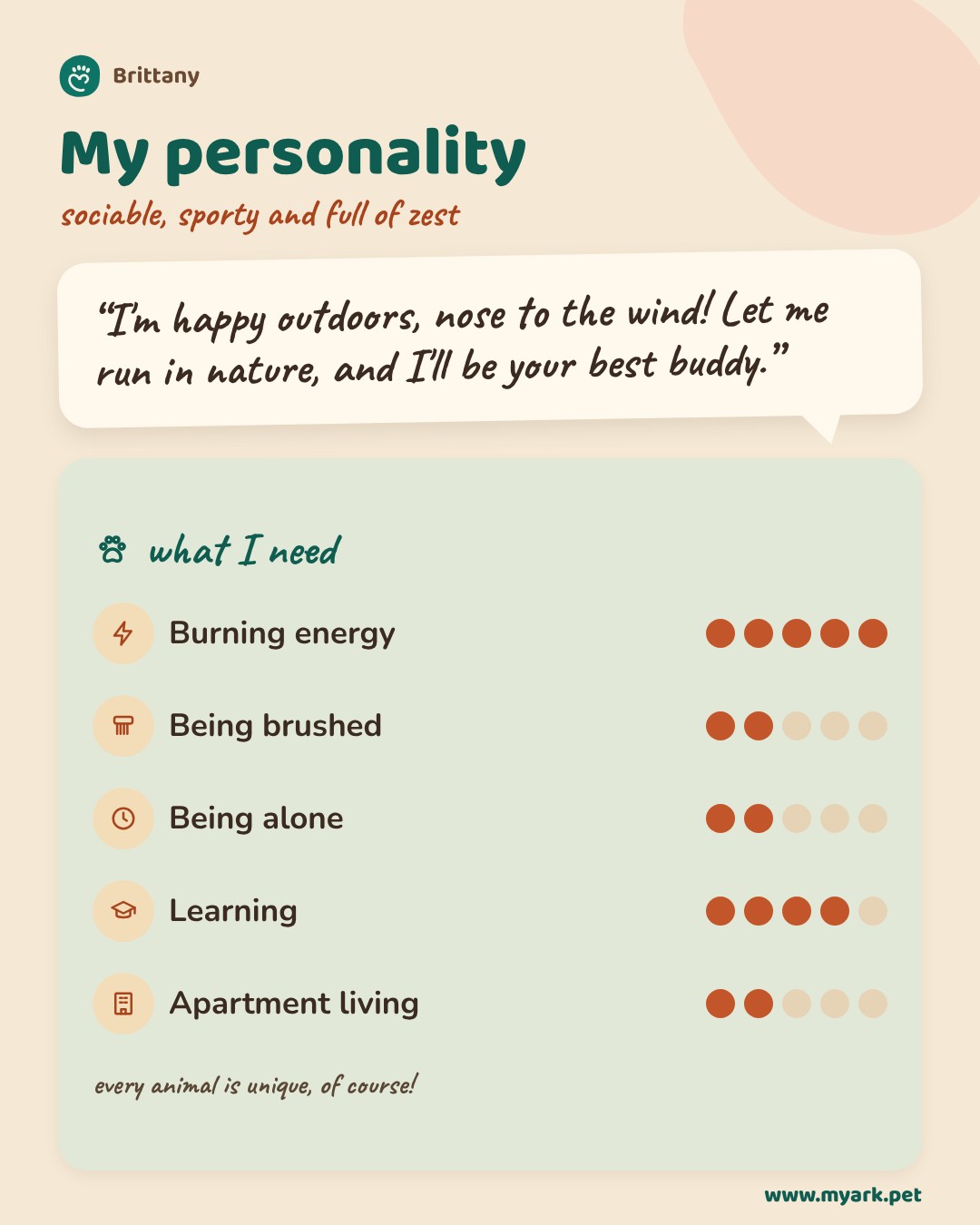
“I’m happy outdoors, nose in the wind! Let me run in the countryside and I’ll be your best friend.”
Its exercise needs are very high: daily runs in open country, scent games and retrieving. Without them it gets bored.
At a glance
- Exercise
- 5 out of 5
- Grooming
- 2 out of 5
- Coping alone
- 2 out of 5
- Ease of training
- 4 out of 5
- Flat living
- 2 out of 5
every dog is unique, of course!
With me, we can go…
- running in the countryside
- scent games
- retrieving
- canicross
Living with a Brittany: who does what
Most of a dog’s care is repeated, shared and easy to forget. Here is the Brittany’s routine at a glance, and how a household can split it without a single “did anyone…?” message.
The routine at a glance
- every day
- regular meals, not before exercise; a long outing with running; a second walk; an ear check after the walk.
- every week
- a brush; a paw check for grass seeds in summer.
- every month
- a weigh-in; flea, tick and worming treatment on your vet’s schedule; a nail check.
- every year
- the vet check-up and vaccine boosters.
Sharing it out
- The long run needs an owner each day — it is the heart of its routine.
- In summer, whoever walks it checks ears and paws for grass seeds.
- Children can join retrieving games with ease.
Before it arrives, agree on…
- who does the daily run
- where it can run safely off lead
- who checks for grass seeds
- who covers the middle of the day
- how it meets cats and small pets
How MyArk helps the household keep track
Dog walk log
Log each run so it gets its daily dose.
See the featureFamily pet chores
Walks and post-walk checks on named people.
See the featurePet weight tracker
Adjust the food to the season’s activity.
See the featurePet sitter instructions
Hand over its routine and checks to a sitter.
See the featureFeeding, grooming and health routine
The coat needs regular brushing, more often during the moult.
What I eat
- a complete food for active dogs
- regular meals, not before exercise
- fresh water at all times
My health routine
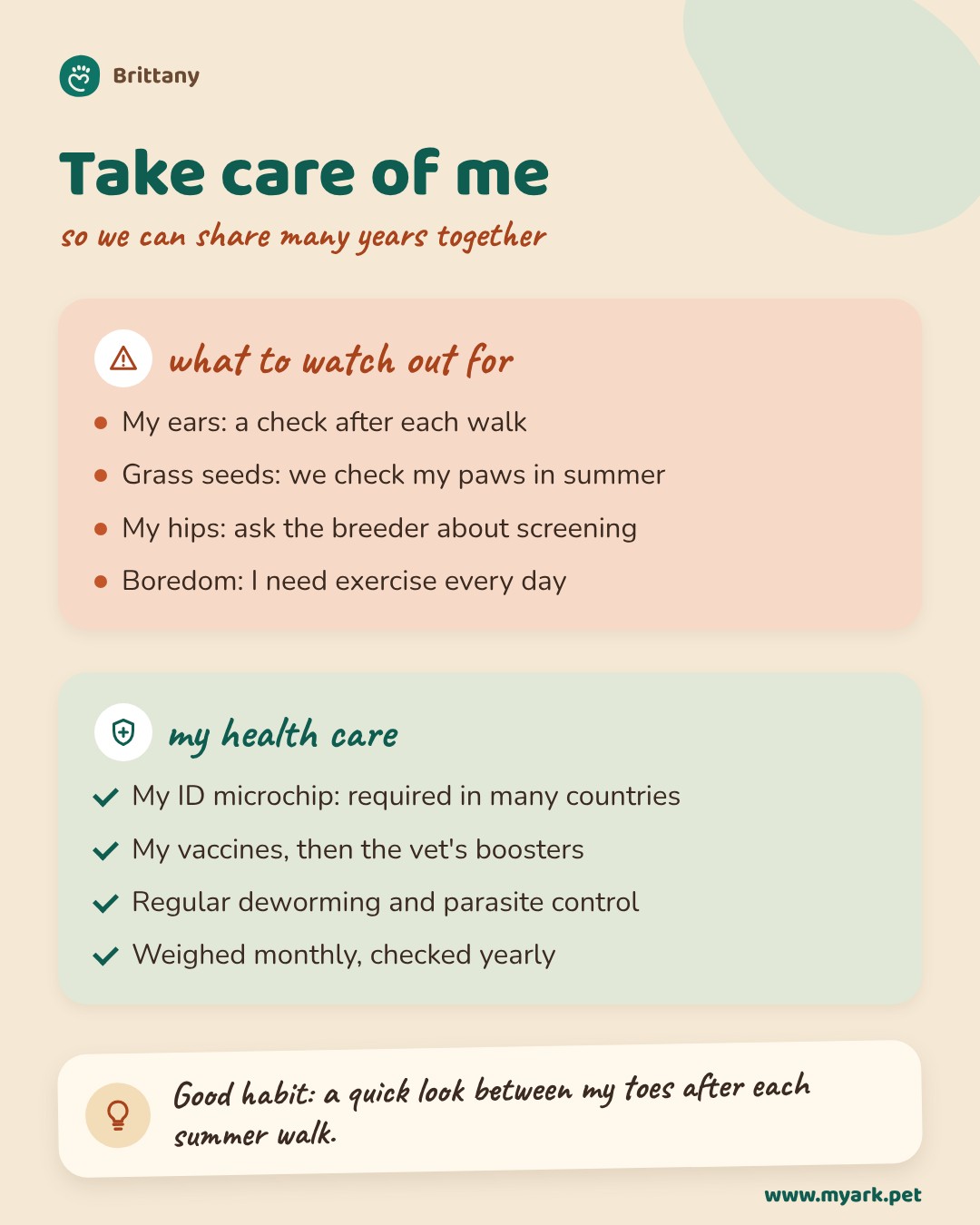
- a microchip registered with your details (a legal requirement in many countries, including the UK and France)
- core vaccinations, then boosters on the schedule your vet sets
- worming and flea and tick treatment on a regular schedule
- a weigh-in every month and a vet check-up every year
The stages of my life
- puppy
- Socialisation and gentle, reward-based training.
- adult
- Sport, games and long walks.
- senior
- From about 8 years old, a gentler pace.
What to keep an eye on
MyArk describes predispositions through visible body shape and simple checks rather than a list of diseases: it is what you can verify from the outside, and act on when choosing a breeder.
Ears
Check them after every walk.
Grass seeds
In summer, check paws, ears and between the toes after walks.
Hips
Ask the breeder for the hip screening results of both parents.
Boredom
It needs sport every day.
And, as for every dog:
- weight: extra kilos strain the joints, heart and breathing
- teeth, ears and nails, checked regularly
- parasite prevention and the vaccination schedule, with your vet
Is it the right dog for your household?
A dog is a social animal that copes badly with long days alone: the real question is less the breed than the time your household has. Before committing, consider rescues and rehoming charities too.
- Home
- Best with a house and access to the countryside (2 out of 5 in a flat).
- Young children
- Sociable and gentle with children.
- Other pets
- Good with dogs; its hunting instinct needs managing with birds and small pets.
- First dog
- A good first dog for a sporty household.
- Time alone
- Copes poorly with long absences (2 out of 5).
Brittany: straight answers
Is a Brittany a good family dog?
Yes for an active family: sociable, gentle and easy to train.
How much exercise does a Brittany need?
A lot: a daily run in open country, plus games.
How big does a Brittany get?
The FCI standard gives 48 to 51 cm at the shoulder for males and 47 to 50 cm for females, for an adult weight of roughly 14 to 20 kg.
What colours does the Brittany come in?
The usual colours are orange, liver, black and tricolour.