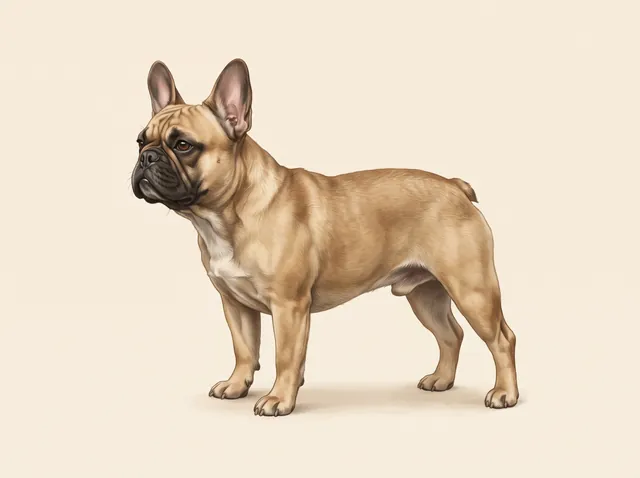
Where the French Bulldog comes from
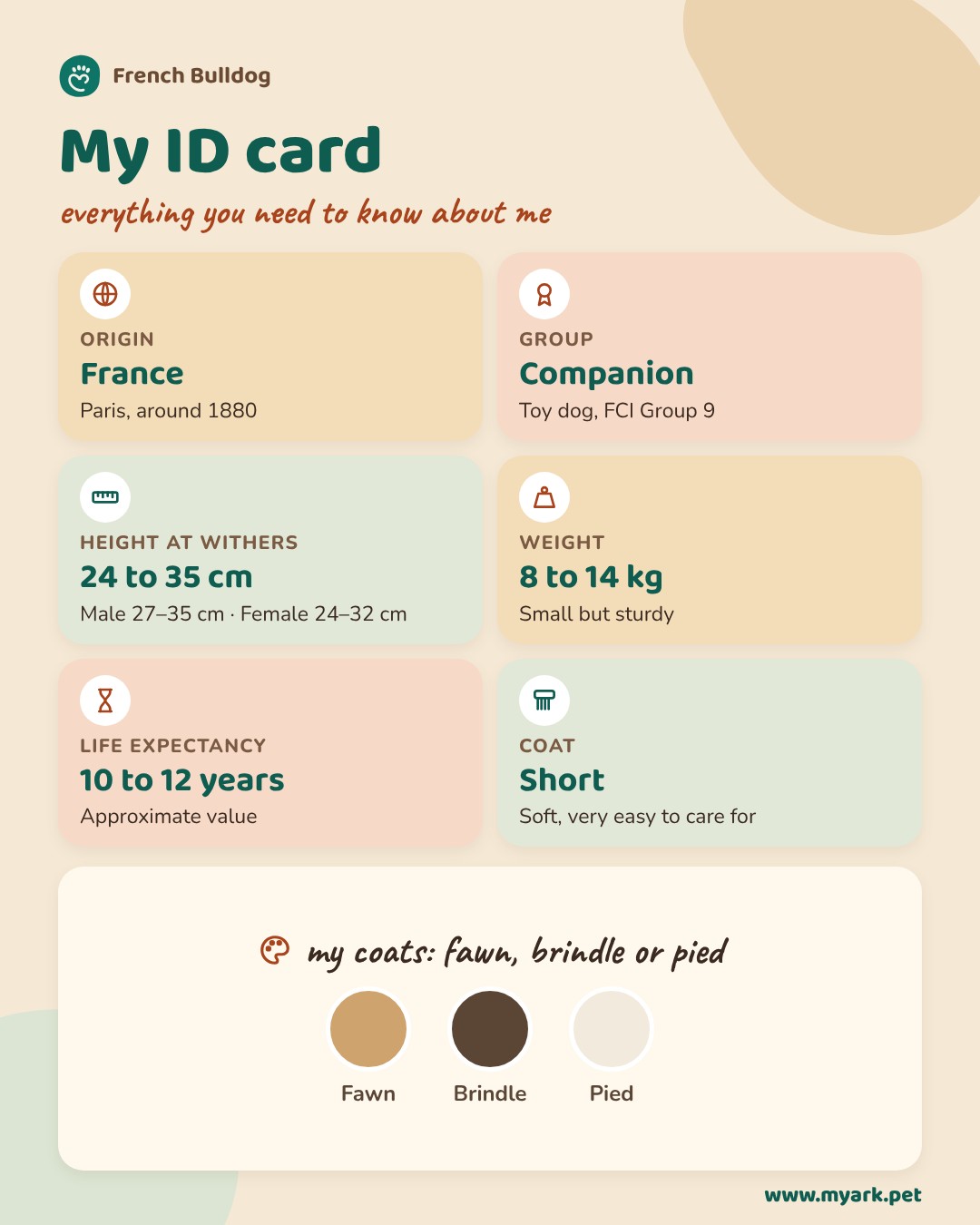
The French Bulldog took shape in Paris in the second half of the 19th century. Its ancestors were small bulldogs brought over from England; working-class Parisians — market porters, butchers, coachmen — adopted them before the breed won over high society and artists.
It was bred purely as a companion. The FCI standard describes it as sociable, cheerful, playful and alert.
Height at the shoulder (FCI standard): 27–35 cm (11–14 in) for males, 24–32 cm (9–13 in) for females.
How to recognise me
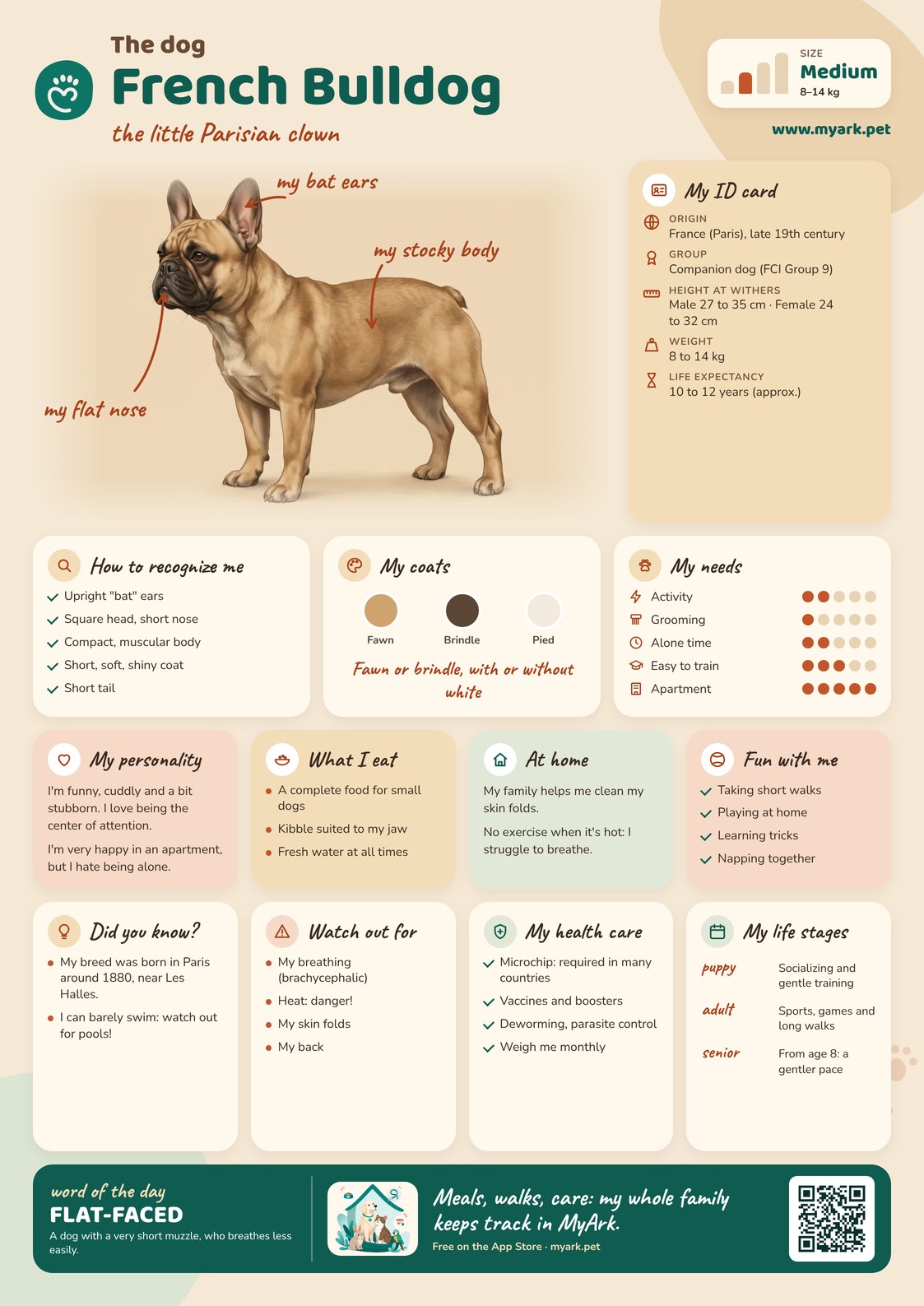
- upright “bat” ears
- square head and short nose
- compact, muscular body
- short, soft, glossy coat
- short tail
My colours
- Fawn
- Brindle
- Pied
What a French Bulldog needs day to day
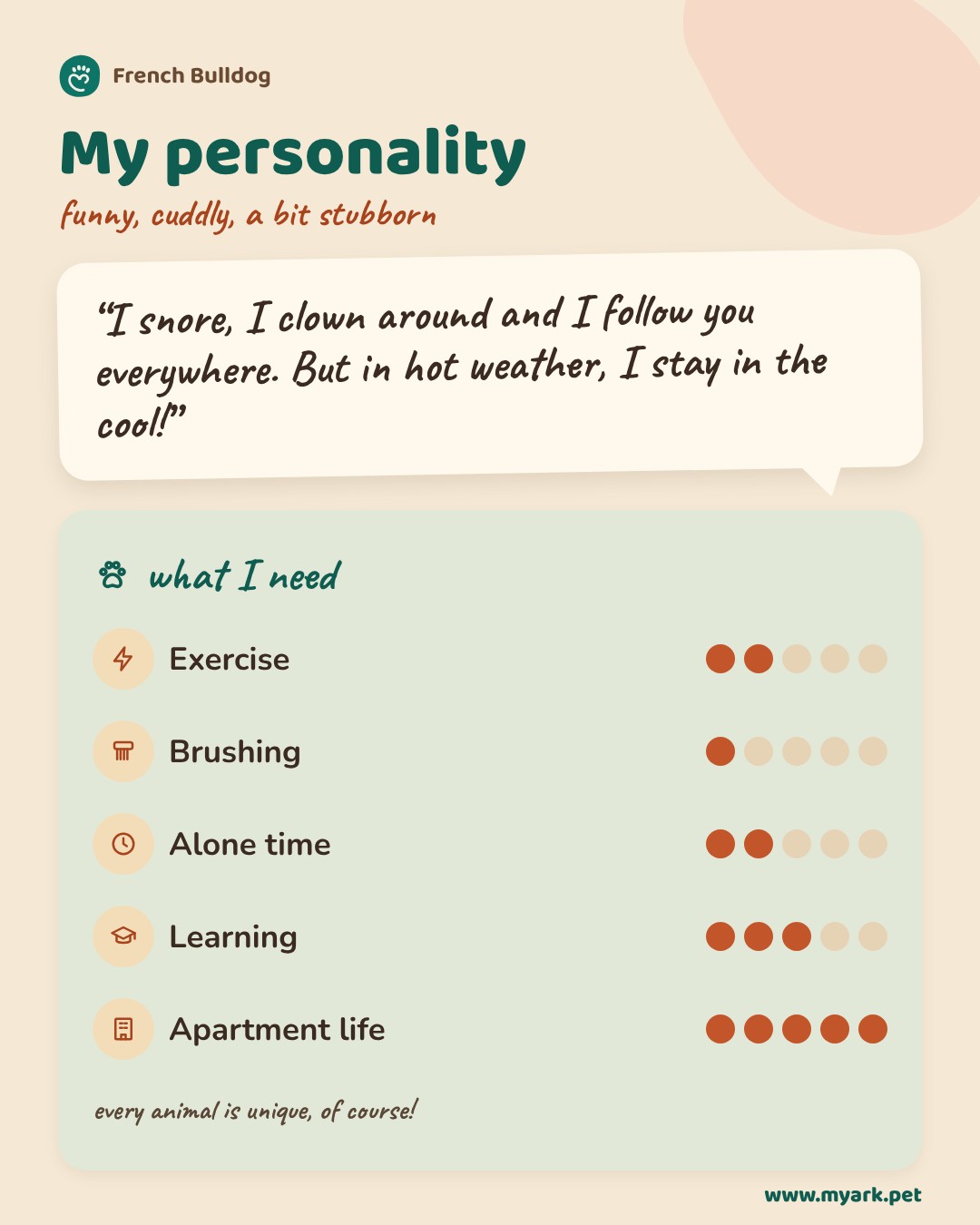
“I snore, I clown around and I follow you everywhere. But when it’s hot, I stay in the cool!”
Its exercise needs are moderate: regular, unhurried walks and play at home suit it well. What matters most is the weather — in warm conditions, walks move to early morning and late evening, and any effort stops at the first sign of heavy panting.
At a glance
- Exercise
- 2 out of 5
- Grooming
- 1 out of 5
- Coping alone
- 2 out of 5
- Ease of training
- 3 out of 5
- Flat living
- 5 out of 5
every dog is unique, of course!
With me, we can go…
- short walks
- games at home
- learning tricks
- naps together
Living with a French Bulldog: who does what
Most of a dog’s care is repeated, shared and easy to forget. Here is the French Bulldog’s routine at a glance, and how a household can split it without a single “did anyone…?” message.
The routine at a glance
- every day
- two weighed meals; short walks, timed for the cool hours in summer; cleaning and drying the facial folds; keeping an eye on its breathing during play.
- every week
- a quick brush; an ear and skin-fold check.
- every month
- a weigh-in — extra weight makes breathing harder; flea, tick and worming treatment on your vet’s schedule; a nail check.
- every year
- the vet check-up and vaccine boosters, with a word about its breathing.
Sharing it out
- Make one person the “weather watcher” in summer: they decide when the walk happens and tell the others.
- Fold cleaning takes two minutes: attach it to the evening meal so it never depends on who remembers.
- Children can play with it, but on the floor: no carrying it around, and no encouraging jumps off the sofa.
Before it arrives, agree on…
- the summer walk rules (times, shade, water) everyone follows
- where it sleeps, and how it gets on and off furniture
- the daily ration and treat allowance
- who keeps it company on long days — it does not like being alone
- which emergency vet to call on a hot day
How MyArk helps the household keep track
Dog walk log
Everyone sees when it last went out — useful when walks shift to the cool hours.
See the featureRecurring pet care reminders
Recurring reminders for fold care, parasite treatment and boosters.
See the featurePet weight tracker
Weight matters for its breathing: a curve anyone at home can read.
See the featurePet sitter instructions
A ready-made sheet with the heat rules and the vet’s number for whoever looks after it.
See the featureFeeding, grooming and health routine
The coat is easy to keep: an occasional brush removes the dead hair.
What I eat
- a complete food for small dogs
- kibble shaped for its short jaw
- fresh water at all times
My health routine
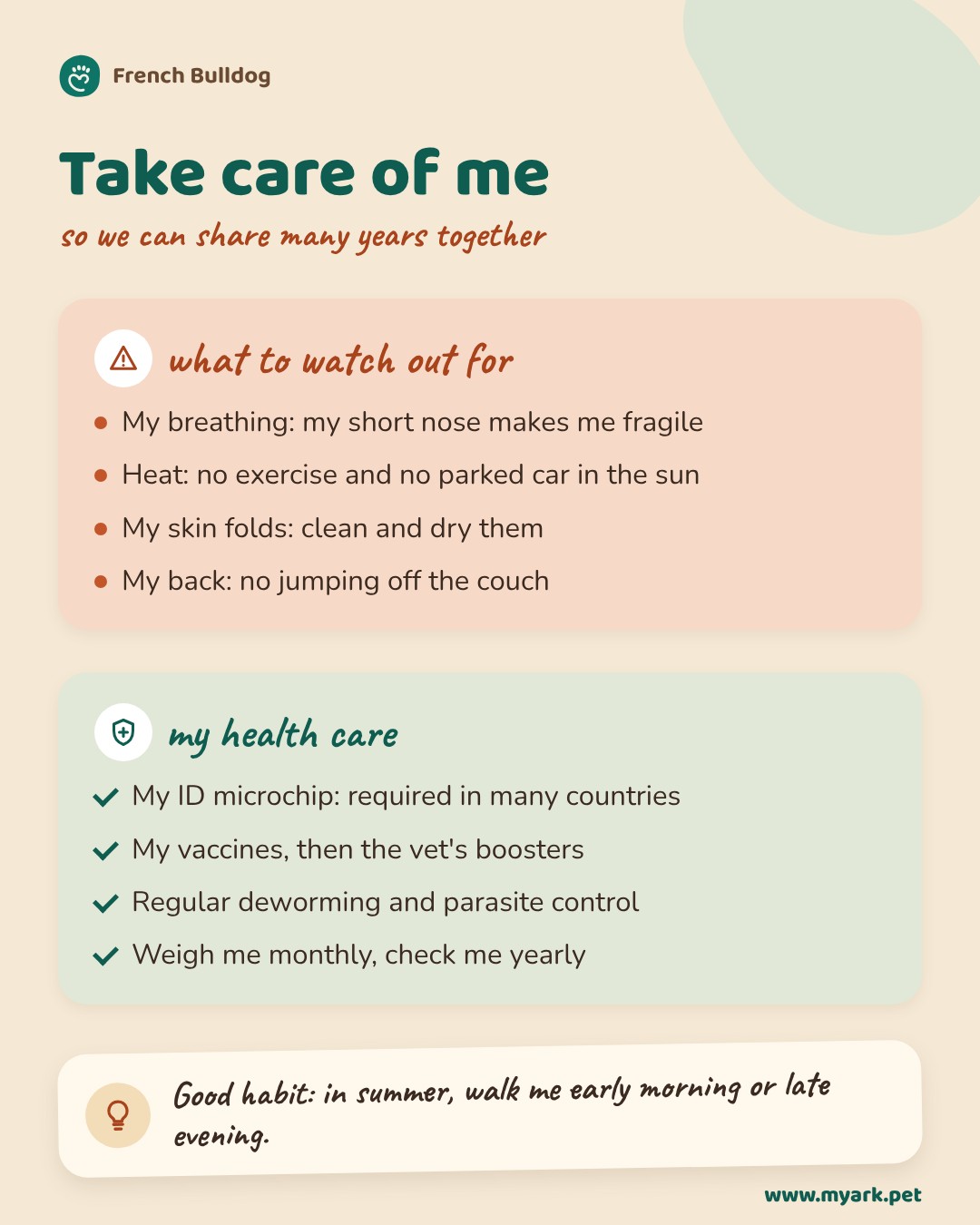
- a microchip registered with your details (a legal requirement in many countries, including the UK and France)
- core vaccinations, then boosters on the schedule your vet sets
- worming and flea and tick treatment on a regular schedule
- a weigh-in every month and a vet check-up every year
The stages of my life
- puppy
- Socialisation and gentle, reward-based training.
- adult
- Short walks and play, never any effort in hot weather.
- senior
- From about 8 years old, a gentler pace.
What to keep an eye on
MyArk describes predispositions through visible body shape and simple checks rather than a list of diseases: it is what you can verify from the outside, and act on when choosing a breeder.
Short muzzle (brachycephaly)
A shortened face restricts airflow. Snoring, quick breathlessness and heat intolerance are not personality traits but clinical signs. Choose a breeder who selects for breathing, and avoid any effort in hot weather.
Skin folds
Folds hold moisture and can lead to skin irritation. Cleaning and drying them, especially on the face, is part of the routine, not an occasional treatment.
Heat
In summer, go out early or late, with shade and water always available. A dog that pants hard and refuses to walk on must be cooled down at once and seen by a vet.
Back
Spare it repeated jumps, especially off the sofa, to protect its back.
And, as for every dog:
- weight: extra kilos strain the joints, heart and breathing
- teeth, ears and nails, checked regularly
- parasite prevention and the vaccination schedule, with your vet
Is it the right dog for your household?
A dog is a social animal that copes badly with long days alone: the real question is less the breed than the time your household has. Before committing, consider rescues and rehoming charities too.
- Home
- Copes well with a small home, as long as it is kept interesting and stays cool in summer.
- Young children
- Possible with supervision: a small dog is vulnerable to falls and rough handling.
- Other pets
- Usually fine with gradual introductions and a place for each animal to retreat.
- First dog
- Accessible to a well-informed first-time household — the key is choosing a breeder carefully.
- Time alone
- Rated 2 out of 5: it wants to be with its people, so long days alone need a plan.
French Bulldog: straight answers
Is a French Bulldog a good family dog?
It is affectionate, playful and adaptable to small homes. The household must accept its limits: gentle exercise, no effort in the heat and close attention to its breathing.
Why do French Bulldogs snore?
Because their very short muzzle restricts airflow. Loud snoring or quick breathlessness are worth discussing with your vet, and are a key point to check with the breeder.
Can a French Bulldog swim?
Barely. Its heavy front and short muzzle make swimming hard, so keep it away from unfenced pools and ponds.
How big does a French Bulldog get?
According to the FCI standard, 27 to 35 cm at the shoulder for males and 24 to 32 cm for females, for an adult weight of roughly 8 to 14 kg.
What colours does the French Bulldog come in?
The usual colours are fawn, brindle and pied.