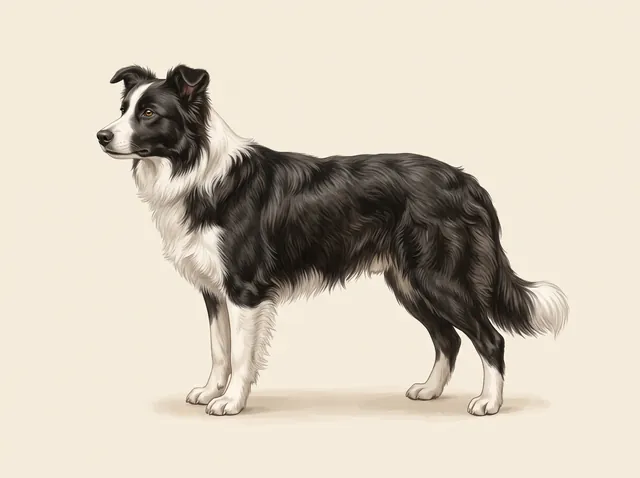
Where the Border Collie comes from
The Border Collie comes from the borders between England and Scotland, where it was selected above all for its ability to work sheep — not for its looks.
The FCI standard describes it as tenacious, hard-working and very biddable: keen, alert, responsive and intelligent, neither nervous nor aggressive.
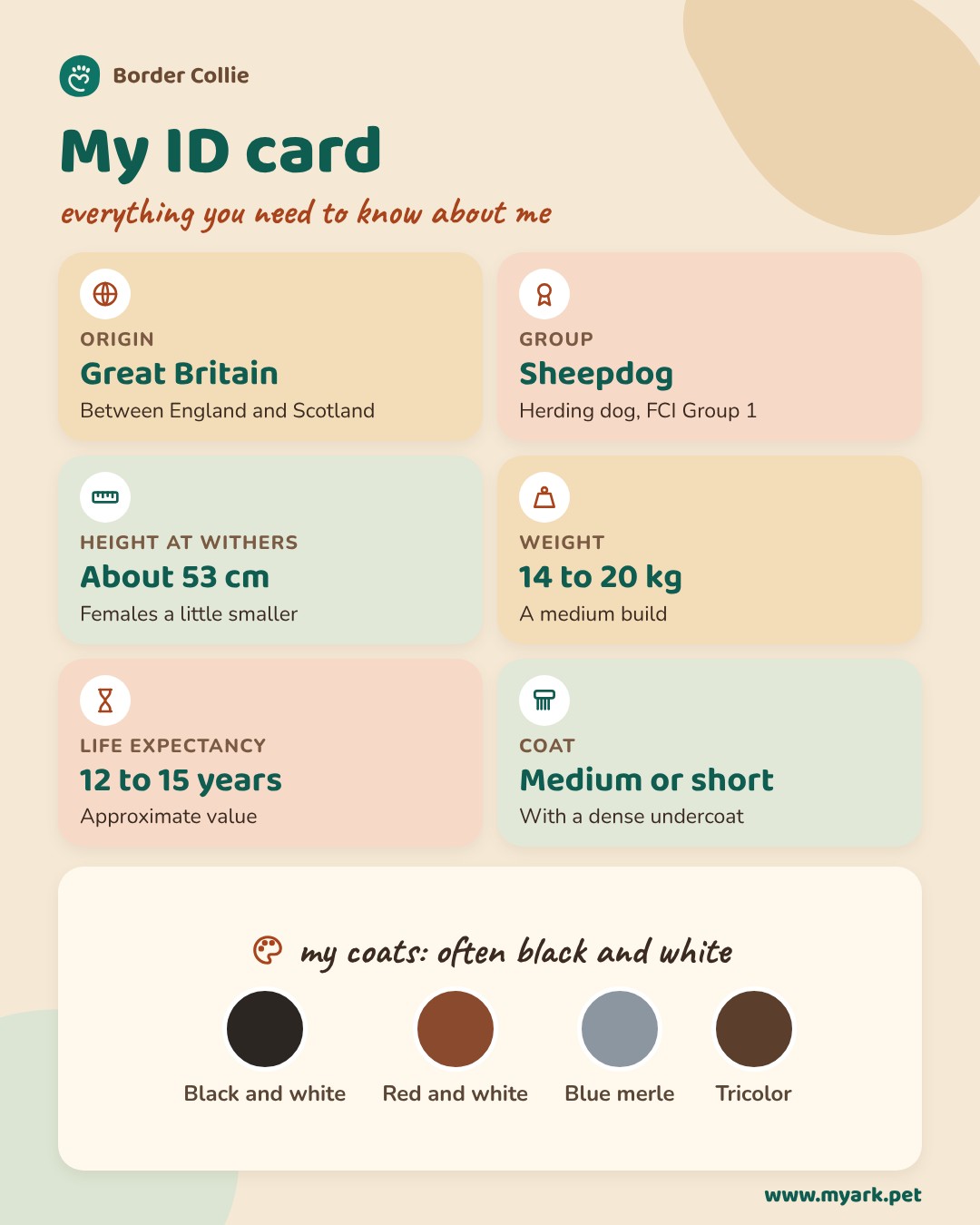
Height at the shoulder (FCI standard): ideally 53 cm (21 in) for males, slightly less for females.
How to recognise me
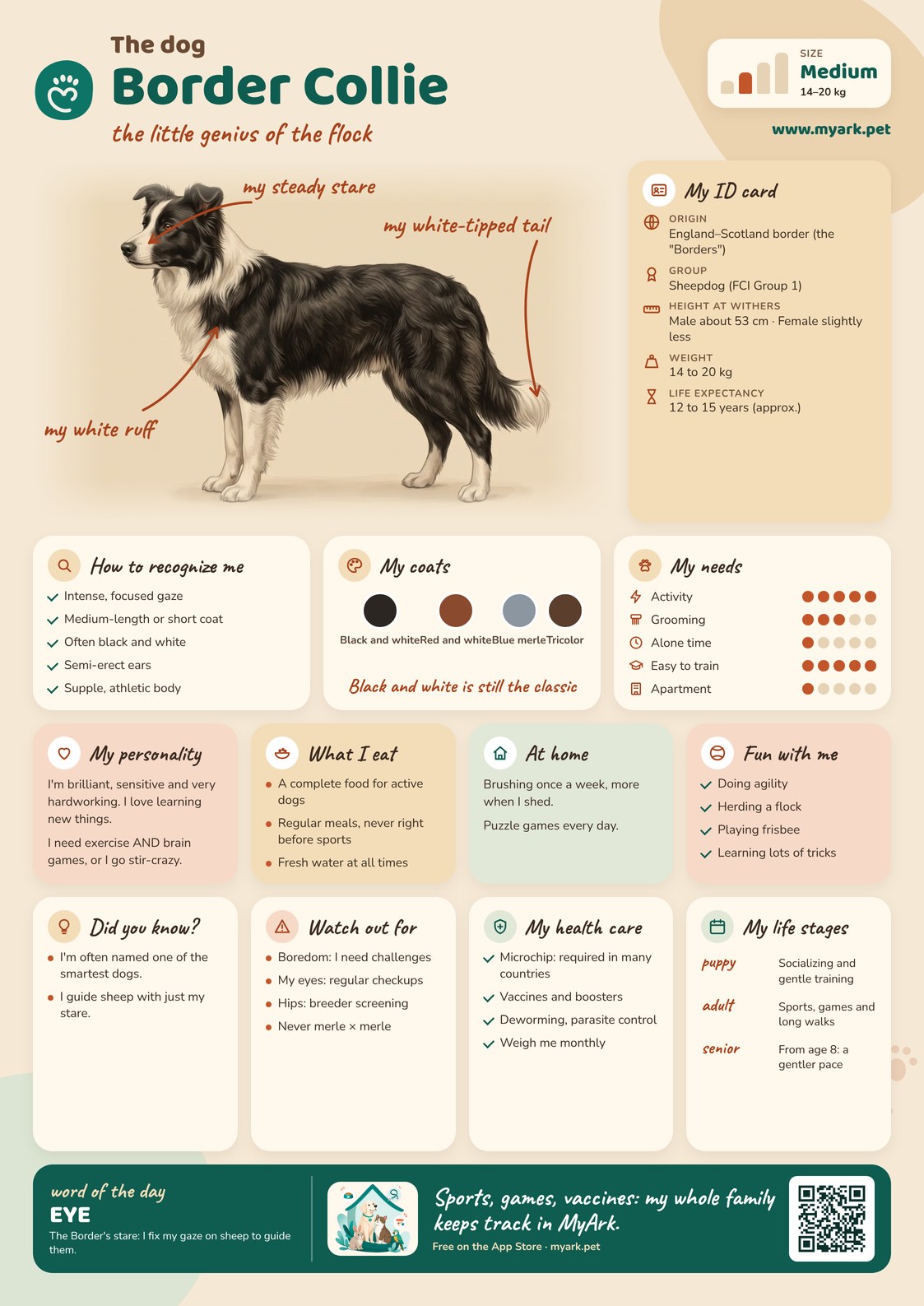
- intense, focused gaze
- medium-length or short coat
- often black and white
- semi-erect ears
- supple, athletic body
My colours
- Black and white
- Red and white
- Blue merle
- Tricolour
What a Border Collie needs day to day
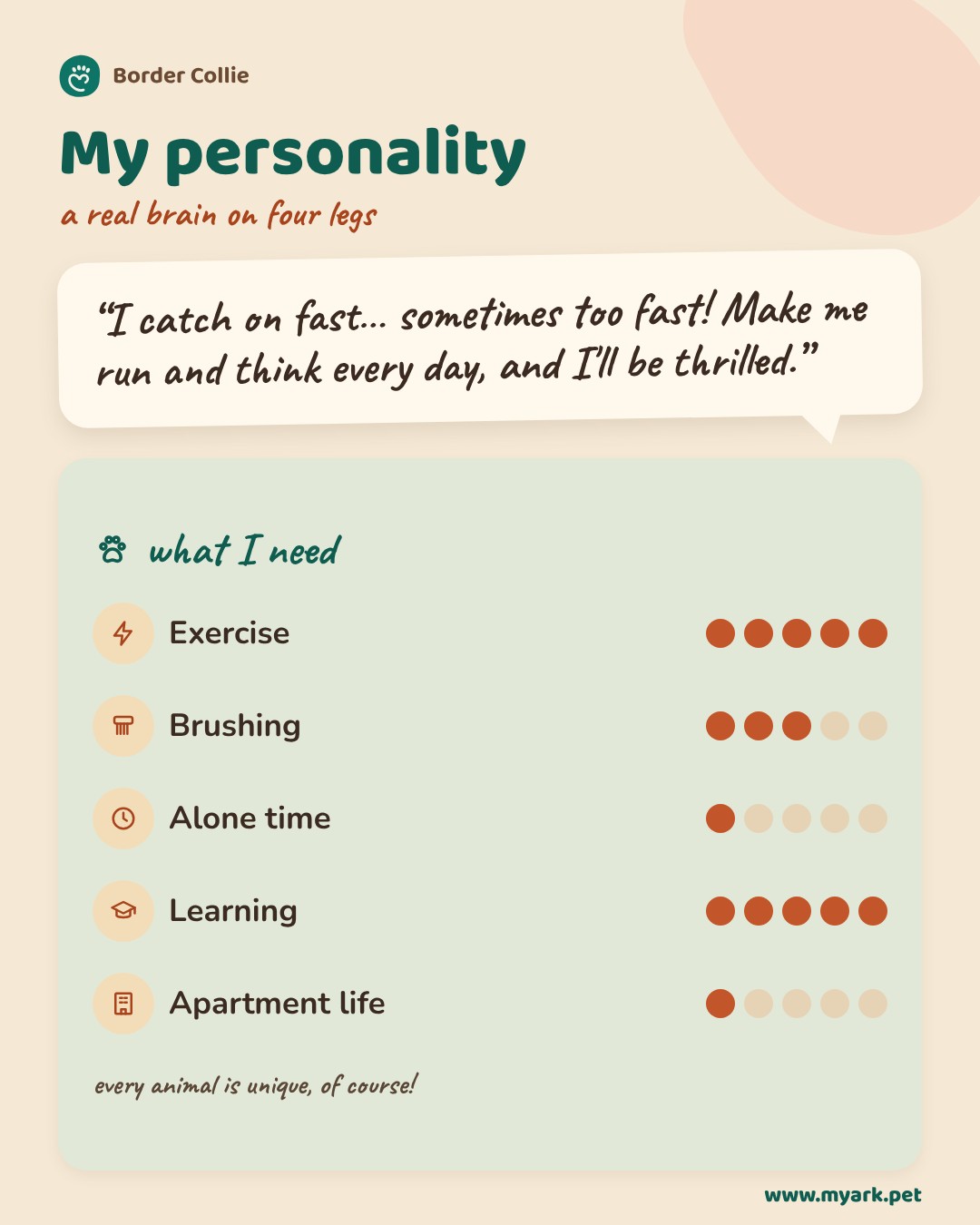
“I understand fast… sometimes too fast! Make me run and think every day, and I’ll be delighted.”
Its exercise needs are very high, and its brain needs as much work as its legs: training, tricks, agility or herding. Without it, it may herd the children, chase cars or stare at shadows.
At a glance
- Exercise
- 5 out of 5
- Grooming
- 3 out of 5
- Coping alone
- 1 out of 5
- Ease of training
- 5 out of 5
- Flat living
- 1 out of 5
every dog is unique, of course!
With me, we can go…
- agility
- herding
- frisbee
- learning lots of tricks
Living with a Border Collie: who does what
Most of a dog’s care is repeated, shared and easy to forget. Here is the Border Collie’s routine at a glance, and how a household can split it without a single “did anyone…?” message.
The routine at a glance
- every day
- two regular meals, not just before sport; two long outings with running; a short training or trick session; a puzzle or search game.
- every week
- a thorough brush; an ear and paw check; an agility or club session.
- every month
- a weigh-in; flea, tick and worming treatment on your vet’s schedule; a nail check.
- every year
- the vet check-up and vaccine boosters; an eye check.
Sharing it out
- Agree on one set of words: a Border Collie learns everything, including the bad habits taught by accident.
- Older children can share training: short, fun sessions of tricks are ideal for them.
- Make sure someone owns the daily brain game, not just the walk.
Before it arrives, agree on…
- the cues and rules everyone uses
- which activity or sport will be its job
- who covers the middle of the day
- how to stop it herding children, bikes or cars
- who brushes it during the moult
How MyArk helps the household keep track
Dog walk log
Log each outing, so the long active one never gets skipped.
See the featureFamily pet chores
Share training, walks and brushing fairly across the household.
See the featurePet weight tracker
Track its weight and adjust the food to its workload.
See the featurePet sitter instructions
Give a sitter the cues and the daily programme it expects.
See the featureFeeding, grooming and health routine
The coat needs regular brushing, more often during the moult.
What I eat
- a complete food for active dogs
- regular meals, not just before sport
- fresh water at all times
My health routine
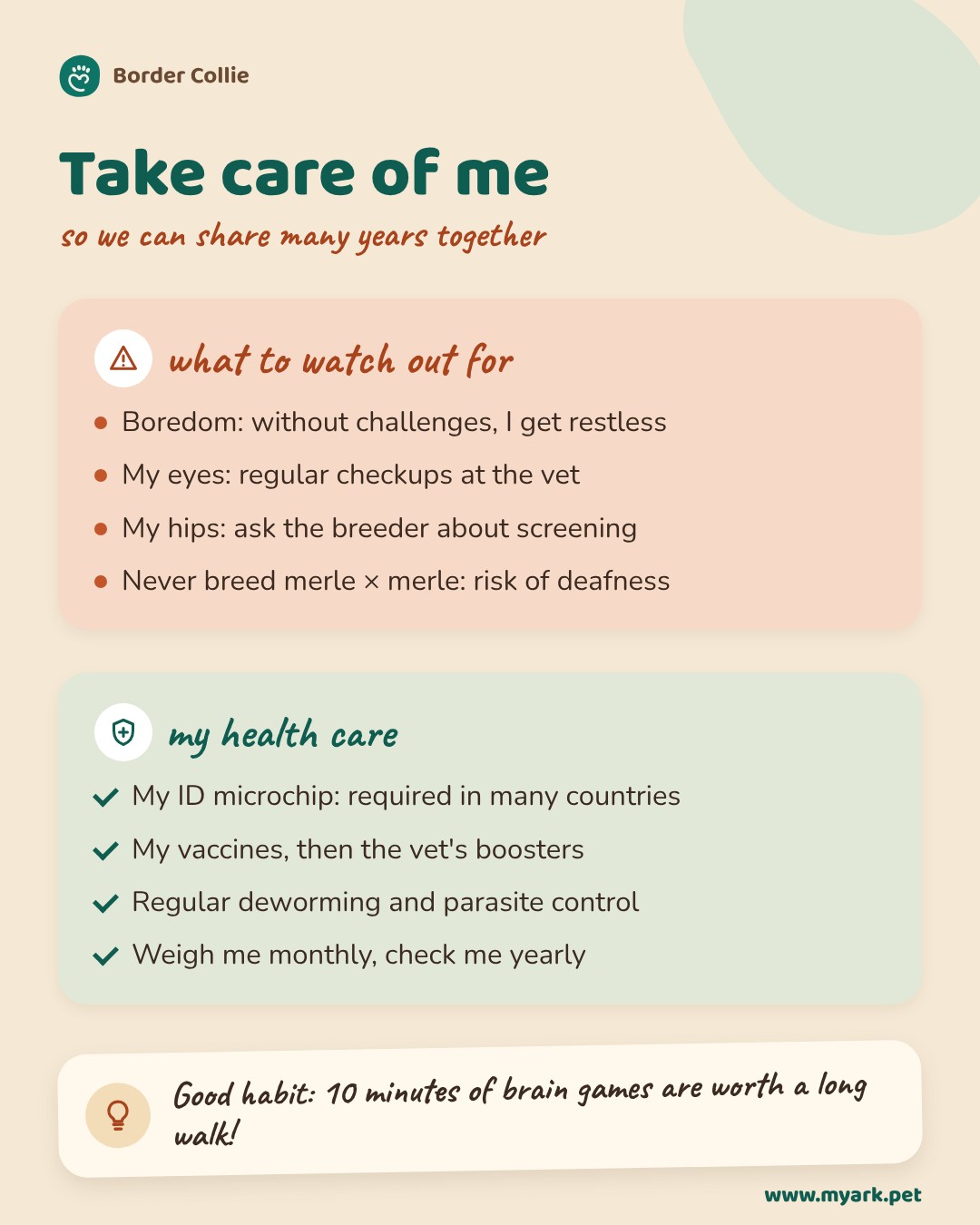
- a microchip registered with your details (a legal requirement in many countries, including the UK and France)
- core vaccinations, then boosters on the schedule your vet sets
- worming and flea and tick treatment on a regular schedule
- a weigh-in every month and a vet check-up every year
The stages of my life
- puppy
- Socialisation and gentle, reward-based training.
- adult
- Sport, games and long walks.
- senior
- From about 8 years old, a gentler pace.
What to keep an eye on
MyArk describes predispositions through visible body shape and simple checks rather than a list of diseases: it is what you can verify from the outside, and act on when choosing a breeder.
Boredom
Without challenges it becomes restless: give it daily mental work, not just exercise.
Eyes
Some lines carry inherited eye conditions: ask the breeder for the parents’ eye test results, and have the eyes checked at every visit.
Hips
Ask the breeder for the hip screening results of both parents.
Merle to merle
Never breed two merle dogs together: it carries a risk of deafness and eye problems in the puppies.
And, as for every dog:
- weight: extra kilos strain the joints, heart and breathing
- teeth, ears and nails, checked regularly
- parasite prevention and the vaccination schedule, with your vet
Is it the right dog for your household?
A dog is a social animal that copes badly with long days alone: the real question is less the breed than the time your household has. Before committing, consider rescues and rehoming charities too.
- Home
- Best with outdoor space and access to the countryside; a flat is hard for it (1 out of 5).
- Young children
- Usually gentle, but it may try to herd running children: supervise and teach both sides.
- Other pets
- Generally fine with other dogs; its herding instinct can stress cats and small pets.
- First dog
- Possible for a very committed, sporty household ready to train every day.
- Time alone
- Its weakest point (1 out of 5): it gets frustrated quickly when left alone.
Border Collie: straight answers
Is a Border Collie a good family dog?
Yes for an active family that trains it daily. In a busy household without time for it, it becomes frustrated.
Can a Border Collie live in a flat?
Only with a great deal of daily exercise and brain work; a house with access to open spaces suits it far better.
Is a Border Collie easy to train?
It learns very fast — good and bad habits alike. Consistent, reward-based training works best.
How big does a Border Collie get?
The FCI standard gives an ideal 53 cm at the shoulder for males, a little less for females, for an adult weight of roughly 14 to 20 kg.
What colours does the Border Collie come in?
The usual colours are black and white, red and white, blue merle and tricolour.