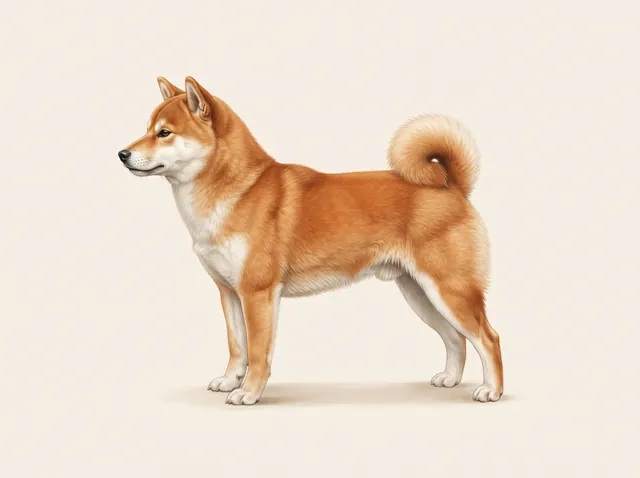
Where the Shiba Inu comes from
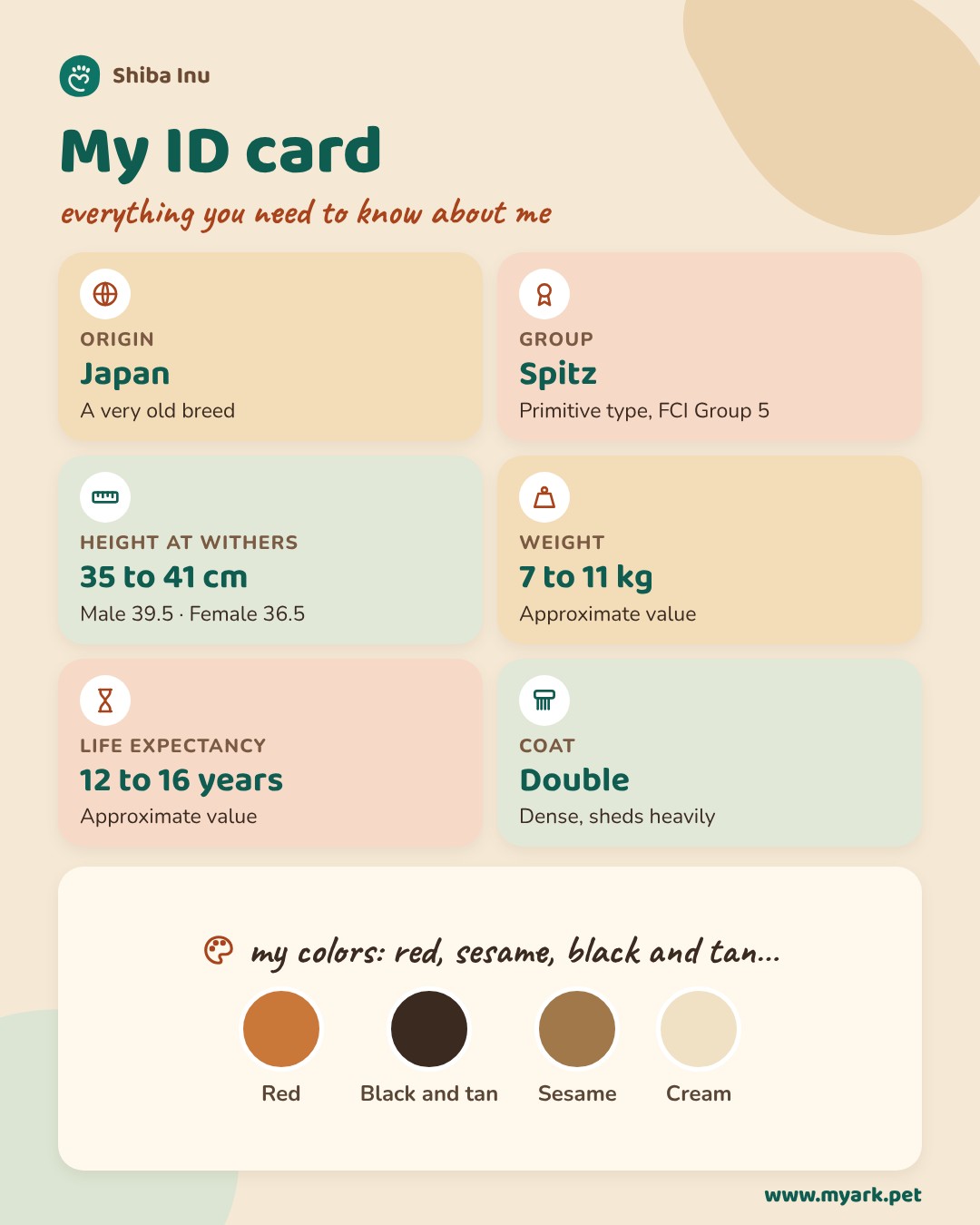
A very old native Japanese breed from the mountainous regions facing the Sea of Japan. “Shiba” is thought to mean something small.
The FCI standard describes it as faithful, very attentive and very alert.
Height at the shoulder (FCI standard): 39.5 cm (15.5 in) for males, 36.5 cm (14.5 in) for females.
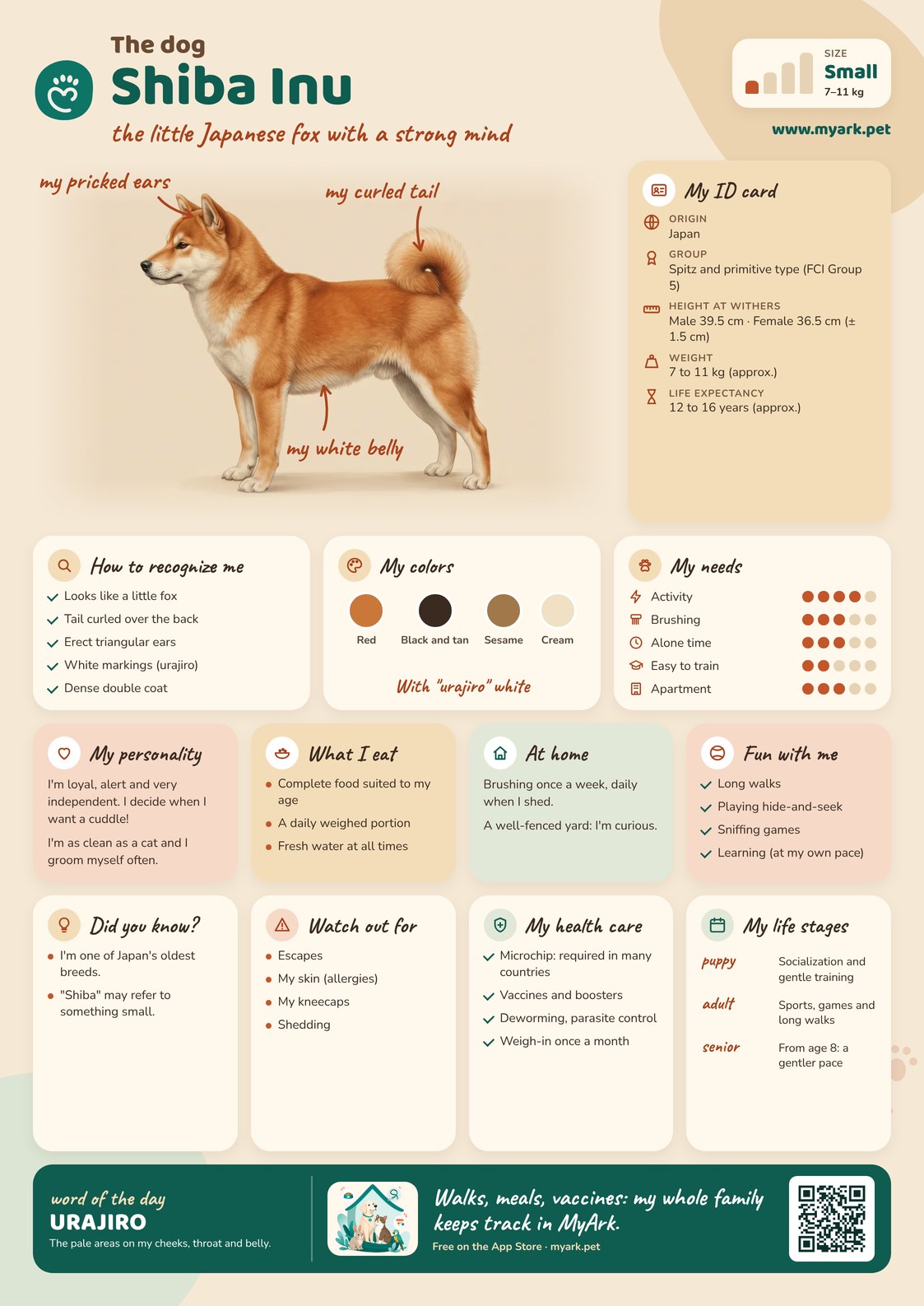
How to recognise me
- fox-like look
- tail curled over the back
- upright triangular ears
- pale markings (urajiro)
- dense double coat
My colours
- Red
- Black and tan
- Sesame
- Cream
What a Shiba Inu needs day to day
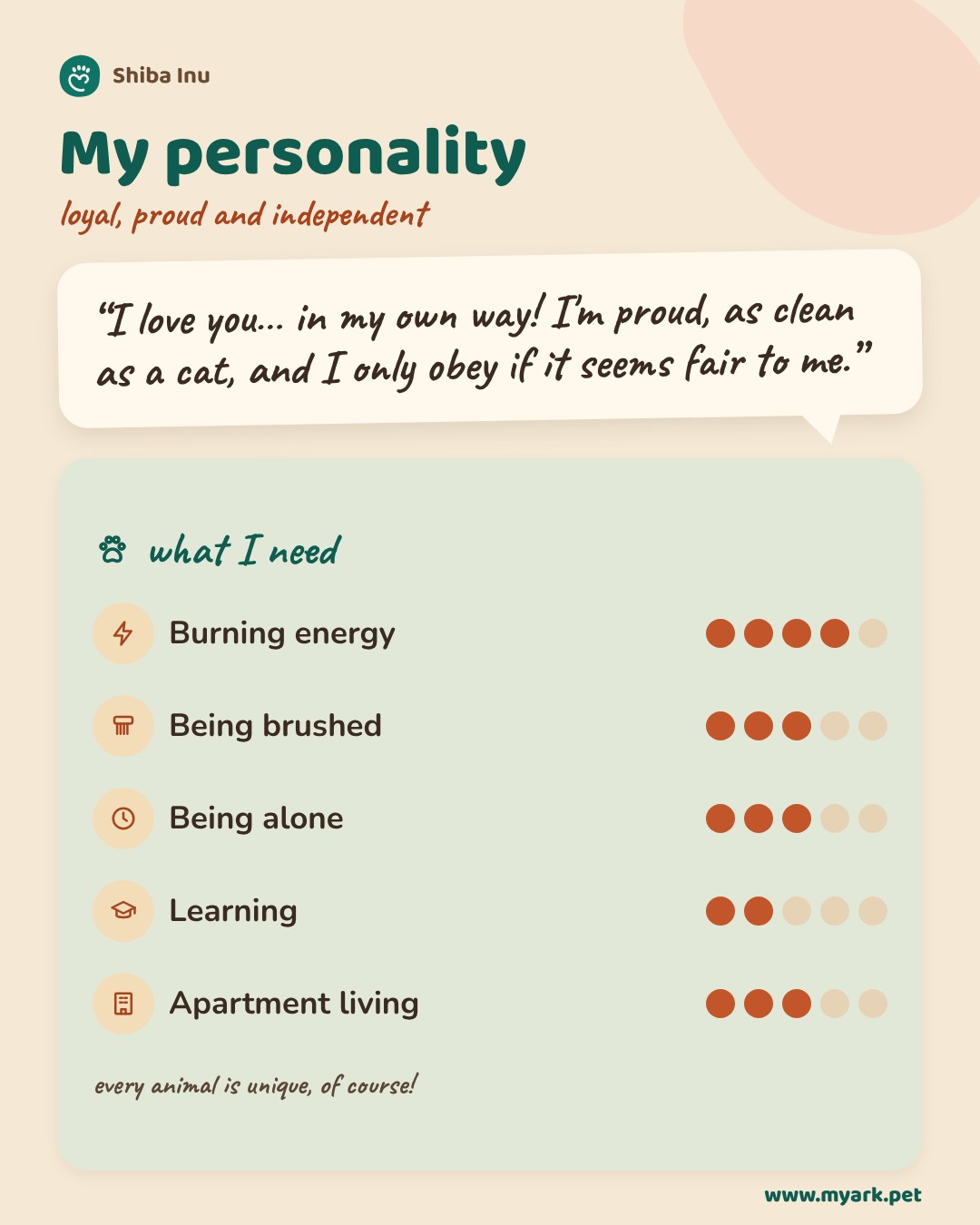
“I love you… but in my own way! I’m proud, clean as a cat, and I only obey if it seems fair to me.”
Its exercise needs are fairly high: long walks, scent games and hide-and-seek. Its recall is never guaranteed, so walks happen on a lead.
At a glance
- Exercise
- 4 out of 5
- Grooming
- 3 out of 5
- Coping alone
- 3 out of 5
- Ease of training
- 2 out of 5
- Flat living
- 3 out of 5
every dog is unique, of course!
With me, we can go…
- long walks
- hide-and-seek
- scent games
- learning (at my own pace)
Living with a Shiba Inu: who does what
Most of a dog’s care is repeated, shared and easy to forget. Here is the Shiba Inu’s routine at a glance, and how a household can split it without a single “did anyone…?” message.
The routine at a glance
- every day
- a weighed daily ration; two walks on a lead, one long; a scent or puzzle game.
- every week
- a brush (daily during the moult); an ear and paw check.
- every month
- a weigh-in; flea, tick and worming treatment on your vet’s schedule; a nail check.
- every year
- the vet check-up and vaccine boosters.
Sharing it out
- Lead on, always, outside fenced areas: everyone, every walk.
- Respect its space: teach children not to grab or hug it.
- Twice a year, the moult needs daily brushing — share it.
Before it arrives, agree on…
- the lead rule everyone follows
- how children approach it
- who brushes during the moult
- who checks the gate and fence
- how handling (nails, brushing) is practised gently
How MyArk helps the household keep track
Dog walk log
Make sure the long daily walk happens.
See the featureFamily pet chores
Share moult brushing and fence checks.
See the featurePet weight tracker
A monthly weigh-in.
See the featurePet sitter instructions
Lead rules and escape risks in one sheet.
See the featureFeeding, grooming and health routine
The coat needs regular brushing, more often during the moult.
What I eat
- a complete food suited to its age
- a weighed ration every day
- fresh water at all times
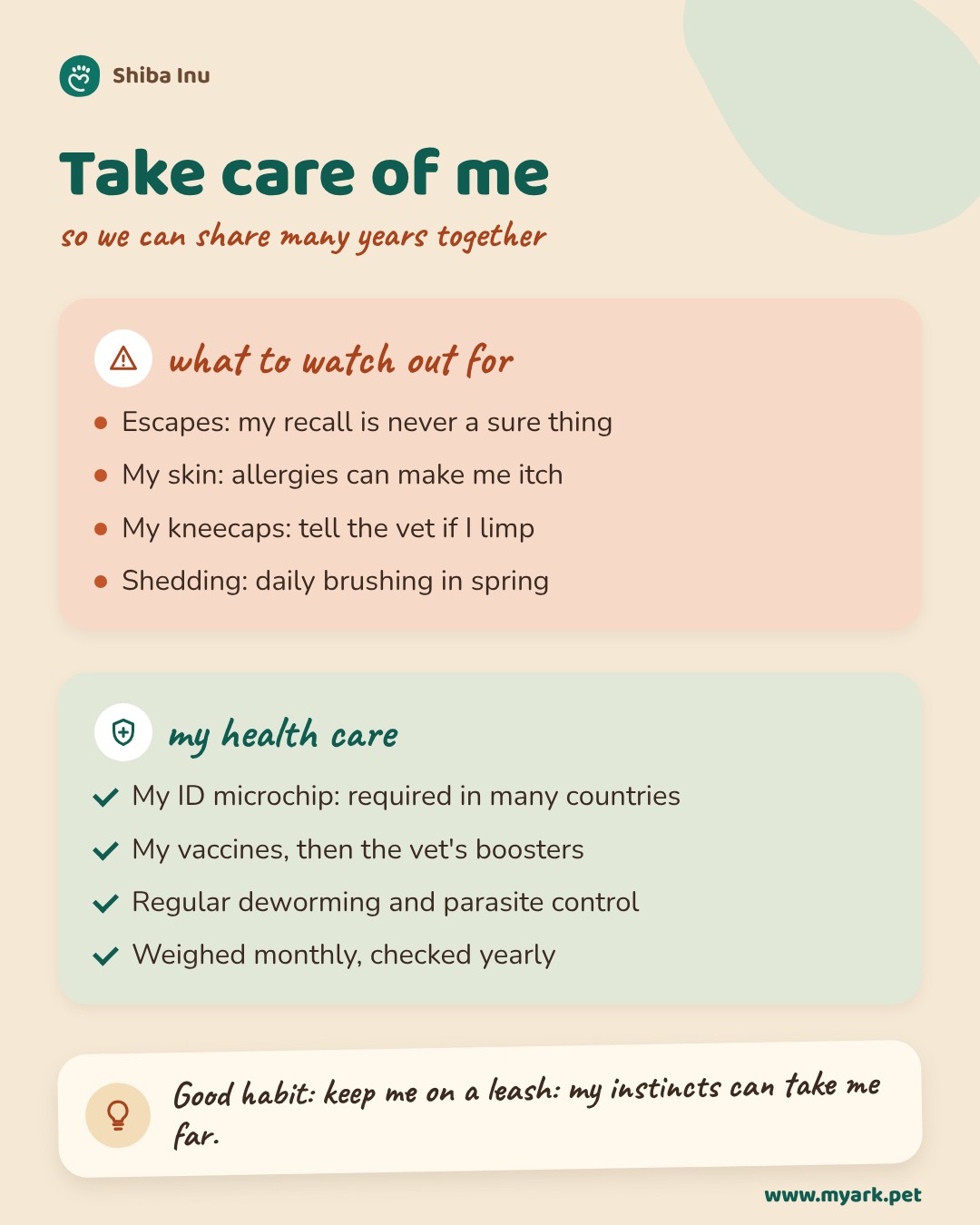
My health routine
- a microchip registered with your details (a legal requirement in many countries, including the UK and France)
- core vaccinations, then boosters on the schedule your vet sets
- worming and flea and tick treatment on a regular schedule
- a weigh-in every month and a vet check-up every year
The stages of my life
- puppy
- Socialisation and gentle, reward-based training.
- adult
- Sport, games and long walks.
- senior
- From about 8 years old, a gentler pace.
What to keep an eye on
MyArk describes predispositions through visible body shape and simple checks rather than a list of diseases: it is what you can verify from the outside, and act on when choosing a breeder.
Escaping
Its recall is never a given: lead outside, secure fence at home.
Skin
Allergies can make it itch: mention any scratching to your vet.
Kneecaps
In small dogs the kneecap can slip out of place: watch for skipping steps or a sudden lameness, and mention it at the check-up.
Moult
A brush every day in spring.
And, as for every dog:
- weight: extra kilos strain the joints, heart and breathing
- teeth, ears and nails, checked regularly
- parasite prevention and the vaccination schedule, with your vet
Is it the right dog for your household?
A dog is a social animal that copes badly with long days alone: the real question is less the breed than the time your household has. Before committing, consider rescues and rehoming charities too.
- Home
- Copes with a flat if walked properly every day (3 out of 5).
- Young children
- Better with older children who respect its independence.
- Other pets
- Can be bossy with dogs of the same sex and chases small pets.
- First dog
- Not easy: independent and hard to train (2 out of 5 for ease of training).
- Time alone
- Copes reasonably with short absences (3 out of 5).
Shiba Inu: straight answers
Is a Shiba Inu a good family dog?
With a patient family and older children who respect its space, yes. It is not a cuddly dog.
Can a Shiba Inu be let off the lead?
Only in secure areas: its recall is famously unreliable.
How big does a Shiba Inu get?
The FCI standard gives 39.5 cm at the shoulder for males and 36.5 cm for females, for an adult weight of roughly 7 to 11 kg.
What colours does the Shiba Inu come in?
The usual colours are red, black and tan, sesame and cream.