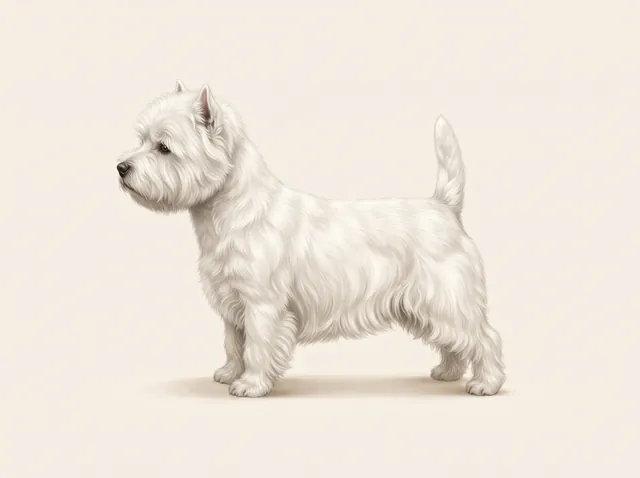
Where the West Highland White Terrier comes from
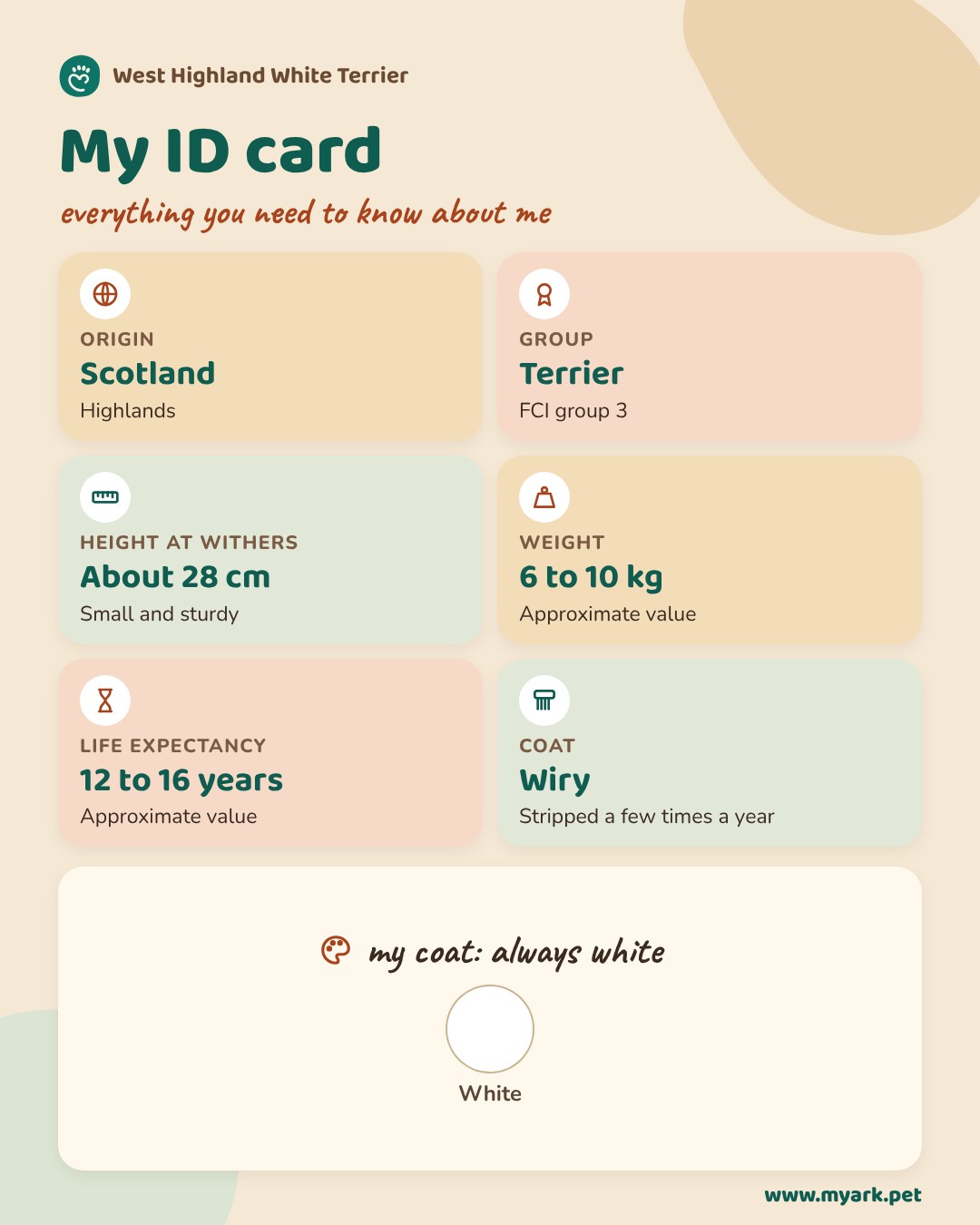
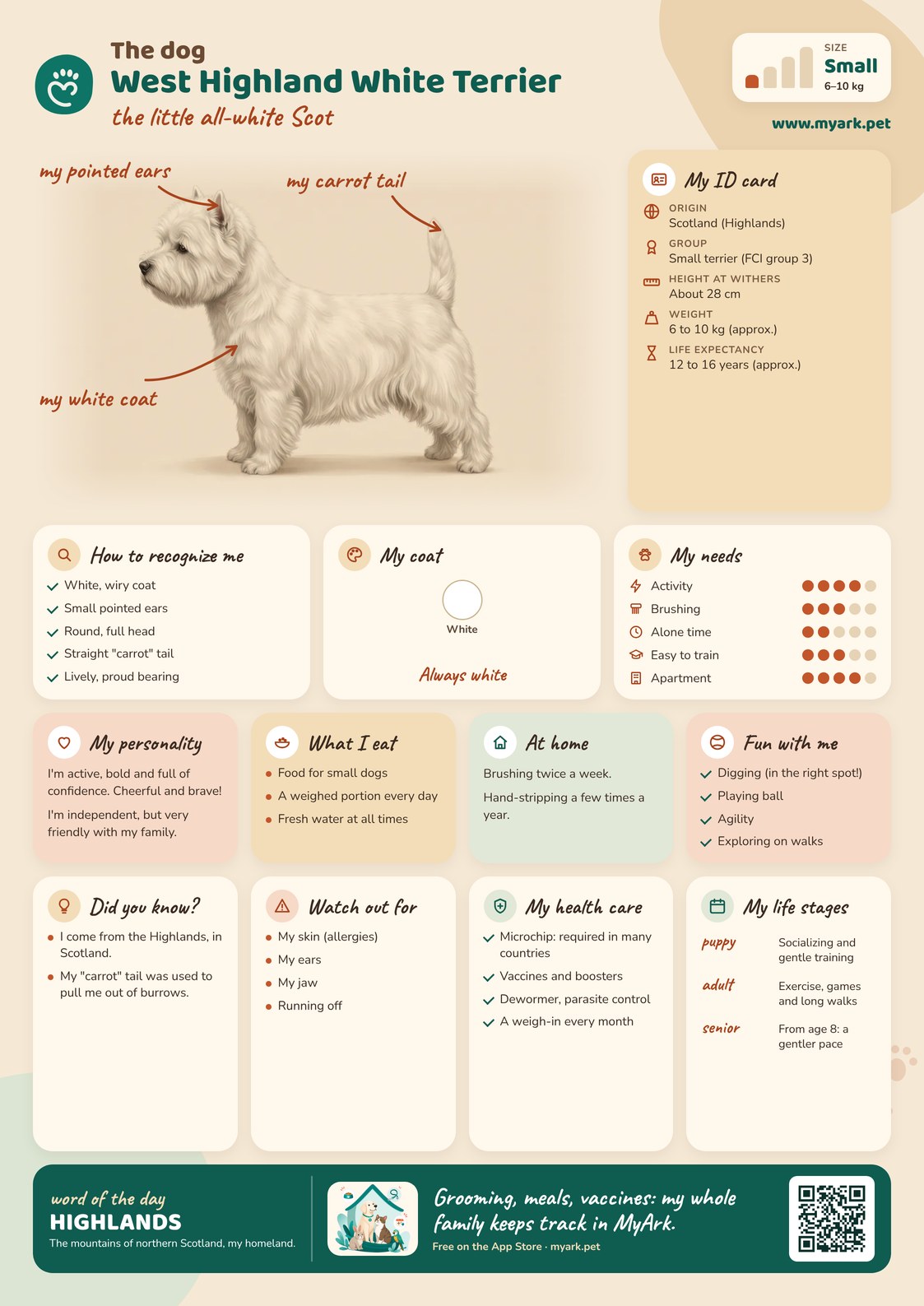
A small white terrier from the Highlands of Scotland, bred to work in rocky country. Its strong “carrot” tail could be used to pull it out of a burrow.
The FCI standard describes it as active, hardy and full of self-esteem; alert, gay, courageous and independent but friendly.
Height at the shoulder (FCI standard): about 28 cm (11 in).
How to recognise me
- all-white, harsh coat
- round head framed by hair
- small pointed upright ears
- carrot-shaped tail
- short, sturdy body
My colours
- White
What a West Highland White Terrier needs day to day
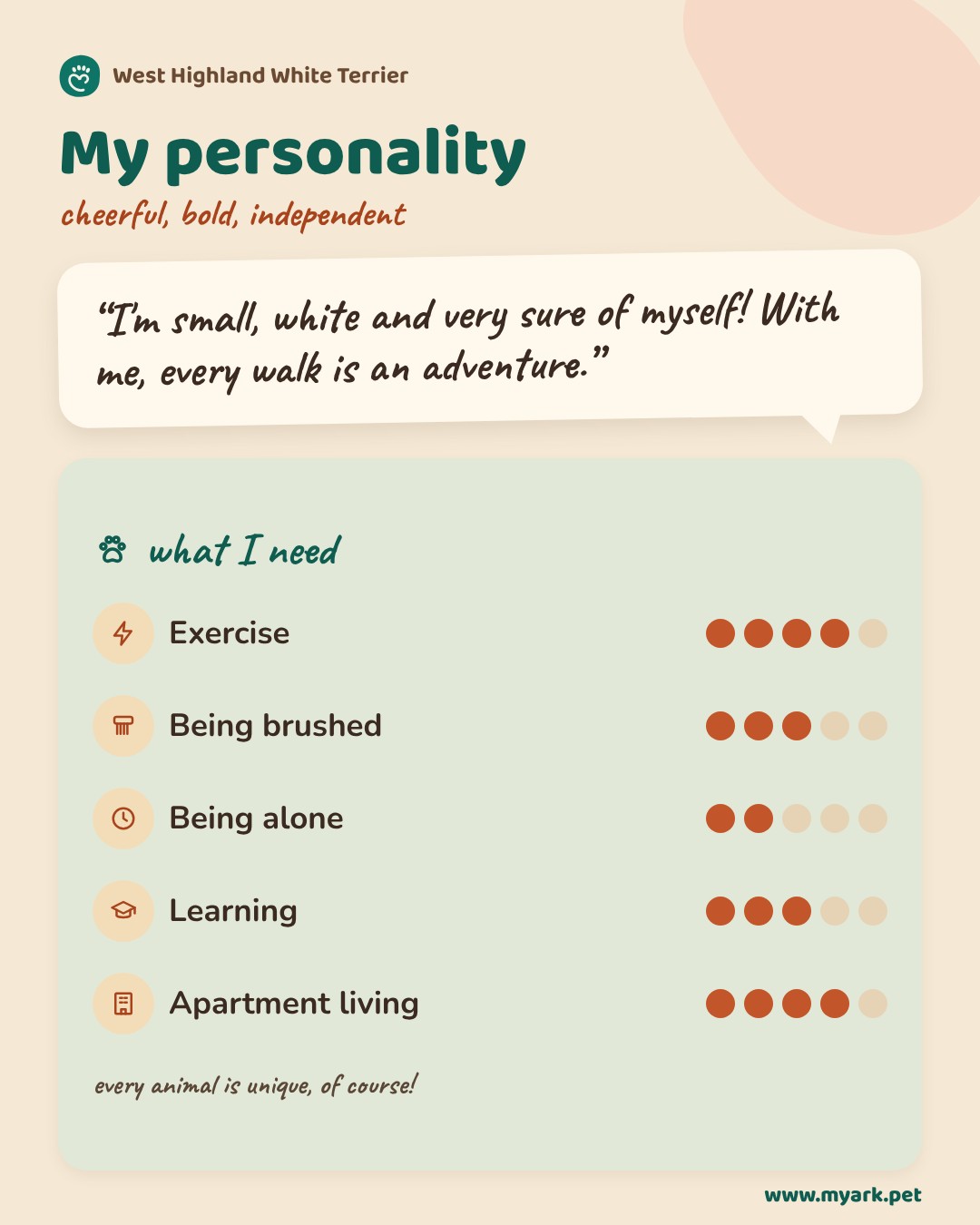
“I’m small, white and very sure of myself! With me, every walk is an adventure.”
Its exercise needs are fairly high: brisk walks, digging and search games every day.
At a glance
- Exercise
- 4 out of 5
- Grooming
- 3 out of 5
- Coping alone
- 2 out of 5
- Ease of training
- 3 out of 5
- Flat living
- 4 out of 5
every dog is unique, of course!
With me, we can go…
- brisk walks
- search games
- ball games
- exploring the garden
Living with a West Highland White Terrier: who does what
Most of a dog’s care is repeated, shared and easy to forget. Here is the West Highland White Terrier’s routine at a glance, and how a household can split it without a single “did anyone…?” message.
The routine at a glance
- every day
- a weighed ration; two brisk walks; a game.
- every week
- two brushes; a skin and ear check.
- every month
- a weigh-in; flea, tick and worming treatment on your vet’s schedule; a nail check; hand-stripping or a groomer visit every two or three months.
- every year
- the vet check-up and vaccine boosters.
Sharing it out
- The gate and fence are everyone’s job: a terrier on a scent is gone fast.
- Skin checks during brushing: note anything red or itchy.
- Children can share search games.
Before it arrives, agree on…
- who checks the fence
- who brushes and checks the skin
- the groomer rhythm
- the lead rule outside
- who covers long days away
How MyArk helps the household keep track
Pet health record
Skin flare-ups, treatments and vet notes in one place.
See the featureDog walk log
Log the daily walks.
See the featureFamily pet chores
Brushing and groomer visits on named people.
See the featurePet sitter instructions
Skin care, gate rules and contacts for a sitter.
See the featureFeeding, grooming and health routine
Coat care is a real commitment: frequent, sometimes daily brushing, and grooming appointments to budget from the start.
What I eat
- a complete food suited to its age
- a weighed ration every day
- fresh water at all times
My health routine
- a microchip registered with your details (a legal requirement in many countries, including the UK and France)
- core vaccinations, then boosters on the schedule your vet sets
- worming and flea and tick treatment on a regular schedule
- a weigh-in every month and a vet check-up every year
The stages of my life
- puppy
- Socialisation and gentle, reward-based training.
- adult
- Sport, games and long walks.
- senior
- From about 8 years old, a gentler pace.
What to keep an eye on
MyArk describes predispositions through visible body shape and simple checks rather than a list of diseases: it is what you can verify from the outside, and act on when choosing a breeder.
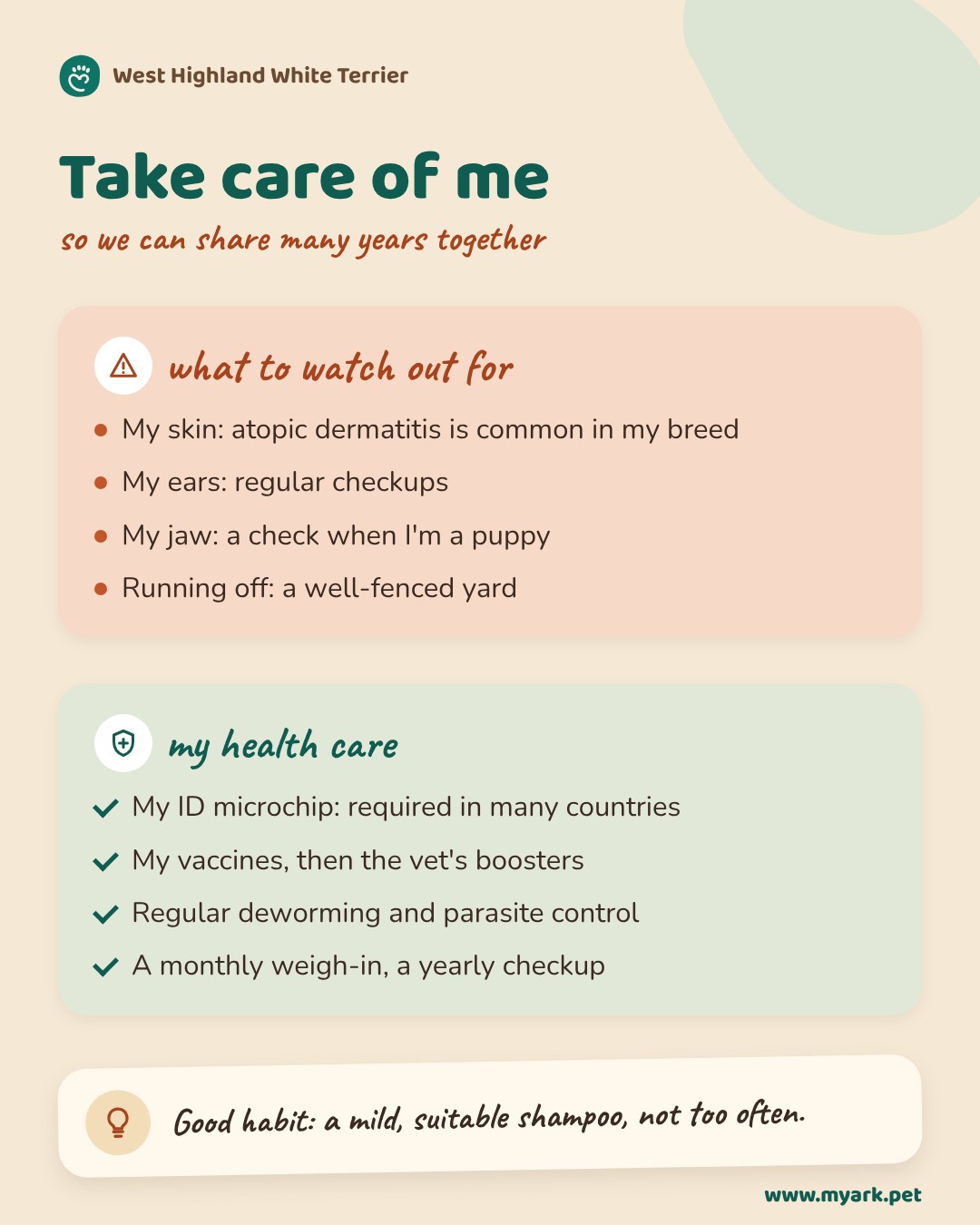
Skin
Atopic dermatitis is common in the breed: show any itching or redness to your vet.
Ears
Check them regularly.
Jaw
A jaw bone condition can affect puppies: mention any pain when chewing.
Escaping
A well-fenced garden.
And, as for every dog:
- weight: extra kilos strain the joints, heart and breathing
- teeth, ears and nails, checked regularly
- parasite prevention and the vaccination schedule, with your vet
Is it the right dog for your household?
A dog is a social animal that copes badly with long days alone: the real question is less the breed than the time your household has. Before committing, consider rescues and rehoming charities too.
- Home
- Copes well with a flat if walked daily (4 out of 5).
- Young children
- Friendly and sturdy with respectful children.
- Other pets
- Can be bossy with dogs and chase small pets.
- First dog
- A good first dog for an active household.
- Time alone
- Copes poorly with long absences (2 out of 5).
West Highland White Terrier: straight answers
Is a Westie a good family dog?
Yes: cheerful, sturdy and friendly, for an active family.
Do Westies have skin problems?
Skin allergies are common in the breed: watch for itching and see your vet early.
How big does a West Highland White Terrier get?
The FCI standard gives about 28 cm at the shoulder, for an adult weight of roughly 6 to 10 kg.
What colours does the West Highland White Terrier come in?
The usual colours are and white.