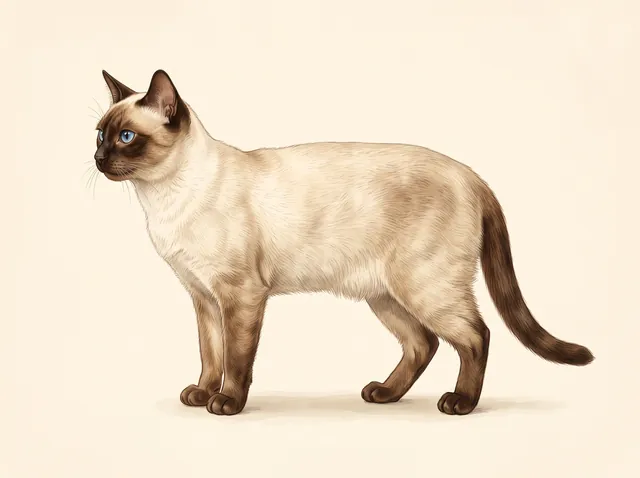
Where the Thai comes from
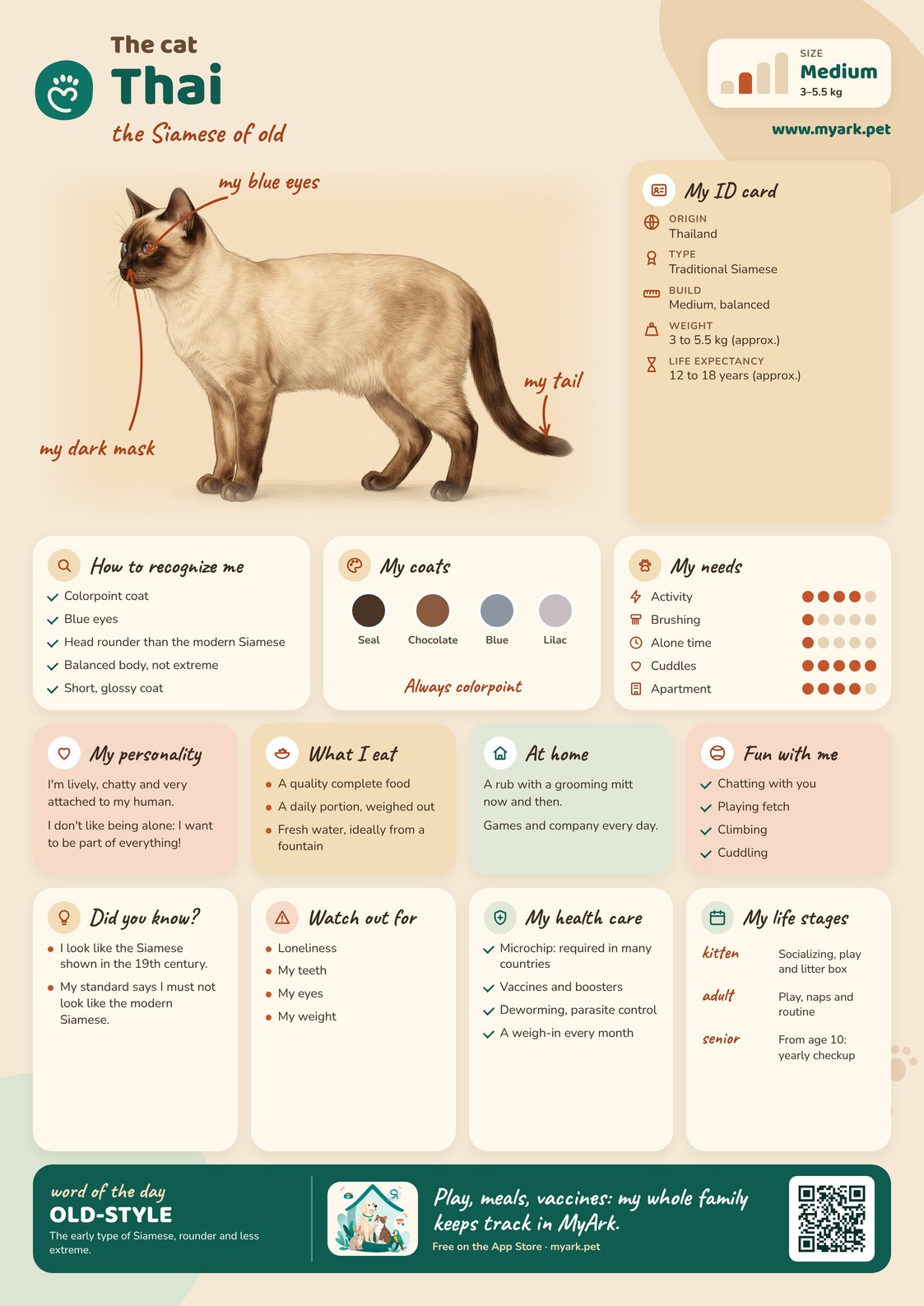
It preserves the type of the Siamese shown from the 19th century to the end of the 1960s — the “traditional Siamese”.
The standard describes it as lively and talkative, and states it must not resemble the modern Siamese.
How to recognise me
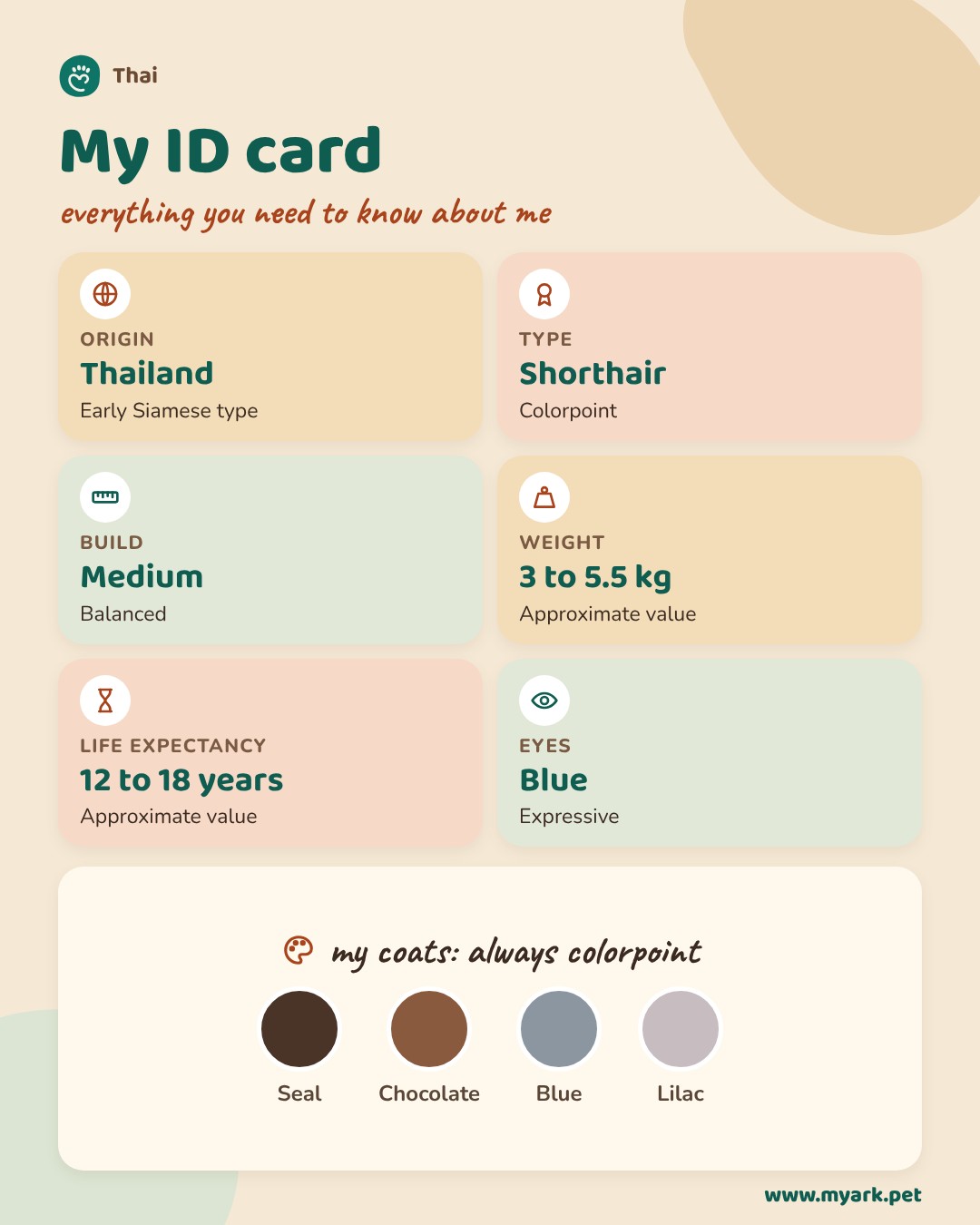
- colourpoint coat
- blue eyes
- head rounder than the modern Siamese
- balanced, moderate body
- short, glossy coat
My colours
- Seal
- Chocolate
- Blue
- Lilac
What a Thai needs day to day
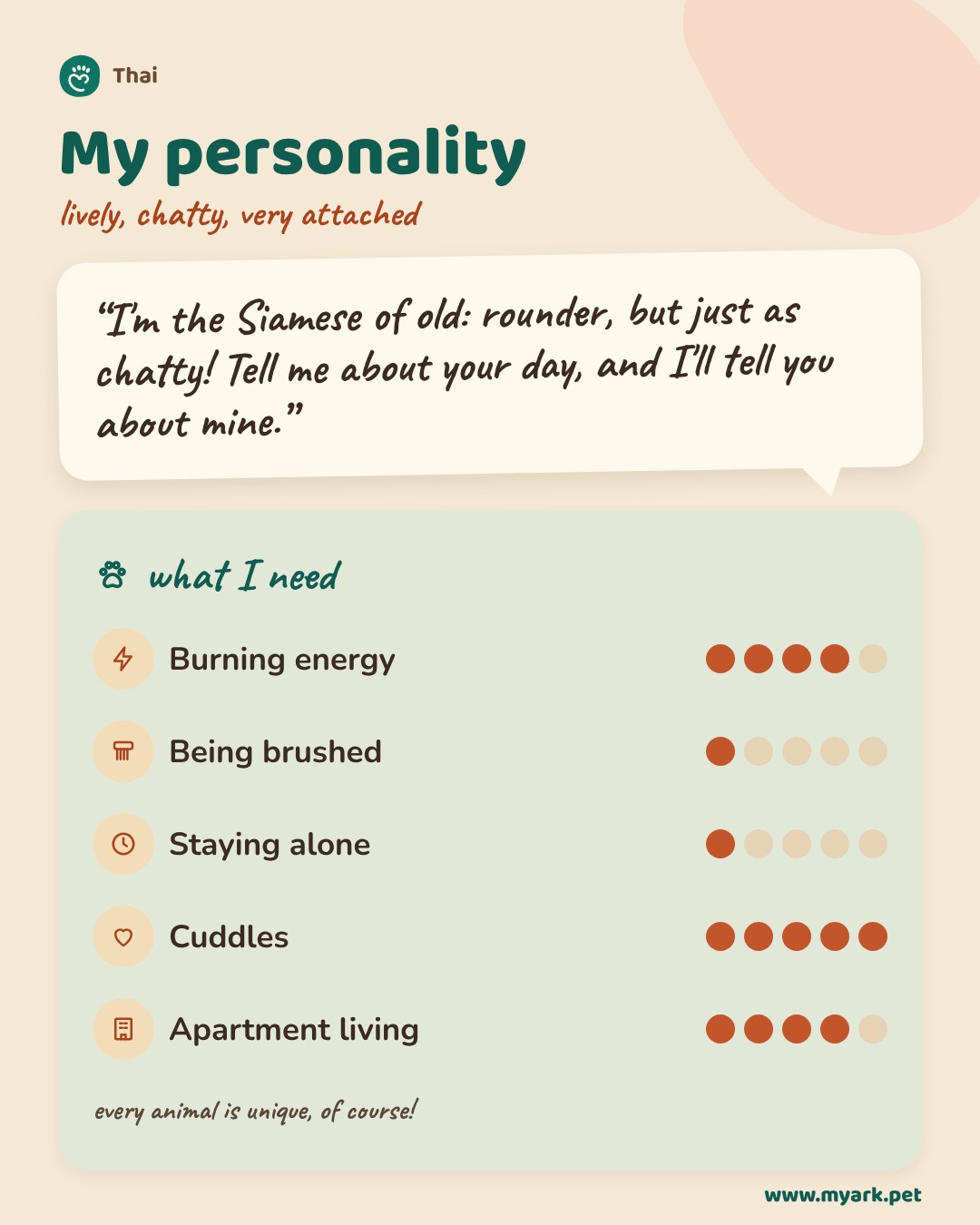
“Meow! I chat, I play, I follow you everywhere. Just don’t leave me alone too long!”
Its exercise needs are high: active play and conversation every day.
At a glance
- Cuddles
- 5 out of 5
every cat is unique, of course!
With me, we can go…
- long conversations
- playing fetch
- harness walks
- learning tricks
Living with a Thai: who does what
A cat’s care looks light, but it is daily, shared and easy to lose track of — litter, water, meals, play. Here is the Thai’s routine at a glance, and how a household can split it without a single “did anyone…?” message.
The routine at a glance
- every day
- a weighed ration; two play sessions; fresh water; a litter tray clean.
- every week
- a quick brush; a teeth and claw check.
- every month
- a weigh-in; flea and worming treatment on your vet’s schedule; a claw check.
- every year
- the vet check-up and vaccine boosters.
Sharing it out
- Company is its main need: plan the days, or a second cat.
- Play sessions spread across the household.
- One feeding rule for everyone.
Before it arrives, agree on…
- who covers long days away
- who plays with it
- who scoops the litter
- indoor only, harness or a safe garden
- who feeds it and how much
How MyArk helps the household keep track
Family pet chores
Play and litter on named people.
See the featurePet weight tracker
A monthly weigh-in.
See the featurePet health record
Dental and eye checks in one place.
See the featurePet sitter instructions
Company needs for a sitter.
See the featureFeeding, grooming and health routine
The coat is easy to keep: an occasional brush removes the dead hair.
What I eat
- a good-quality complete food
- a weighed ration every day
- fresh water at all times
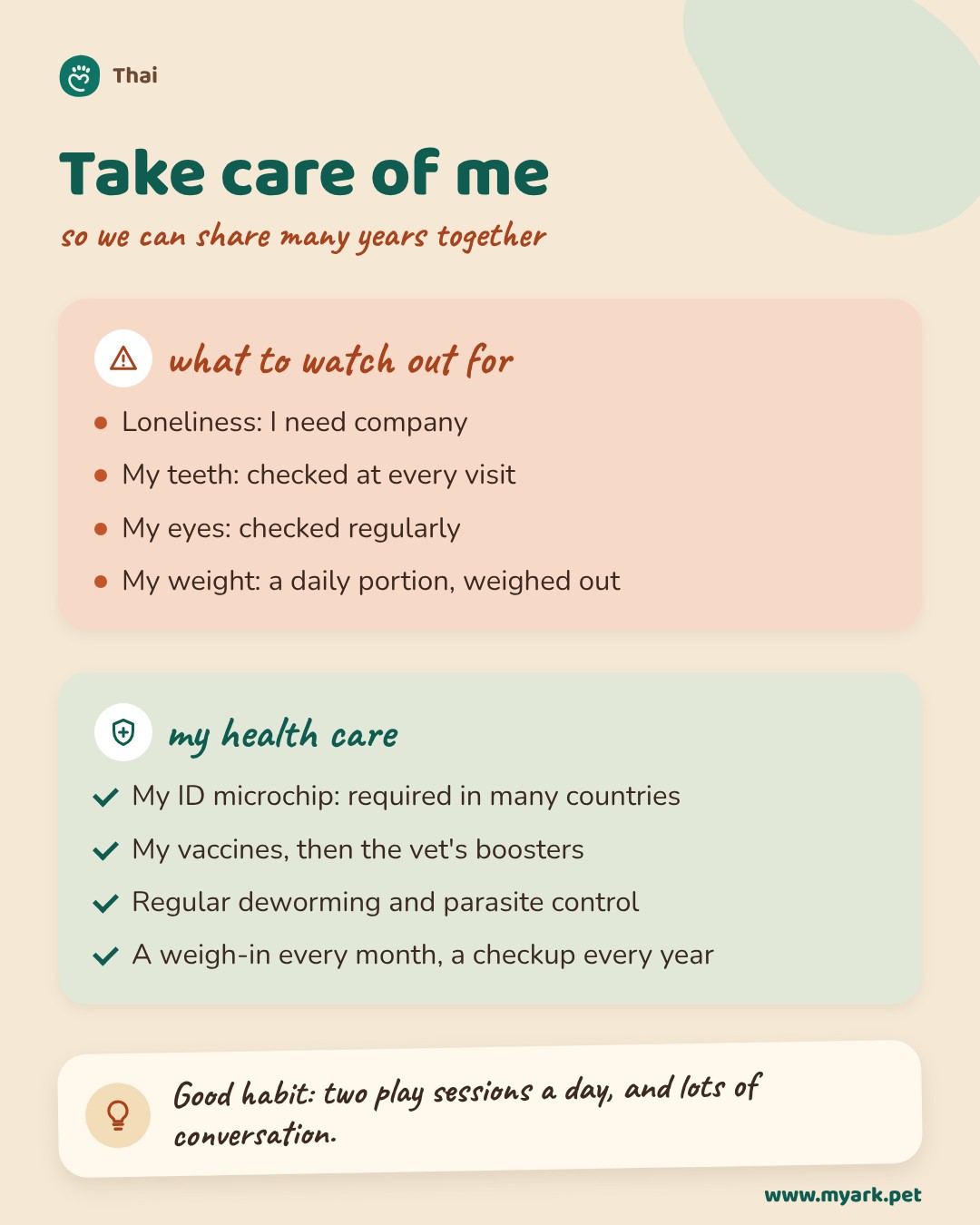
My health routine
- a microchip registered with your details (a legal requirement for cats in England and in France)
- core vaccinations, then boosters on the schedule your vet sets
- worming and flea treatment on a regular schedule
- a weigh-in every month and a vet check-up every year
The stages of my life
- kitten
- Play, socialisation and discovering the home.
- adult
- Daily play, a stable routine and yearly check-ups.
- senior
- From about 10 years old, more regular check-ups.
What to keep an eye on
MyArk describes predispositions through visible body shape and simple checks rather than a list of diseases: it is what you can verify from the outside, and act on when choosing a breeder.
Being alone
It needs company: long days alone suit it badly.
Teeth
Tartar and gum problems are common in cats: check the mouth and have the teeth looked at every year.
Eyes
Have them checked regularly.
Weight
A weighed ration every day.
And, as for every cat:
- weight: extra weight raises the risk of diabetes and joint pain
- what it drinks and how it uses the litter tray: a change is worth a vet visit
- teeth, claws and coat, checked regularly
- parasite prevention and the vaccination schedule, with your vet
Is it the right cat for your household?
A cat needs a stable territory, resources in several places and daily play, whatever its breed. Before committing, consider rescues and rehoming charities too: many adult cats are waiting for a home.
- Home
- Happy in a flat with play.
- Young children
- Playful and sociable.
- Other pets
- Often happier with another cat.
- First cat
- Good for an available household.
- Time alone
- Copes badly with long days alone.
Thai: straight answers
What is the difference between a Thai and a Siamese?
The Thai keeps the older, rounder Siamese type; the modern Siamese is much more slender.
Is a Thai cat vocal?
Yes, like all Siamese-type cats.
How big does a Thai get?
It is a medium-sized cat: an adult weighs roughly 3 to 5 kg.
What colours does the Thai come in?
The usual colours are seal, chocolate, blue and lilac.