Where the British Shorthair comes from
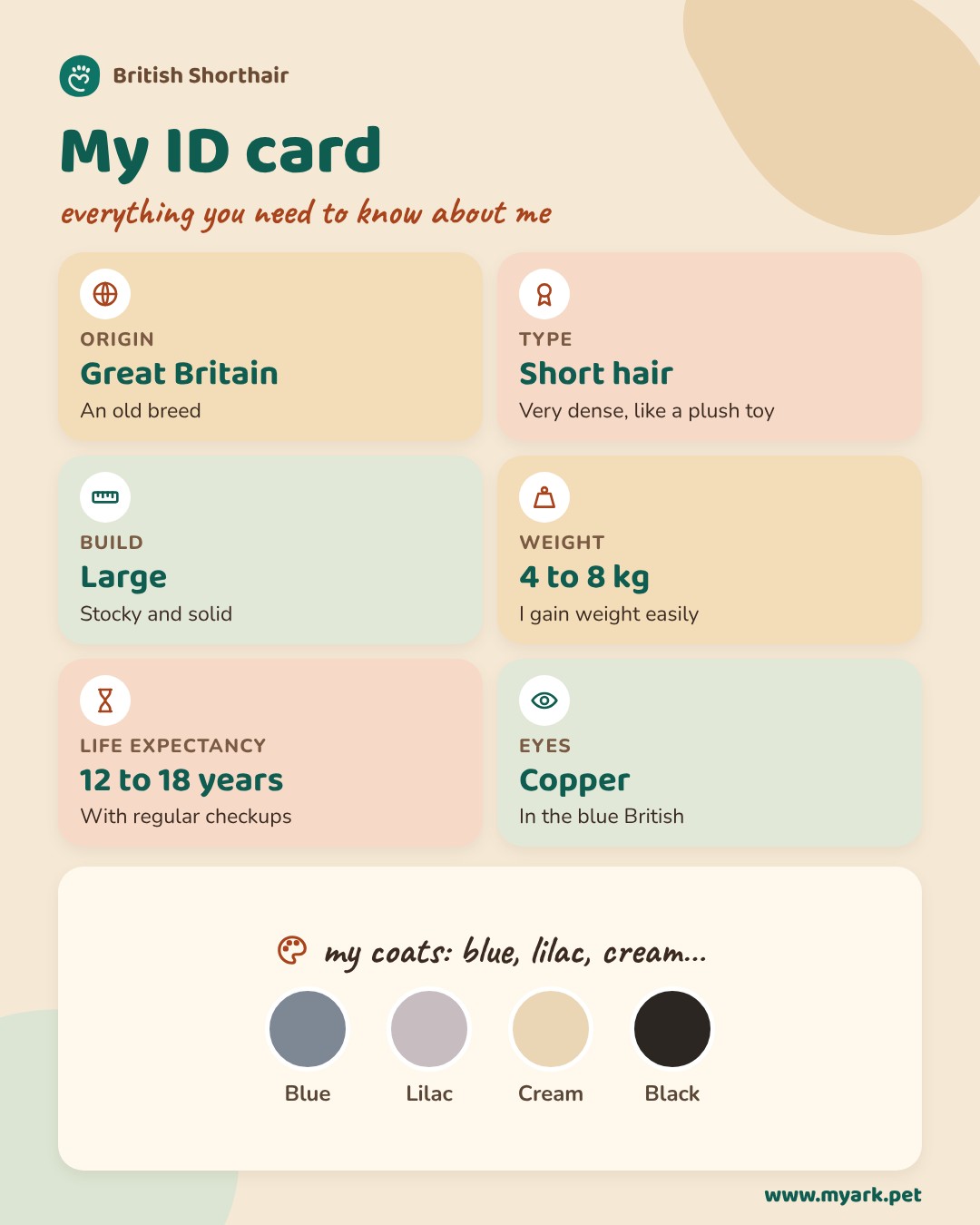
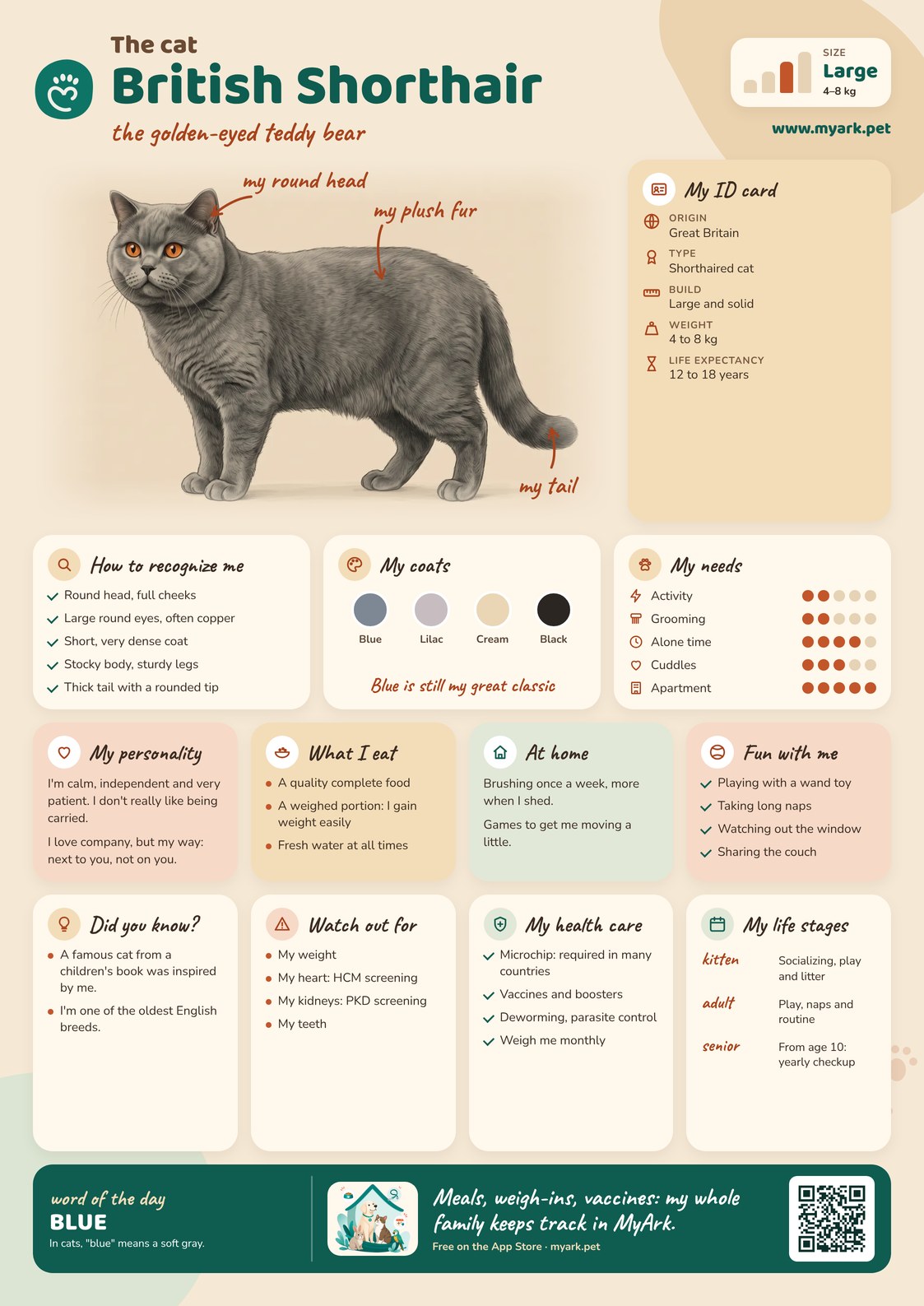
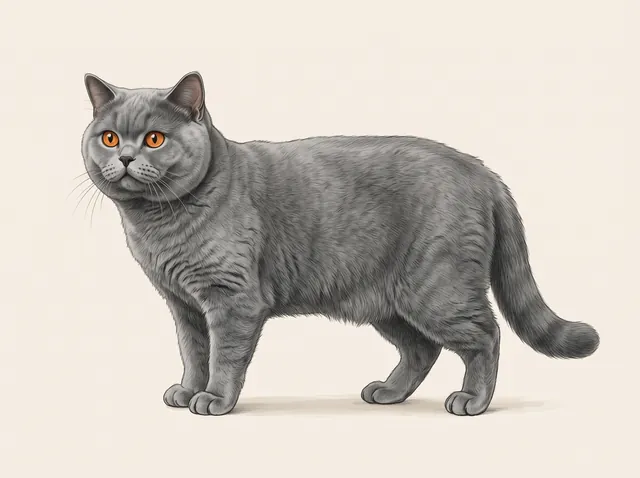
One of the oldest English breeds: a medium to large cat, robust and powerful, built in curves — round “apple” head, large eyes, short muzzle, broad shoulders and hips.
It gives an overall impression of strength and gentleness.
How to recognise me
- round head, full cheeks
- large round eyes, often copper
- short, very dense coat
- stocky body, sturdy legs
- thick tail with a rounded tip
My colours
- Blue
- Lilac
- Cream
- Black
What a British Shorthair needs day to day
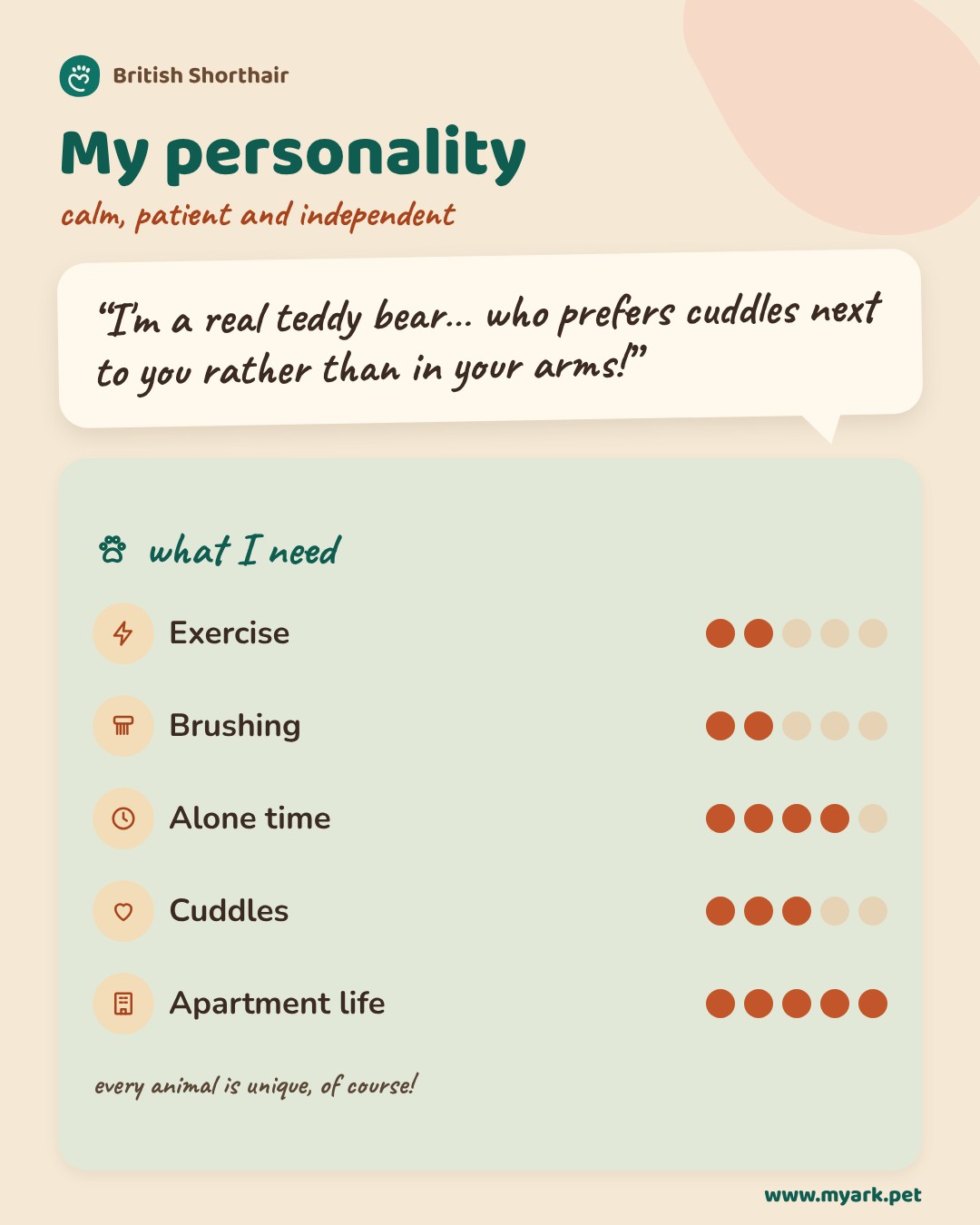
“I’m a real teddy bear… who prefers cuddles next to you rather than in your arms!”
Its exercise needs are low: short daily play sessions keep it fit and its weight steady.
At a glance
- Cuddles
- 3 out of 5
every cat is unique, of course!
With me, we can go…
- fishing-rod toy games
- long naps
- watching from the window
- sharing the sofa
Living with a British Shorthair: who does what
A cat’s care looks light, but it is daily, shared and easy to lose track of — litter, water, meals, play. Here is the British Shorthair’s routine at a glance, and how a household can split it without a single “did anyone…?” message.
The routine at a glance
- every day
- a weighed ration; a play session; fresh water; a litter tray clean.
- every week
- a quick brush; a claw check.
- every month
- a weigh-in; flea and worming treatment on your vet’s schedule; a claw check.
- every year
- the vet check-up and vaccine boosters; heart and kidney screening if your vet advises it.
Sharing it out
- One treat rule for everyone: it is greedy and calm.
- Short daily play goes on a name.
- Children learn it prefers sitting next to them to being carried.
Before it arrives, agree on…
- who feeds it and how much
- the treat rules
- who plays with it
- who scoops the litter
- indoor only, or a safe garden
How MyArk helps the household keep track
Pet weight tracker
Weight is its main watch-point: track it monthly.
See the featurePet feeding tracker
Log meals so no one feeds it twice.
See the featureFamily pet chores
Litter and play on named people.
See the featurePet health record
Heart and kidney screenings in one place.
See the featureFeeding, grooming and health routine
The coat is easy to keep: an occasional brush removes the dead hair.
What I eat
- a good-quality complete food
- a weighed ration — it gains weight easily
- fresh water at all times
My health routine
- a microchip registered with your details (a legal requirement for cats in England and in France)
- core vaccinations, then boosters on the schedule your vet sets
- worming and flea treatment on a regular schedule
- a weigh-in every month and a vet check-up every year
The stages of my life
- kitten
- Play, socialisation and discovering the home.
- adult
- Daily play, a stable routine and yearly check-ups.
- senior
- From about 10 years old, more regular check-ups.
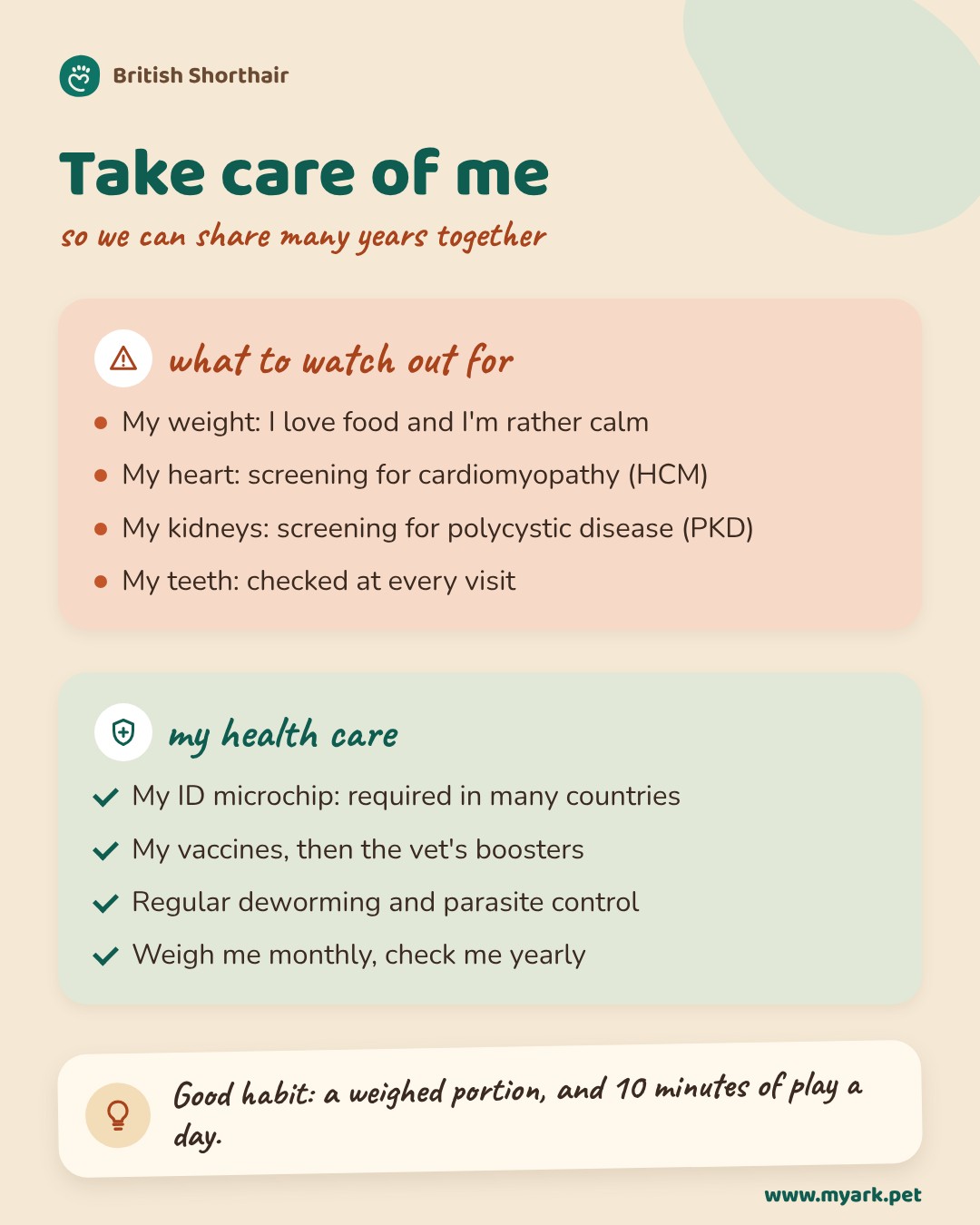
What to keep an eye on
MyArk describes predispositions through visible body shape and simple checks rather than a list of diseases: it is what you can verify from the outside, and act on when choosing a breeder.
Weight
It is greedy and rather calm: weigh the food.
Heart
Some lines carry inherited heart disease (HCM): ask the breeder for the parents’ heart screening.
Kidneys
Ask the breeder about kidney screening (PKD) of the parents.
Teeth
Tartar and gum problems are common in cats: check the mouth and have the teeth looked at every year.
And, as for every cat:
- weight: extra weight raises the risk of diabetes and joint pain
- what it drinks and how it uses the litter tray: a change is worth a vet visit
- teeth, claws and coat, checked regularly
- parasite prevention and the vaccination schedule, with your vet
Is it the right cat for your household?
A cat needs a stable territory, resources in several places and daily play, whatever its breed. Before committing, consider rescues and rehoming charities too: many adult cats are waiting for a home.
- Home
- Very happy in a flat.
- Young children
- Patient, but dislikes being carried around.
- Other pets
- Calm and tolerant with other cats and cat-friendly dogs.
- First cat
- An excellent first cat: calm and independent.
- Time alone
- Copes well with ordinary working days.
British Shorthair: straight answers
Is a British Shorthair a lap cat?
Not really: it likes being close to you more than being held.
Do British Shorthairs get fat?
They gain weight easily: measured meals and daily play.
How big does a British Shorthair get?
It is a sturdy cat: an adult weighs roughly 3 to 8 kg, females at the lower end.
What colours does the British Shorthair come in?
The usual colours are blue, lilac, cream and black.