Where the Cornish Rex comes from
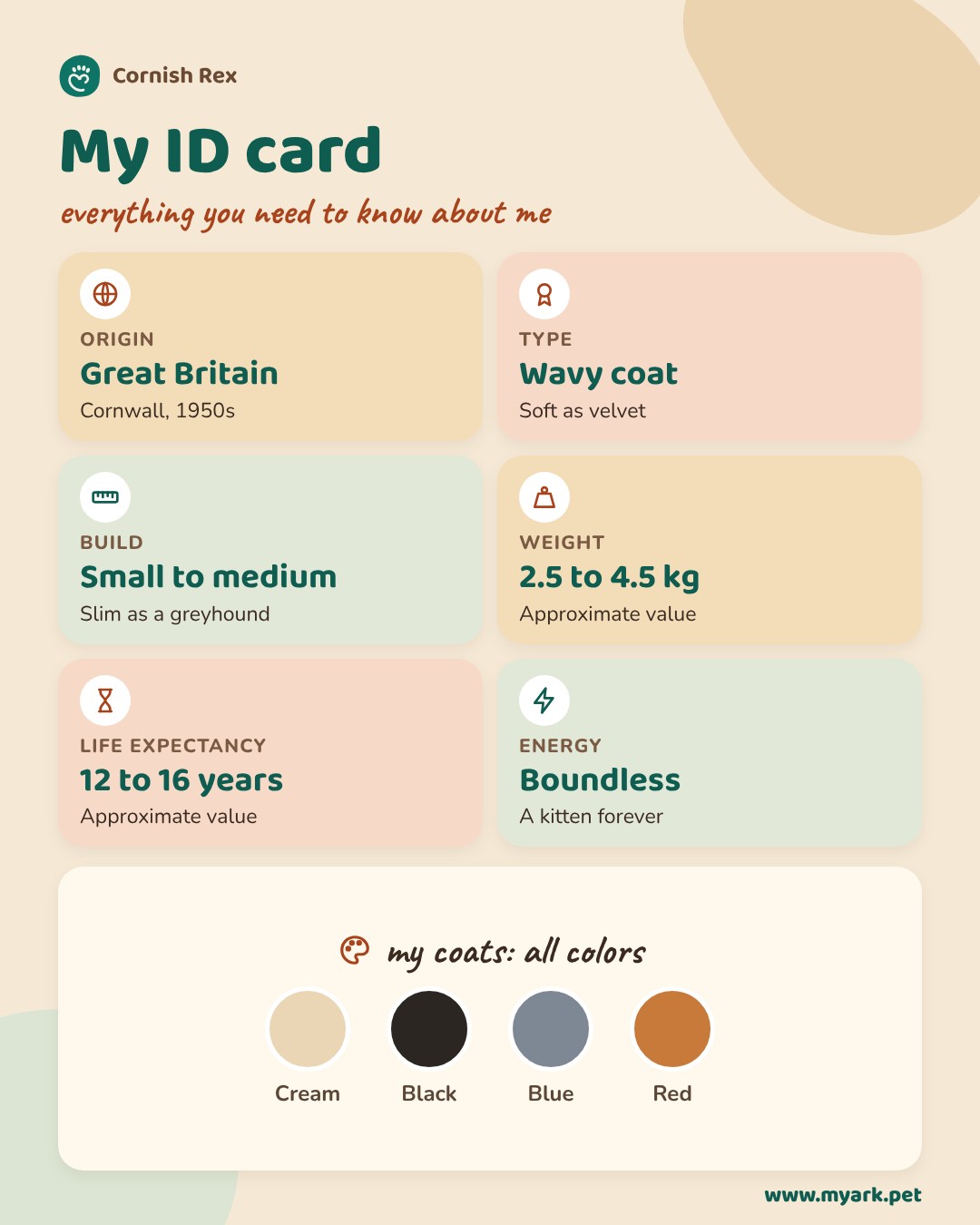
It comes from Cornwall, where in the early 1950s a kitten with an astrakhan-like coat, Kallibunker, was found; all Cornish Rex descend from him.
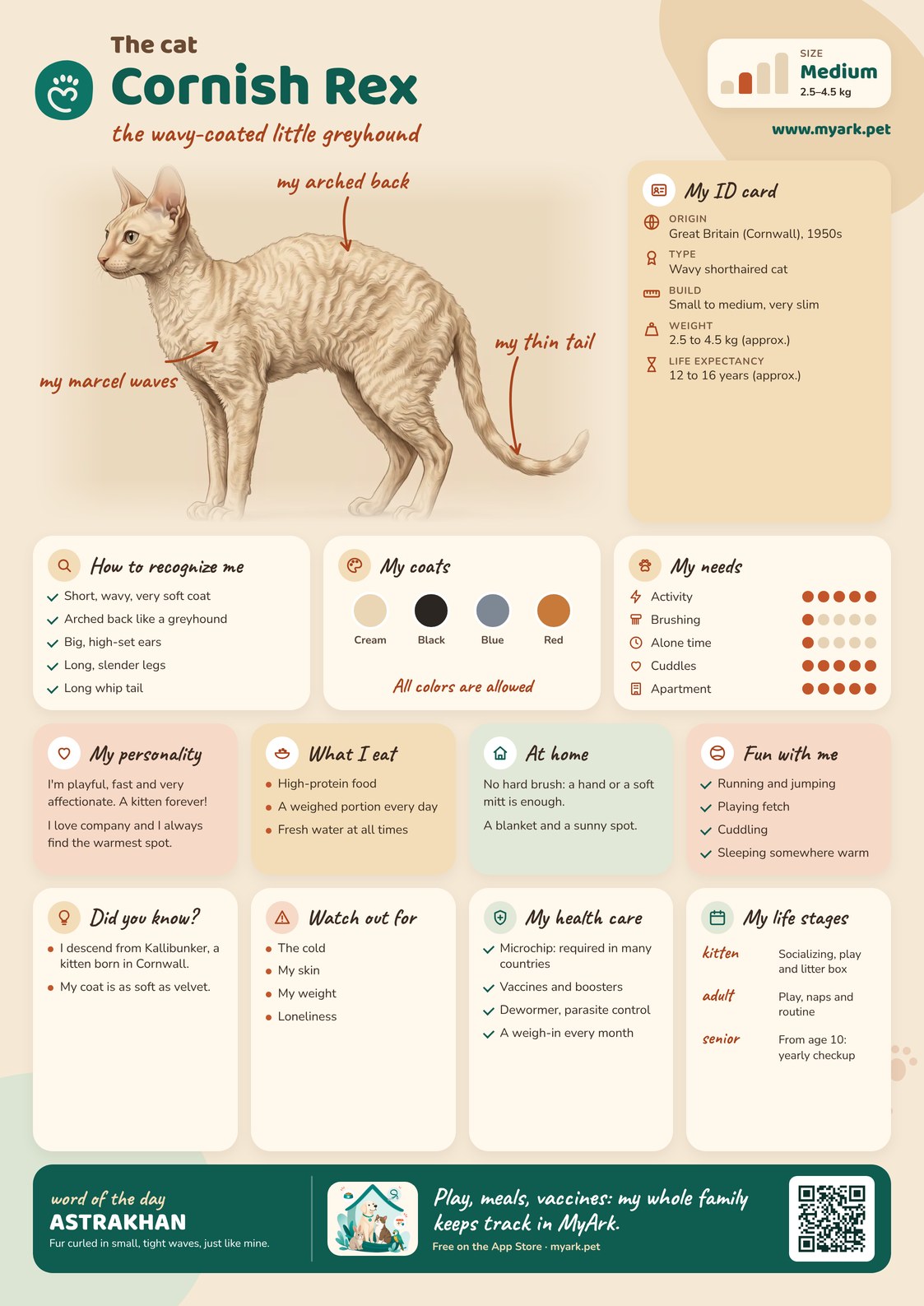
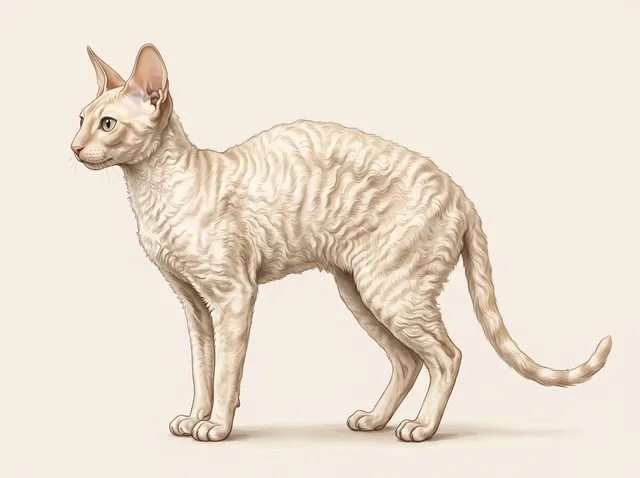
Its arched back, lean muscles and very fine bones give it the look of a greyhound; its rippled coat is extremely soft.
How to recognise me
- short, wavy, very soft coat
- back arched like a greyhound’s
- large, high-set ears
- long, fine legs
- long, whip-like tail
My colours
- Cream
- Black
- Blue
- Red
What a Cornish Rex needs day to day
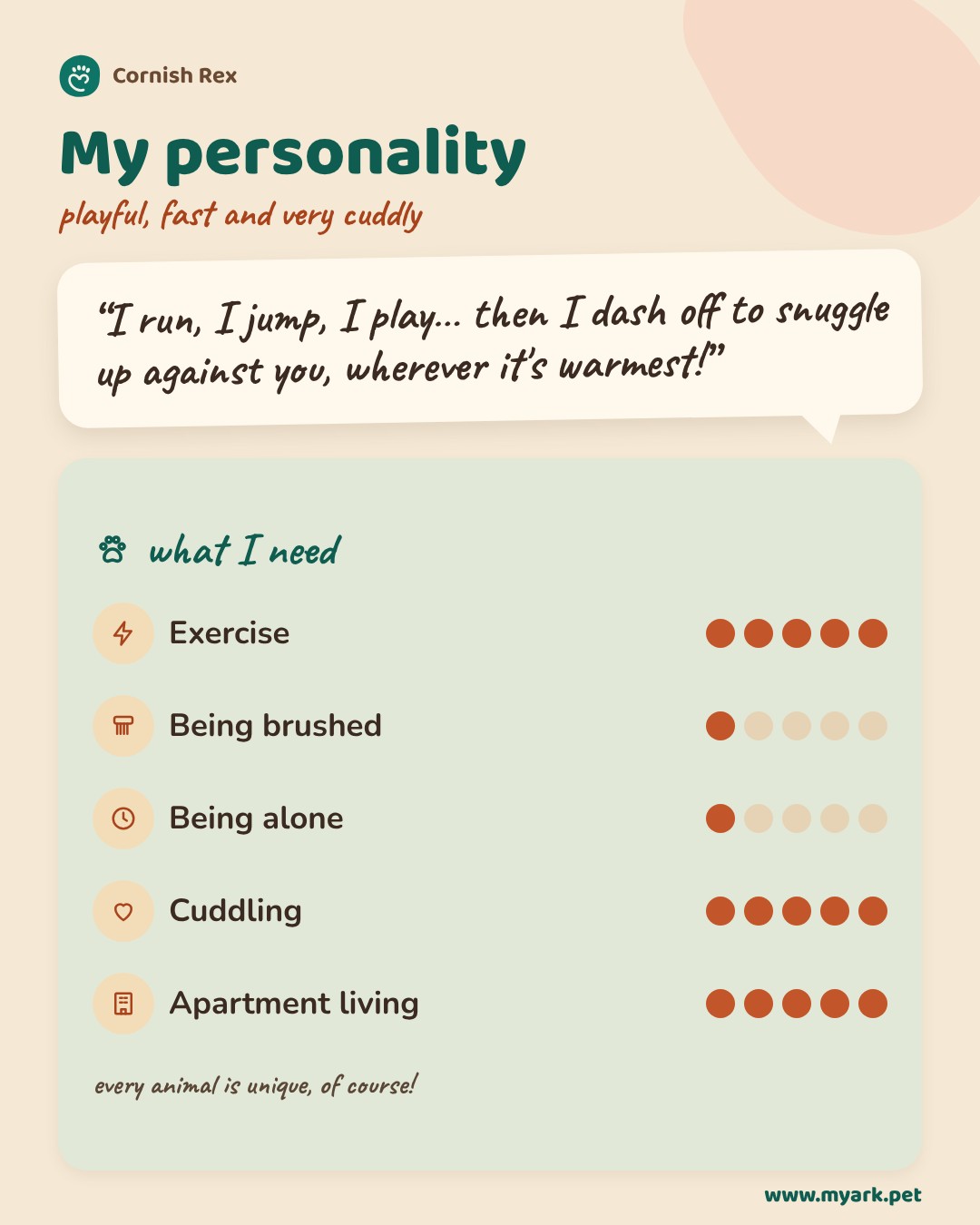
“I run, I jump, I play… then I curl up against you, wherever it’s warmest!”
Its exercise needs are high: running, jumping and fetch every day, with warmth and company.
At a glance
- Cuddles
- 5 out of 5
every cat is unique, of course!
With me, we can go…
- running and jumping
- playing fetch
- cuddles
- sleeping somewhere warm
Living with a Cornish Rex: who does what
A cat’s care looks light, but it is daily, shared and easy to lose track of — litter, water, meals, play. Here is the Cornish Rex’s routine at a glance, and how a household can split it without a single “did anyone…?” message.
The routine at a glance
- every day
- a weighed ration — it is greedy; two active play sessions; fresh water; a litter tray clean.
- every week
- a gentle wipe if the skin gets oily; an ear and claw check.
- every month
- a weigh-in; flea and worming treatment on your vet’s schedule; a claw check.
- every year
- the vet check-up and vaccine boosters.
Sharing it out
- Play sessions spread across the household.
- One feeding rule for all.
- A warm bed in winter.
Before it arrives, agree on…
- who covers long days away
- who plays with it
- who feeds it and how much
- where its warm bed goes
- indoor only, or a safe garden
How MyArk helps the household keep track
Family pet chores
Play and litter on named people.
See the featurePet feeding tracker
Log meals: it will ask for more.
See the featurePet weight tracker
A monthly weigh-in.
See the featurePet sitter instructions
Warmth and company needs for a sitter.
See the featureFeeding, grooming and health routine
The coat is easy to keep: an occasional brush removes the dead hair.
What I eat
- a good-quality complete food
- a weighed ration every day
- fresh water at all times
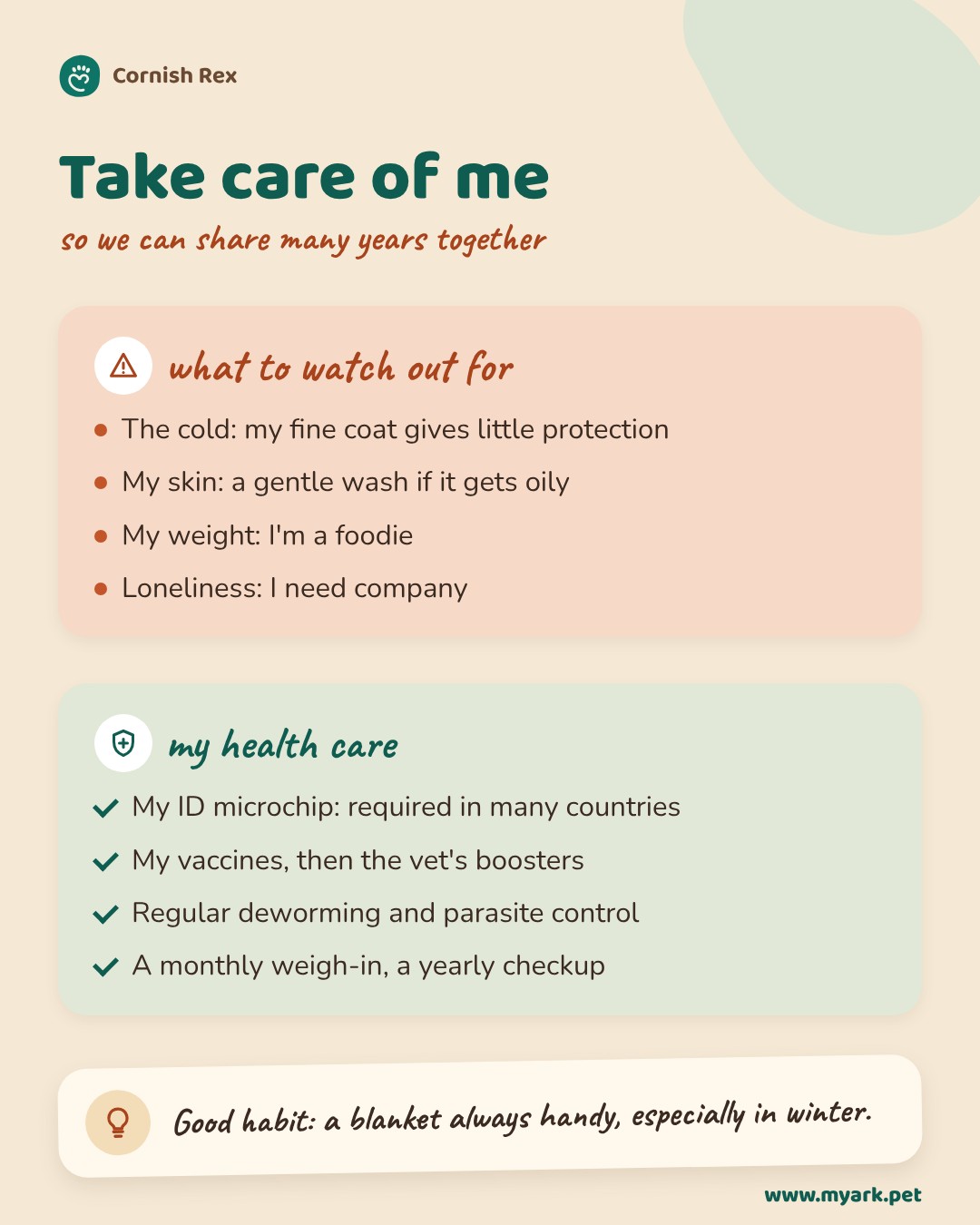
My health routine
- a microchip registered with your details (a legal requirement for cats in England and in France)
- core vaccinations, then boosters on the schedule your vet sets
- worming and flea treatment on a regular schedule
- a weigh-in every month and a vet check-up every year
The stages of my life
- kitten
- Play, socialisation and discovering the home.
- adult
- Daily play, a stable routine and yearly check-ups.
- senior
- From about 10 years old, more regular check-ups.
What to keep an eye on
MyArk describes predispositions through visible body shape and simple checks rather than a list of diseases: it is what you can verify from the outside, and act on when choosing a breeder.
The cold
A thin or absent coat protects it poorly: a warm home, a heated bed or a blanket in winter.
Skin
A gentle wipe if it becomes oily.
Weight
It is greedy.
Being alone
It needs company: long days alone suit it badly.
And, as for every cat:
- weight: extra weight raises the risk of diabetes and joint pain
- what it drinks and how it uses the litter tray: a change is worth a vet visit
- teeth, claws and coat, checked regularly
- parasite prevention and the vaccination schedule, with your vet
Is it the right cat for your household?
A cat needs a stable territory, resources in several places and daily play, whatever its breed. Before committing, consider rescues and rehoming charities too: many adult cats are waiting for a home.
- Home
- An indoor cat, happy in a warm flat with play.
- Young children
- Playful with active, respectful children.
- Other pets
- Sociable; another pet gives company.
- First cat
- Good for an available, playful household.
- Time alone
- Copes badly with long days alone.
Cornish Rex: straight answers
Cornish Rex or Devon Rex?
The Cornish is taller, with an arched back and a tighter wave; the Devon has huge low-set ears and a pixie face.
Does a Cornish Rex feel the cold?
Yes: it has no guard hairs. A warm home and bed.
How big does a Cornish Rex get?
It is a slim cat: an adult weighs roughly 2 to 4 kg.
What colours does the Cornish Rex come in?
The usual colours are cream, black, blue and red.