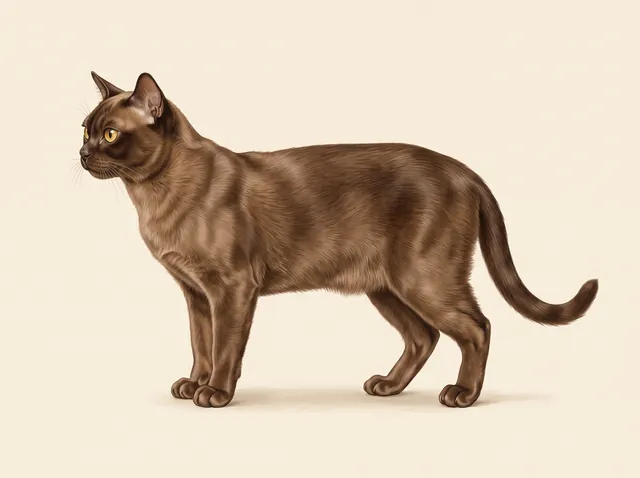
Where the Burmese comes from
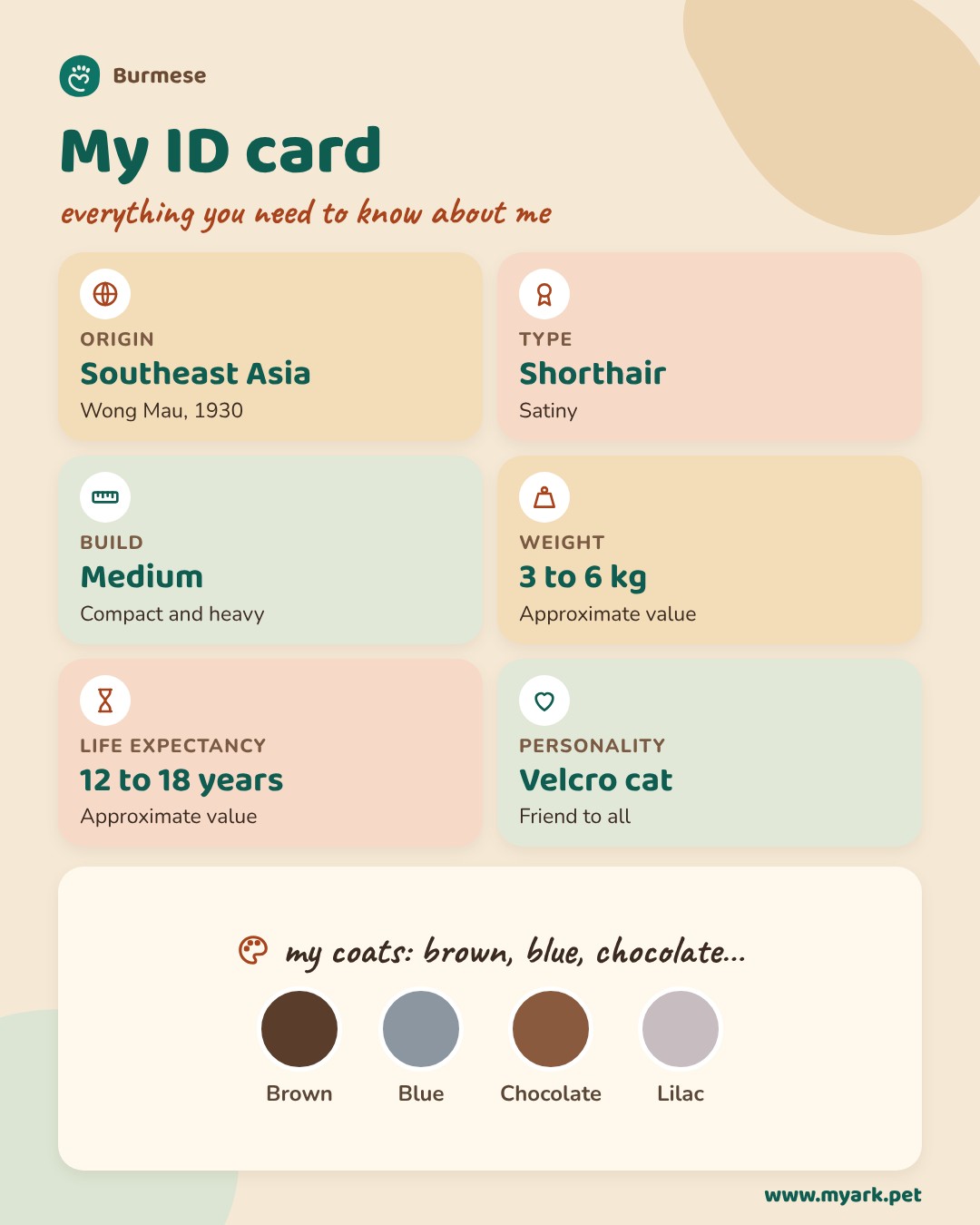
A very old breed from South-East Asia, discovered in the West in 1930 when a little cat named Wong Mau arrived in the United States.
It is known for its “sepia” colour, slightly lighter on the body than on the extremities. The LOOF distinguishes the English and the American Burmese.
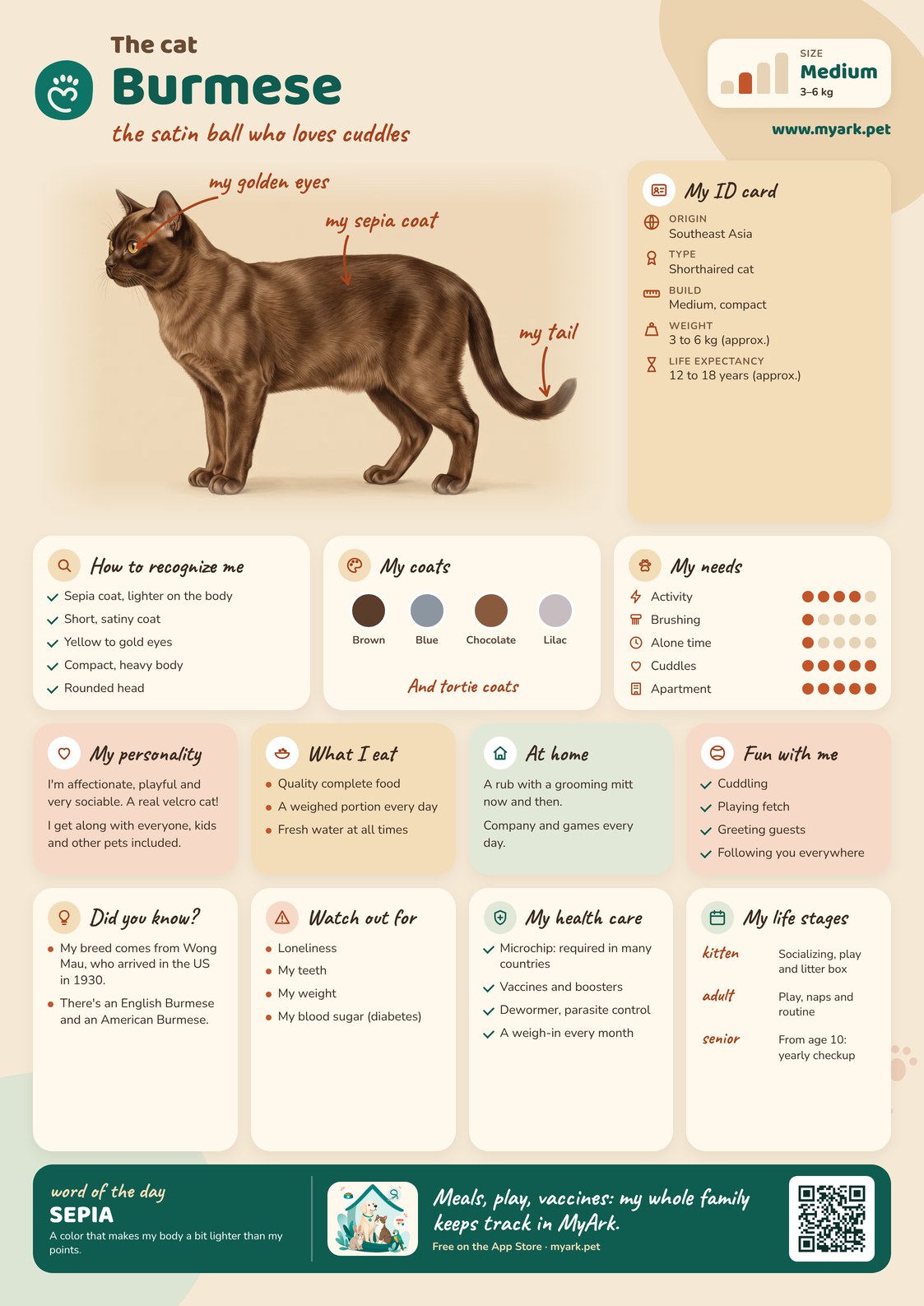
How to recognise me
- sepia coat, lighter on the body
- short, satin coat
- yellow to gold eyes
- compact, heavy body
- rounded head
My colours
- Brown (sable)
- Blue
- Chocolate
- Lilac
What a Burmese needs day to day
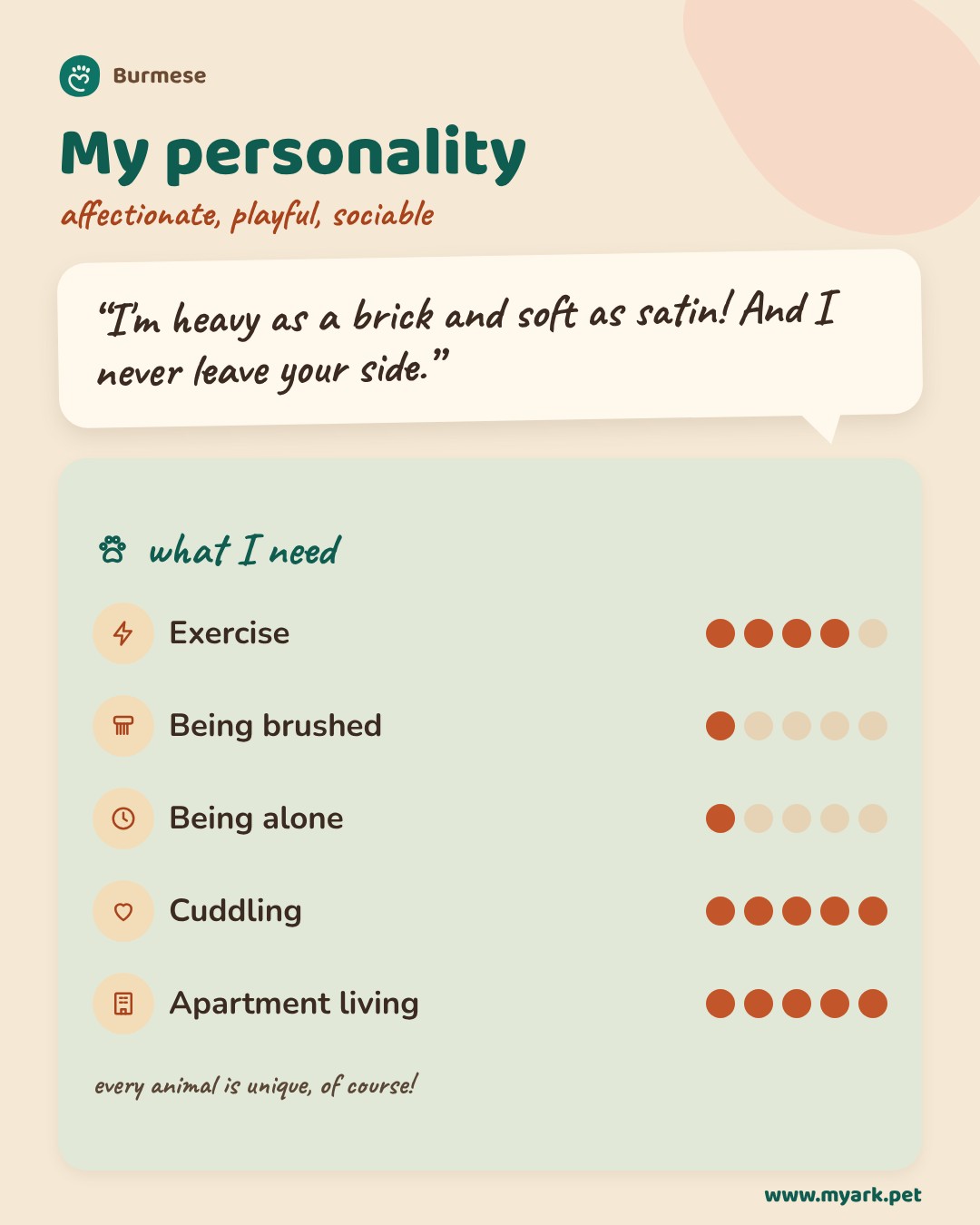
“I’m heavy as a brick and soft as satin! And I never leave your side.”
Its exercise needs are high: lively play every day and a lot of company.
At a glance
- Cuddles
- 5 out of 5
every cat is unique, of course!
With me, we can go…
- playing fetch
- following you everywhere
- cuddles
- learning tricks
Living with a Burmese: who does what
A cat’s care looks light, but it is daily, shared and easy to lose track of — litter, water, meals, play. Here is the Burmese’s routine at a glance, and how a household can split it without a single “did anyone…?” message.
The routine at a glance
- every day
- a weighed ration; two play sessions; fresh water; a litter tray clean.
- every week
- a quick brush; a teeth and claw check.
- every month
- a weigh-in; flea and worming treatment on your vet’s schedule; a claw check.
- every year
- the vet check-up and vaccine boosters.
Sharing it out
- Company is its main need: plan the days.
- One feeding rule for everyone.
- Everyone watches how much it drinks.
Before it arrives, agree on…
- who covers long days away
- who feeds it and how much
- who plays with it
- who scoops the litter
- indoor only, or a safe garden
How MyArk helps the household keep track
Pet weight tracker
A monthly weigh-in.
See the featureFamily pet chores
Play and litter on named people.
See the featurePet health record
Dental checks and vet notes in one place.
See the featurePet sitter instructions
Company needs for a sitter.
See the featureFeeding, grooming and health routine
The coat is easy to keep: an occasional brush removes the dead hair.
What I eat
- a good-quality complete food
- a weighed ration every day
- fresh water at all times
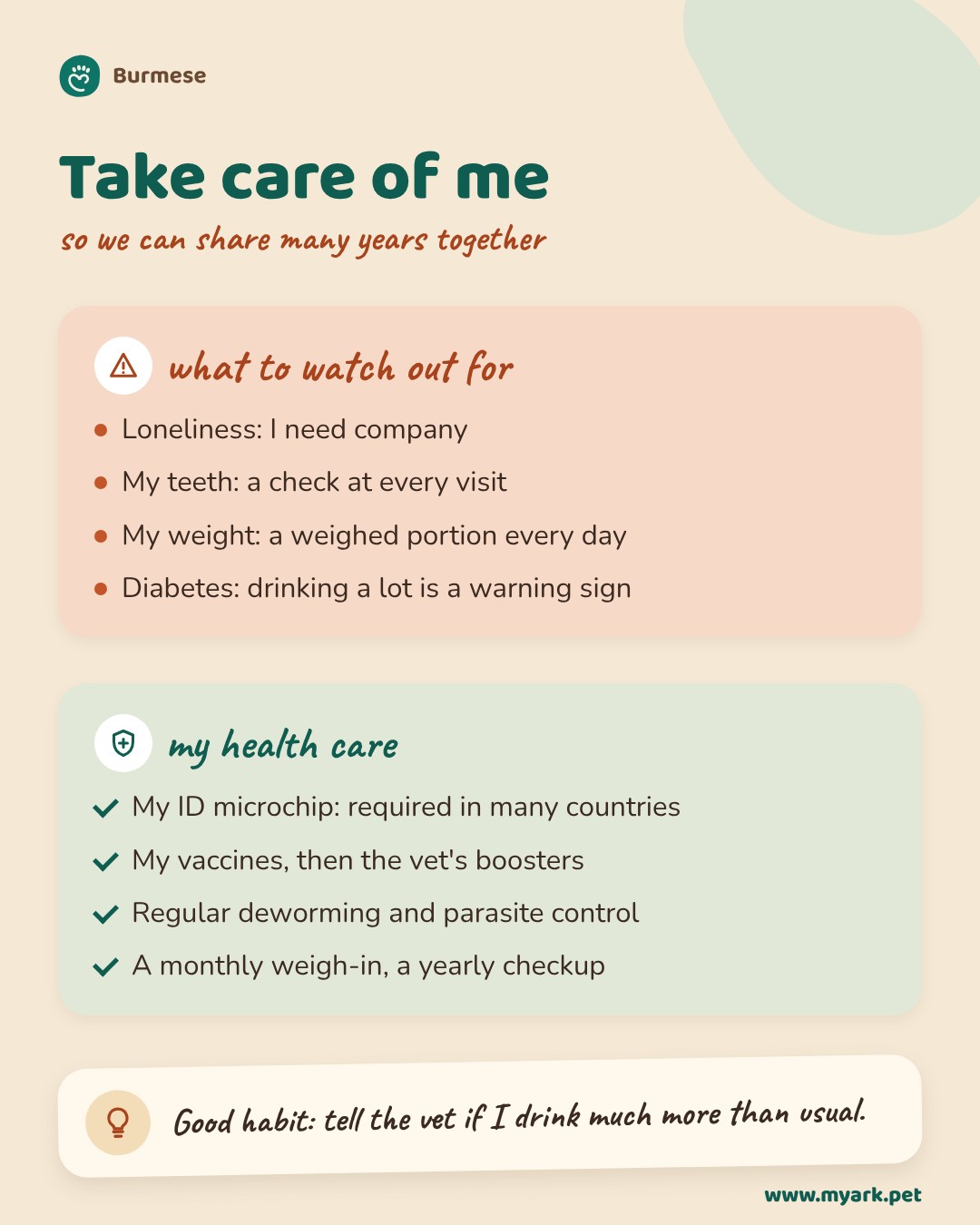
My health routine
- a microchip registered with your details (a legal requirement for cats in England and in France)
- core vaccinations, then boosters on the schedule your vet sets
- worming and flea treatment on a regular schedule
- a weigh-in every month and a vet check-up every year
The stages of my life
- kitten
- Play, socialisation and discovering the home.
- adult
- Daily play, a stable routine and yearly check-ups.
- senior
- From about 10 years old, more regular check-ups.
What to keep an eye on
MyArk describes predispositions through visible body shape and simple checks rather than a list of diseases: it is what you can verify from the outside, and act on when choosing a breeder.
Being alone
It needs company: long days alone suit it badly.
Teeth
Tartar and gum problems are common in cats: check the mouth and have the teeth looked at every year.
Weight
A weighed ration every day.
Diabetes
Drinking a lot is a warning sign: see your vet.
And, as for every cat:
- weight: extra weight raises the risk of diabetes and joint pain
- what it drinks and how it uses the litter tray: a change is worth a vet visit
- teeth, claws and coat, checked regularly
- parasite prevention and the vaccination schedule, with your vet
Is it the right cat for your household?
A cat needs a stable territory, resources in several places and daily play, whatever its breed. Before committing, consider rescues and rehoming charities too: many adult cats are waiting for a home.
- Home
- Very happy in a flat.
- Young children
- Affectionate and playful.
- Other pets
- Sociable; often happier with company.
- First cat
- A good first cat for an available household.
- Time alone
- Copes badly with long days alone.
Burmese: straight answers
Is a Burmese a lap cat?
Yes: it is one of the most people-oriented breeds.
English or American Burmese?
The English Burmese is more oriental in type; the American has a rounder head and body.
How big does a Burmese get?
It is compact but heavy: an adult weighs roughly 3 to 6 kg.
What colours does the Burmese come in?
The usual colours are brown (sable), blue, chocolate and lilac.