Where the Birman comes from
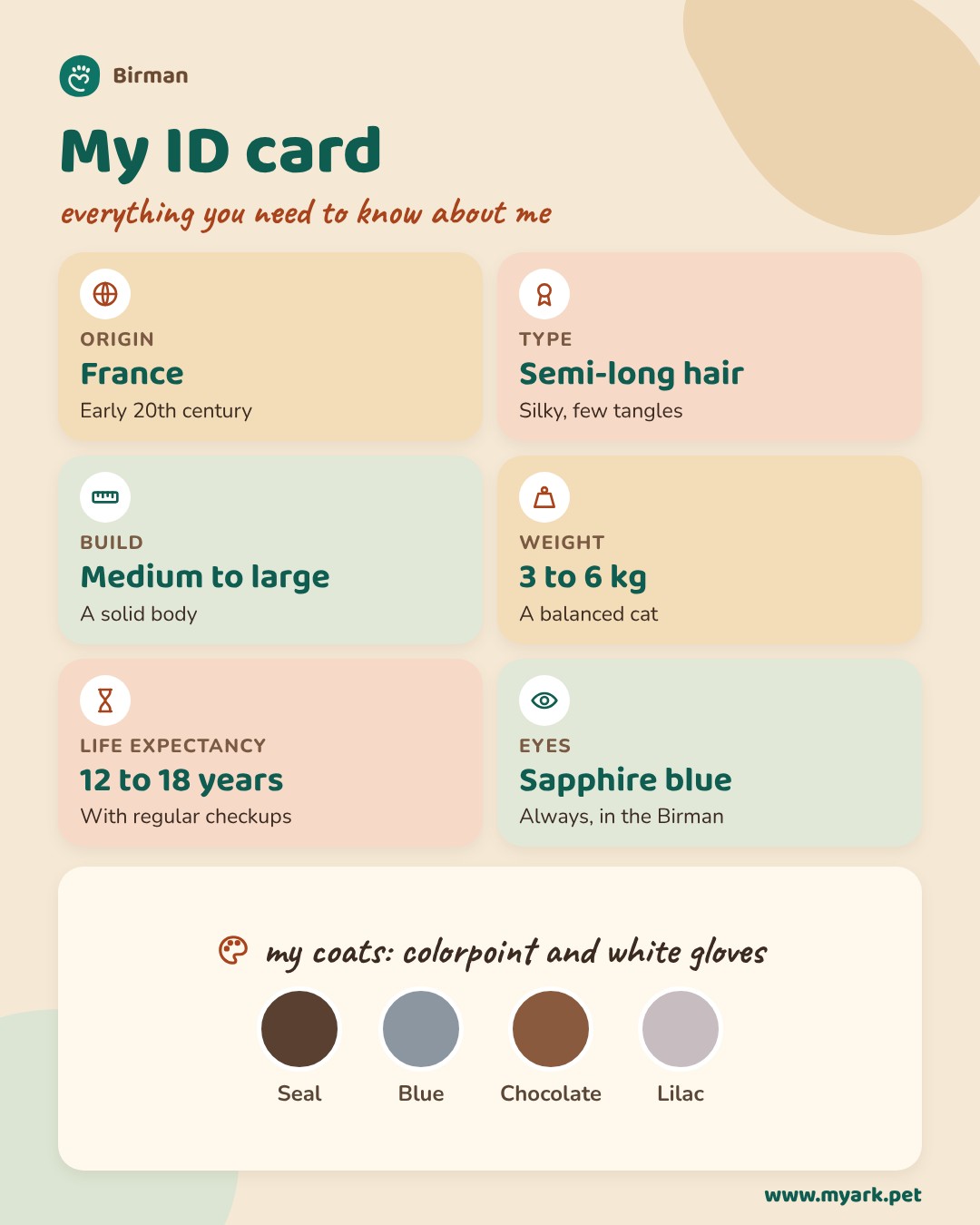
Despite the many legends about its origin, it was created in France in the early 20th century from a cross between a Persian and a white-gloved Siamese, and recognised in the 1920s.
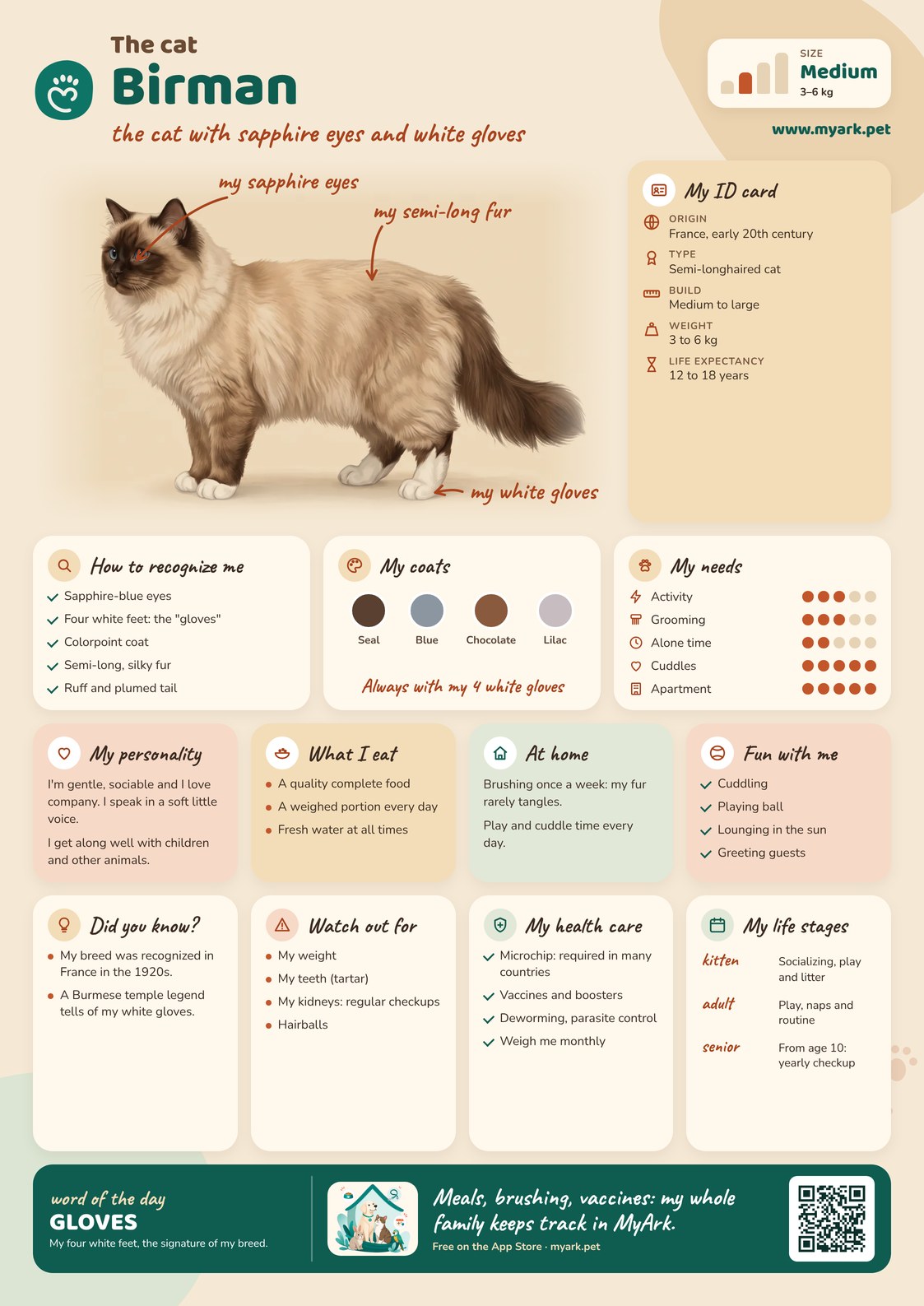
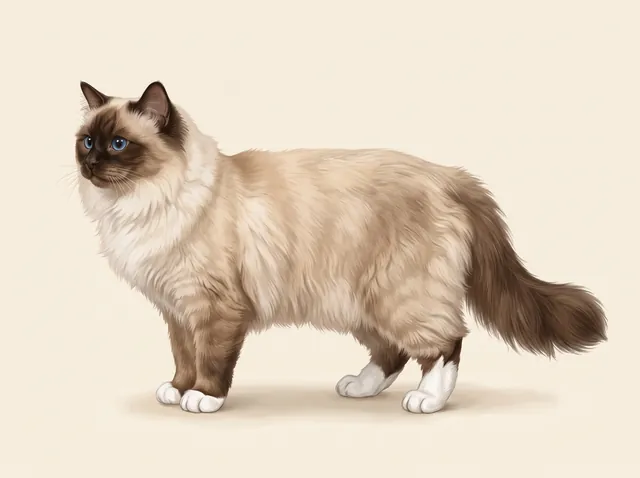
It is known for its sapphire-blue eyes and its four white feet, the “gloves”.
How to recognise me
- sapphire-blue eyes
- four white feet: the “gloves”
- colourpoint coat
- semi-long, silky coat
- ruff and plumed tail
My colours
- Seal
- Blue
- Chocolate
- Lilac
What a Birman needs day to day
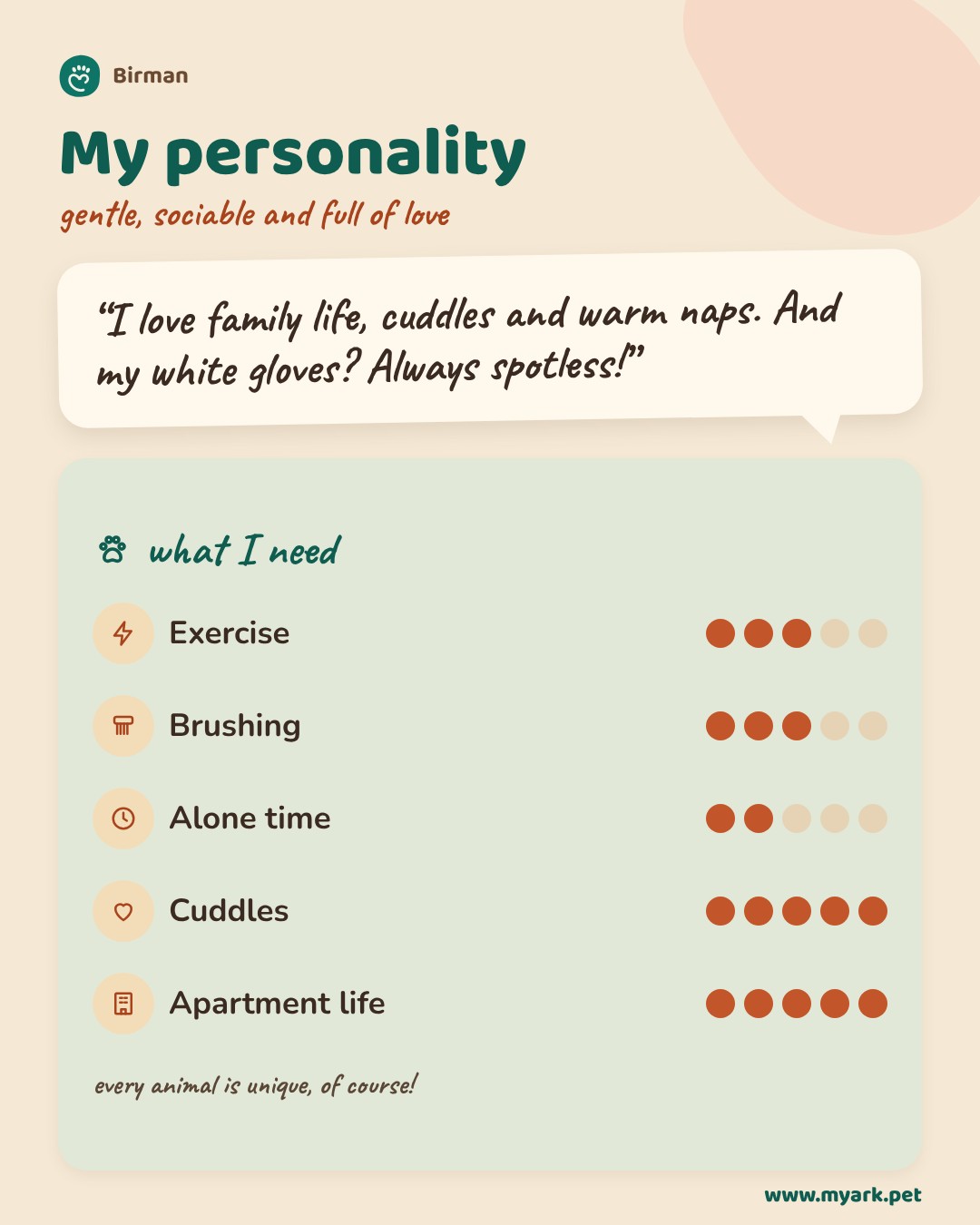
“I love family life, cuddles and warm naps. And my white gloves? Always spotless!”
Its exercise needs are moderate: daily play and company. It enjoys welcoming visitors.
At a glance
- Cuddles
- 5 out of 5
every cat is unique, of course!
With me, we can go…
- cuddles
- ball games
- lounging in the sun
- welcoming guests
Living with a Birman: who does what
A cat’s care looks light, but it is daily, shared and easy to lose track of — litter, water, meals, play. Here is the Birman’s routine at a glance, and how a household can split it without a single “did anyone…?” message.
The routine at a glance
- every day
- a weighed ration; a play session; fresh water; a litter tray clean.
- every week
- a brush; a teeth and claw check.
- every month
- a weigh-in; flea and worming treatment on your vet’s schedule; a claw check.
- every year
- the vet check-up and vaccine boosters; a kidney check as it gets older.
Sharing it out
- Weekly brushing goes on a name.
- Play is a lovely job for children.
- One feeding rule for all.
Before it arrives, agree on…
- who feeds it and how much
- who plays with it
- who scoops the litter
- who brushes it
- indoor only, or a safe garden
How MyArk helps the household keep track
Pet feeding tracker
Log meals so no one feeds it twice.
See the featurePet weight tracker
A monthly weigh-in.
See the featureFamily pet chores
Litter, play and brushing on named people.
See the featurePet health record
Dental and kidney checks in one place.
See the featureFeeding, grooming and health routine
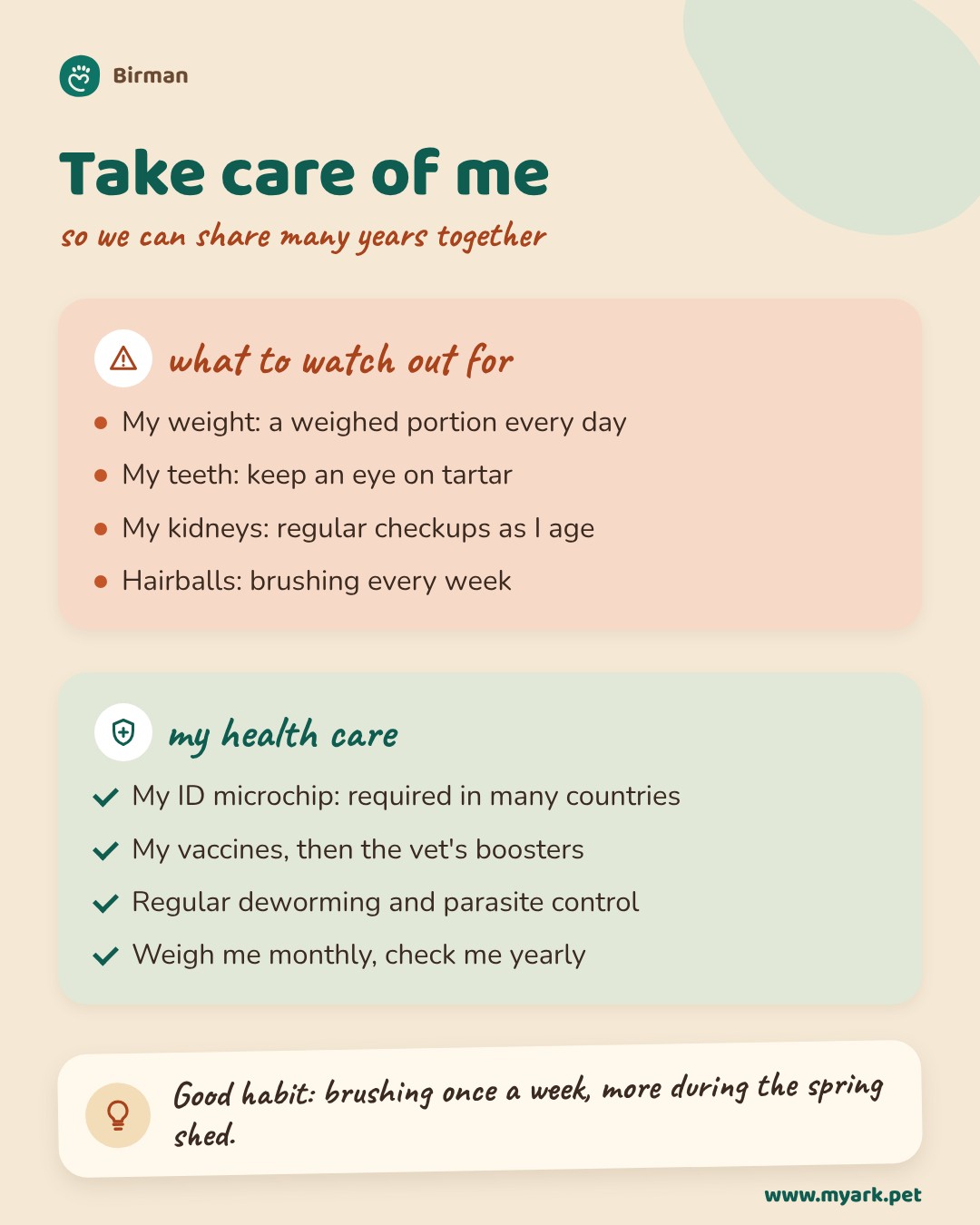
The coat needs regular brushing, more often during the moult.
What I eat
- a good-quality complete food
- a weighed ration every day
- fresh water at all times
My health routine
- a microchip registered with your details (a legal requirement for cats in England and in France)
- core vaccinations, then boosters on the schedule your vet sets
- worming and flea treatment on a regular schedule
- a weigh-in every month and a vet check-up every year
The stages of my life
- kitten
- Play, socialisation and discovering the home.
- adult
- Daily play, a stable routine and yearly check-ups.
- senior
- From about 10 years old, more regular check-ups.
What to keep an eye on
MyArk describes predispositions through visible body shape and simple checks rather than a list of diseases: it is what you can verify from the outside, and act on when choosing a breeder.
Weight
A weighed ration every day.
Teeth
Tartar and gum problems are common in cats: check the mouth and have the teeth looked at every year.
Kidneys
Regular check-ups as it gets older.
Hairballs
A brush every week.
And, as for every cat:
- weight: extra weight raises the risk of diabetes and joint pain
- what it drinks and how it uses the litter tray: a change is worth a vet visit
- teeth, claws and coat, checked regularly
- parasite prevention and the vaccination schedule, with your vet
Is it the right cat for your household?
A cat needs a stable territory, resources in several places and daily play, whatever its breed. Before committing, consider rescues and rehoming charities too: many adult cats are waiting for a home.
- Home
- Very happy in a flat.
- Young children
- Gentle and patient with respectful children.
- Other pets
- Sociable with cats and calm dogs.
- First cat
- An excellent first cat.
- Time alone
- Prefers company; plan play when you are back.
Birman: straight answers
What is the difference between a Birman and a Ragdoll?
The Birman is smaller, always has four white “gloves” and a less heavy build.
Does a Birman need a lot of grooming?
A weekly brush is usually enough: its coat has little undercoat.
How big does a Birman get?
It is a medium-sized cat: an adult weighs roughly 3 to 6 kg.
What colours does the Birman come in?
The usual colours are seal, blue, chocolate and lilac.