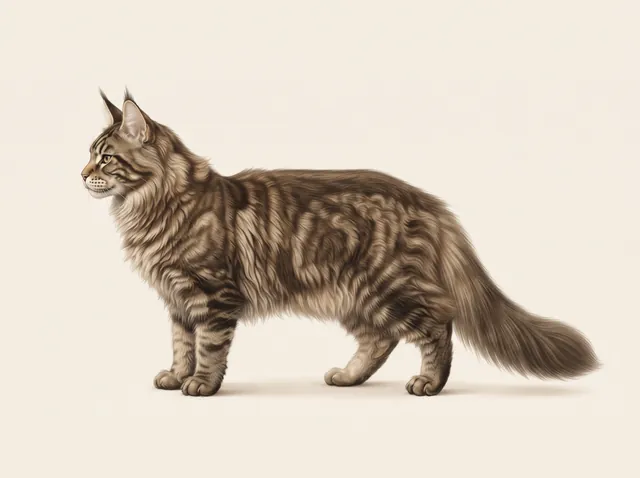
Where the Maine Coon comes from
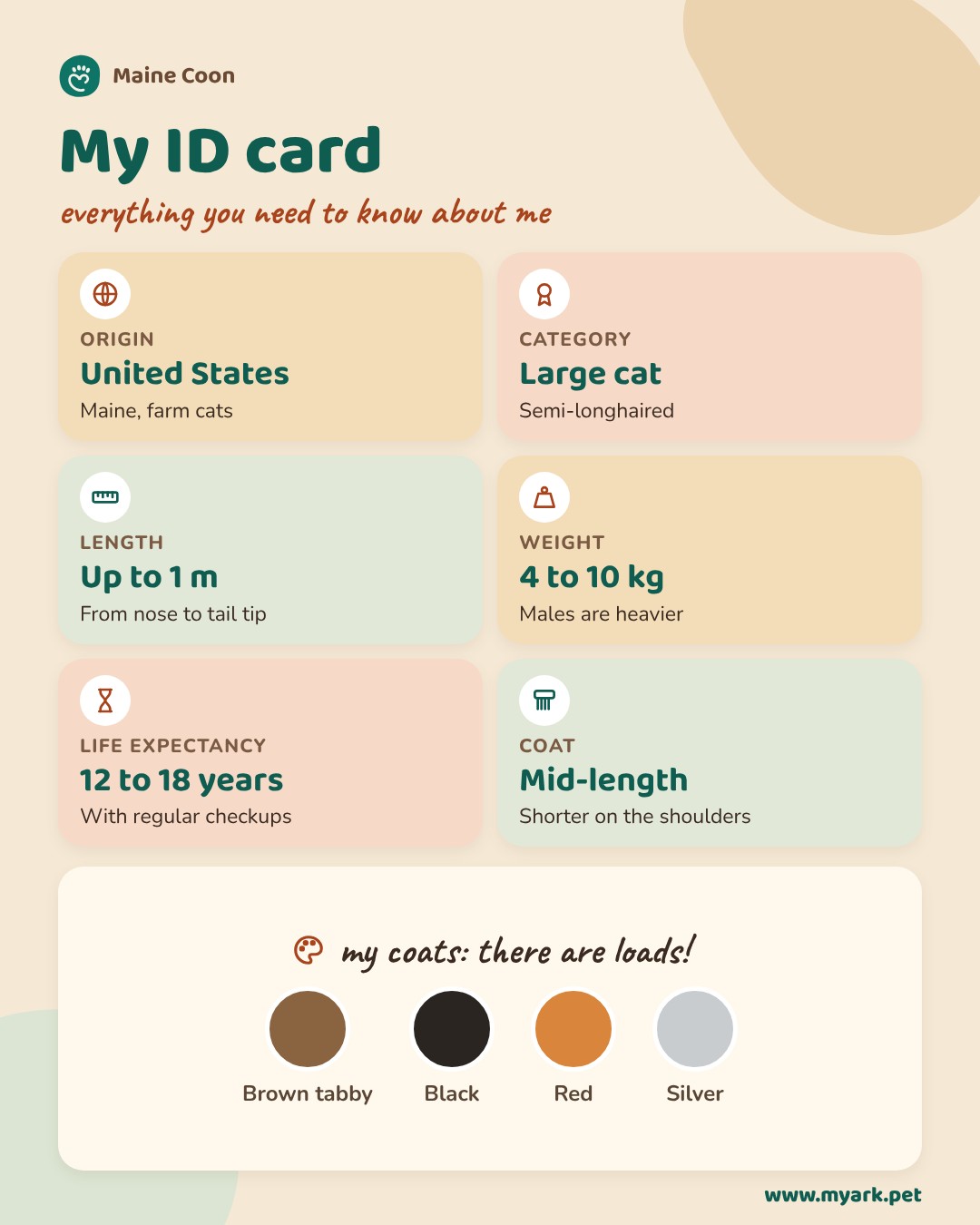
A semi-long-haired cat native to the state of Maine, on the east coast of the United States, descended from farm cats crossed with cats brought by European settlers and adapted to the region’s harsh climate. It is Maine’s official state cat.
Males are clearly larger than females, and the breed is slow to mature, reaching its full size between the ages of 3 and 4.
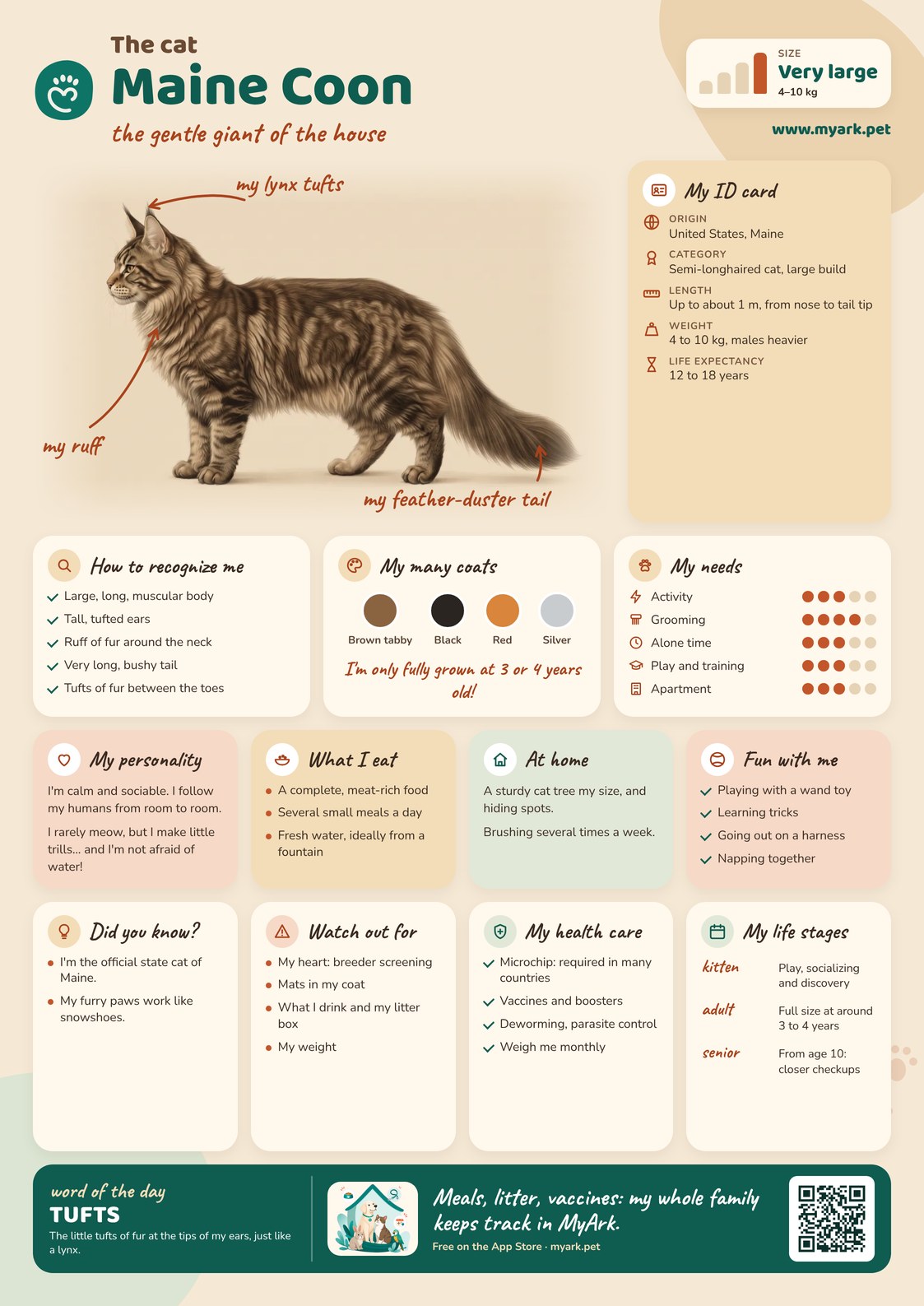
How to recognise me
- large, long, muscular body
- tall ears with lynx tips
- ruff around the neck
- very long, bushy tail
- tufts of hair between the toes
My colours
- Brown tabby
- Black
- Red
- Silver
What a Maine Coon needs day to day
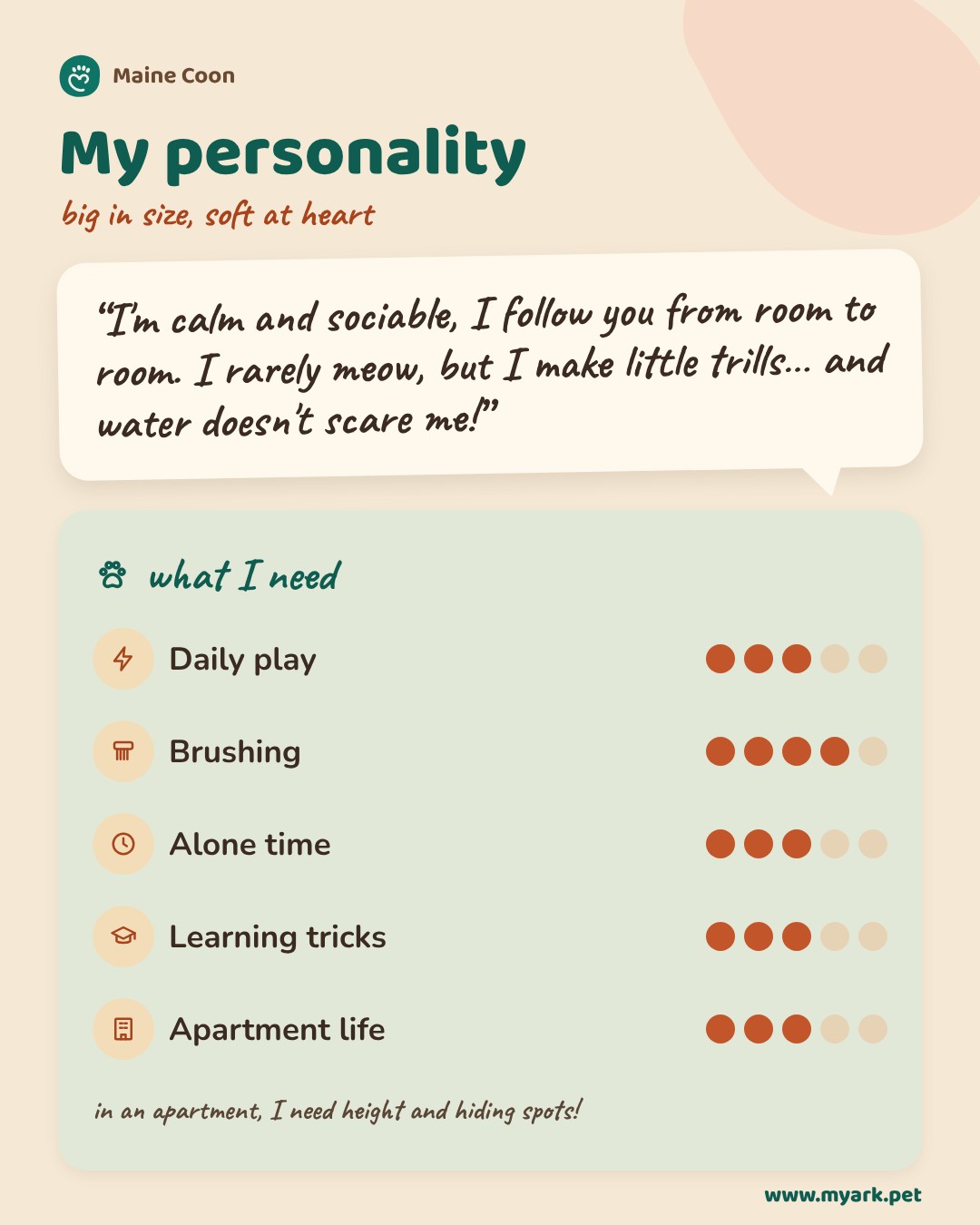
“I’m calm and sociable, I follow you from room to room. I don’t meow much, but I chirp… and water doesn’t scare me!”
Its exercise needs are moderate: daily play that mimics the hunt, height to climb and observe, and resources (water, bowls, litter trays, beds) spread out. Its size calls for big trays and sturdy cat trees.
At a glance
- Exercise
- 3 out of 5
- Grooming
- 4 out of 5
- Coping alone
- 3 out of 5
- Ease of training
- 3 out of 5
- Flat living
- 3 out of 5
every cat is unique, of course!
With me, we can go…
- fishing-rod toy games
- learning tricks
- harness walks
- naps together
Living with a Maine Coon: who does what
A cat’s care looks light, but it is daily, shared and easy to lose track of — litter, water, meals, play. Here is the Maine Coon’s routine at a glance, and how a household can split it without a single “did anyone…?” message.
The routine at a glance
- every day
- several small meals; two play sessions; fresh water, ideally from a fountain; a litter tray clean.
- every week
- two or three brushes; a claw and ear check.
- every month
- a weigh-in; flea and worming treatment on your vet’s schedule; a claw check.
- every year
- the vet check-up and vaccine boosters; heart screening if your vet advises it.
Sharing it out
- The litter tray and water need daily owners — write them down.
- Play sessions are a perfect job for children.
- Brushing two or three times a week goes on a rota.
Before it arrives, agree on…
- who scoops the litter and refreshes the water
- who plays with it, and when
- where its tall cat tree and trays go
- indoor only, garden or harness walks
- who brushes it
How MyArk helps the household keep track
Pet feeding tracker
Log small meals so it is never fed twice.
See the featureFamily pet chores
Litter, water, play and brushing on named people.
See the featurePet weight tracker
A monthly weigh-in, for a big cat that matures slowly.
See the featurePet sitter instructions
Routine, resources and contacts for whoever looks after it.
See the featureFeeding, grooming and health routine
Coat care is a real commitment: frequent, sometimes daily brushing, and grooming appointments to budget from the start.
What I eat
- a complete, meat-rich food
- several small meals a day
- fresh water, ideally from a fountain
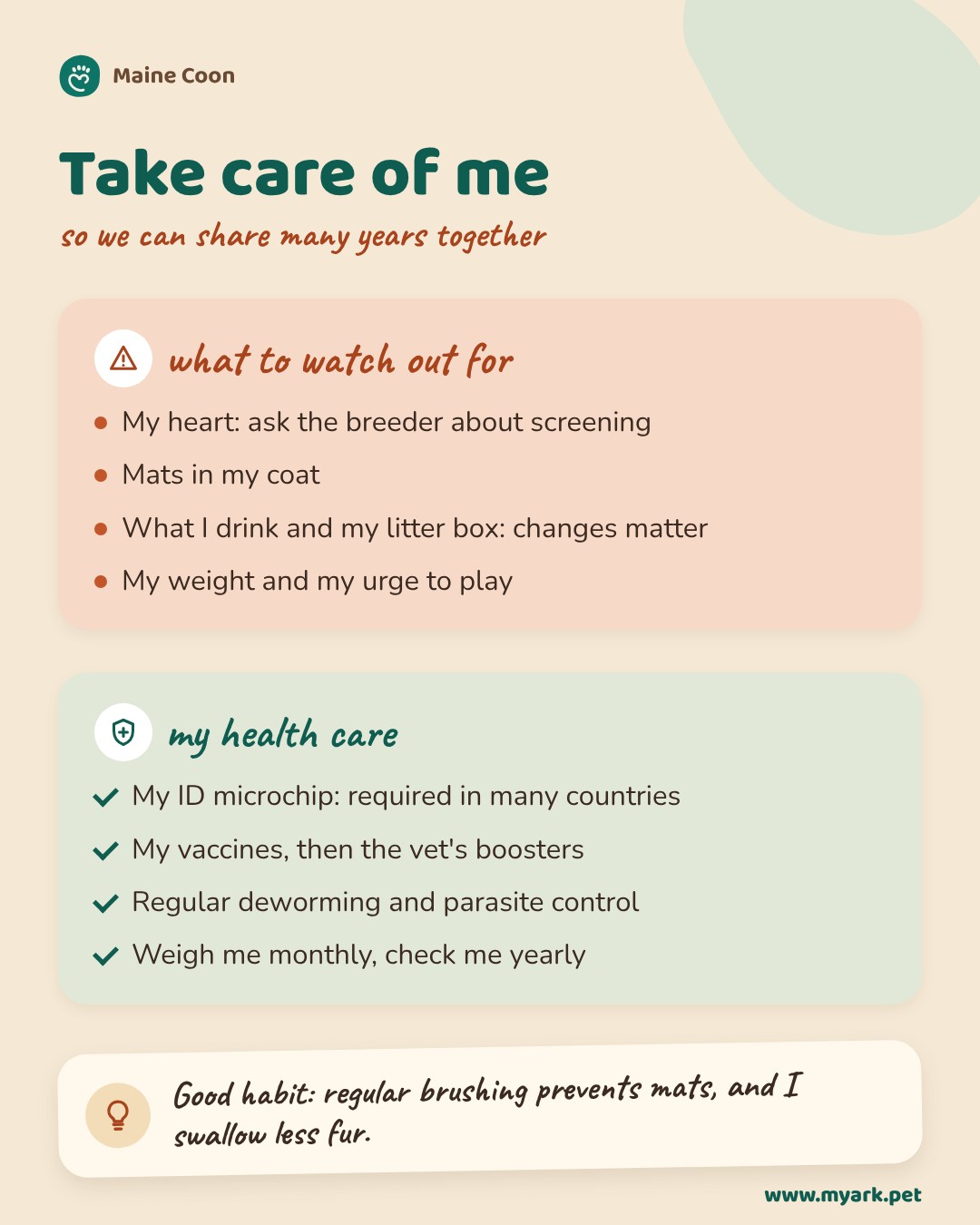
My health routine
- a microchip registered with your details (a legal requirement for cats in England and in France)
- core vaccinations, then boosters on the schedule your vet sets
- worming and flea treatment on a regular schedule
- a weigh-in every month and a vet check-up every year
The stages of my life
- kitten
- Play, socialisation and discovering the home.
- adult
- Reaches its final size between the ages of 3 and 4.
- senior
- From about 10 years old, more regular check-ups.
What to keep an eye on
MyArk describes predispositions through visible body shape and simple checks rather than a list of diseases: it is what you can verify from the outside, and act on when choosing a breeder.
Heart
Some lines carry inherited heart disease (HCM): ask the breeder for the parents’ heart screening.
Knots
A long coat mats quickly: brush several times a week, right down to the skin.
Drinking and the litter tray
A change in how much it drinks or uses the tray is worth a vet visit.
Weight and play
An indoor cat gains weight easily: measured meals and daily play.
And, as for every cat:
- weight: extra weight raises the risk of diabetes and joint pain
- what it drinks and how it uses the litter tray: a change is worth a vet visit
- teeth, claws and coat, checked regularly
- parasite prevention and the vaccination schedule, with your vet
Is it the right cat for your household?
A cat needs a stable territory, resources in several places and daily play, whatever its breed. Before committing, consider rescues and rehoming charities too: many adult cats are waiting for a home.
- Home
- Copes with a flat (3 out of 5) if it has height, hiding places and daily play.
- Young children
- Gentle and patient with respectful children.
- Other pets
- Usually sociable, including with cat-friendly dogs.
- First cat
- A good first cat for a household ready to brush and play.
- Time alone
- Copes with ordinary working days (3 out of 5), with play when you are back.
Maine Coon: straight answers
Is a Maine Coon a good family cat?
Yes: calm, sociable and gentle, it suits families with space for a big cat.
How big does a Maine Coon get?
It is one of the largest cat breeds: an adult weighs roughly 4 to 10 kg, males clearly more than females.
Does a Maine Coon need a lot of grooming?
Its coat needs brushing two or three times a week to prevent knots.
What colours does the Maine Coon come in?
The usual colours are brown tabby, black, red and silver.