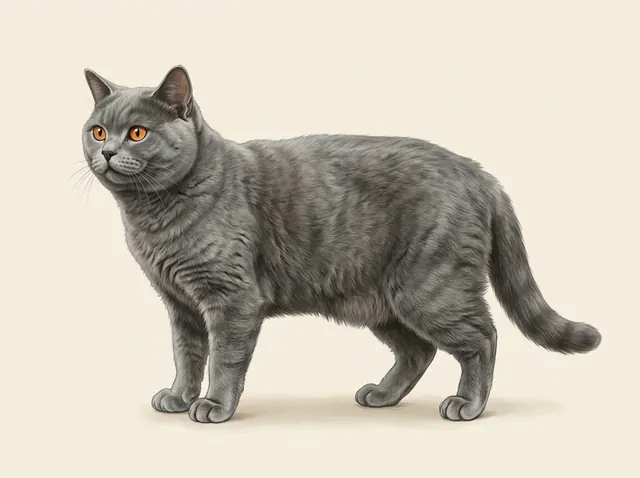
Where the Chartreux comes from
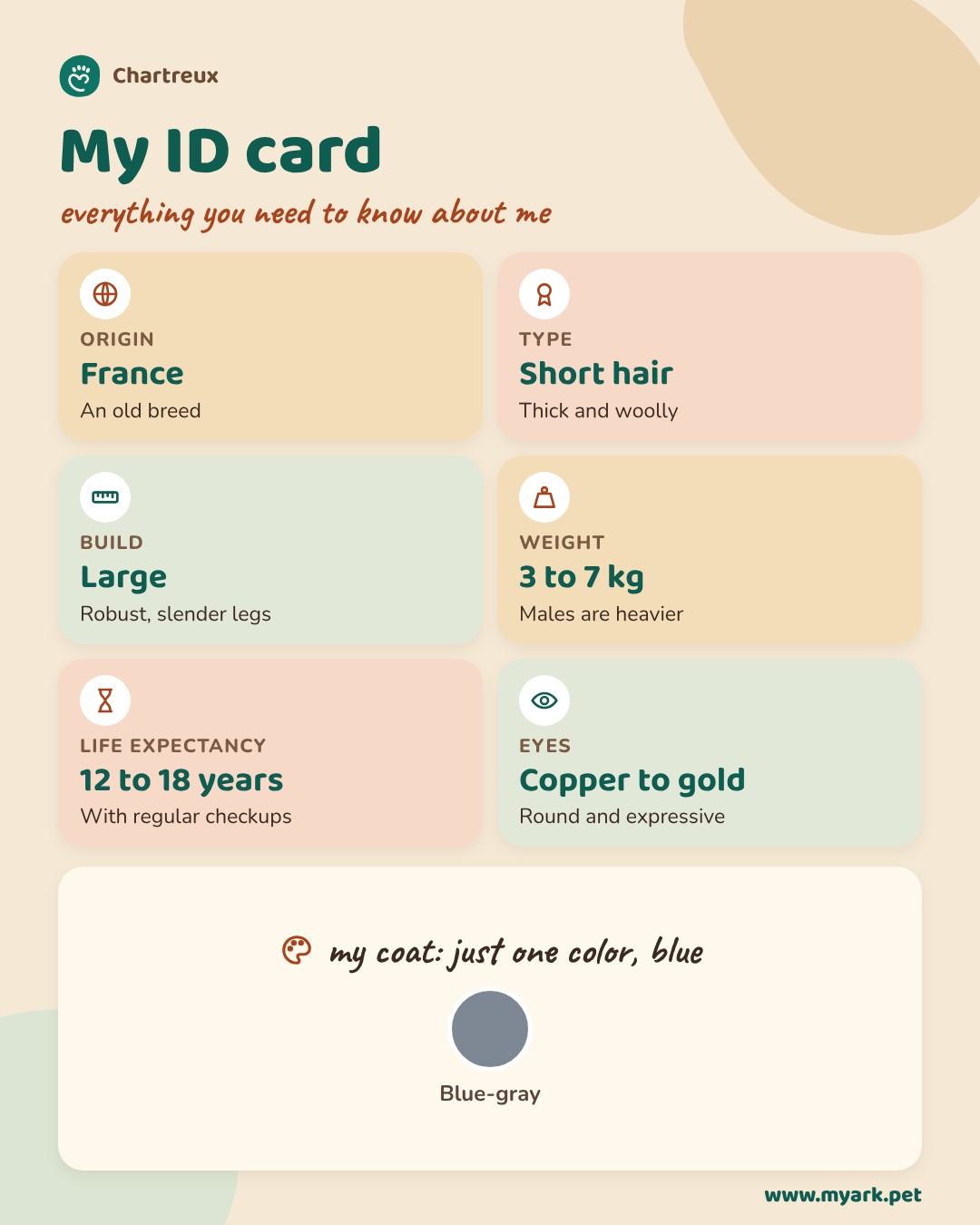
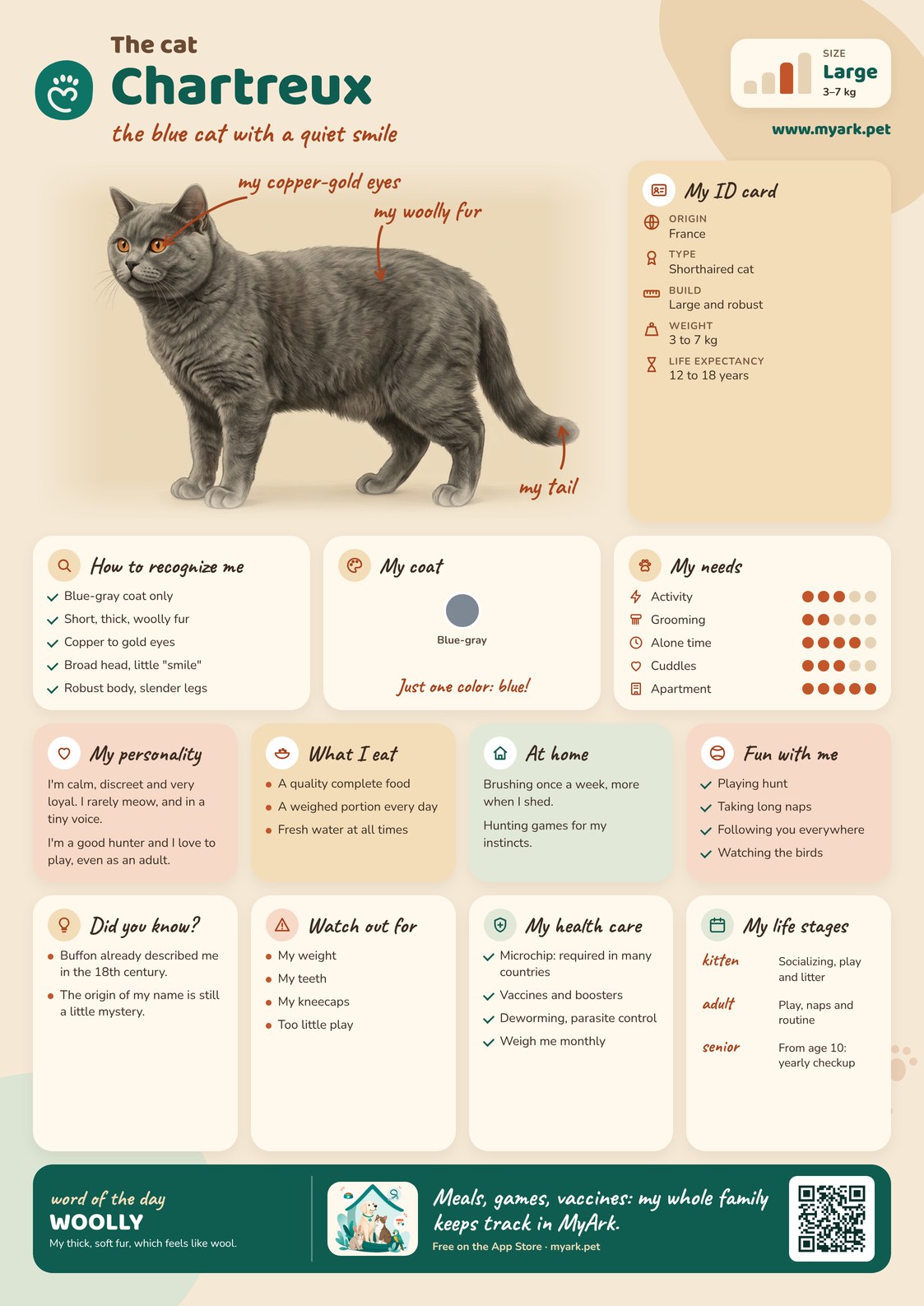
A robust short-haired cat known in France for centuries, prized as a hunter and once used by furriers for its thick, woolly coat. Buffon described it precisely in the 18th century.
The origin of its name is still a small mystery.
How to recognise me
- unique blue-grey coat
- short, thick, woolly coat
- copper to gold eyes
- broad head with a little “smile”
- robust body, fine legs
My colours
- Blue-grey
What a Chartreux needs day to day
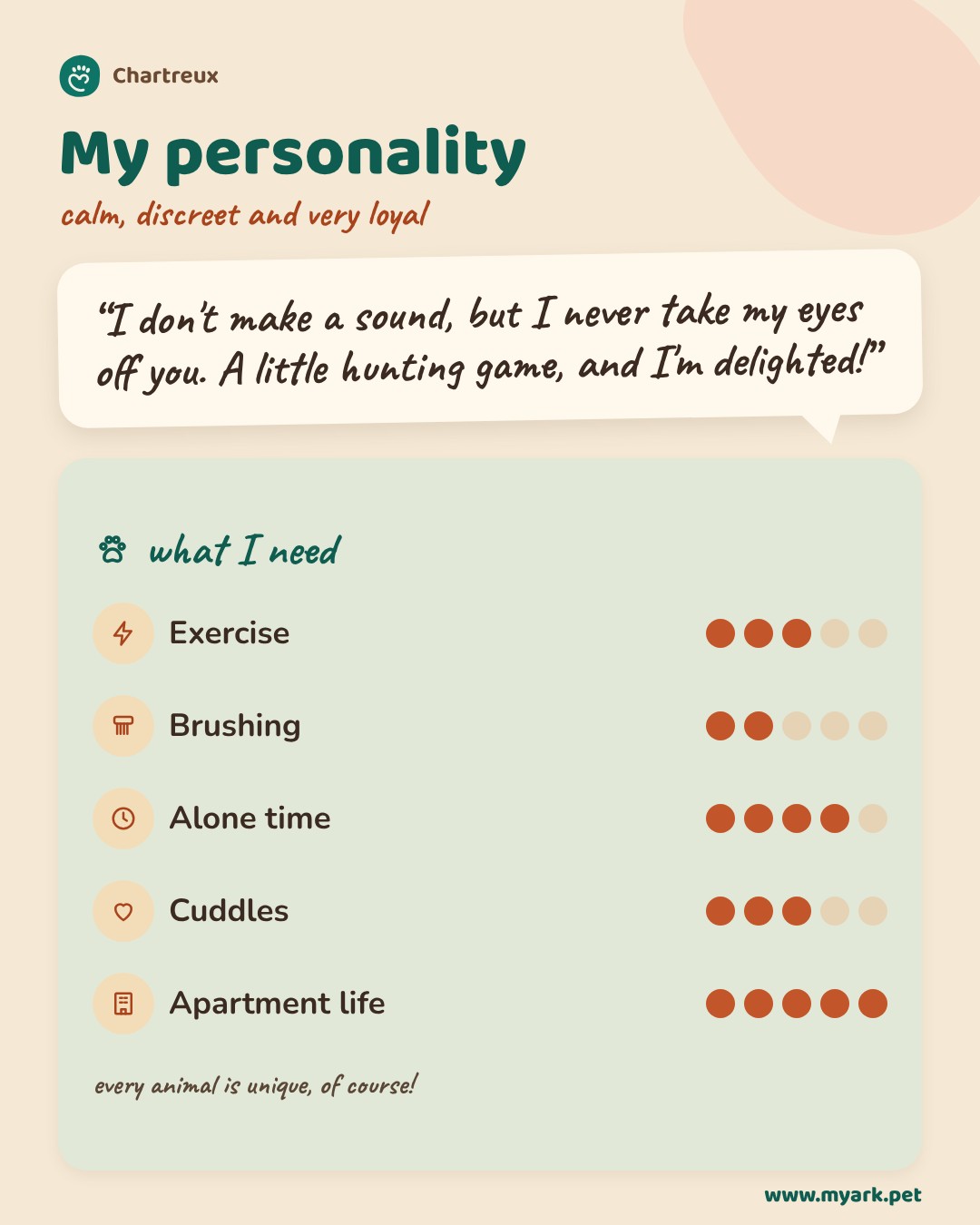
“I don’t make a sound, but I never take my eyes off you. A little hunting game, and I’m happy!”
Its exercise needs are moderate: daily hunting games keep its instinct and weight in balance.
At a glance
- Cuddles
- 3 out of 5
every cat is unique, of course!
With me, we can go…
- hunting games
- long naps
- following you everywhere
- watching the birds
Living with a Chartreux: who does what
A cat’s care looks light, but it is daily, shared and easy to lose track of — litter, water, meals, play. Here is the Chartreux’s routine at a glance, and how a household can split it without a single “did anyone…?” message.
The routine at a glance
- every day
- a weighed ration; a hunting game; fresh water; a litter tray clean.
- every week
- a brush (more during the moult); a claw check.
- every month
- a weigh-in; flea and worming treatment on your vet’s schedule; a claw check.
- every year
- the vet check-up and vaccine boosters.
Sharing it out
- Daily hunting games on a name.
- One feeding rule for everyone.
- Children make great fishing-rod partners.
Before it arrives, agree on…
- who feeds it and how much
- who plays with it
- who scoops the litter
- indoor only, or a safe garden
- who brushes it during the moult
How MyArk helps the household keep track
Pet weight tracker
A monthly weigh-in.
See the featureFamily pet chores
Litter and play on named people.
See the featurePet feeding tracker
Log meals.
See the featurePet sitter instructions
Routine and contacts for a sitter.
See the featureFeeding, grooming and health routine
The coat is easy to keep: an occasional brush removes the dead hair.
What I eat
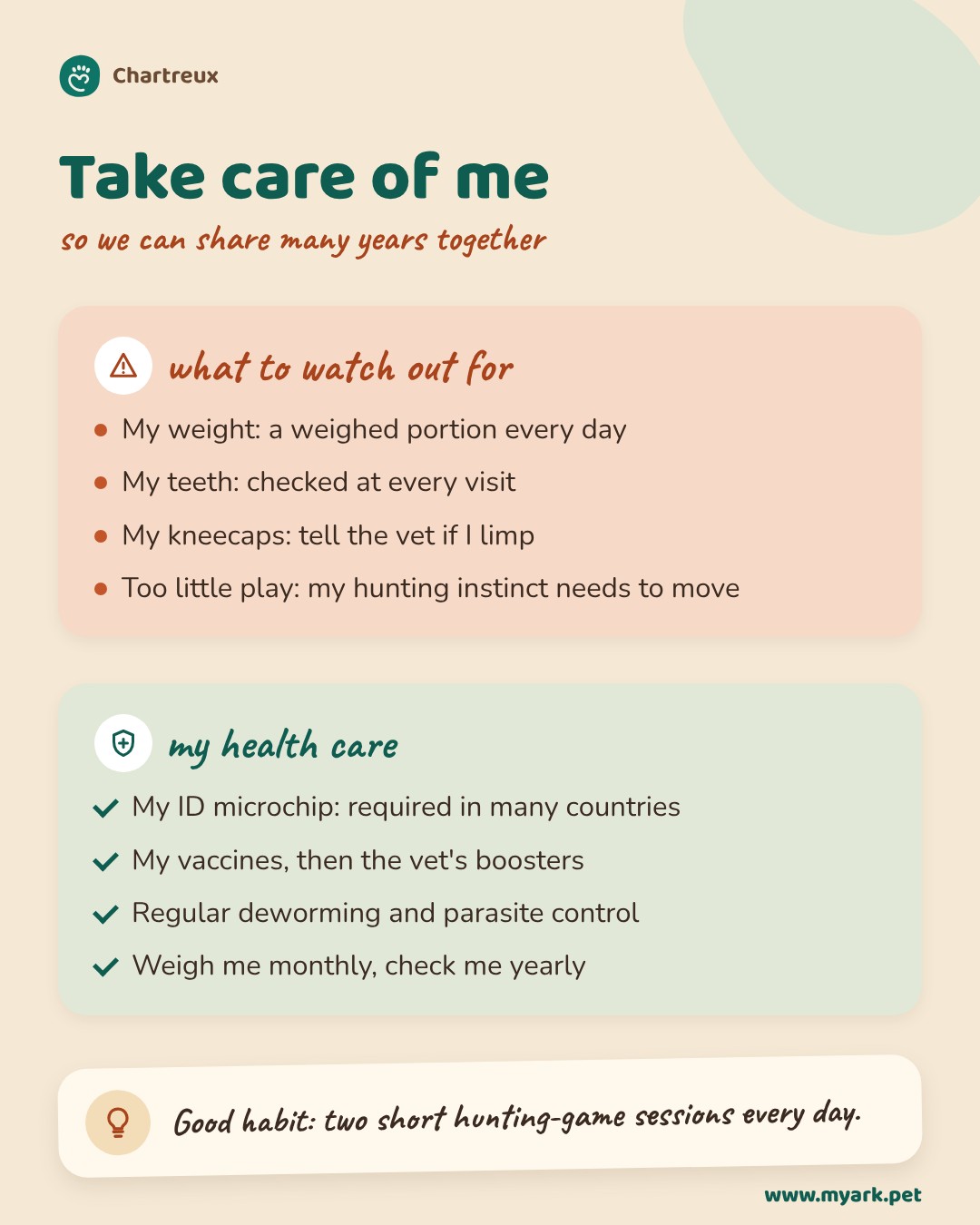
- a good-quality complete food
- a weighed ration every day
- fresh water at all times
My health routine
- a microchip registered with your details (a legal requirement for cats in England and in France)
- core vaccinations, then boosters on the schedule your vet sets
- worming and flea treatment on a regular schedule
- a weigh-in every month and a vet check-up every year
The stages of my life
- kitten
- Play, socialisation and discovering the home.
- adult
- Daily play, a stable routine and yearly check-ups.
- senior
- From about 10 years old, more regular check-ups.
What to keep an eye on
MyArk describes predispositions through visible body shape and simple checks rather than a list of diseases: it is what you can verify from the outside, and act on when choosing a breeder.
Weight
A weighed ration every day.
Teeth
Tartar and gum problems are common in cats: check the mouth and have the teeth looked at every year.
Kneecaps
Mention any limping to your vet.
Lack of play
Its hunting instinct needs to move.
And, as for every cat:
- weight: extra weight raises the risk of diabetes and joint pain
- what it drinks and how it uses the litter tray: a change is worth a vet visit
- teeth, claws and coat, checked regularly
- parasite prevention and the vaccination schedule, with your vet
Is it the right cat for your household?
A cat needs a stable territory, resources in several places and daily play, whatever its breed. Before committing, consider rescues and rehoming charities too: many adult cats are waiting for a home.
- Home
- Happy in a flat with play.
- Young children
- Patient and gentle.
- Other pets
- Usually calm with other cats and cat-friendly dogs.
- First cat
- An excellent first cat.
- Time alone
- Copes well with ordinary working days.
Chartreux: straight answers
Is a Chartreux a quiet cat?
Yes: it rarely meows, but it follows its people closely.
Chartreux or British Blue?
The Chartreux is a separate French breed, lighter-boned, with a woolly coat.
How big does a Chartreux get?
It is a large, robust cat: an adult weighs roughly 3 to 7 kg.
What colours does the Chartreux come in?
The usual colours are and blue-grey.