Where the Somali comes from
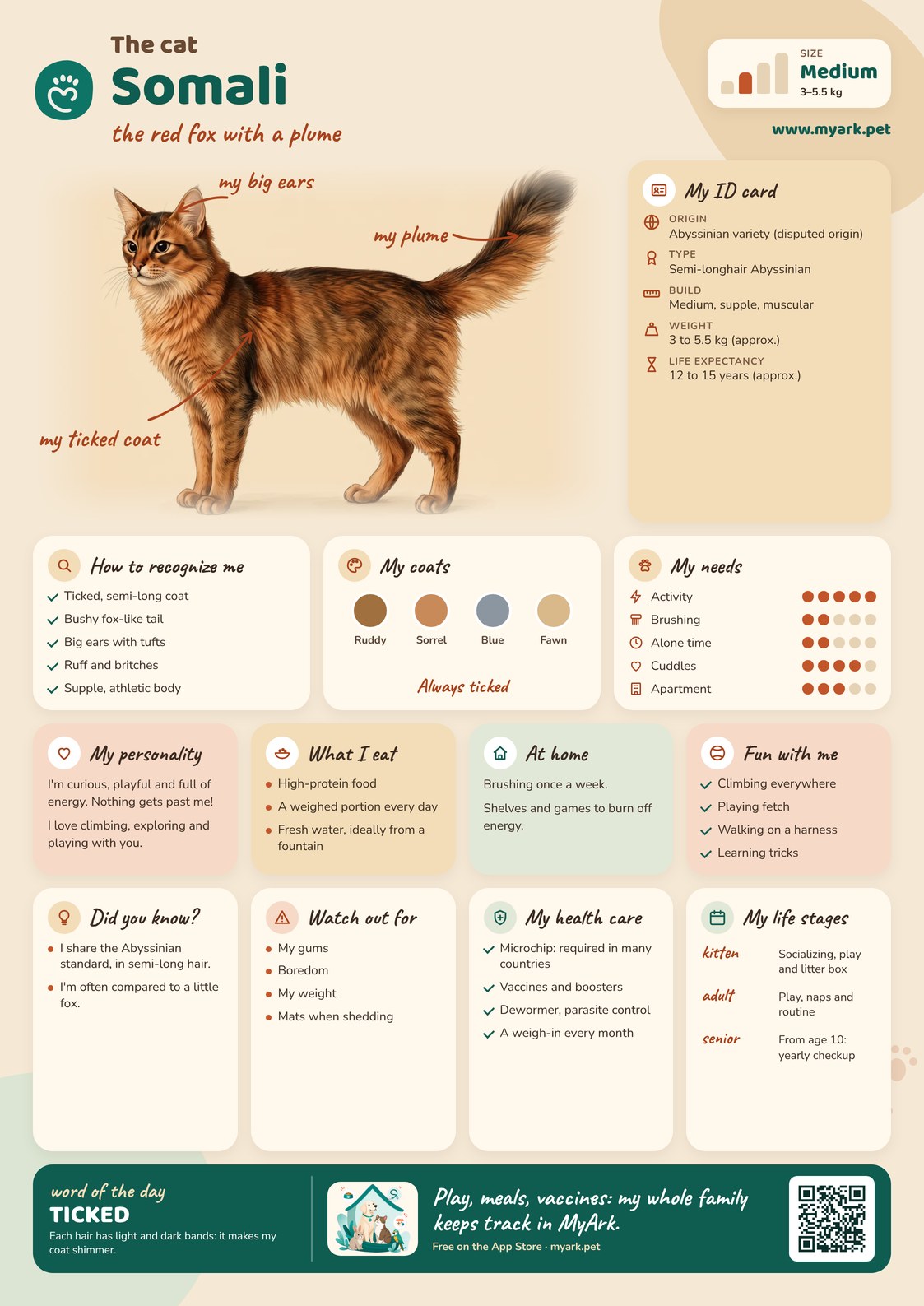
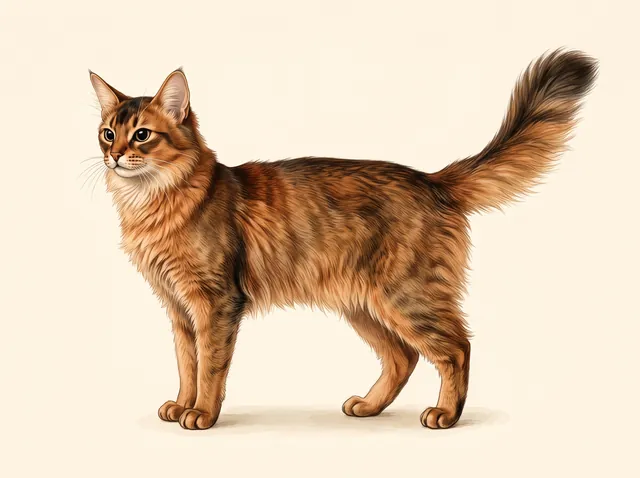
The semi-long-haired variety of the Abyssinian, with which it shares its LOOF standard: supple, agile and curious, with a ticked coat.
With its plumed tail, it is often compared to a little fox.
How to recognise me
- ticked, semi-long coat
- fox-like plumed tail
- large tufted ears
- ruff and breeches
- supple, athletic body
My colours
- Ruddy
- Sorrel
- Blue
- Fawn
What a Somali needs day to day
“With my plume, people take me for a little fox! Give me things to climb and play with, and I’m happy.”
Its exercise needs are very high: climbing, fetch and puzzle toys several times a day.
At a glance
- Cuddles
- 4 out of 5
every cat is unique, of course!
With me, we can go…
- climbing everywhere
- playing fetch
- harness walks
- learning tricks
Living with a Somali: who does what
A cat’s care looks light, but it is daily, shared and easy to lose track of — litter, water, meals, play. Here is the Somali’s routine at a glance, and how a household can split it without a single “did anyone…?” message.
The routine at a glance
- every day
- a weighed ration; two or three active play sessions; fresh water; a litter tray clean.
- every week
- a brush (more during the moult); a gum and claw check.
- every month
- a weigh-in; flea and worming treatment on your vet’s schedule; a claw check.
- every year
- the vet check-up and vaccine boosters; a dental check.
Sharing it out
- Play sessions are the core job: spread them out.
- Someone checks its gums and teeth.
- Agree what it may climb.
Before it arrives, agree on…
- who plays with it, morning and evening
- where its climbing space goes
- who checks teeth and gums
- who brushes it
- who covers long days away
How MyArk helps the household keep track
Family pet chores
Play, brushing and gum checks on named people.
See the featurePet health record
Dental notes in one place.
See the featurePet weight tracker
A monthly weigh-in.
See the featurePet sitter instructions
Play needs for a sitter.
See the featureFeeding, grooming and health routine
The coat needs regular brushing, more often during the moult.
What I eat
- a good-quality complete food
- a weighed ration every day
- fresh water at all times
My health routine
- a microchip registered with your details (a legal requirement for cats in England and in France)
- core vaccinations, then boosters on the schedule your vet sets
- worming and flea treatment on a regular schedule
- a weigh-in every month and a vet check-up every year
The stages of my life
- kitten
- Play, socialisation and discovering the home.
- adult
- Daily play, a stable routine and yearly check-ups.
- senior
- From about 10 years old, more regular check-ups.
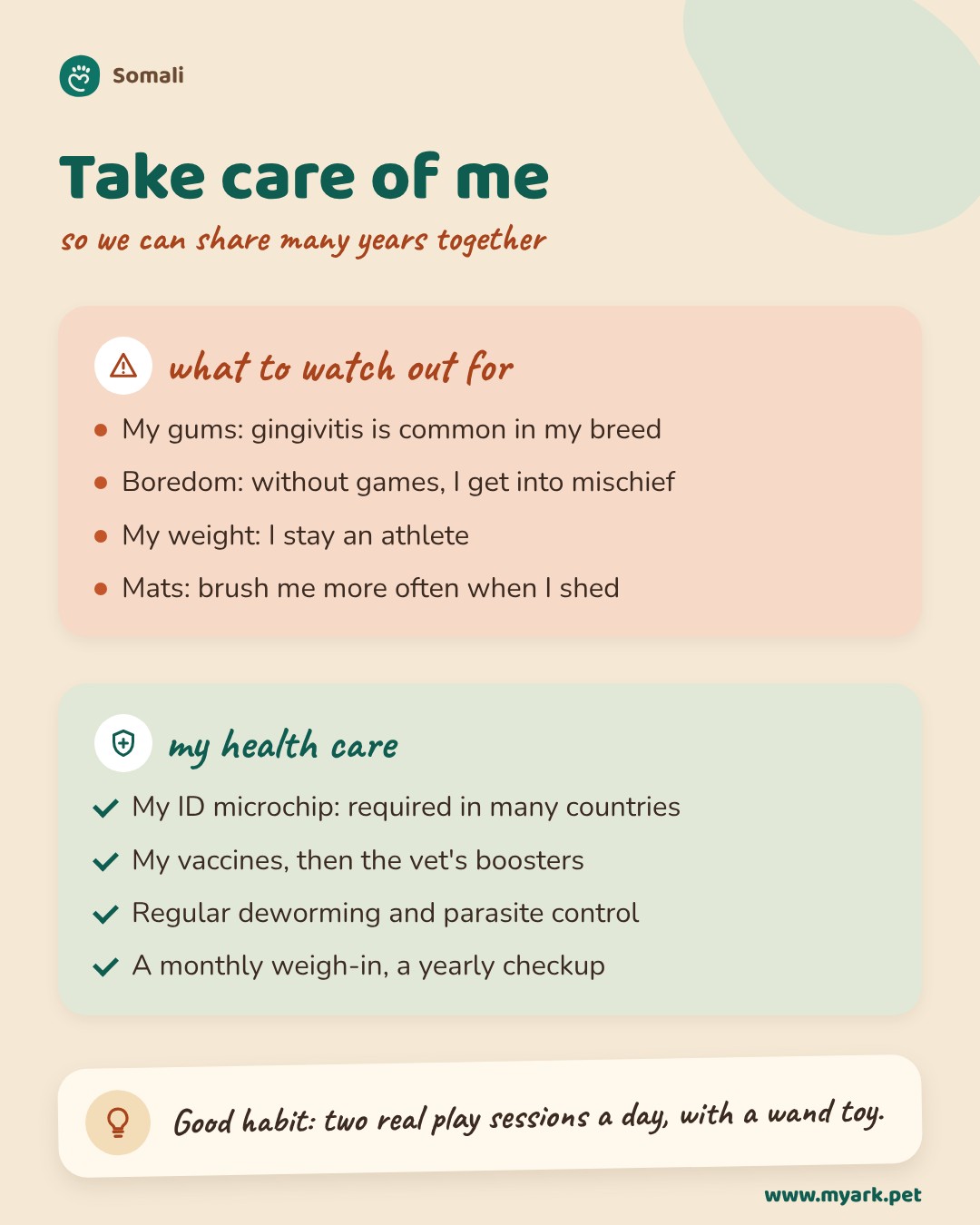
What to keep an eye on
MyArk describes predispositions through visible body shape and simple checks rather than a list of diseases: it is what you can verify from the outside, and act on when choosing a breeder.
Gums
Gingivitis is common in the breed: check the mouth regularly.
Boredom
Without play it gets into mischief.
Weight
It should stay an athlete.
Knots
Brush more often during the moult.
And, as for every cat:
- weight: extra weight raises the risk of diabetes and joint pain
- what it drinks and how it uses the litter tray: a change is worth a vet visit
- teeth, claws and coat, checked regularly
- parasite prevention and the vaccination schedule, with your vet
Is it the right cat for your household?
A cat needs a stable territory, resources in several places and daily play, whatever its breed. Before committing, consider rescues and rehoming charities too: many adult cats are waiting for a home.
- Home
- Copes with a flat if it has climbing space and a lot of play.
- Young children
- Playful with active, respectful children.
- Other pets
- Often happier with another playful cat.
- First cat
- Demanding: best for an active household.
- Time alone
- Copes badly with long days alone.
Somali: straight answers
Somali or Abyssinian?
Same breed family and character; the Somali has a semi-long coat and a plumed tail.
Is a Somali a calm cat?
No: it is very active and curious.
How big does a Somali get?
It is a medium-sized, athletic cat: an adult weighs roughly 3 to 5 kg.
What colours does the Somali come in?
The usual colours are ruddy, sorrel, blue and fawn.