
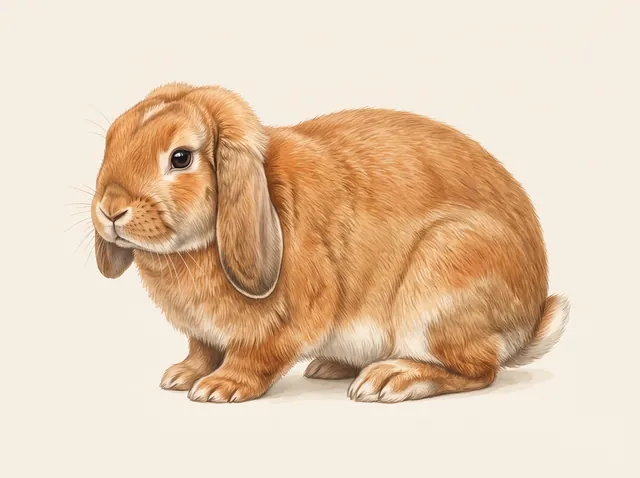
Why neuter your rabbit
- Uterine cancer
- According to the MSD Veterinary Manual, it is the most common tumour in rabbits. It becomes more and more common with age, often spreads to the lungs and liver, and is usually fatal. Spaying removes this risk, along with the risk of ovarian cancer.
- Unwanted litters
- According to the PDSA, most female rabbits can become pregnant at around 3 months old, even by a brother from the same litter.
- Behaviour
- A neutered rabbit is much less inclined to aggression towards people and to urine marking.
- Living in pairs
- Neutered rabbits fight much less, so they can live as a pair or a group.
At what age
The benchmarks vary a little between sources: your vet will choose the right time based on your rabbit’s size and maturity.
- MaleCastration possible from about 10 weeks according to the PDSA, around 3 months according to the Scottish Government’s pet rabbit welfare guidance.
- FemaleSpaying usually from 4 to 6 months, depending on the source (Scottish guidance, PDSA, MSD Veterinary Manual).
- Large breedsSometimes later, up to about 8 months, according to the PDSA.
Be careful: according to the PDSA, a male can stay fertile for up to 6 weeks after castration. Keep him away from unspayed females during that time. A female, on the other hand, is infertile from the day of the operation.
Neutering and living in pairs
Rabbits need the company of another rabbit. According to the PDSA and the RSPCA, the easiest pairing is a neutered male with a neutered female. Two females can also get on well if they were brought together young and spayed at puberty, according to the Scottish Government’s guidance.
- Have both rabbits neutered and let them recover from the operation before introducing them.
- Start with side-by-side pens, separated by a barrier: they can see and smell each other without biting.
- Move on to short, supervised meetings in a neutral space, with hiding places.
- Separate them immediately if there is serious or repeated aggression, and ask for advice.
- Don’t house a rabbit with a guinea pig, even a neutered one.
Before and after the operation
Neutering is a routine and relatively safe operation. Its main risk, according to the PDSA, is gut stasis. Follow your vet’s instructions exactly before the operation: in rabbits, going without food can upset the gut, according to the MSD Veterinary Manual.
- They must start eating again soon after waking up: offer their usual hay and greens.
- Watch their droppings: fewer droppings, or soft ones, should be reported to your vet.
- Check the wound at least twice a day: redness, swelling, discharge or a loose stitch.
- If they live in a pair, ask your vet whether their companion can stay with them: according to the Scottish guidance, their presence is reassuring.
When to call your vet back
In the days after, the whole household keeps watch
After the operation, appetite and droppings need watching hour by hour. In MyArk, everyone notes what they have seen in the shared care log: the household knows at any moment when your rabbit last ate.
- Every meal and every observation logged with the time and the person’s name
- A reminder for each medicine prescribed after the operation
- The neutering date kept in the health record
- The weight chart, to follow the recovery
Common questions
Why spay a female rabbit?
Above all to protect her from uterine cancer, the most common tumour in female rabbits and often fatal after the age of 3. It also prevents litters and makes living in pairs easier.
At what age should a rabbit be neutered?
Males from about 10 weeks to 3 months, females from 4 to 6 months, later for large breeds. Your vet will decide the right time for your rabbit.
Can a castrated rabbit still get a female pregnant?
Yes, for about 6 weeks after the operation, according to the PDSA. Keep him away from unspayed females during that time.
Should a rabbit who lives alone be neutered?
Rabbits need another rabbit for their wellbeing. And for a female, even one living alone, spaying protects her from uterine cancer. Talk it through with your vet.
Does neutering change a rabbit’s personality?
It mainly reduces aggression, urine marking and fighting between rabbits. Some mounting or gentle nipping may carry on, which is harmless.
What are the risks of the operation?
It is a routine and relatively safe operation. The main risk is gut stasis in the days that follow: watch their appetite and droppings, and call at the slightest doubt.
Sources
Benchmarks checked on 21 October 2026 in the documents below, then rewritten in plain English. They do not replace an examination and advice from your vet, who adapts care to your pet and to where you live.
- MSD Veterinary Manual, Disorders Affecting Multiple Body Systems of Rabbits (2026)
- MSD Veterinary Manual, Routine Health Care of Rabbits (2026)
- PDSA, Rabbit neutering: castration and spaying guide (2022)
- Scottish Government, Pet rabbit welfare guidance — section 7: preventing suffering, injury and disease (2018)
- Scottish Government, Pet rabbit welfare guidance — section 6: living with or apart from other animals (2018)
- RSPCA, Keeping rabbits with other animals (company and companionship)
- MSD Veterinary Manual, Illness of Rabbits (2026)