
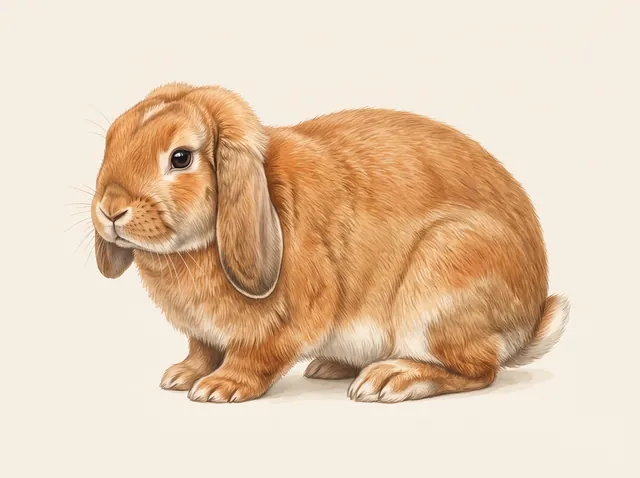
Flystrike: the summer danger
Flystrike happens when flies lay eggs in the fur, most often around the bottom. The maggots that hatch burrow under the skin and feed on the tissue. It is extremely painful and can be fatal without prompt treatment. It is most common in summer, when flies are active.
Any rabbit can be affected, but the risk is much higher for a rabbit with a dirty bottom: diarrhoea, soft droppings, or a rabbit who can no longer groom because of obesity, dental pain or arthritis.
- Check their bottom every day, and at least twice a day in warm weather, as the Scottish Government’s pet rabbit welfare guidance recommends.
- Remove droppings, dirty litter and wet bedding every day.
- Ask your vet which preventive product to use in summer, and how often to reapply it.
- A hay-rich diet limits the soft droppings that stick to the fur.
- Brush a long-haired rabbit regularly, and have the fur around the bottom trimmed in summer.
Fleas: look at the dog and cat first
According to the PDSA, a rabbit’s fleas usually come from a dog or cat in the home. If they are treated regularly, your rabbit is unlikely to catch any, and routine flea treatment for the rabbit is generally not needed. Wild rabbits can also pass on fleas, which sometimes carry myxomatosis: avoid any contact.
If your rabbit does have fleas, your vet will prescribe a treatment for them, for their surroundings and for the other animals in the household, sometimes in several rounds.
Ear mites and “walking dandruff”
- Ear mites
- Common in rabbits. They cause thick, brown, very itchy crusts in the ears: the rabbit shakes their head and scratches. Never pick off the crusts: it hurts and makes the ears bleed. The mite survives up to 3 weeks in the environment, so all the rabbits and their space are treated together.
- Fur mites
- Nicknamed “walking dandruff”: you can see the flakes moving on the skin. They cause itching, crusts and sometimes hair loss, and can irritate people’s skin too.
Worms and E. cuniculi: one for your vet
Rabbits don’t have a routine worming schedule like dogs and cats: internal parasite treatment is decided case by case with your vet.
A microscopic parasite, Encephalitozoon cuniculi, is fairly common in rabbits, often with no signs at all. It spreads through urine, on food, water, litter or toys, and can affect the brain and kidneys: head tilt, weak back legs, loss of balance. It is often hard to diagnose, and no treatment guarantees a cure.
- Keep a new rabbit apart from the others for about a month, and ask your vet whether to give a parasite treatment on arrival, as the PDSA suggests.
- Don’t share hutches, runs or bowls between groups of rabbits, and clean with a suitable disinfectant.
- This parasite can also affect people with weakened immunity: wash your hands after handling and ask your doctor for advice if needed.
Products you must never use
When to ask for advice
Protection timed to the season
Enter the summer preventive treatment your vet prescribed and how often it is due: MyArk alerts everyone in the household on the date of the next one. Whoever does it ticks it off, and the next date is worked out automatically.
- A reminder on the prescribed product’s schedule, throughout fly season
- Flea treatment for the household’s dog and cat in the same calendar
- Every treatment kept in your rabbit’s health record
- The shared care log, to note who checked their bottom today
Common questions
Does my rabbit need flea treatment all year round?
Not necessarily. According to the PDSA, if the household’s dog and cat are protected, routine treatment for the rabbit is generally not needed. Your vet will decide based on your situation.
What is flystrike in rabbits?
Flies lay eggs in soiled fur, and the maggots burrow under the skin. It is a painful emergency, most common in summer. Check your rabbit’s bottom every day, and at least twice a day in warm weather.
Can I use my cat’s flea treatment on my rabbit?
No, not without your vet’s agreement. Some dog and cat products are toxic to rabbits, especially those containing fipronil, which can kill them.
My rabbit has crusts in their ears: what should I do?
It is often ear mites. See your vet and don’t pick off the crusts. All the rabbits in the household and their surroundings will need treating at the same time.
Do rabbits need worming?
There is no routine schedule as there is for dogs and cats. Your vet will decide, for example when a new rabbit arrives or if signs appear.
What is E. cuniculi?
A microscopic parasite common in rabbits, often without signs, which can affect the brain and kidneys (head tilt, balance problems). It spreads through urine: good hygiene and quarantining new rabbits reduce the risk.
Sources
Benchmarks checked on 21 October 2026 in the documents below, then rewritten in plain English. They do not replace an examination and advice from your vet, who adapts care to your pet and to where you live.
- PDSA, Flystrike in rabbits (2021)
- Scottish Government, Pet rabbit welfare guidance — section 7: preventing suffering, injury and disease (2018)
- PDSA, Fleas, mites and lice in rabbits (2020)
- MSD Veterinary Manual, Skin Disorders of Rabbits (2026)
- PDSA, E. cuniculi in rabbits (2021)
- MSD Veterinary Manual, Disorders Affecting Multiple Body Systems of Rabbits (2026)