
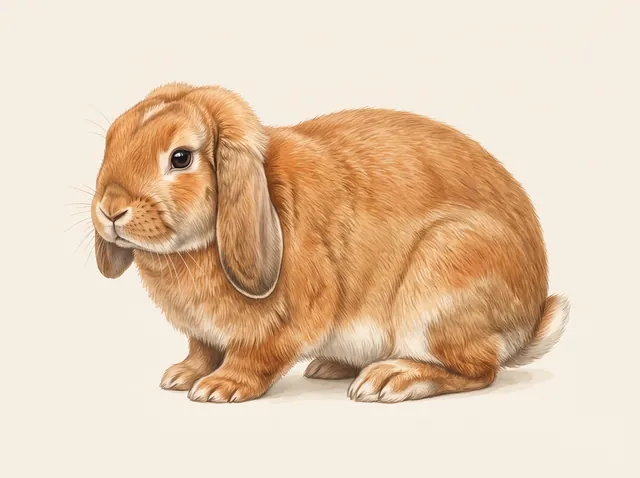
The body condition chart
The UK veterinary charity PDSA offers a simple three-level chart, based on what you can see and feel under your hand. It works for every breed, because the ideal weight varies but the right shape does not:
- 1: too thin
- Wasted muscles, hollow rump; ribs, spine and hips sticking out, feeling sharp.
- 2: ideal weight
- You can feel the ribs, spine and hips without seeing them; the rump is flat and the belly doesn’t sag.
- 3: obese
- Thick layers of fat, rounded rump; you can no longer feel the ribs or other bones.
A healthy rabbit generally has no visible waist: don’t look for one as you would on a dog.
Checking your rabbit’s shape
- Base of the tailGently pinch where the tail meets the spine: there should be no roll of fat.
- RibsRun your flat hands along their sides: the skin should slide freely over ribs that are easy to feel.
- Spine and hipsAlong the back, they should be easy to feel under the skin, without sticking out.
- BellyIt should tuck in, not sag.
Keep your rabbit on all four feet, well supported: according to the PDSA, you should never turn a rabbit onto their back, which is very stressful for them.
Weighing your rabbit and tracking the trend
- Weigh yourself holding your rabbit snugly against you, then without them, and work out the difference.
- For a small rabbit this method isn’t precise enough: your vet can weigh them on suitable scales.
- Weigh them and note the result at least once a month, as the Scottish Government’s pet rabbit welfare guidance recommends.
- Weight loss can reveal a dental problem or another illness: it is the trend that counts.
Why weight matters so much
An overweight rabbit can no longer turn round to clean their bottom: according to the PDSA, they are at risk of flystrike, when flies lay eggs in soiled fur. Excess weight also contributes to arthritis and heart problems, and wears away the fur under the back feet until the skin becomes sore.
The causes are often the same: too many pellets, muesli-style mixes, too many treats, and not enough space to move.
Helping your rabbit lose weight safely
- Start with your vet: they will rule out illness and set a target. Many practices run weight clinics.
- Keep hay unlimited: you never ration a rabbit’s hay.
- Weigh the pellets and cut out sugary treats.
- Give them space and chances to move every day: exercise matters as much as diet.
- Aim for slow weight loss: according to the PDSA, losing weight too quickly can cause liver problems.
When to ask for advice
Track your rabbit’s weight on a chart
Log every weigh-in in MyArk: the chart shows everyone in the household whether the weight is stable, or whether a diet is bringing it down gently, and the latest weigh-in is to hand at the vet’s.
- A weight chart for each pet, over time
- A weigh-in reminder, for example every month
- Meals logged by the whole household: no more double treats
- An up-to-date weight for the vet and for dosing a treatment
Common questions
How do I know if my rabbit is overweight?
Run your hands over their sides and back: if you can no longer feel their ribs, spine or hips, if a roll forms at the base of the tail or their belly sags, they are probably overweight. Your vet can confirm.
What is my rabbit’s ideal weight?
It depends on their breed and build: a dwarf rabbit and a giant rabbit are not comparable at all. The right body shape is the same for every rabbit, though; your vet can give you a target weight.
How often should I weigh my rabbit?
At least once a month, noting the result, and more often during a diet or an illness, as your vet advises.
How do you weigh a rabbit?
Weigh yourself holding them against you, then without them, and work out the difference. For a very small rabbit, the scales at the vet’s are more accurate.
Should I cut down the hay for an overweight rabbit?
No: hay stays unlimited. It is pellets, muesli-style mixes and treats that need cutting down, along with more exercise.
My rabbit is losing weight: is it serious?
Weight loss should always be reported to your vet: it is often one of the first signs of a dental problem or another illness.
Sources
Benchmarks checked on 21 October 2026 in the documents below, then rewritten in plain English. They do not replace an examination and advice from your vet, who adapts care to your pet and to where you live.