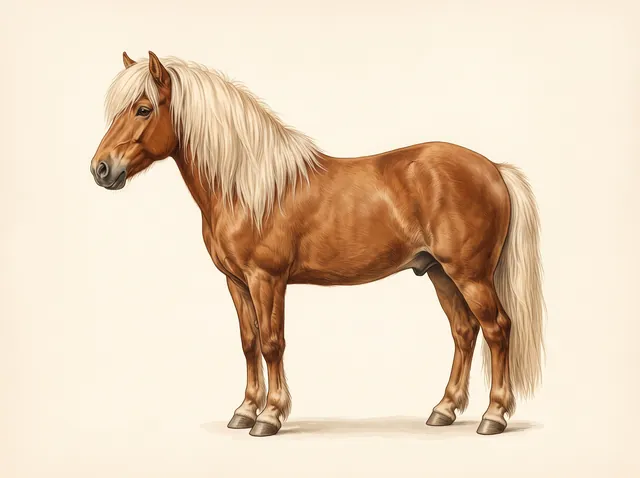
Where the Icelandic Horse comes from
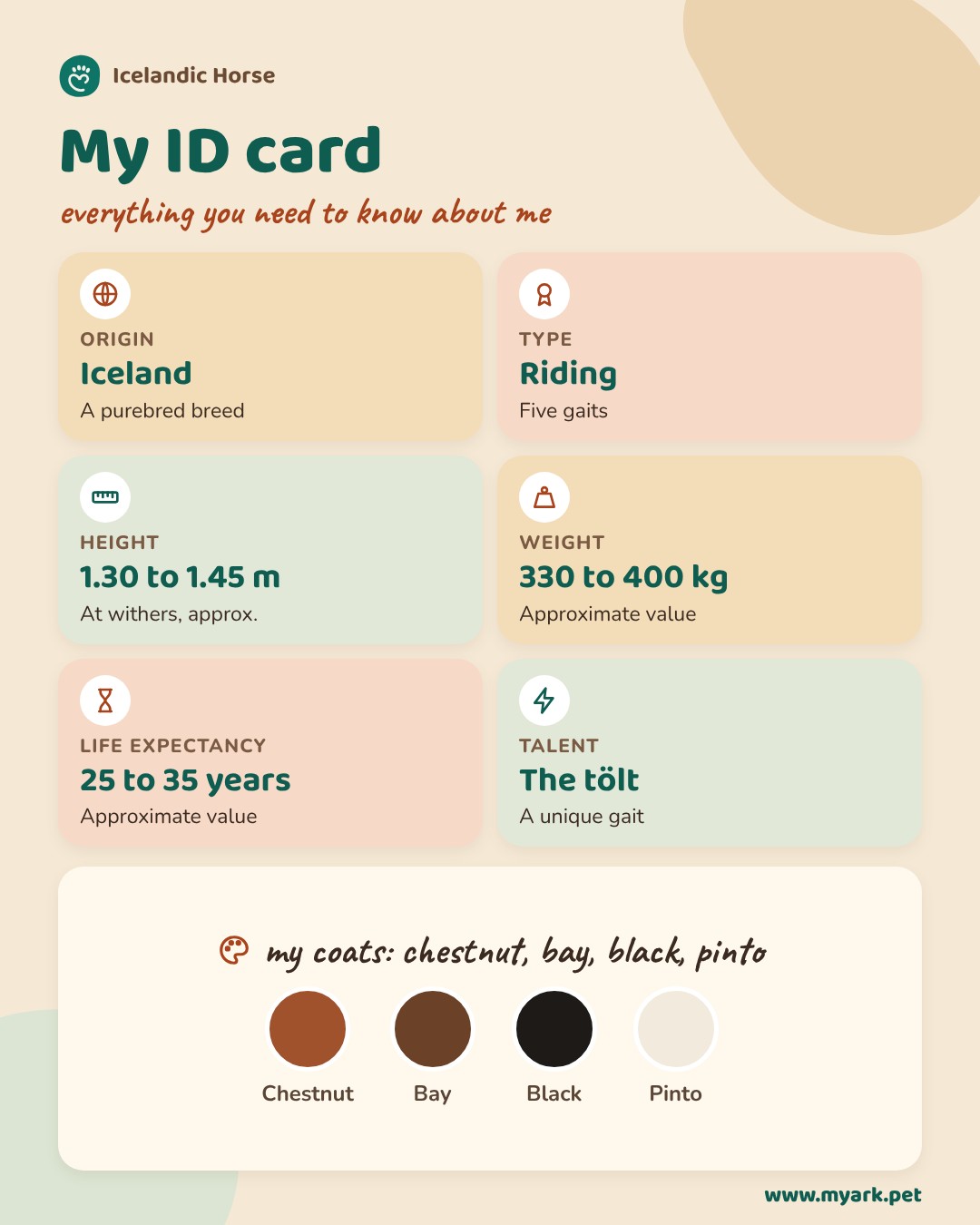
Iceland’s only horse breed, descended from the mounts brought by the Vikings. Horse imports have been banned in Iceland since the 10th century, so it has had no crossbreeding for more than a thousand years.
It has special gaits, including the tölt; a horse that leaves Iceland can never return.
Height at the withers: ideally 1.35–1.45 m (13.1–14.1 hh).
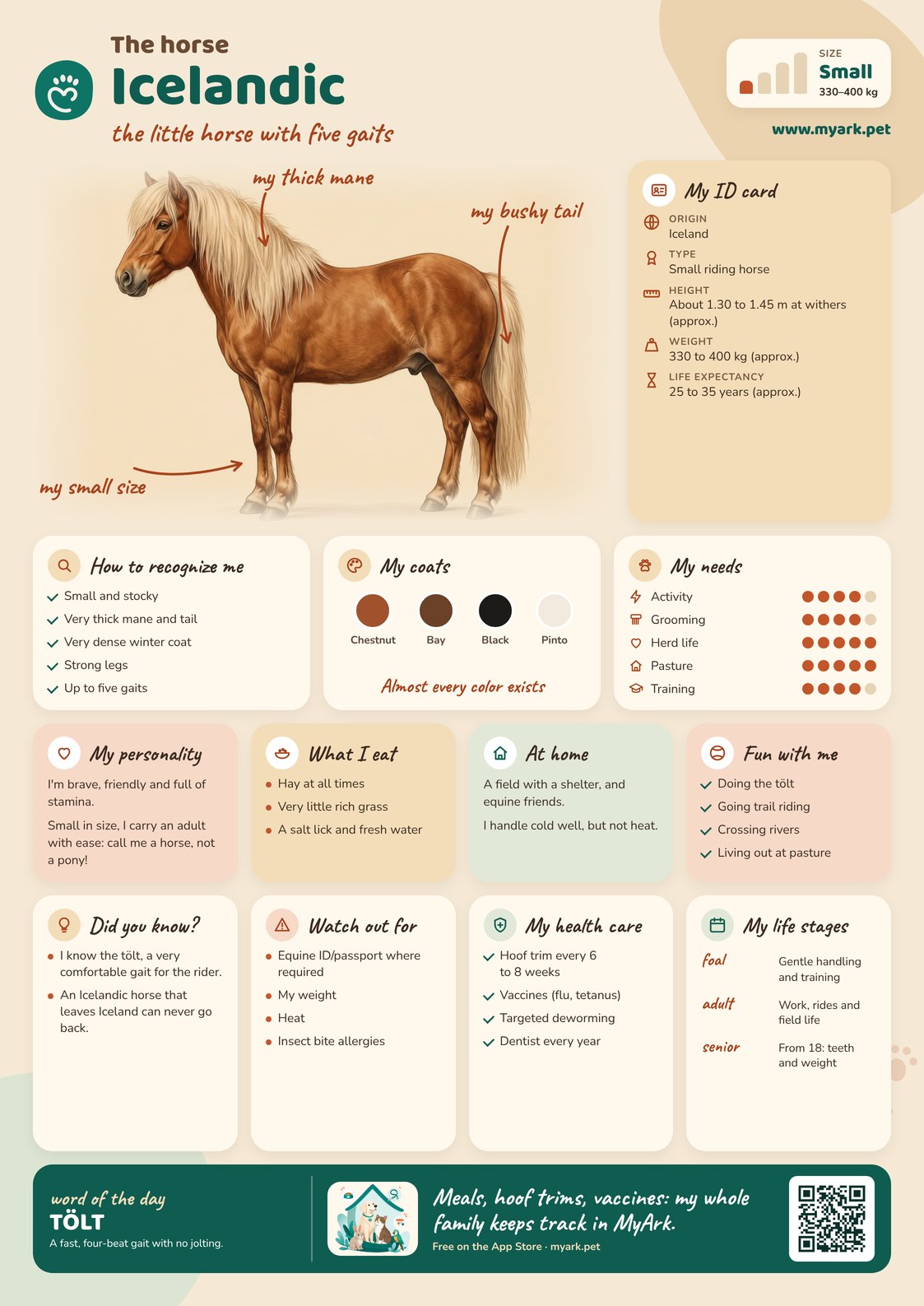
How to recognise me
- small, sturdy body
- very thick mane
- thick winter coat
- five gaits, including the tölt
- sure-footed
My colours
- Chestnut
- Bay
- Black
- Piebald or skewbald
What a Icelandic Horse needs day to day
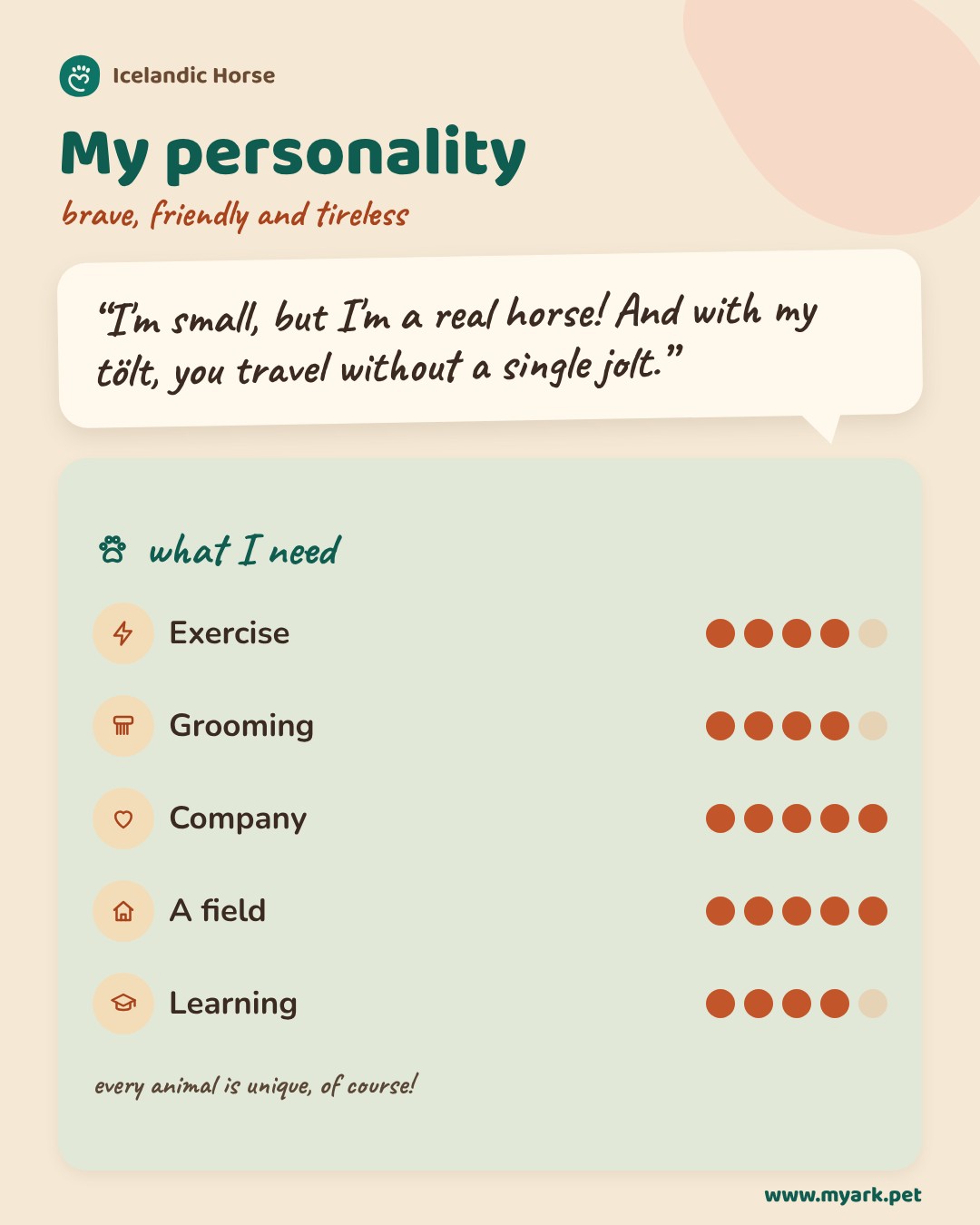
“I have five gaits and a big heart! I love open space, cold air and my herd.”
Its exercise needs are moderate to high: trail riding, tölt and living out with a herd.
At a glance
- Exercise
- 4 out of 5
- Grooming
- 4 out of 5
- Company
- 5 out of 5
- A field
- 5 out of 5
- Learning
- 4 out of 5
every horse is unique, of course!
With me, we can go…
- the tölt
- trail riding
- crossing rivers
- living out in the field
Living with a Icelandic Horse: who does what
A horse’s care is daily, often split between home and the yard — hay, water, turnout, mucking out, hooves — and easy to lose track of. Here is the Icelandic Horse’s routine at a glance, and how a household can split it without a single “did anyone…?” message.
The routine at a glance
- every day
- hay (measured) and water; turnout with company; picking out the hooves.
- every week
- grooming; a weight-tape check; a fly rug check in summer.
- every month
- a weight-tape check; a check of the field, fences and water; the farrier visit, every 6 to 8 weeks.
- every year
- vaccinations and the vet check-up; the equine dentist.
Sharing it out
- Summer insect protection on a name: fly rugs and shade.
- Grazing rules in spring.
- Rides shared fairly.
Before it arrives, agree on…
- who rides, drives or works it, and when
- who feeds the hay and how much
- who mucks out and checks the field
- who books the farrier and dentist
- who covers holidays
How MyArk helps the household keep track
Pet feeding tracker
Log hay, hard feed and supplements so no one feeds twice.
See the featureFamily pet chores
Mucking out, turnout and checks on named people.
See the featurePet health record
Farrier, dentist, vaccinations and worming in one place.
See the featureRecurring pet care reminders
Never miss the vaccination and worming dates.
See the featureFeeding, grooming and health routine
Coat care is a real commitment: frequent, sometimes daily brushing, and grooming appointments to budget from the start.
What I eat
- hay all year round
- a ration adapted to its work
- a salt lick and fresh water
My health routine
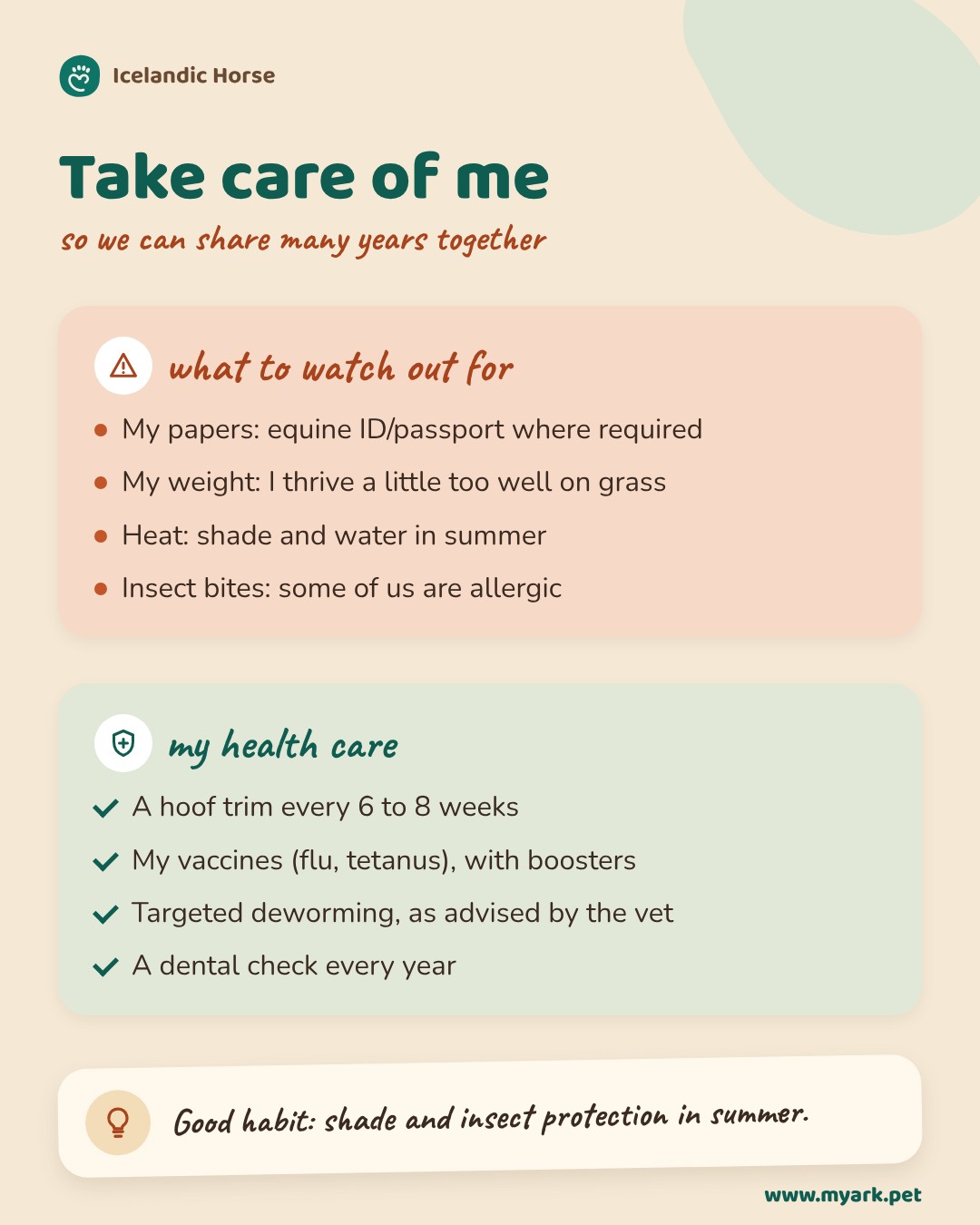
- a passport and a microchip (a legal requirement for horses in the UK and in France)
- vaccinations (equine flu, tetanus) on the schedule your vet sets
- targeted worming, guided by faecal egg counts
- the farrier every 6 to 8 weeks and an equine dentist every year
The stages of my life
- foal
- Handling, gentle education and a herd to grow up in.
- adult
- Regular work, turnout and a steady routine.
- senior
- From about 20 years old, adapted feeding and closer check-ups.
What to keep an eye on
MyArk describes predispositions through visible body shape and simple checks rather than a list of diseases: it is what you can verify from the outside, and act on when choosing a breeder.
Papers
Identification is a legal requirement: passport and microchip.
Weight
It does very well on grass.
Heat
Shade and water in summer.
Sweet itch
An allergy to midge bites: fly rugs and stabling at dusk and dawn.
And, as for every horse:
- weight and grass: rich spring grass and extra weight are the main causes of laminitis
- hooves trimmed or shod every 6 to 8 weeks, teeth checked every year
- vaccinations and worming, planned with your vet
- company: a horse lives badly alone, it needs at least one equine companion
Is it the right horse for your household?
A horse is a herd animal that needs a field, company and daily care for decades: the real question is less the breed than the time, the space and the budget your household has. Before buying, consider loaning, sharing or a rescue horse too.
- Space
- Happiest living out with a herd and shelter.
- Children
- Sturdy and kind, carries children and adults.
- Other animals
- Needs equine company.
- First horse
- A good first horse for a supported household.
- Time
- Daily care, all year round.
Icelandic Horse: straight answers
What is the tölt?
A smooth four-beat gait that is very comfortable to ride.
Can adults ride Icelandic horses?
Yes: despite their size, they are strong enough for adults.
How big does an Icelandic horse get?
Ideally about 1.35 to 1.45 m at the withers.
What colours does the Icelandic Horse come in?
The usual colours are chestnut, bay, black and piebald or skewbald.