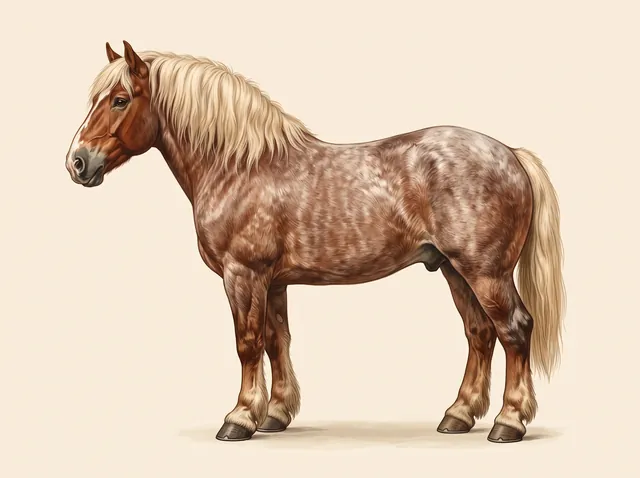
Where the Breton comes from
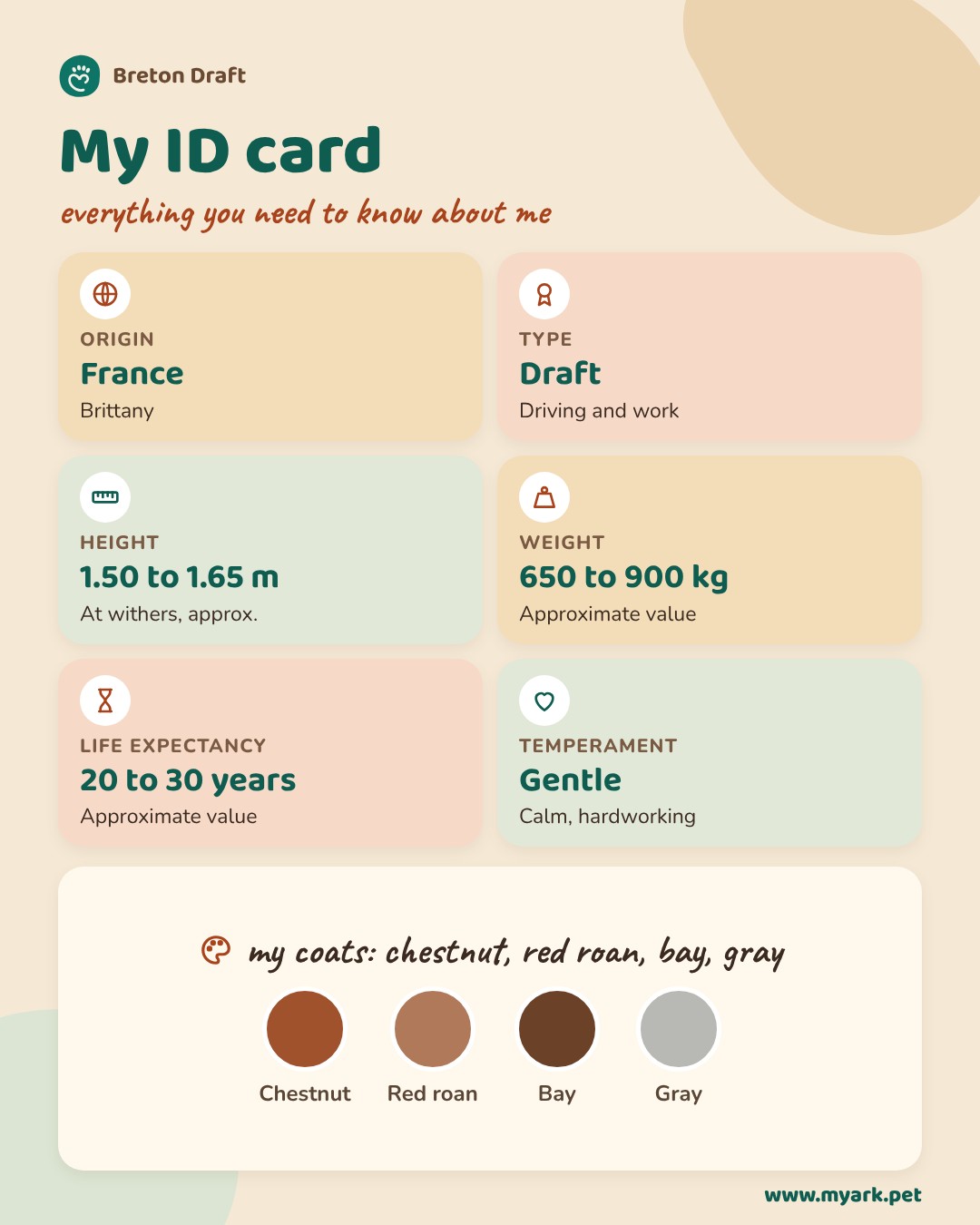
A draught horse descended from the Breton bidets, whose breeding was organised from the end of the 17th century.
Powerful and versatile, it was widely exported in the early 20th century and used to improve other draught breeds. There are two types: the draught Breton and the Postier Breton.
Height at the withers: about 1.58 m (15.2 hh).
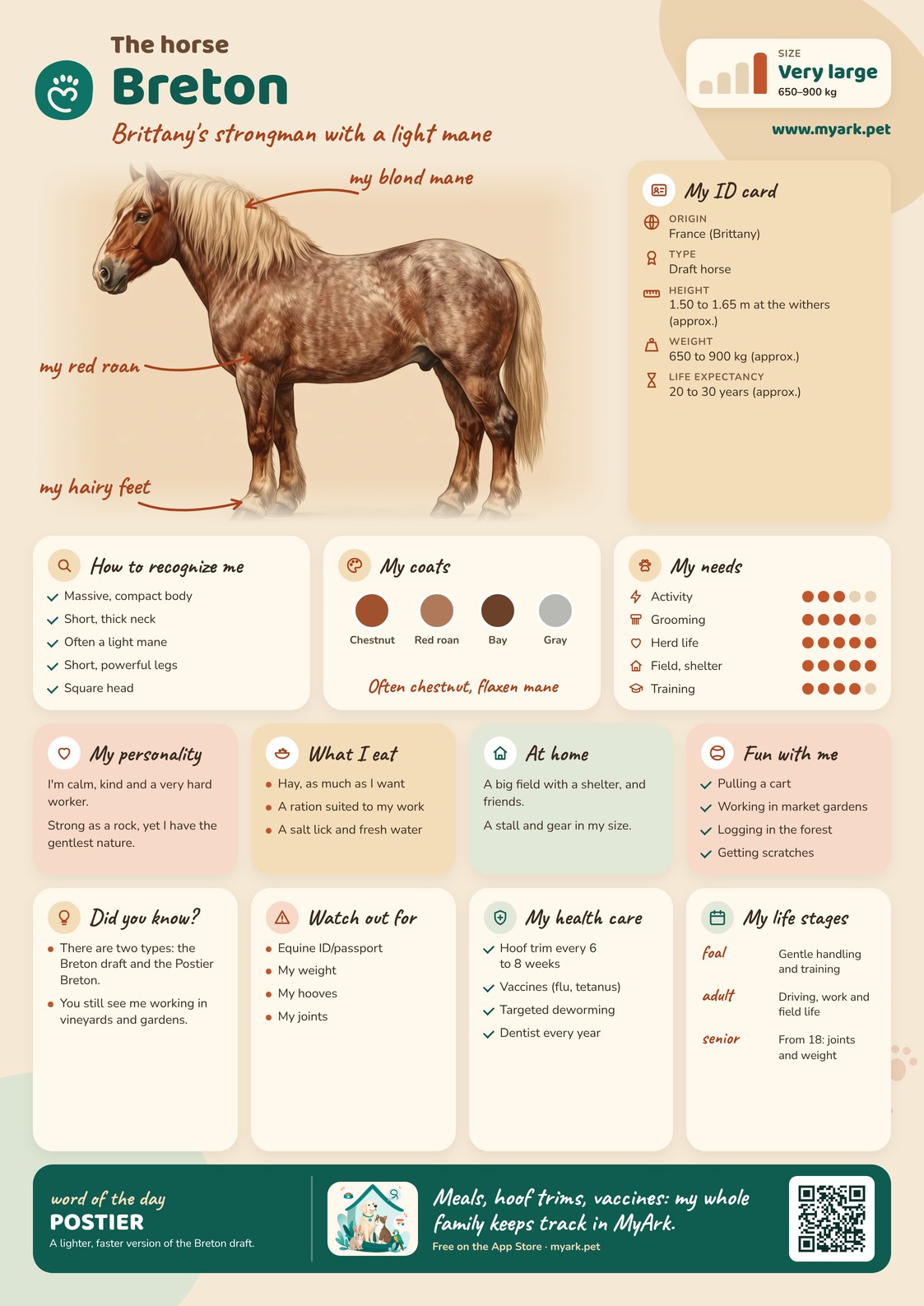
How to recognise me
- chestnut or roan coat
- pale mane and tail
- compact, powerful body
- short, strong legs
- broad chest
My colours
- Chestnut
- Strawberry roan
- Bay
- Grey
What a Breton needs day to day
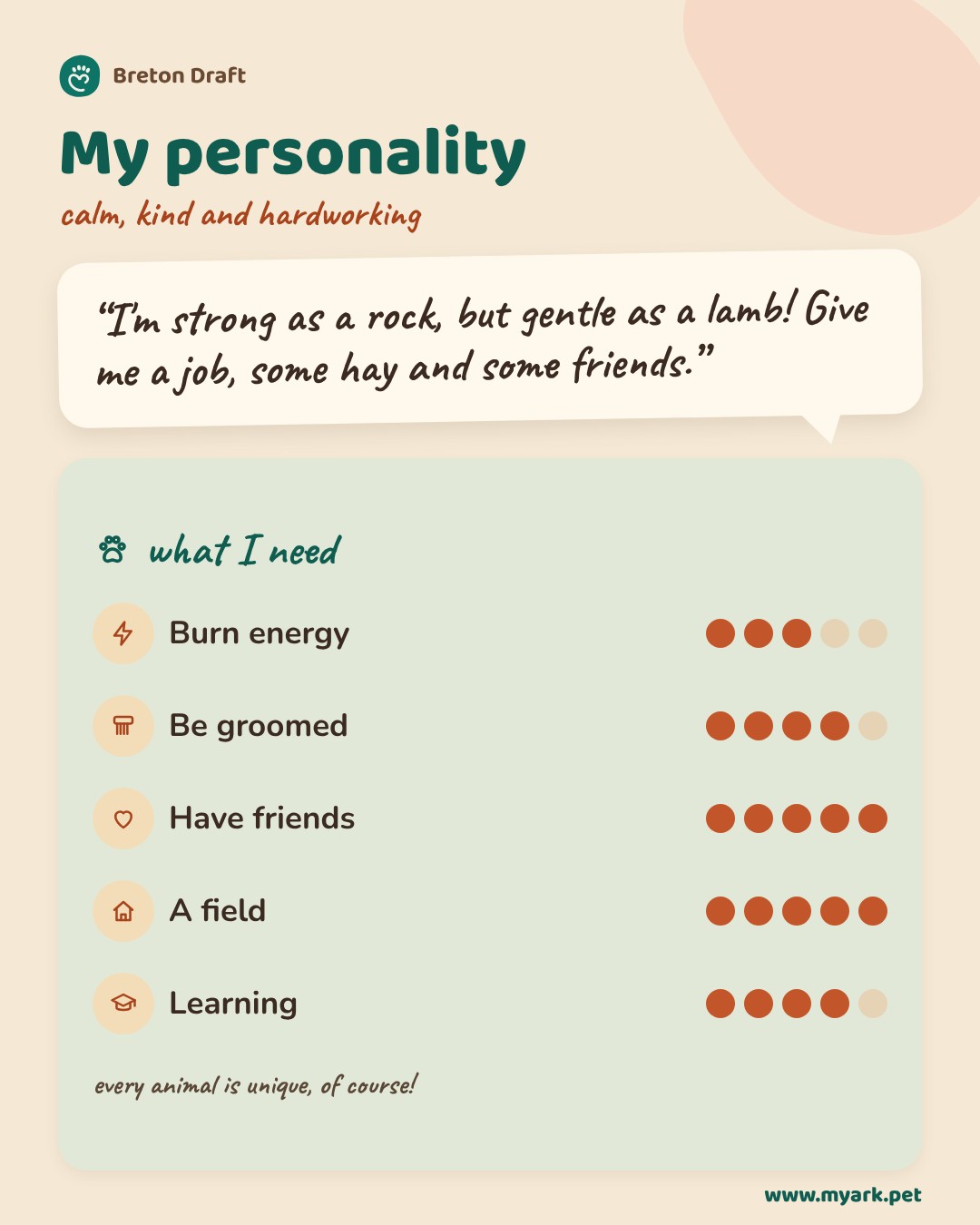
“I’m strong and calm! Driving, gardening or a good scratch: count me in.”
Its exercise needs are moderate: driving, light work and daily turnout.
At a glance
- Exercise
- 3 out of 5
- Grooming
- 4 out of 5
- Company
- 5 out of 5
- A field
- 5 out of 5
- Learning
- 4 out of 5
every horse is unique, of course!
With me, we can go…
- driving
- market gardening
- logging in the forest
- a good scratch
Living with a Breton: who does what
A horse’s care is daily, often split between home and the yard — hay, water, turnout, mucking out, hooves — and easy to lose track of. Here is the Breton’s routine at a glance, and how a household can split it without a single “did anyone…?” message.
The routine at a glance
- every day
- measured hay and water; turnout; picking out the hooves.
- every week
- grooming; a weight-tape check; a fence and water check.
- every month
- a weight-tape check; a check of the field, fences and water; the farrier visit, every 6 to 8 weeks.
- every year
- vaccinations and the vet check-up; the equine dentist.
Sharing it out
- Hay measured on one rule: it gains weight easily.
- Adults handle it in harness.
- Farrier for big feet on the calendar.
Before it arrives, agree on…
- who rides, drives or works it, and when
- who feeds the hay and how much
- who mucks out and checks the field
- who books the farrier and dentist
- who covers holidays
How MyArk helps the household keep track
Pet feeding tracker
Log hay, hard feed and supplements so no one feeds twice.
See the featureFamily pet chores
Mucking out, turnout and checks on named people.
See the featurePet health record
Farrier, dentist, vaccinations and worming in one place.
See the featureRecurring pet care reminders
Never miss the vaccination and worming dates.
See the featureFeeding, grooming and health routine
Coat care is a real commitment: frequent, sometimes daily brushing, and grooming appointments to budget from the start.
What I eat
- hay all year round
- a ration adapted to its work
- a salt lick and fresh water
My health routine
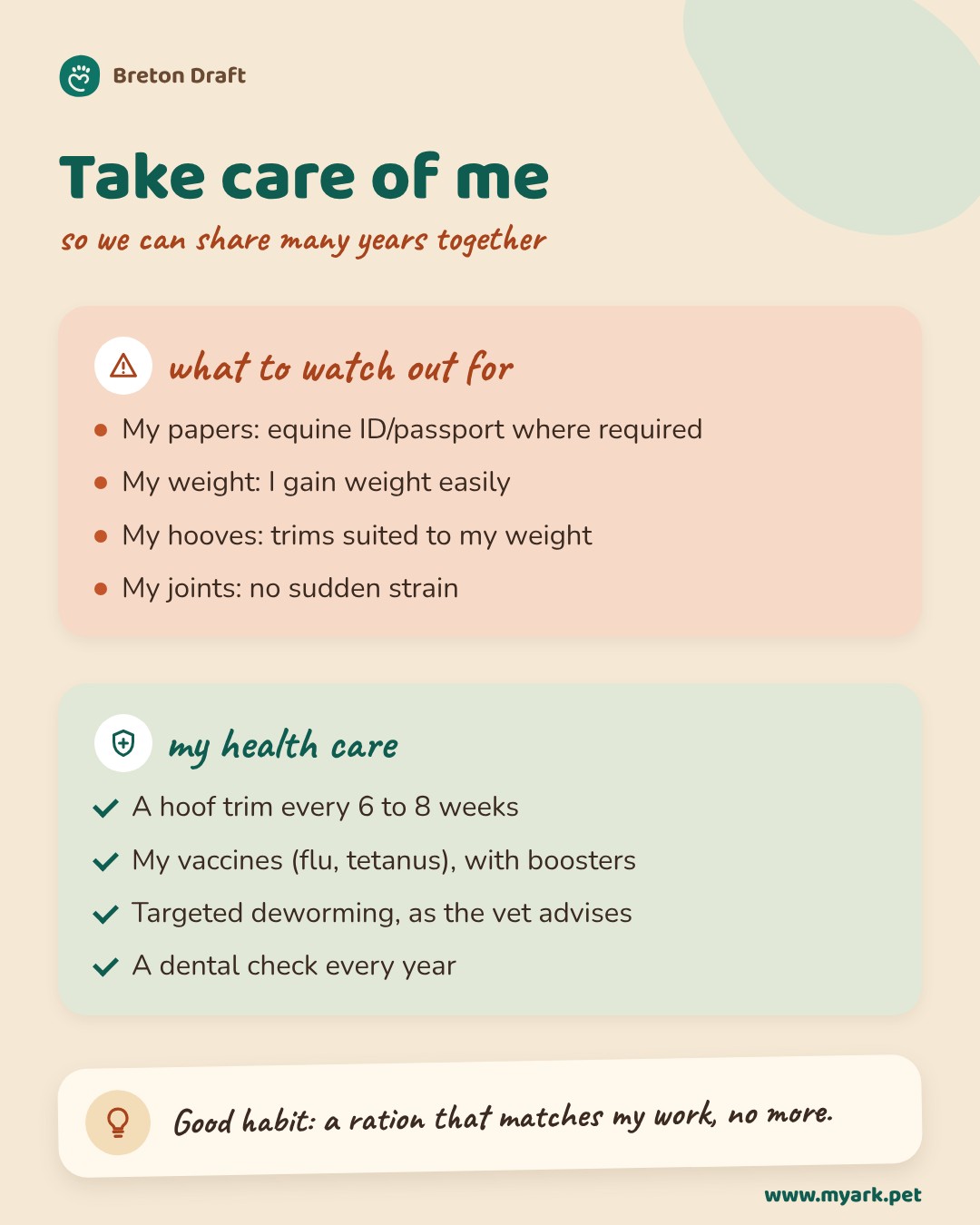
- a passport and a microchip (a legal requirement for horses in the UK and in France)
- vaccinations (equine flu, tetanus) on the schedule your vet sets
- targeted worming, guided by faecal egg counts
- the farrier every 6 to 8 weeks and an equine dentist every year
The stages of my life
- foal
- Handling, gentle education and a herd to grow up in.
- adult
- Regular work, turnout and a steady routine.
- senior
- From about 20 years old, adapted feeding and closer check-ups.
What to keep an eye on
MyArk describes predispositions through visible body shape and simple checks rather than a list of diseases: it is what you can verify from the outside, and act on when choosing a breeder.
Weight
It gains weight easily.
Hooves
A trim adapted to its weight, every 6 to 8 weeks.
Joints
No sudden, brutal effort: build up work gradually.
And, as for every horse:
- weight and grass: rich spring grass and extra weight are the main causes of laminitis
- hooves trimmed or shod every 6 to 8 weeks, teeth checked every year
- vaccinations and worming, planned with your vet
- company: a horse lives badly alone, it needs at least one equine companion
Is it the right horse for your household?
A horse is a herd animal that needs a field, company and daily care for decades: the real question is less the breed than the time, the space and the budget your household has. Before buying, consider loaning, sharing or a rescue horse too.
- Space
- A large field with a shelter.
- Children
- Calm, but adults lead the handling.
- Other animals
- Needs equine company.
- First horse
- Possible for a supported household with space.
- Time
- Daily care and regular work.
Breton: straight answers
Can you ride a Breton?
Yes, especially the Postier type.
What work does a Breton do today?
Driving, market gardening, vineyards and forestry.
How big does a Breton get?
About 1.58 m at the withers.
What colours does the Breton come in?
The usual colours are chestnut, strawberry roan, bay and grey.