
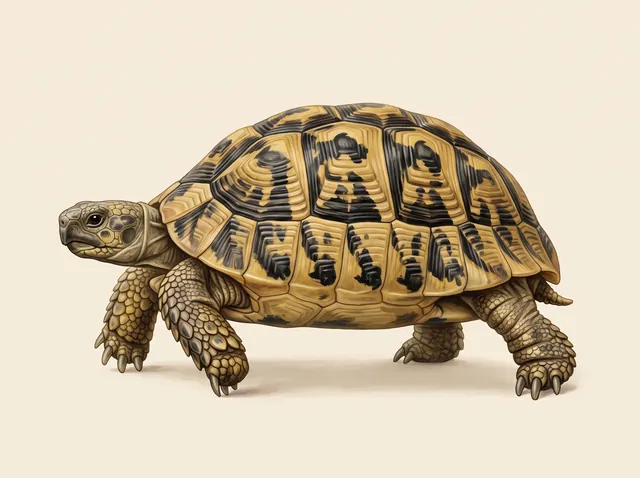
Wild plants, the basis of the diet
According to the RVC, wild plants should make up the majority, more than 70%, of what a Mediterranean tortoise eats. They provide the fibre and calcium it needs.
- Wild plants recommended by the RVC: dandelion, sow thistle, plantain, chickweed, bindweed, milk thistle.
- Suitable garden flowers and plants: nasturtium, hibiscus, honeysuckle, stonecrop (sedum).
- Always picked away from roads, free of pesticides and fertilisers.
- Salad leaves and vegetables only when wild plants are scarce, in winter for example.
Foods best avoided
- Fruit
- Too sugary according to the RVC; according to the MSD Veterinary Manual, cultivated fruit provides little plant protein, calcium and micronutrients.
- High-protein foods
- According to the MSD Manual, too much protein encourages gout and abnormal beak overgrowth in tortoises.
- Large amounts of cabbage, broccoli or Chinese leaf
- According to the MSD Manual, these vegetables can lead to iodine deficiency if fed too often: small amounts only.
Calcium is essential
According to the MSD Manual, mineral deficiencies are common in captive tortoises. Metabolic bone disease, caused by a lack of calcium, vitamin D3 or UVB, is the most common bone disease in reptiles.
- A supplement high in calcium and low in phosphorus, sprinkled on the plants, as often as your vet advises.
- A cuttlefish bone can be left out, but according to the RVC it should not be the main source of calcium.
- No random supplements: the MSD Manual warns against too much calcium or vitamin D3.
UVB and vitamin D3: light is part of the meal
A tortoise needs UVB to make vitamin D3, which allows it to use calcium. Nothing replaces sunlight: according to the MSD Manual, even the best lamps are a poor substitute, and the RVC recommends an outdoor enclosure in summer.
- Indoors, a UVB lamp switched on for about 12 hours a day, at the distance given by the manufacturer.
- A lamp’s UVB output drops over time, even while it still gives light: replace it at least as often as the manufacturer recommends.
- According to the MSD Manual, a tortoise that gets little UV may need a vitamin D3 supplement: that is for your vet to decide.
Water and bathing
Water should be available at all times, in a dish large enough for the tortoise to get into, and changed every day. The RVC also advises a bath in shallow warm water twice a week: tortoises drink while bathing.
Slow, steady growth
According to the MSD Manual, shell deformities have been linked to growth that is too fast, with humidity and temperature possibly playing a role. It advises weighing young tortoises regularly to check that they are growing neither too slowly nor too fast.
When to ask for advice
Meals, supplements and baths, logged by the whole household
In MyArk, everyone records what they gave and when, in a shared care log. The household knows whether the calcium supplement has been given, and recurring reminders make sure nobody forgets the bath or the lamp change.
- Meals and supplements recorded in the shared care log
- A reminder for baths and for replacing the UVB lamp
- Weigh-ins in the weight tracker, to follow growth
- Feeding instructions on the pet sitter sheet
Common questions
What do tortoises eat?
Mostly wild plants: dandelion, plantain, sow thistle, chickweed, bindweed… According to the RVC, they should make up more than 70% of the diet. Salad leaves and vegetables fill the gap when wild plants are scarce.
Can tortoises eat fruit?
It is best avoided: fruit is too sugary according to the RVC, and according to the MSD Veterinary Manual cultivated fruit provides little calcium and few micronutrients.
Can I give my tortoise lettuce or salad?
As an extra, when wild plants are scarce. The RVC considers it acceptable in moderation; it should not replace wild plants, which are richer in fibre and calcium.
Does my tortoise need calcium?
Yes: according to the MSD Manual, a reptile calcium supplement is advised for herbivores. Your vet decides how often, because too much calcium or vitamin D3 is also harmful.
Why does a tortoise need a UVB lamp?
UVB allows it to make vitamin D3, which it needs to use calcium. Without it, it risks metabolic bone disease. The sun remains the best source, whenever the weather allows.
Do tortoises need water?
Yes: fresh water at all times, changed every day, in a dish it can get into. The RVC also advises two warm baths a week.
Sources
Benchmarks checked on 25 October 2026 in the documents below, then rewritten in plain English. They do not replace an examination and advice from your vet, who adapts care to your pet and to where you live.
- Royal Veterinary College, Beaumont Sainsbury Animal Hospital (exotics service), Mediterranean tortoise care (2024)
- Royal Veterinary College, Mediterranean tortoise care (earlier factsheet)
- MSD Veterinary Manual, Providing a Home for a Reptile
- MSD Veterinary Manual, Disorders and Diseases of Reptiles
- MSD Veterinary Manual, veterinary edition, Nutrition in Tortoises (2025)
- MSD Veterinary Manual, veterinary edition, Nutritional, Metabolic, and Endocrine Diseases of Reptiles