
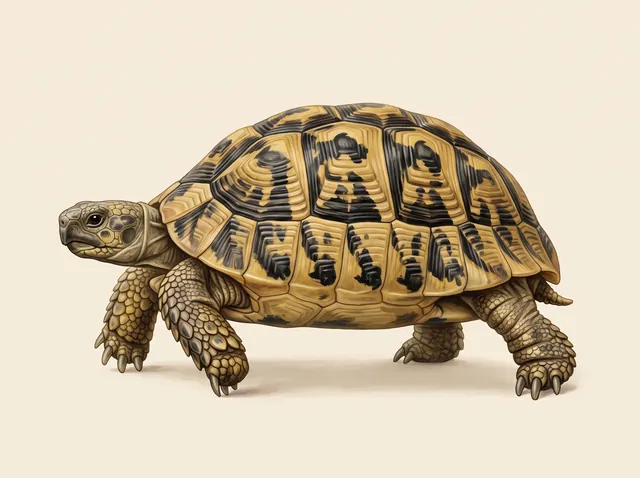
Which tortoises can hibernate
According to the Royal Veterinary College (RVC) animal hospital in London, most Mediterranean tortoises and the Horsfield (Russian) tortoise can hibernate. Some spur-thighed tortoises, those from southern Turkey and North Africa, usually do not: if you are unsure where yours comes from, ask your vet.
- No hibernation this year
- A tortoise that is ill, underweight or has had a serious health problem during the year spends the winter warm, indoors, according to the RVC.
- Young tortoises
- According to the British veterinary associations (BSAVA, BVZS), a young tortoise has its first hibernation only in its second, third or fourth winter, and for about 6 weeks only.
Before hibernation: health check and fasting
- Early autumnA health check and weigh-in at the vet. The RVC also advises a faecal test, to look for parasites.
- Stop feedingThe gut must be empty. The tortoise stays warm for the first week to finish digesting.
- The following weeksThe temperature is lowered gradually, by about 5 °C a week according to the RVC.
- Throughout the fastRegular warm baths, at least every other day according to the RVC: the tortoise should go into hibernation with a full bladder, as this is its water reserve.
The RVC moves the tortoise to its hibernation place once its temperature has dropped to around 13 °C.
During hibernation: the right temperature
The temperature should stay steady, at around 5 °C (41 °F): roughly 4 to 7 °C according to Langford Vets, 5 to 8 °C according to the BSAVA. Too cold, and the tortoise can go blind or die; too warm, and it uses up its reserves too quickly.
- An insulated box, safe from rodents and other animals, or a fridge kept only for this purpose.
- A thermometer placed next to the tortoise and checked every day: the temperature varies from one fridge shelf to another.
- In a fridge, the RVC advises opening the door for about 30 seconds a day and leaving a bowl of water inside.
- The RVC does not recommend hibernating a tortoise in the garden, where the temperature cannot be controlled.
Weighing during hibernation
Weighing a tortoise does not wake it up. The RVC advises weighing every one to two weeks, the BSAVA every week. Write down each weight to compare it with the weight before hibernation.
- Normal loss
- About 1% of body weight a month according to the RVC and Langford Vets: a 1,000 g tortoise loses around ten grams a month.
- Worrying loss
- Faster loss, or a total loss approaching 8 to 10% of the starting weight: the tortoise must be woken up and examined.
Langford Vets also advises waking the tortoise if it passes urine during hibernation, is injured or starts to wake on its own. Hibernation usually lasts 2 to 3 months, 16 weeks at most.
Waking up and rehydration
- Bring your tortoise back to warmth gradually, in a room at normal temperature, then under its heat lamp.
- Give it a warm bath every day, for at least 30 minutes according to the RVC, so that it drinks and passes urine.
- Offer food from the second day, according to the BSAVA, starting with plants that contain plenty of water.
- Keep it warm indoors while days and nights are still cool.
When to ask for advice
Hibernation weigh-ins on a chart
Record the weight before hibernation, then every weigh-in: MyArk draws the chart and everyone in the household can see whether the loss stays within the limits your vet gave you.
- Every weigh-in recorded and plotted in the weight tracker
- A recurring reminder so nobody forgets the weigh-in
- The autumn health check and its findings in the health record
- The dates your tortoise went into hibernation and woke up, kept in the shared care log
Common questions
Should my tortoise hibernate?
Opinions vary. British vets (RVC, BSAVA) say that healthy Hermann’s, spur-thighed and Horsfield tortoises can hibernate; the MSD Veterinary Manual stresses that hibernation should never be attempted in a sick reptile. Decide each year with your vet, after the autumn health check.
What temperature should a tortoise hibernate at?
A steady temperature of around 5 °C: roughly 4 to 7 °C according to Langford Vets, 5 to 8 °C according to the BSAVA. Never below 0 °C, which can blind or kill it.
How much weight does a tortoise lose in hibernation?
About 1% of its body weight a month according to the RVC. Faster loss, or a total loss approaching 8 to 10%, means it must be woken up and examined.
Can a tortoise hibernate in a fridge?
Yes, according to the RVC and the BVZS, provided the fridge is used only for this, the temperature is steady and checked every day with a thermometer, and the door is opened briefly every day for air.
How long does hibernation last?
Usually 2 to 3 months, and 16 weeks at most according to Langford Vets. A young tortoise hibernates for only about 6 weeks. According to the BSAVA, hibernating for too long is the main cause of problems on waking.
My tortoise isn’t eating after hibernation: what should I do?
Daily warm baths and warmth. If it has neither passed urine nor eaten within 7 days of waking, or seems unwell, see a vet who treats tortoises, as the RVC advises.
Sources
Benchmarks checked on 25 October 2026 in the documents below, then rewritten in plain English. They do not replace an examination and advice from your vet, who adapts care to your pet and to where you live.
- Royal Veterinary College, Beaumont Sainsbury Animal Hospital (exotics service), Tortoise hibernation guidelines (2024)
- BSAVA, with the BVA and the BVZS, Vet organisations give advice on tortoise hibernation (2016)
- Langford Vets (University of Bristol veterinary hospital), Tortoise hibernation
- MSD Veterinary Manual, Providing a Home for a Reptile
- MSD Veterinary Manual, Disorders and Diseases of Reptiles