
Before you commit
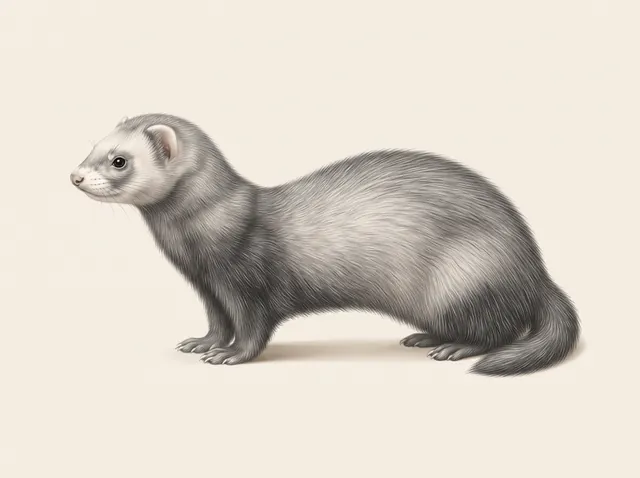
Ferrets are fun, inquisitive and affectionate, but they are not a cage pet. According to the PDSA, they sleep for up to 20 hours a day and adapt to your routine, playing mostly in the morning and evening. Their musky smell can put some people off, although neutering reduces it.
Rescue centres and ferret welfare groups across the UK often rehome ferrets that are already neutered, vaccinated and used to living together.
- Can you give them several hours of supervised play every day?
- Do you have room for at least 10 m² for a pair, indoors or in a secure outdoor court?
- Is there a vet nearby who treats ferrets, including out of hours?
- Do you keep rabbits, guinea pigs, rats or birds? Ferrets are predators and must be kept well away from them.
The rules in the UK
- Under the Animal Welfare Act 2006, anyone who owns or looks after a ferret in England and Wales has a legal duty of care to meet their welfare needs. Scotland and Northern Ireland have equivalent laws.
- In England, a business selling ferrets as pets needs a licence from the local council and cannot sell ferrets under 8 weeks old, according to GOV.UK.
- Microchipping isn’t compulsory for ferrets, but the PDSA recommends it: ferrets are notorious escape artists.
- Travelling abroad needs a microchip, a rabies vaccination and an animal health certificate: see our microchipping guide.
Ferret-proof your home before they arrive
A ferret can slip through a gap of a few centimetres and chews almost anything. Check the room they will play in at ferret height:
- Block gaps behind and under the cooker, fridge, washing machine and kitchen units.
- Keep recliner and sofa-bed mechanisms out of reach: ferrets hide inside them.
- Close windows, and keep doors to the outside shut while they are out.
- Remove rubber, foam, erasers, soft toys and small plastic objects: chewed pieces can block the gut.
- Remove poisonous plants and protect electrical cables, as the RSPCA advises.
- Keep medicines, cleaning products and bags out of reach.
The shopping list
- Space
- A dedicated room, a converted shed or a ferret court of at least 10 m² for a pair, with a solid floor and several low levels.
- Sleeping places
- Hammocks, a closed sleeping box, old T-shirts and blankets: ferrets love burrowing into fabric.
- Litter
- High-sided corner trays and wood pellet litter; never clumping cat litter, which is harmful if swallowed.
- Food and water
- A complete ferret food, high in animal protein; a heavy bowl and a bottle with a metal spout.
- Carrier
- A rigid, ventilated carrier with a secure door.
- Enrichment
- Tunnels, drainpipes, a digging box, treat balls and toys that can’t be chewed into pieces.
The first days
- Let them settle in their space for a day or two before handling them much.
- Keep the same food they were eating before, and make any change gradually.
- Watch that they eat, drink, use the litter tray and pass normal droppings.
- Start short play sessions in the ferret-proofed room, always supervised.
- Pick them up only after they have played and burned off some energy.
Questions to ask the rescue or seller
- Which food do they eat, and how much?
- Have they been vaccinated against distemper? On which date?
- Are they neutered, or do they have a hormone implant? When was it placed?
- Do they already live with other ferrets?
- Have they had any health problems: hair loss, weakness, swallowed objects?
- Are they used to being handled, and do they nip?
Detailed guides
From the first day, one log for the whole household
In the first days, everyone wants to know whether the ferrets have eaten and used their tray. In MyArk, whoever feeds them or cleans the litter logs it in one tap: the whole household sees it on their iPhone, with no account to create.
- Meals and observations logged with the time and the person’s name
- The first weigh-ins on a chart
- Vaccination and implant reminders for the months ahead
- Your vet’s details to hand for everyone
Common questions
What do I need before getting a ferret?
A companion ferret, at least 10 m² for a pair, a ferret-proofed room for daily play, hammocks, high-sided corner litter trays, a complete ferret food, a heavy bowl and a water bottle, a rigid carrier and a vet who treats ferrets.
Should I get one ferret or two?
Two or more. According to the PDSA, ferrets need to live in pairs or small groups: alone, they can become lonely and stressed, and human company doesn’t replace ferret company.
Do ferrets smell?
They have a natural musky smell, stronger in entire males during the breeding season. Neutering or a hormone implant reduces it, and clean litter and bedding help a lot.
How long do ferrets live?
Around 6 to 10 years, according to the PDSA and the RSPCA, with good care and regular check-ups.
Sources
Benchmarks checked on 9 November 2026 in the documents below, then rewritten in plain English. They do not replace an examination and advice from your vet, who adapts care to your ferrets and to where you live.