
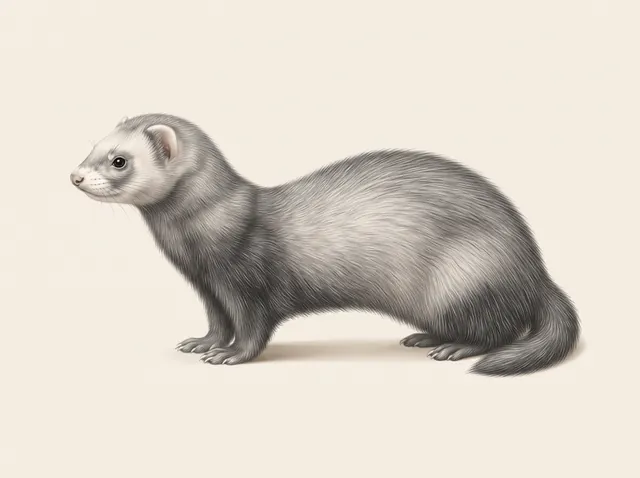
Sounds and body language
- Dooking
- A soft chuckle while playing or exploring: an excited, happy ferret, according to the RSPCA.
- Playful bouncing
- Leaping sideways with an arched back, mouth open, often while dooking: an invitation to play.
- Barking
- A short, sharp sound that can indicate fear.
- Hissing
- Annoyance or warning, often between ferrets.
- Screaming
- Continuous screaming means high alarm or pain: stop what is happening and check them.
The natural behaviours they need
- Exploring every corner, squeezing into tunnels and gaps.
- Digging, in a box of dry rice or soil.
- Chasing and wrestling with other ferrets or a toy on a string.
- Hoarding: ferrets often stash food and toys in a hiding place.
- Hiding and resting in tunnels or closed hammocks when they feel scared.
- Long sleeps, undisturbed.
Handling without being nipped
According to the PDSA, regular handling from a young age makes ferrets friendlier and less likely to bite. Let them play first to burn off energy, then pick them up by supporting the chest with one hand and the back legs with the other, holding them close to your body.
Young ferrets often nip in play, as they would with each other. Stop the game calmly, then start again: never shout or punish, as the RSPCA warns it only makes a ferret more nervous. Children should sit on the floor and offer a treat from their lap.
Living in pairs and groups
Ferrets need the company of other ferrets: the PDSA says they can become lonely and stressed alone. Rough play, wrestling and dragging each other around are normal; watch for excessive aggression within a group, such as one ferret constantly biting or dragging another.
If you keep males and females together, discuss neutering or implants with your vet. Ferrets are predators: keep them well away from rabbits, guinea pigs, rats and birds.
Common behaviour problems
- Nipping
- Often play or overexcitement: play first, handle calmly, reward gentle behaviour.
- Toileting outside the tray
- Ferrets back into corners: put trays in the corners they choose, and add more.
- Escaping and stealing
- Natural curiosity: ferret-proof better rather than punish.
- A sudden change
- Reluctance to move, trembling, crying, teeth grinding or hiding can be pain, according to the RSPCA: see your vet.
Detailed guides
Small changes, written down
A change of behaviour often starts quietly: a ferret who plays less or hides more. In MyArk, everyone in the household notes what they have seen in the shared care log, with the date, ready to describe precisely to your vet.
- Observations logged with the date and the person’s name
- The weight chart next to the log
- Neutering and implant dates in the health record
- Handling advice on the pet sitter sheet
Common questions
What does it mean when a ferret dooks?
Dooking is a soft chuckling sound a ferret makes when excited and playing. It is a sign of a happy, engaged ferret.
Why does my ferret bite?
Usually play or overexcitement, especially in young ferrets, sometimes fear or pain. Let them play first, handle them calmly and never punish; a ferret that suddenly bites more should see a vet.
How do you pick up a ferret?
After they have played, support the chest with one hand and the back legs with the other, and hold them close to your body, as the PDSA advises.
Can ferrets live alone?
They shouldn’t: the PDSA says ferrets need to live in pairs or small groups, as they can become lonely and stressed alone.
Sources
Benchmarks checked on 9 November 2026 in the documents below, then rewritten in plain English. They do not replace an examination and advice from your vet, who adapts care to your ferrets and to where you live.