
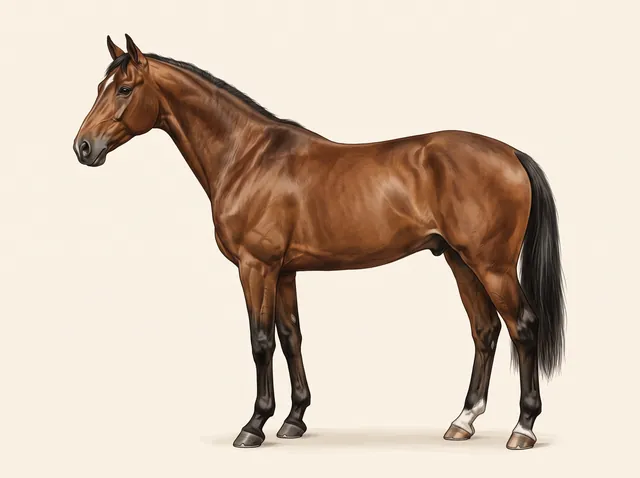
Fat scoring: two scales
World Horse Welfare describes two systems: the 0 to 5 scale, most common in the UK and easier for beginners, and the 1 to 9 Henneke scale used in research and in the US. Both rely on feeling for fat, not just looking.
- 0 to 1 (out of 5)
- Very thin to thin: bones easy to see and feel.
- 2.5 to 3
- Healthy for most horses: ribs felt but not seen, smooth neck and quarters.
- 4 to 5
- Fat to obese: ribs hard to feel, a cresty neck, fat pads, a gutter along the back.
Fat scoring your horse
- Score the neck, the middle (ribs and back) and the hindquarters separately.
- Run your hands firmly over each area to feel fat cover.
- Look for a cresty neck and fat pads behind the shoulder and around the tail head.
- Score every few weeks and note the result.
Estimating the weight
A weigh tape, passed round the girth just behind the withers, gives an estimate that is useful to follow changes, as long as it is always used the same way. A weighbridge, sometimes available at vet practices or shows, gives the true weight. World Horse Welfare advises using the tape together with fat scoring.
Why weight matters
Obesity is linked with laminitis and equine metabolic syndrome, and strains joints and the heart. The right weight is also needed to dose wormers and medicines correctly.
If your horse is overweight
- Agree a plan and a target with your vet.
- Weigh the forage and soak hay to reduce its sugar content.
- Restrict grazing with a track system or a grazing muzzle, used safely.
- Increase exercise gradually.
- Avoid long periods without any forage.
When to ask your vet
A horse losing weight without reason, an obese horse with a cresty neck, or any sign of laminitis needs your vet.
Follow your horse’s weight and fat score
Log each weigh tape reading and fat score in MyArk: the curve shows the trend, shared with the yard and your vet.
- Weight and fat score curves
- The target set with your vet
- A reminder for the next measurement
- The right weight to hand for dosing
Common questions
How do I know if my horse is too fat?
Fat score it: if the ribs are hard to feel, the neck is cresty and there are fat pads, your horse is probably overweight.
What is my horse’s ideal weight?
It depends on its height and build. Aim for a fat score of about 2.5 to 3 out of 5, and ask your vet.
How do I use a weigh tape?
Pass it round the girth just behind the withers, with the horse standing square, and read it the same way each time.
Is a weigh tape accurate for ponies and foals?
Less so: tapes are designed for average horses. Use it to follow trends, and a weighbridge for the true weight.
How can I help my horse lose weight?
With a plan from your vet: weighed and soaked forage, restricted grazing and more exercise, without long fasts.
My horse is losing weight: what should I check?
Teeth, worms, feed quantity and quality, and health: ask your vet.
Sources
Benchmarks checked on 12 November 2026 in the documents below, then rewritten in plain English. They do not replace an examination and advice from your vet, who adapts care to your pet and to where you live.