
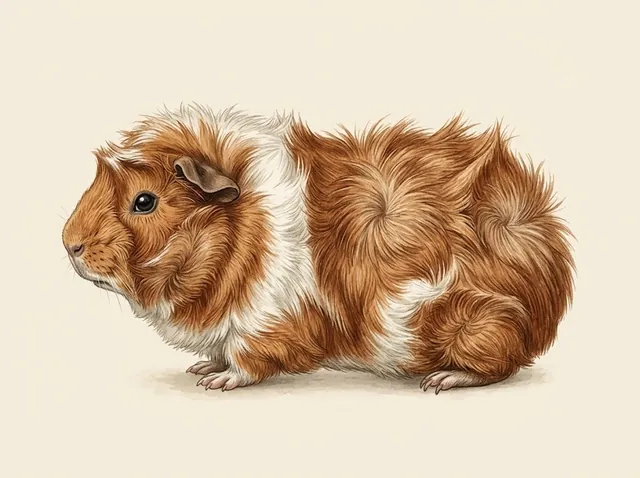
Why weighing matters so much for guinea pigs
As prey animals, guinea pigs mask pain and illness. According to the MSD Veterinary Manual, they hide the signs until they are very unwell and can go downhill very quickly: early treatment often makes all the difference.
According to the PDSA, regular weighing is the best way to check that they’re eating properly. A drop on the scales often comes before visible signs: dental problems, digestive trouble, infection or a lack of vitamin C.
How to weigh your guinea pig
- Every weekOn the same day, at roughly the same time.
- The same scalesKitchen scales accurate to the gram; put your guinea pig in a small tub and subtract its weight.
- One weight eachIn a group, weigh each guinea pig separately and record the result under their name.
- Write it downRecord every weigh-in: it’s the comparison from week to week that tells you something, not a single figure.
Pick them up calmly with both hands, one hand under the chest with their front legs either side of your fingers, as the RSPCA describes. Don’t handle a newly arrived youngster straight away: let them settle in first.
Reading the chart
- Stable weight
- A good sign in a healthy adult.
- Weight loss
- According to the PDSA, it can be a sign of illness. Check they’re eating their hay, look at their teeth and droppings, and call your vet if it continues.
- Weight gain
- According to the PDSA, a possible sign of too many pellets or too much fresh food. Talk to your vet.
- Rapid change
- Significant weight loss or gain over a short time is one of the signs to report, according to the PDSA.
Back it up with your hands
The RSPCA advises also assessing their body condition, using a scoring chart, to make sure they’re neither too thin nor too fat. Ask your vet to show you how to feel for it at the annual check-up: you’ll know what your guinea pig feels like at a healthy weight.
Keeping a healthy weight
- Unlimited hay, a small portion of pellets and vegetables: it’s too many pellets and too much sugar that cause weight gain.
- Fruit and treats stay occasional.
- Exercise every day, with space, tunnels and supervised time out of the enclosure; no exercise wheel, which can injure them according to the MSD manual.
- Being overweight makes sores on the feet (pododermatitis) more likely, according to the PDSA and the MSD manual.
- For an overweight guinea pig, your vet will set the plan: never cut back on hay.
When to ask for advice
A weight chart for every guinea pig
Log every weigh-in in MyArk: the chart shows the trend at a glance, for everyone in the household, and a drop shows up before it’s too late.
- A weight chart for each pet, over time
- A weekly weigh-in reminder
- Meals logged by everyone in the household
- The latest weight to hand for your vet
Common questions
How often should I weigh my guinea pig?
Once a week, writing down each result, as the RSPCA recommends. Your vet may suggest more often during an illness or treatment.
What is the ideal weight for a guinea pig?
There’s no single figure: most adults weigh around a kilo, according to the MSD Veterinary Manual, but size and build vary. What matters is that their weight stays stable and their body condition is good.
My guinea pig is losing weight: what should I do?
Check they’re eating their hay and vegetables, see whether they’re drooling or their droppings have changed, then call your vet. Weight loss can be the first sign of a dental problem or another illness.
How do I weigh a guinea pig that won’t keep still?
Put them in a small tub on scales accurate to the gram, and subtract the weight of the tub. Always the same scales, at the same time of day.
My guinea pig is putting on weight: is that a problem?
According to the PDSA, weight gain can mean too many pellets or too much fresh food. Being overweight makes sores on the feet more likely. Talk it through with your vet, and never cut back on hay.
Should I weigh every guinea pig in the group?
Yes, separately: in a group, one can lose weight while the others are doing fine.
Sources
Benchmarks checked on 21 October 2026 in the documents below, then rewritten in plain English. They do not replace an examination and advice from your vet, who adapts care to your pet and to where you live.
- RSPCA, How to take care of your guinea pigs — booklet (2023)
- PDSA, Your guinea pigs’ diet
- PDSA, Guinea pig health
- MSD Veterinary Manual, Routine Care of Guinea Pigs (2025)
- MSD Veterinary Manual, Nutritional Problems of Guinea Pigs (2025)
- MSD Veterinary Manual, Providing a Home for a Guinea Pig (2025)
- PDSA, Five common health problems in guinea pigs and how to prevent them (2024)