
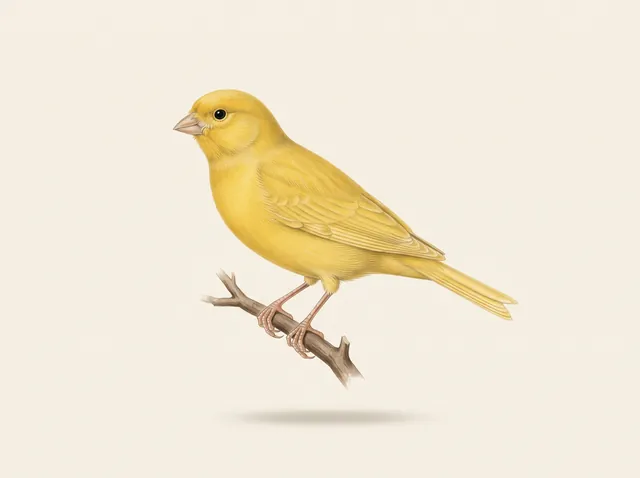
A normal moult
A fully grown feather doesn’t regrow: to replace it, the bird has to moult. According to VCA Animal Hospitals, every bird moults at least once a year, gradually and symmetrically, so that it is never bald or unable to fly. The MSD Veterinary Manual adds that a partial moult often follows around six months later.
In canaries, the moult follows the breeding season, as the days shorten in late summer and autumn, according to Dorrestein’s handbook of avian medicine. In captivity, it can last from one month to several months, according to VCA.
- Whole feathers on the cage floor, in unusual numbers.
- Little quills of new feathers growing in.
- A quieter bird that sings little or not at all.
Light controls the moult
Changes of season and day length trigger the moult, VCA points out. According to Dorrestein, a day length that varies from one day to the next can interrupt breeding and trigger an early moult. An early study published in Science showed that artificially long days prolong the canary’s moult.
What it needs during the moult
Feathers are made of keratin, a protein. According to VCA, the moult increases the need for protein, calcium and iron, and tires the body to the point of making it more vulnerable to illness. In canaries, feathers make up around 14% of body weight, the highest share among the pet birds studied by Dorrestein.
- A complete diet all year round, not just during the moult: pellets or egg food, greens and a little seed, according to VCA.
- No unbalanced “moulting” products, which VCA advises against.
- A cuttlebone always available for calcium.
- A dish of water for bathing, refreshed every day.
- Peace and quiet: avoid moving house, new birds and other changes during this period.
The colour of new feathers
Plumage colour depends partly on diet during the moult. For red canaries, breeders give food pigments (carotenoids) until the end of the moult, according to Sandmeier and Coutteel; loss of colour can also come from a deficiency. Talk to your vet before adding anything to your canary’s diet.
Abnormal or “permanent” moult
- A moult that never ends
- Feathers falling for months, out of season: often linked to light (days too long or irregular), temperature or poor general condition, according to Sandmeier and Coutteel.
- Bare patches
- A normal moult leaves no gaps. Sudden or patchy feather loss is abnormal, according to the MSD Manual.
- Damaged or broken feathers
- Moulted feathers are whole; ragged feathers suggest feather plucking or a parasite.
- Dull, misshapen or faded feathers
- A diet low in vitamin A and protein directly damages feathers, according to the MSD Manual.
- Feather cysts
- Lumps under the skin, common in some frilled or soft-feathered canary breeds.
When to worry
Keep track of every moult
Note the start and end of each moult in the MyArk health record: from one year to the next, you will know whether it is lasting longer than usual. The household’s weigh-ins and observations complete the picture for your vet.
- Moult start and end dates in the health record
- The household’s observations, dated
- Weigh-ins on a chart in the weight tracker during the moult
- A daily reminder for the bath water
Common questions
When do canaries moult?
Once a year, after the breeding season, in late summer and autumn, as the days shorten. A partial moult may follow around six months later.
How long does a canary’s moult last?
In captivity, from about a month to several months, according to VCA Animal Hospitals. A moult that drags on or keeps coming back deserves a vet’s opinion.
Why does my canary stop singing during the moult?
The moult is tiring: many canaries sing less or stop altogether during this period, according to VCA.
What is a permanent moult in canaries?
A moult that never stops, often linked to artificial lighting that is too long or irregular, heat or poor general condition. Regular lighting hours help; if it persists, see your vet.
What should I feed a moulting canary?
A complete diet, the same as the rest of the year: pellets or egg food, greens, a little seed and a cuttlebone. “Moulting” products are not balanced, according to VCA.
My canary has gaps in its plumage: is it the moult?
No: a normal moult is gradual and leaves no bald patches. Bare patches or damaged feathers should be examined by your vet.
Sources
Benchmarks checked on 25 October 2026 in the documents below, then rewritten in plain English. They do not replace an examination and advice from your vet, who adapts care to your pet and to where you live.
- VCA Animal Hospitals (Drs Rich, Hess and Axelson, vets), Molting in Birds (2024)
- MSD Veterinary Manual, Skin and Feather Disorders of Pet Birds (2026)
- G. M. Dorrestein, “Passerines”, Handbook of Avian Medicine, 2nd edn (2009), full text on PubMed Central
- P. Sandmeier and P. Coutteel, “Management of Canaries, Finches & Mynahs”, Clinical Avian Medicine (IVIS)
- H. Kobayashi and K. Okubo, Prolongation of molting period in the canary by long days, Science (1955)
- VCA Animal Hospitals (Drs Rich, Hess and Axelson, vets), Canaries – Feeding (2026)
- Royal Veterinary College, Beaumont Sainsbury Animal Hospital, Canary care and advice (2022)