
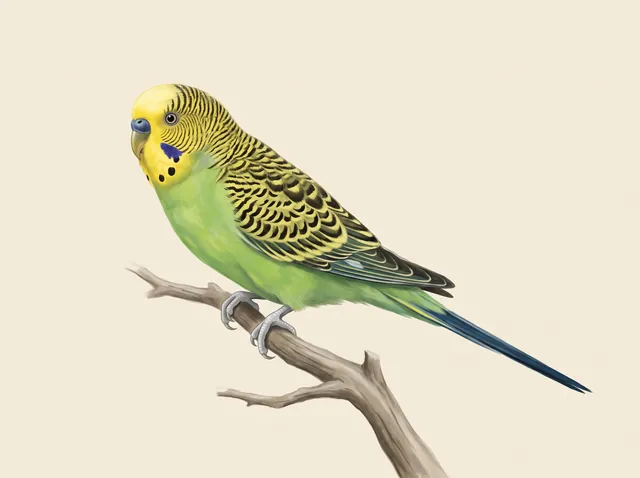
Signs of ageing
- Less flying, more resting.
- Weight changes.
- Lumps.
- Overgrown beak or nails.
Adapting the cage
- Lower perches, wider and padded if needed.
- Food and water close to perches.
- A warm, draught-free spot.
- Fewer obstacles.
The health routine
- Every weekWeigh-in.
- Every dayDroppings, appetite, breathing.
- Every 6 to 12 monthsAvian vet check.
Quality of life and saying goodbye
Discuss quality of life with your vet. When suffering cannot be relieved, euthanasia can be the kindest choice. Blue Cross offers guidance and a free pet bereavement support service.
The companion left behind
A budgie that loses its companion may call, eat less or become quiet. A new companion, introduced gradually, often helps.
Detailed guides
Weight and comfort, tracked together
Log weights and notes in MyArk, to share with your vet.
- Weight curve per bird
- Notes on appetite and activity
- Reminders
- Shared with the household
Common questions
At what age is a budgie old?
Often from around 6 or 7 years, depending on the bird.
My old budgie has a lump: what should I do?
See an avian vet: lumps are common in budgies.
Should I get a new companion after a loss?
Often yes, introduced gradually.
How often should an older budgie see the vet?
Every 6 to 12 months, and at any change.
How will I know when it is time?
Discuss quality of life with your vet.
Sources
Benchmarks checked on 12 November 2026 in the documents below, then rewritten in plain English. They do not replace an examination and advice from your vet, who adapts care to your budgies and to where you live.