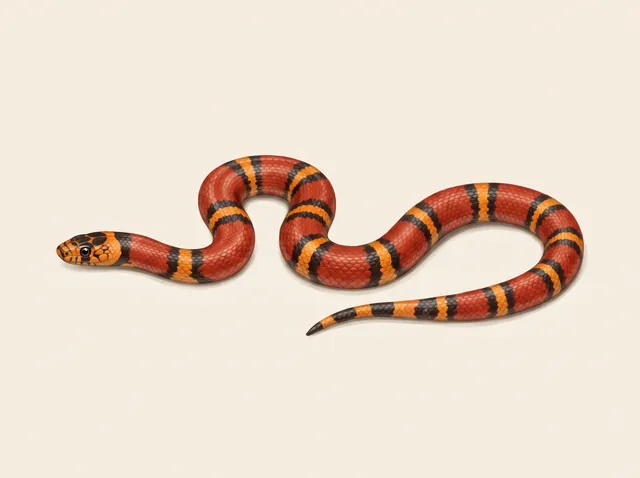
Where the Milk snake comes from
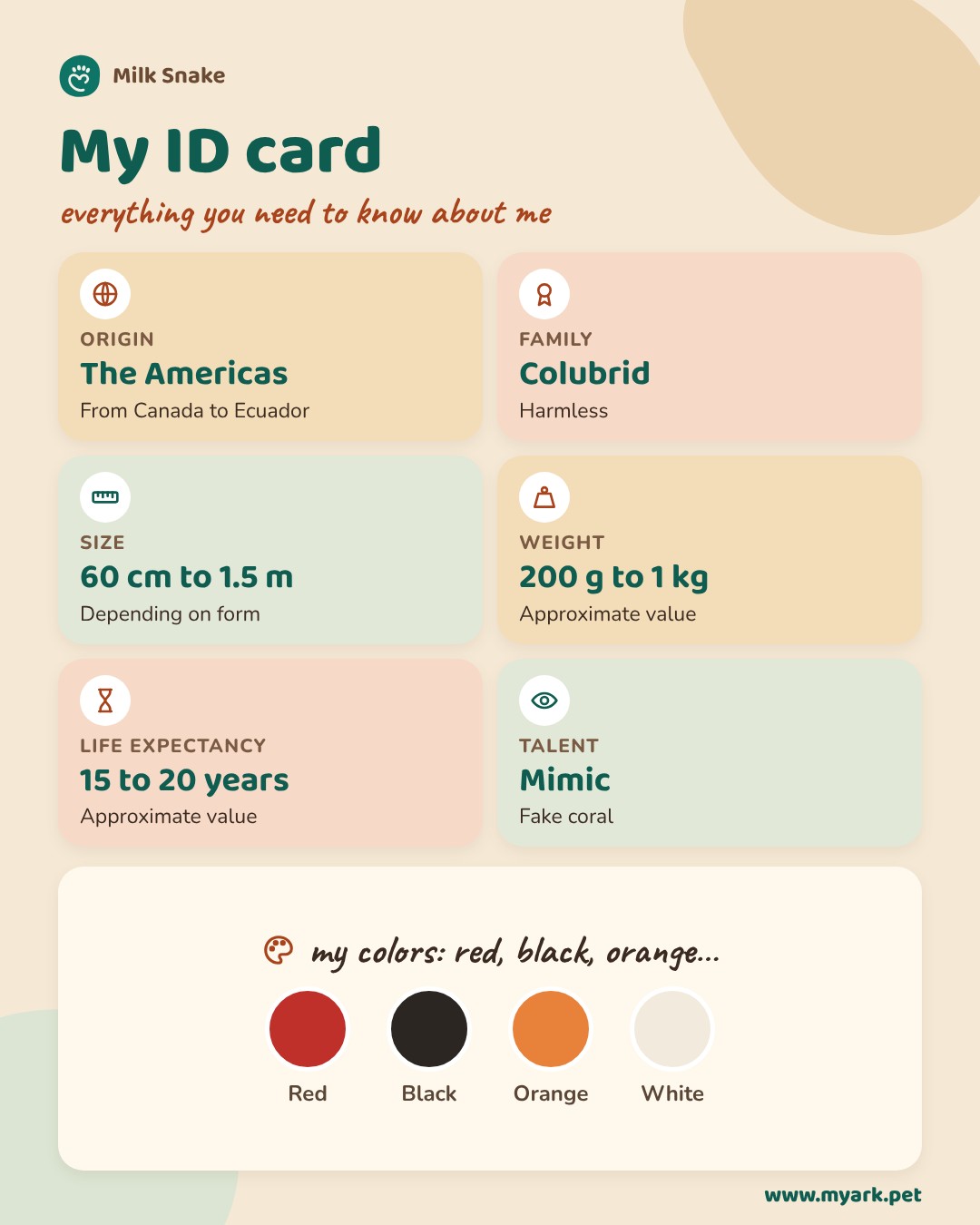
Milk snakes live across North, Central and South America.
Its rings imitate the venomous coral snake, though it is harmless; it was once wrongly believed to drink cows’ milk.
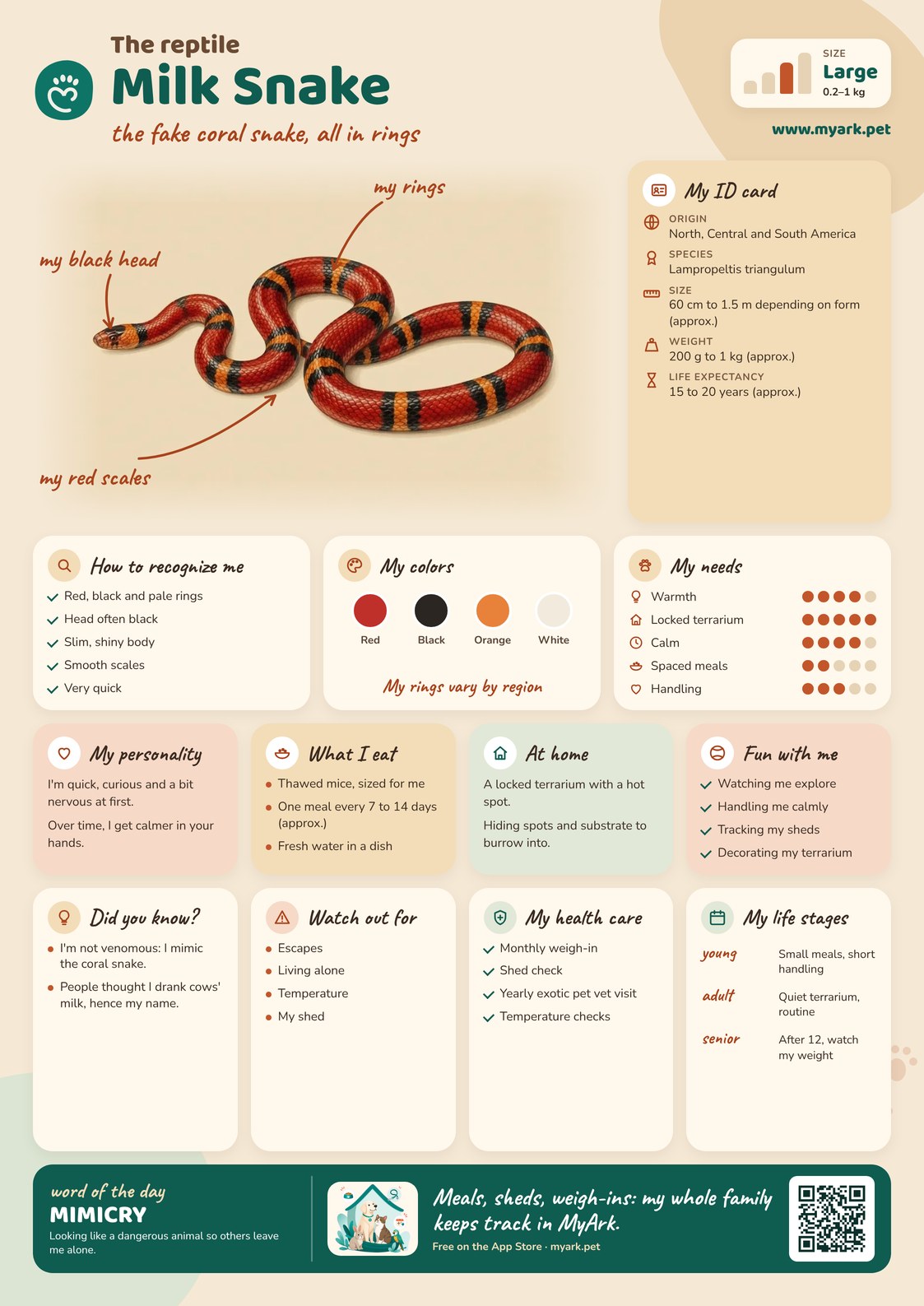
How to recognise me
- red, black and pale rings
- head often black
- slim, shiny body
- smooth scales
- very lively
My colours
- Red
- Black
- Orange
- White
What a Milk snake needs day to day
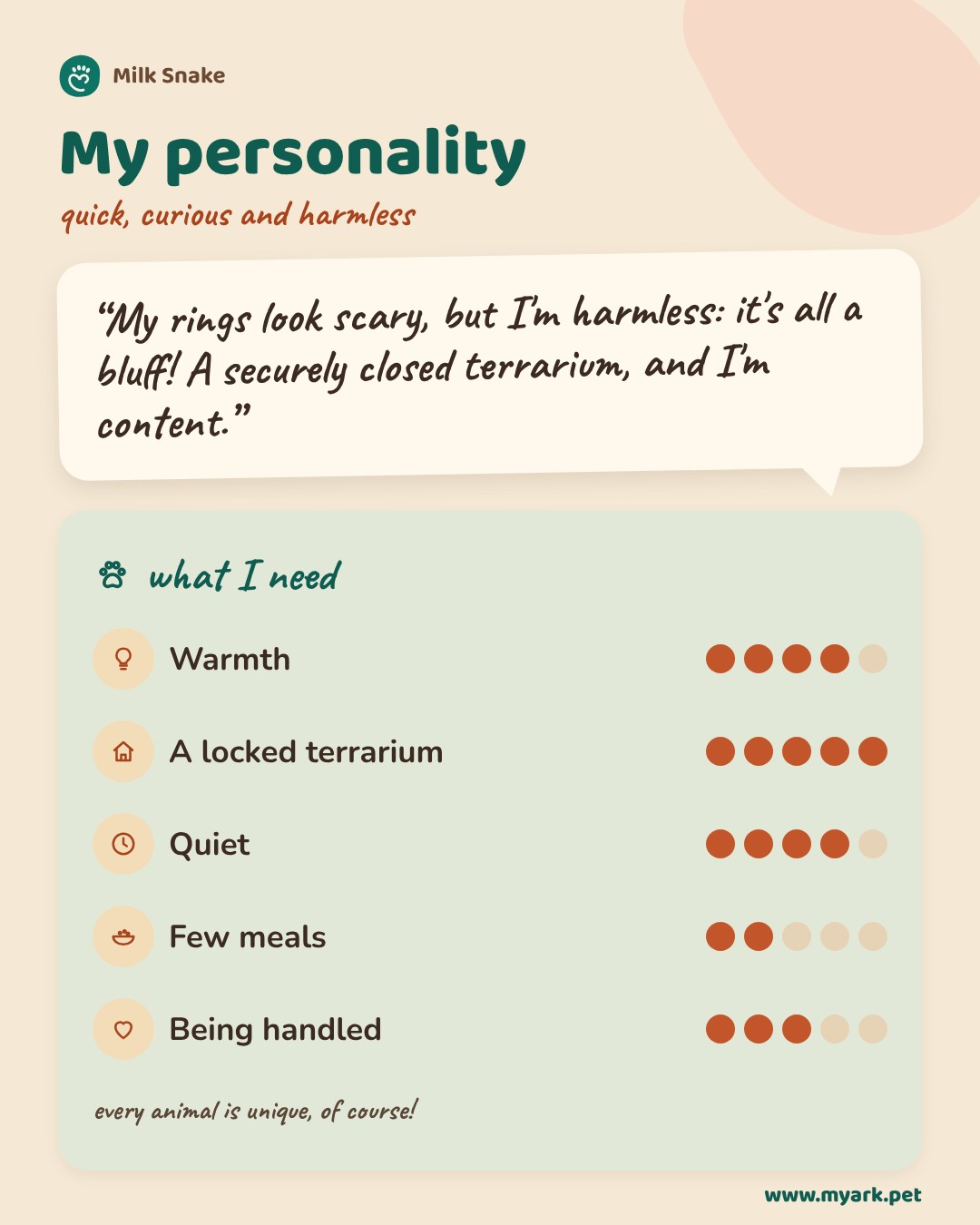
“My rings look scary, but I’m harmless: it’s a bluff! A well-locked vivarium, and I’m at peace.”
Its needs are simple once the set-up is right: warmth, hides, a locked vivarium and a meal every week or two.
At a glance
- Warmth
- 4 out of 5
- A locked vivarium
- 5 out of 5
- Calm
- 4 out of 5
- Few meals
- 2 out of 5
- Being handled
- 3 out of 5
every snake is unique, of course!
With me, we can go…
- exploring the vivarium in the evening
- climbing branches
- hiding in its hides
- calm, short handling sessions
Living with a Milk snake: who does what
A snake takes little time each day but needs a technically correct set-up: mistakes show up later as chronic health problems. The routine is short — temperatures, water, a lock check — and the meals are rare, so dates matter. Here is the Milk snake’s routine at a glance, and how a household can split it without a single “did anyone…?” message.
The routine at a glance
- every day
- temperatures checked at the warm and cool ends; fresh water; a look at the snake, without disturbing it; lid and locks checked.
- every week
- droppings and shed skin removed; the water bowl cleaned; a thawed meal when it is due.
- every month
- a weigh-in; decor and hides cleaned; thermostat and lamps checked.
- every year
- a check-up with a reptile vet; heat mats and bulbs checked or replaced; a full clean of the vivarium.
Sharing it out
- Daily temperature and water checks on a rota.
- Feeding on one named adult, with the date logged.
- Handling only with an adult present.
Before it arrives, agree on…
- who checks temperatures and water every day
- who feeds, and on which date
- who handles it, and how — calmly, with the body supported
- the house rule: the lid is always locked
- who looks after it during holidays
How MyArk helps the household keep track
Pet feeding tracker
Log each meal and refusal: snakes eat rarely, so dates matter.
See the featurePet weight tracker
A monthly weigh-in, especially when it refuses food.
See the featureFamily pet chores
Temperature checks, water and cleaning on named people.
See the featurePet sitter instructions
Holiday instructions: temperatures, water, and the lid always locked.
See the featureFeeding, vivarium and health routine
Care is regular rather than time-consuming: temperatures and humidity checked, water changed, a clean vivarium and a weigh-in.
What I eat
- thawed mice of the right size
- a meal every 7 to 14 days (as a guide)
- fresh water in a bowl
My health routine
- a thermostat on every heat source, checked with a thermometer
- humidity checked, especially before a shed
- a monthly weigh-in: weight loss is an early warning sign
- a reptile vet found before there is a problem
The stages of my life
- young
- Small meals more often, and short, gentle handling.
- adult
- A steady set-up, meals at the right interval and a monthly weigh-in.
- older
- Fewer meals and a closer watch on weight.
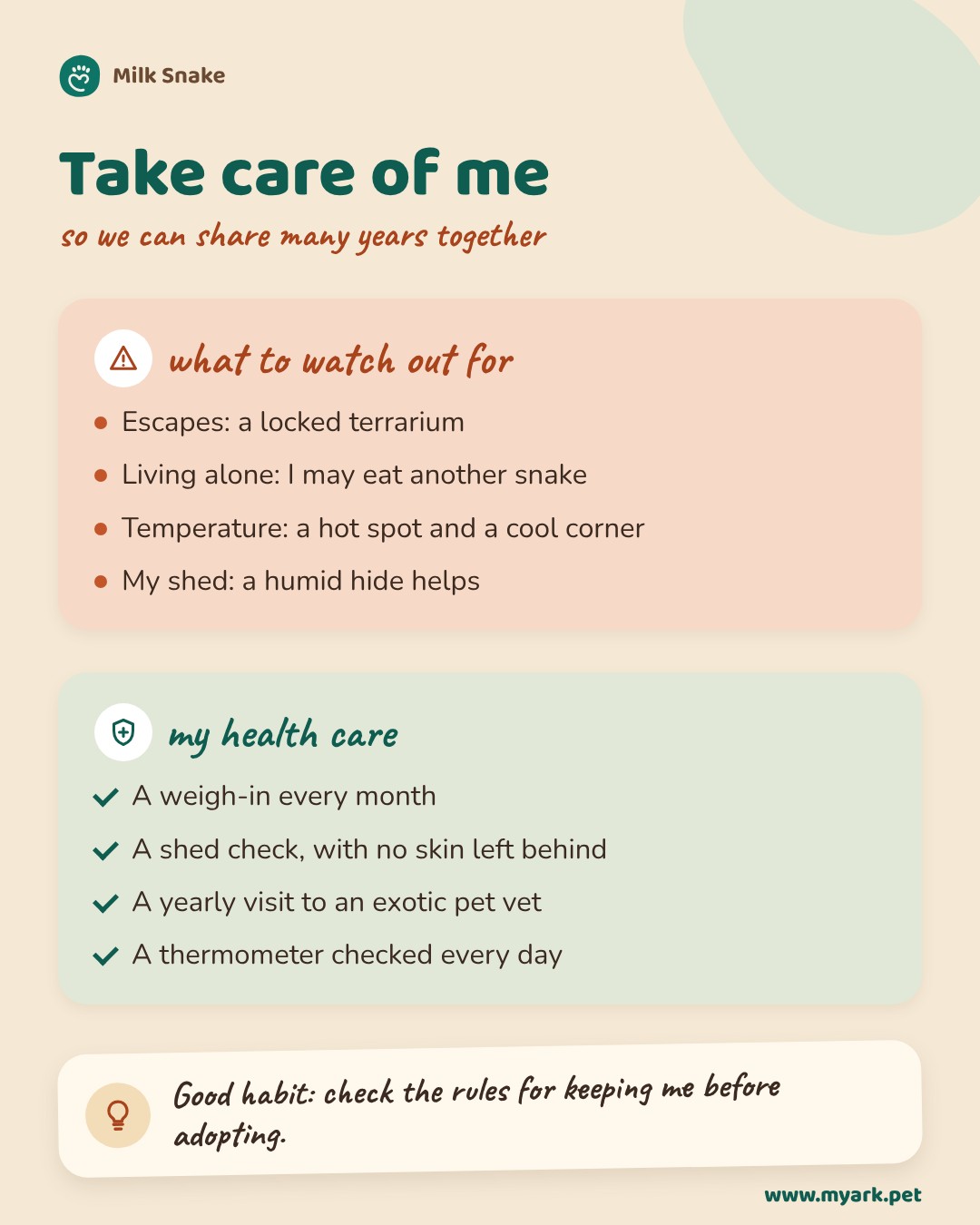
What to keep an eye on
MyArk describes the points to watch through the set-up, the shed and simple checks rather than a list of diseases: most snake health problems start with a temperature or humidity error.
Escapes
A vivarium locked with a key.
Living alone
I may eat another snake.
Temperature
A warm spot and a cool corner.
Shedding
A humid hide helps it shed well.
And, as for every snake:
- a precise temperature gradient, controlled by a thermostat and checked with a thermometer
- hides at both ends of the vivarium, warm and cool
- a water bowl big enough to soak in
- prey of the right size, thawed — never live
Is it the right snake for your household?
A snake needs a secure, locked vivarium, a heat source on a thermostat, thawed prey and a reptile vet — and many live for decades. Check the rules and any CITES papers required in your country, and consider reptile rescues before buying.
- Home
- A secure, locked vivarium with a thermostat, in a calm room.
- Children
- Lively; handling with an adult present.
- Other pets
- Keep cats and dogs away from the vivarium; one snake per vivarium.
- First reptile
- A good first snake.
- Time
- A few minutes a day, and meals on a schedule.
Milk snake: straight answers
Is a milk snake venomous?
No: it mimics the venomous coral snake.
Can milk snakes live together?
No: they may eat each other.
Is it nervous?
Lively when young, calmer with gentle handling.
What colours does the Milk snake come in?
The usual colours are red, black, orange and white.