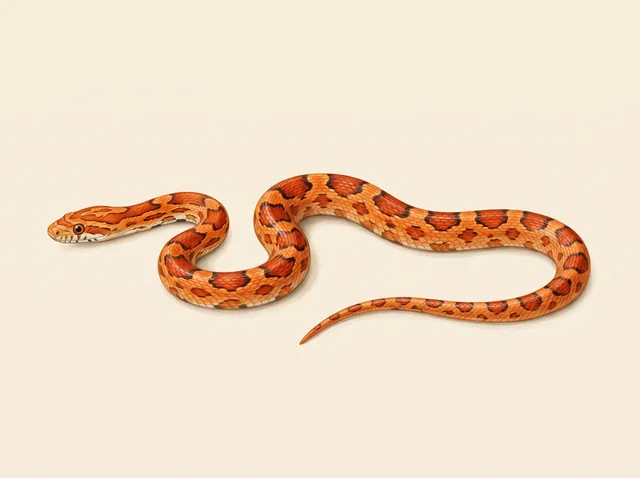
Where the Corn snake comes from
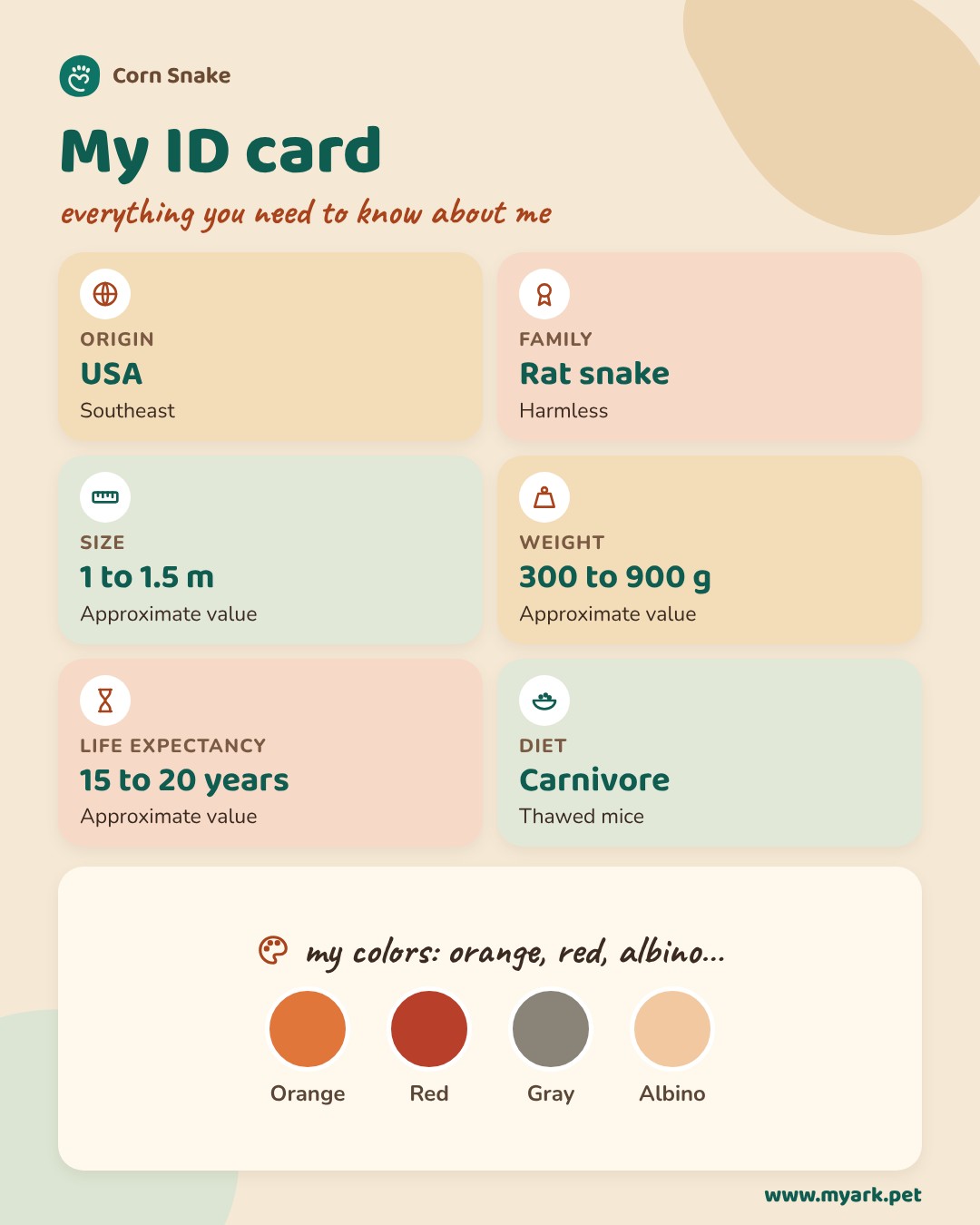
The corn snake lives in the south-east and centre of the United States; its name may come from its presence near corn stores, where it hunts mice.
It kills by constriction and has no functional venom: it is harmless to people.
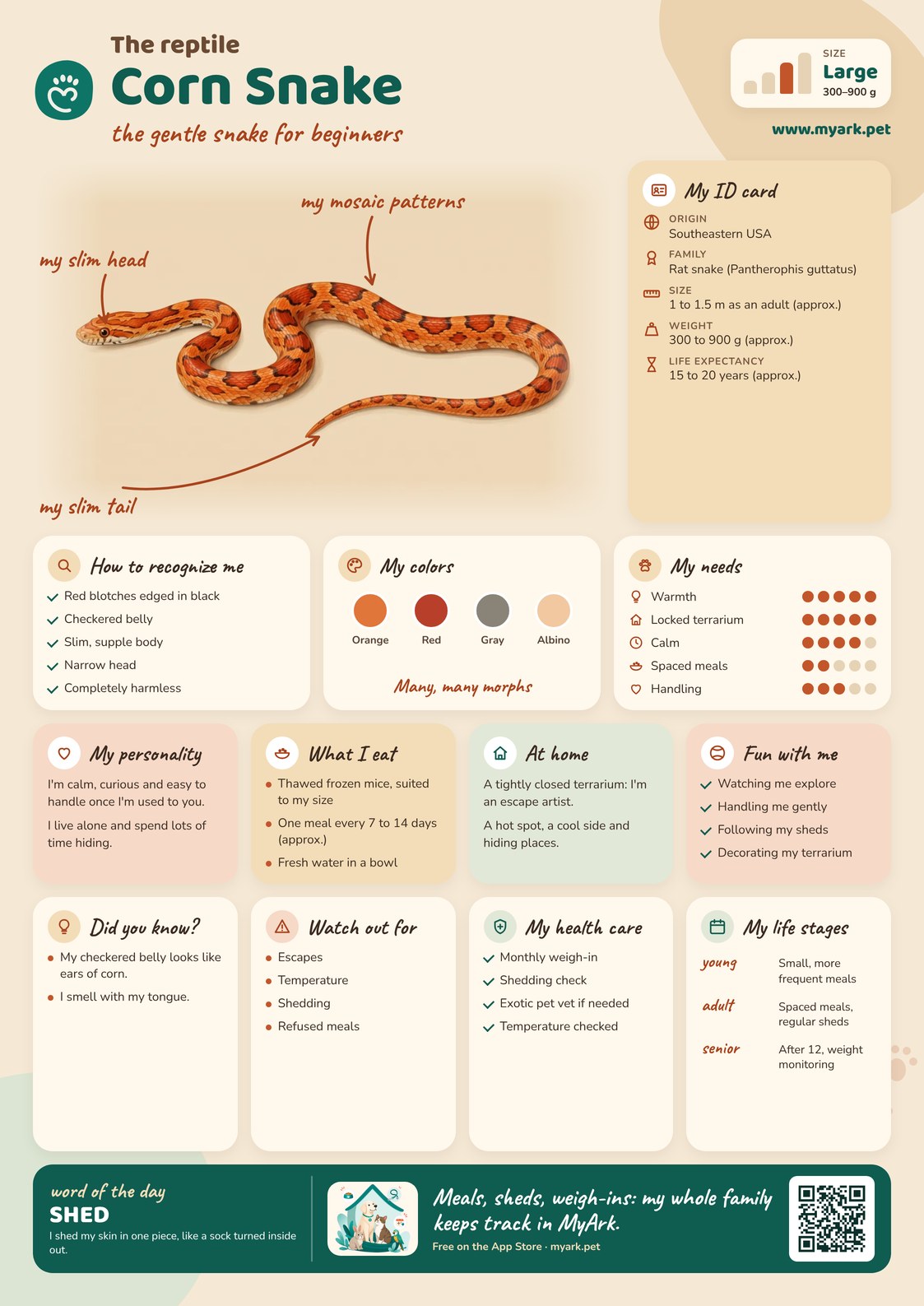
How to recognise me
- red blotches edged with black
- chequered belly
- slim, supple body
- narrow head
- completely harmless
My colours
- Orange
- Red
- Grey
- Albino
What a Corn snake needs day to day
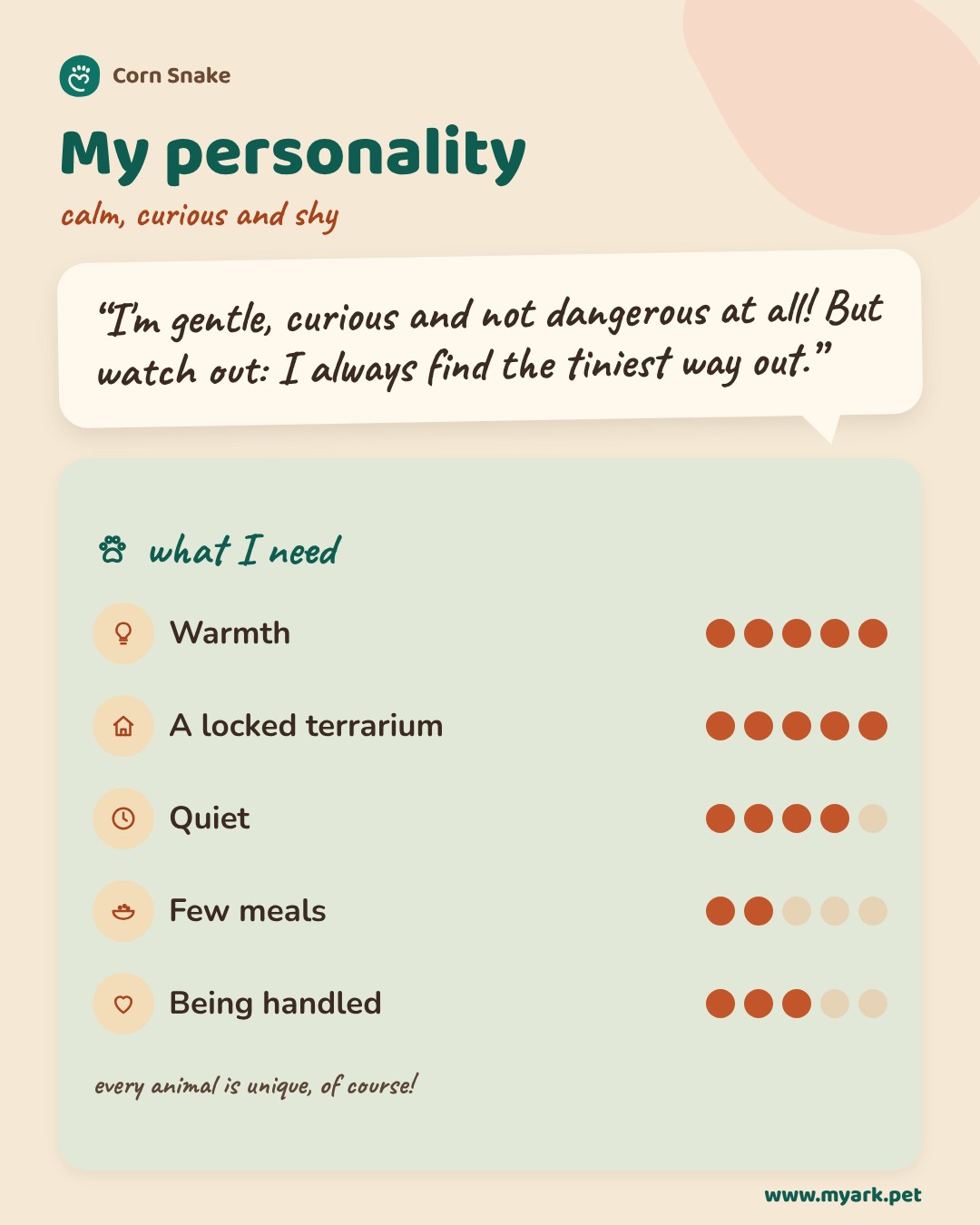
“I’m gentle, curious and not dangerous at all! But careful: I always find the smallest way out.”
Its needs are simple once the set-up is right: warmth, hides, a locked vivarium and a meal every week or two.
At a glance
- Warmth
- 5 out of 5
- A locked vivarium
- 5 out of 5
- Calm
- 4 out of 5
- Few meals
- 2 out of 5
- Being handled
- 3 out of 5
every snake is unique, of course!
With me, we can go…
- exploring the vivarium in the evening
- climbing branches
- hiding in its hides
- calm, short handling sessions
Living with a Corn snake: who does what
A snake takes little time each day but needs a technically correct set-up: mistakes show up later as chronic health problems. The routine is short — temperatures, water, a lock check — and the meals are rare, so dates matter. Here is the Corn snake’s routine at a glance, and how a household can split it without a single “did anyone…?” message.
The routine at a glance
- every day
- temperatures checked at the warm and cool ends; fresh water; a look at the snake, without disturbing it; lid and locks checked.
- every week
- droppings and shed skin removed; the water bowl cleaned; a thawed meal when it is due.
- every month
- a weigh-in; decor and hides cleaned; thermostat and lamps checked.
- every year
- a check-up with a reptile vet; heat mats and bulbs checked or replaced; a full clean of the vivarium.
Sharing it out
- Daily temperature and water checks on a rota.
- Feeding on one named adult, with the date logged.
- Handling only with an adult present.
Before it arrives, agree on…
- who checks temperatures and water every day
- who feeds, and on which date
- who handles it, and how — calmly, with the body supported
- the house rule: the lid is always locked
- who looks after it during holidays
How MyArk helps the household keep track
Pet feeding tracker
Log each meal and refusal: snakes eat rarely, so dates matter.
See the featurePet weight tracker
A monthly weigh-in, especially when it refuses food.
See the featureFamily pet chores
Temperature checks, water and cleaning on named people.
See the featurePet sitter instructions
Holiday instructions: temperatures, water, and the lid always locked.
See the featureFeeding, vivarium and health routine
Care is regular rather than time-consuming: temperatures and humidity checked, water changed, a clean vivarium and a weigh-in.
What I eat
- thawed mice of the right size
- a meal every 7 to 14 days (as a guide)
- fresh water in a bowl
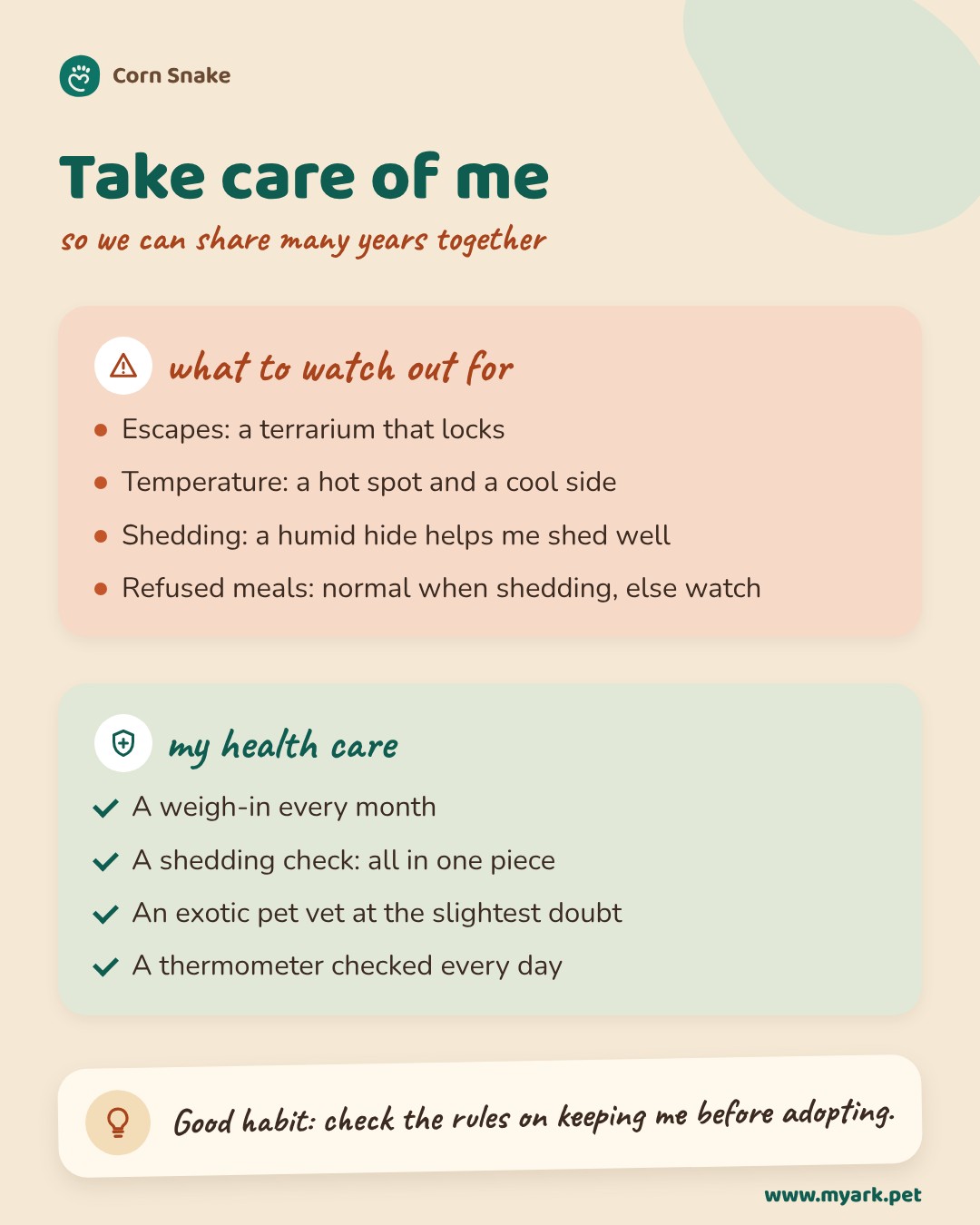
My health routine
- a thermostat on every heat source, checked with a thermometer
- humidity checked, especially before a shed
- a monthly weigh-in: weight loss is an early warning sign
- a reptile vet found before there is a problem
The stages of my life
- young
- Small meals more often, and short, gentle handling.
- adult
- A steady set-up, meals at the right interval and a monthly weigh-in.
- older
- Fewer meals and a closer watch on weight.
What to keep an eye on
MyArk describes the points to watch through the set-up, the shed and simple checks rather than a list of diseases: most snake health problems start with a temperature or humidity error.
Escapes
A vivarium locked with a key.
Temperature
A warm spot and a cool corner.
Shedding
A humid hide helps it shed well.
Refused meals
Normal during a shed; otherwise, watch its weight.
And, as for every snake:
- a precise temperature gradient, controlled by a thermostat and checked with a thermometer
- hides at both ends of the vivarium, warm and cool
- a water bowl big enough to soak in
- prey of the right size, thawed — never live
Is it the right snake for your household?
A snake needs a secure, locked vivarium, a heat source on a thermostat, thawed prey and a reptile vet — and many live for decades. Check the rules and any CITES papers required in your country, and consider reptile rescues before buying.
- Home
- A secure, locked vivarium with a thermostat, in a calm room.
- Children
- Gentle and easy to handle with an adult present.
- Other pets
- Keep cats and dogs away from the vivarium; one snake per vivarium.
- First reptile
- An excellent first snake.
- Time
- A few minutes a day, and meals on a schedule.
Corn snake: straight answers
Is a corn snake a good beginner snake?
Yes: gentle, harmless and easy to keep.
Is a corn snake venomous?
No: it is harmless to people.
How often does a corn snake eat?
Roughly every week or two, depending on age.
What colours does the Corn snake come in?
The usual colours are orange, red, grey and albino.