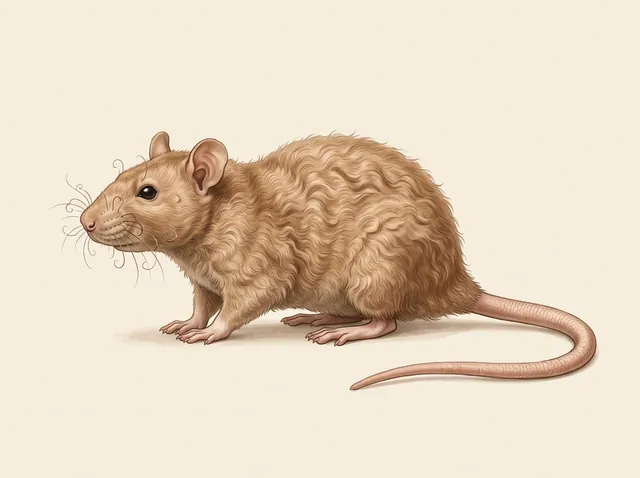
Where the Rex rat comes from
The Rex rat has curly fur, whiskers included; the trait is dominant, and a 2010 study showed it affects a keratin gene.
Two copies of the gene give the semi-hairless Double Rex.
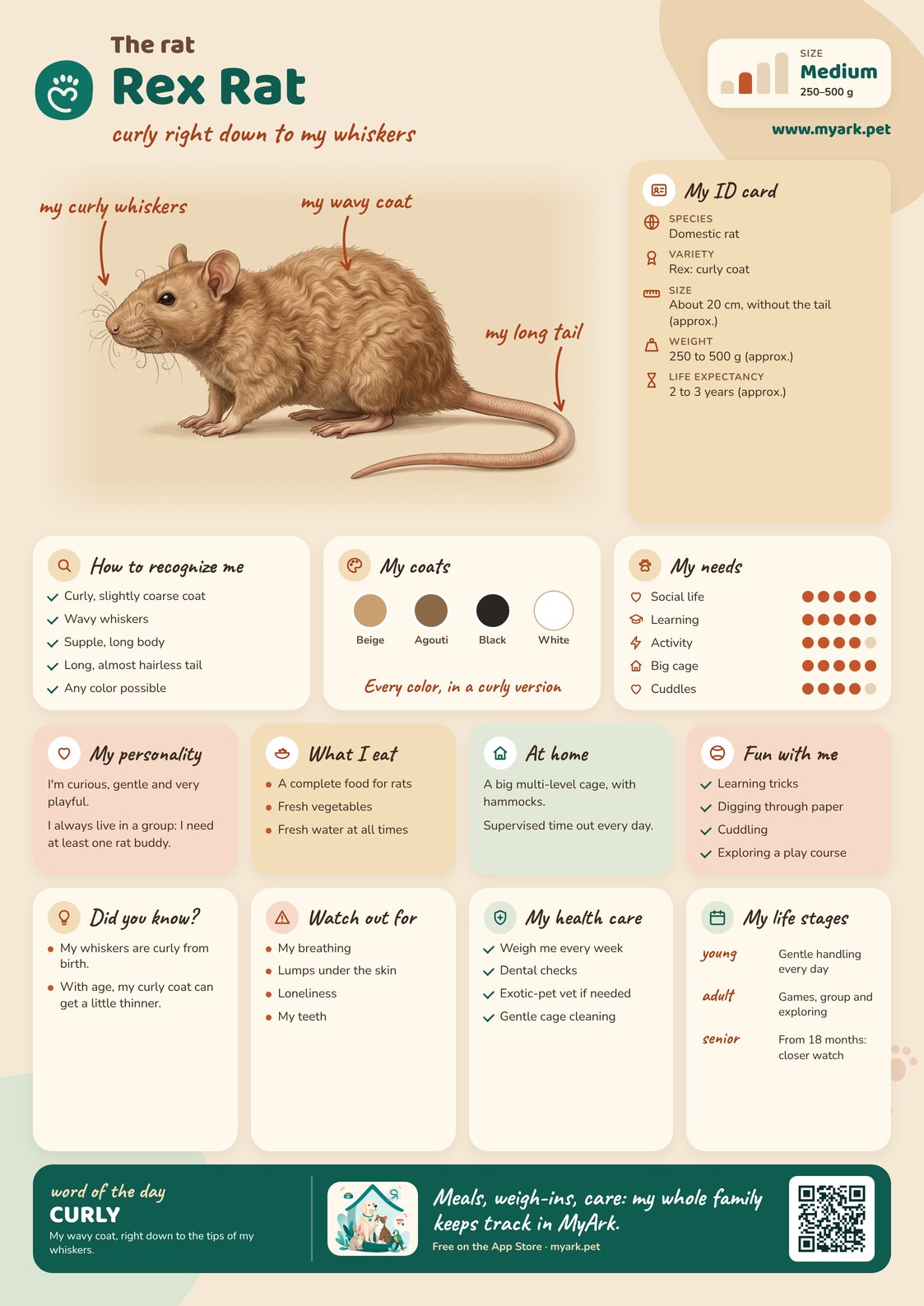
How to recognise me
- curly, slightly harsh fur
- wavy whiskers
- supple, elongated body
- long, almost bare tail
- any colour
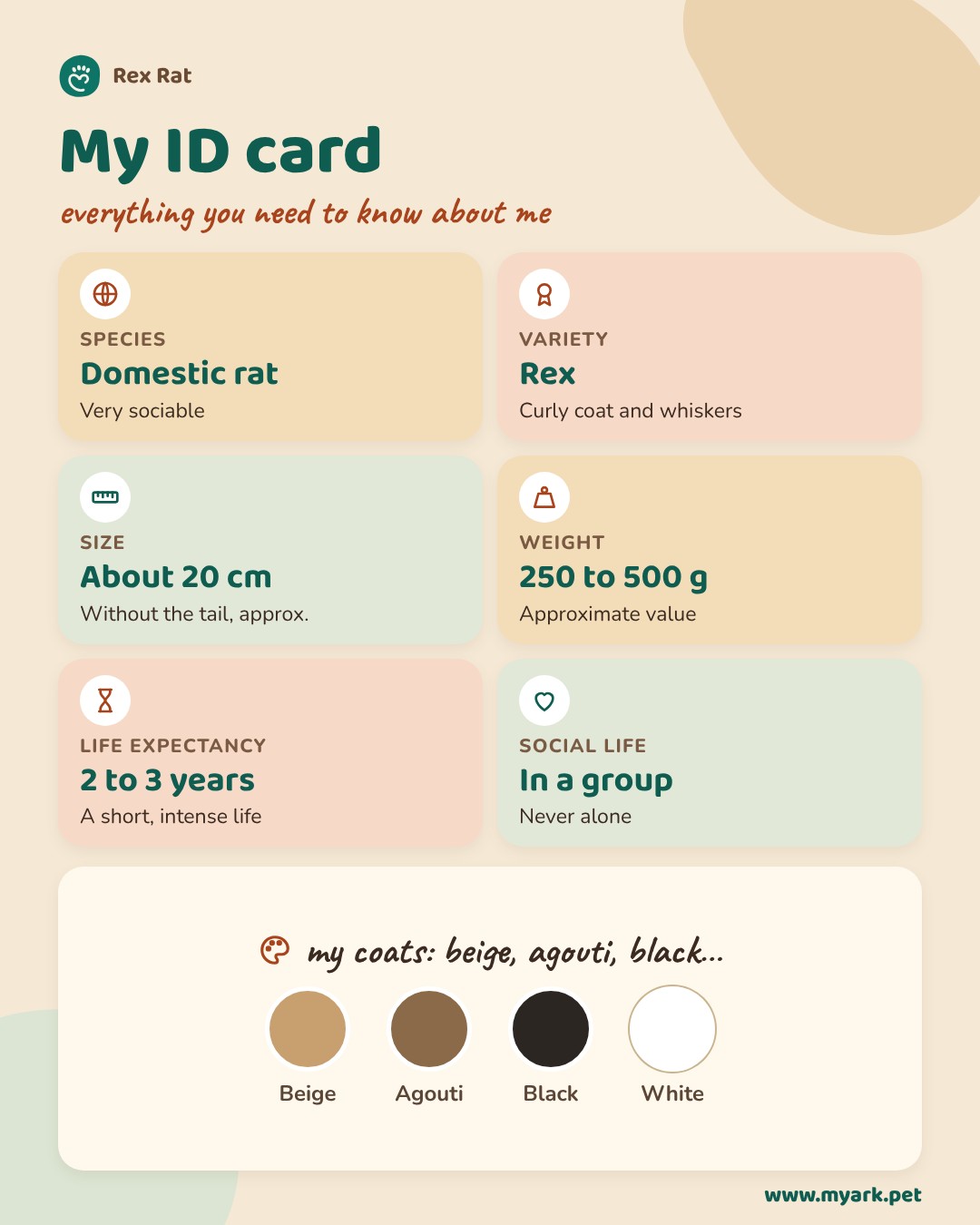
My colours
- Beige
- Agouti
- Black
- White
What a Rex rat needs day to day
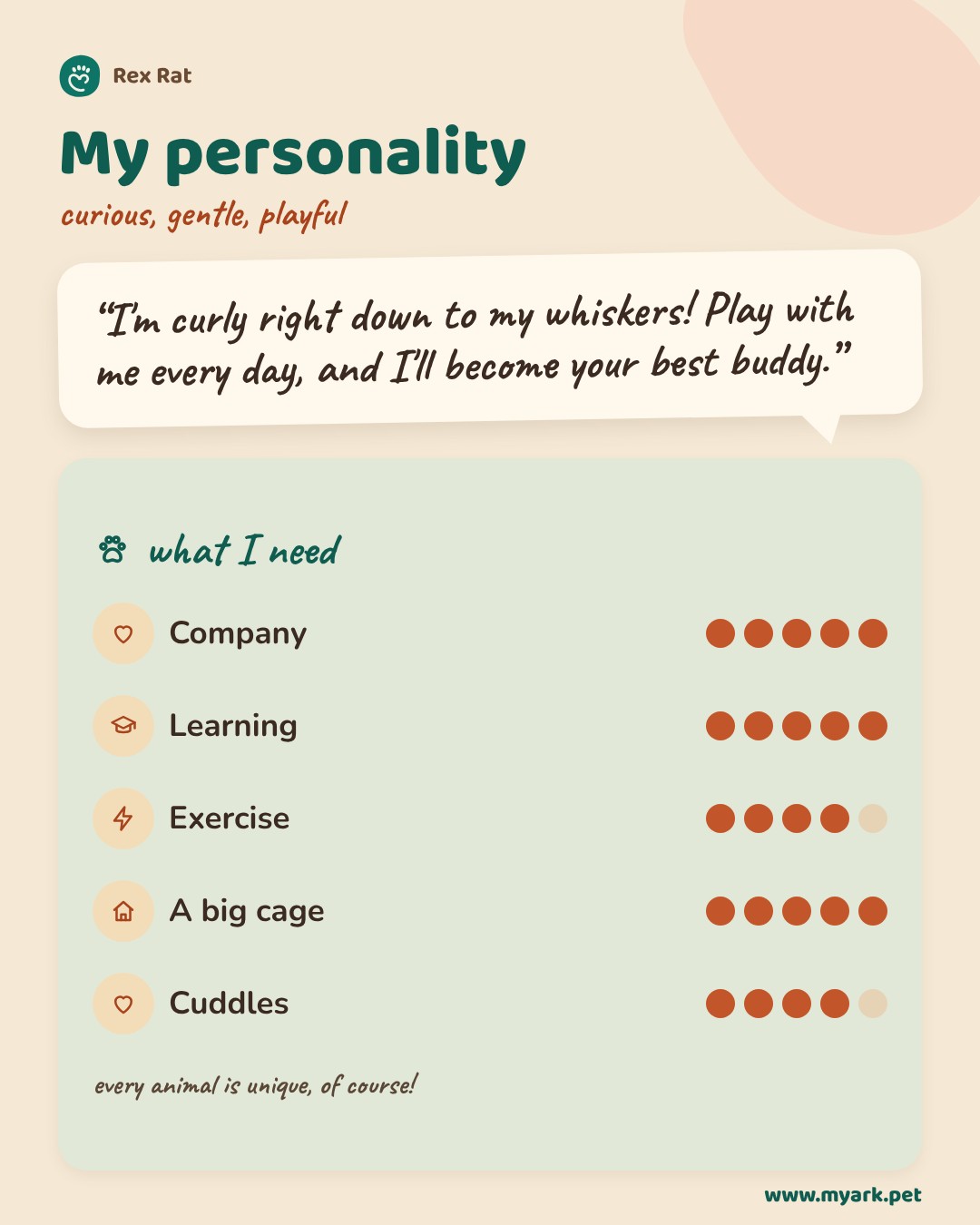
“I’m curly right to the tips of my whiskers! Play with me every day, and I’ll become your best friend.”
Its needs are high: same-sex companions, a tall cage, daily time out, play and learning.
At a glance
- Company
- 5 out of 5
- Learning
- 5 out of 5
- Exercise
- 4 out of 5
- A big cage
- 5 out of 5
- Cuddles
- 4 out of 5
every rat is unique, of course!
With me, we can go…
- learning tricks
- hunting for hidden treats
- climbing and hammocks
- cuddles on your shoulder
Living with a Rex rat: who does what
The rat is the most interactive rodent and asks for daily contact: time out of the cage, play, a clean cage — and its short life is a real test for young children. Here is the Rex rat’s routine at a glance, and how a household can split it without a single “did anyone…?” message.
The routine at a glance
- every day
- measured complete rat food; fresh vegetables; fresh water; an hour or more out of the cage, with play.
- every week
- a full cage clean with dust-free bedding; a weigh-in; a feel for lumps under the skin.
- every month
- hammocks and toys washed or replaced; claws checked; new games or a new layout.
- every year
- a check-up with a vet used to small mammals.
Sharing it out
- Play time out of the cage shared between named people.
- The weekly clean and weigh-in on a name.
- Children hold them sitting down, with an adult.
Before it arrives, agree on…
- who plays with them every day, and when
- who cleans the cage each week
- who does the weekly weigh-in and lump check
- how children handle them — sitting down, gently
- who looks after them during holidays
How MyArk helps the household keep track
Family pet chores
Food, cleaning and play time on named people.
See the featurePet weight tracker
A weekly weigh-in: rats gain weight fast, and weight loss is a warning sign.
See the featurePet health record
Note breathing noises, lumps and vet visits in one shared record.
See the featurePet sitter instructions
Holiday instructions: measured food, water and daily contact.
See the featureFeeding, grooming and health routine
The coat needs regular brushing, more often during the moult.
What I eat
- a complete rat food
- fresh vegetables
- fresh water at will
My health routine
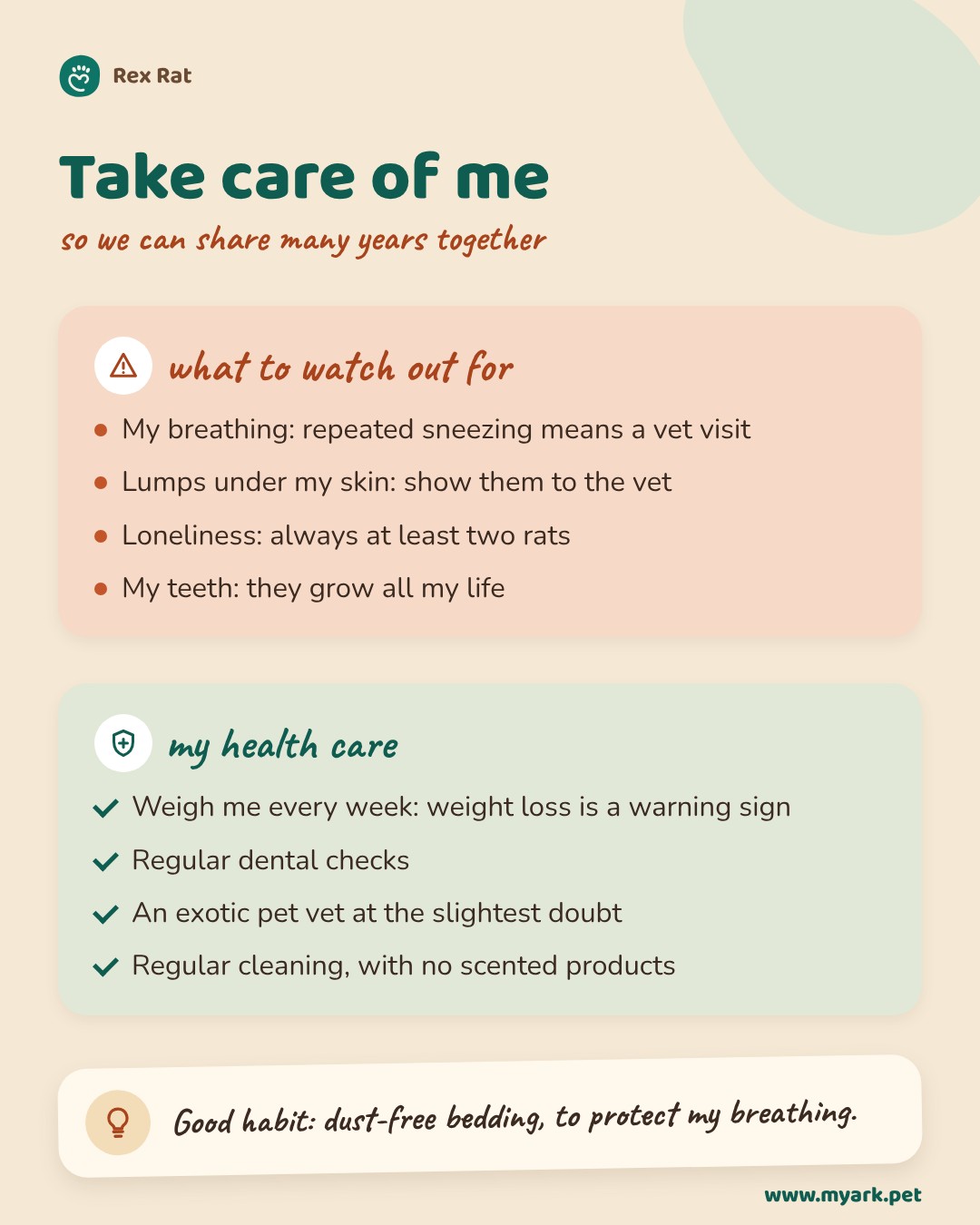
- any unusual breathing noise or repeated sneezing is worth a vet visit: respiratory problems are very common
- a weekly feel for lumps under the skin, in females and males alike
- dust-free, unscented bedding only
- a vet used to small mammals, found before there is a problem
The stages of my life
- young
- Gentle handling every day, and learning to come when called.
- adult
- Company, play, measured food and daily time out.
- older
- From about 18 months, closer watch on breathing, lumps and weight.
What to keep an eye on
MyArk describes predispositions through visible body shape and simple checks rather than a list of diseases: it is what you can verify from the outside, and act on when choosing a breeder.
Breathing
Repeated sneezing: see a vet.
Lumps under the skin
Show them to the vet.
Living alone
Always at least two rats.
Teeth
They grow all its life.
And, as for every rat:
- life in a same-sex group: never a rat alone
- a tall cage with levels, and time out every day
- measured food: rats gain weight fast
- interaction: one of the rodents that most need contact
Is it the right rat for your household?
Rats need at least one companion of the same sex, a big cage, daily time out and a vet used to small mammals. They are clever and affectionate, but live only 2 to 3 years: prepare children for that. Rescues often have rats waiting for a home.
- Home
- A tall cage with levels in a calm room, plus a rat-proofed space for time out.
- Children
- Gentle and clever; children handle them sitting down — and need preparing for their short life.
- Other pets
- Keep cats and dogs away; never mix with other rodents.
- First pet
- An excellent first pet for a household ready to give daily time.
- Time
- An hour or more of contact every day.
Rex rat: straight answers
Does a Rex rat need grooming?
No special care: its curly whiskers are just brittle.
Can a Rex rat live alone?
No: always keep at least two rats of the same sex.
Rex or Double Rex?
The Double Rex carries two copies of the gene and is semi-hairless.
What colours does the Rex rat come in?
The usual colours are beige, agouti, black and white.