Where the Husky rat comes from
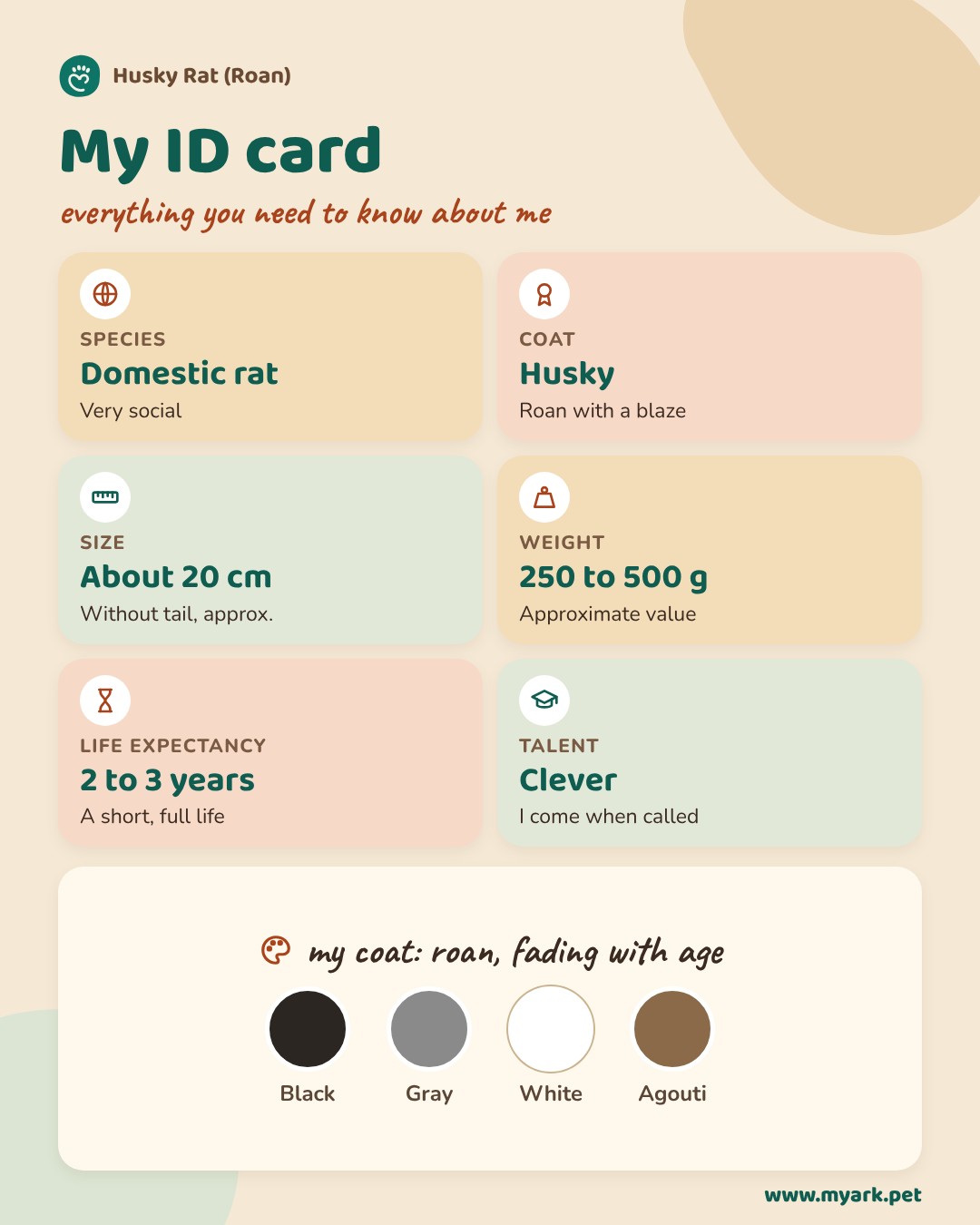
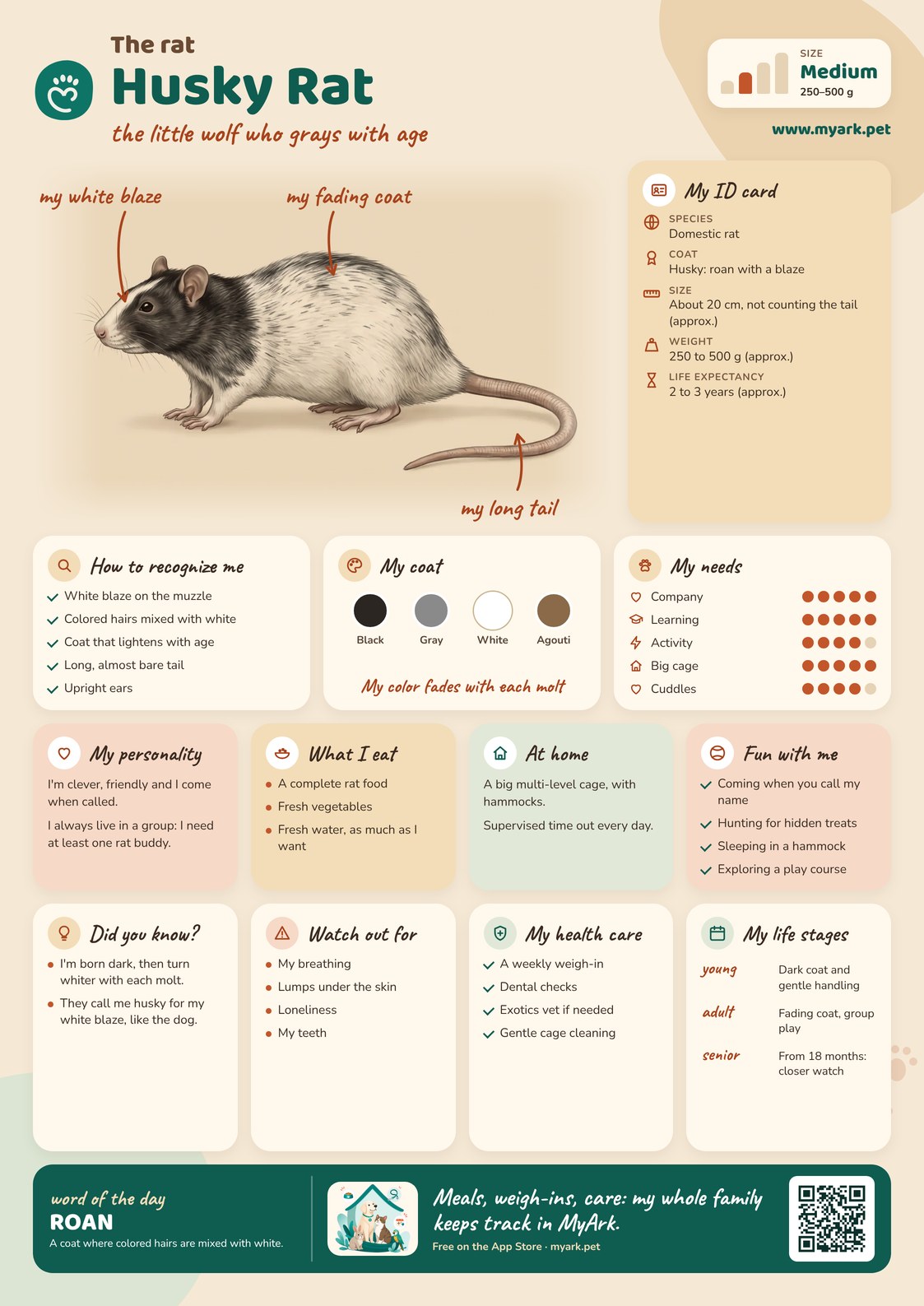
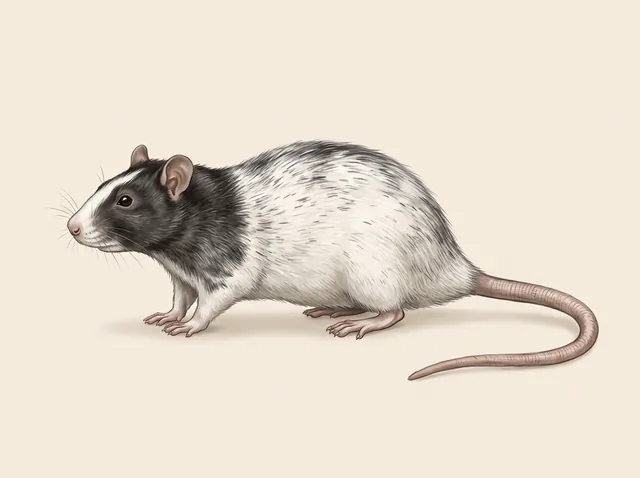
The Husky is a roan variety: coloured hairs mixed with white, with a white blaze on the face.
It is born dark and turns paler at each moult.
How to recognise me
- white blaze on the muzzle
- coloured hairs mixed with white
- coat that lightens with age
- long, almost bare tail
- upright ears
My colours
- Black
- Grey
- White
- Agouti
What a Husky rat needs day to day
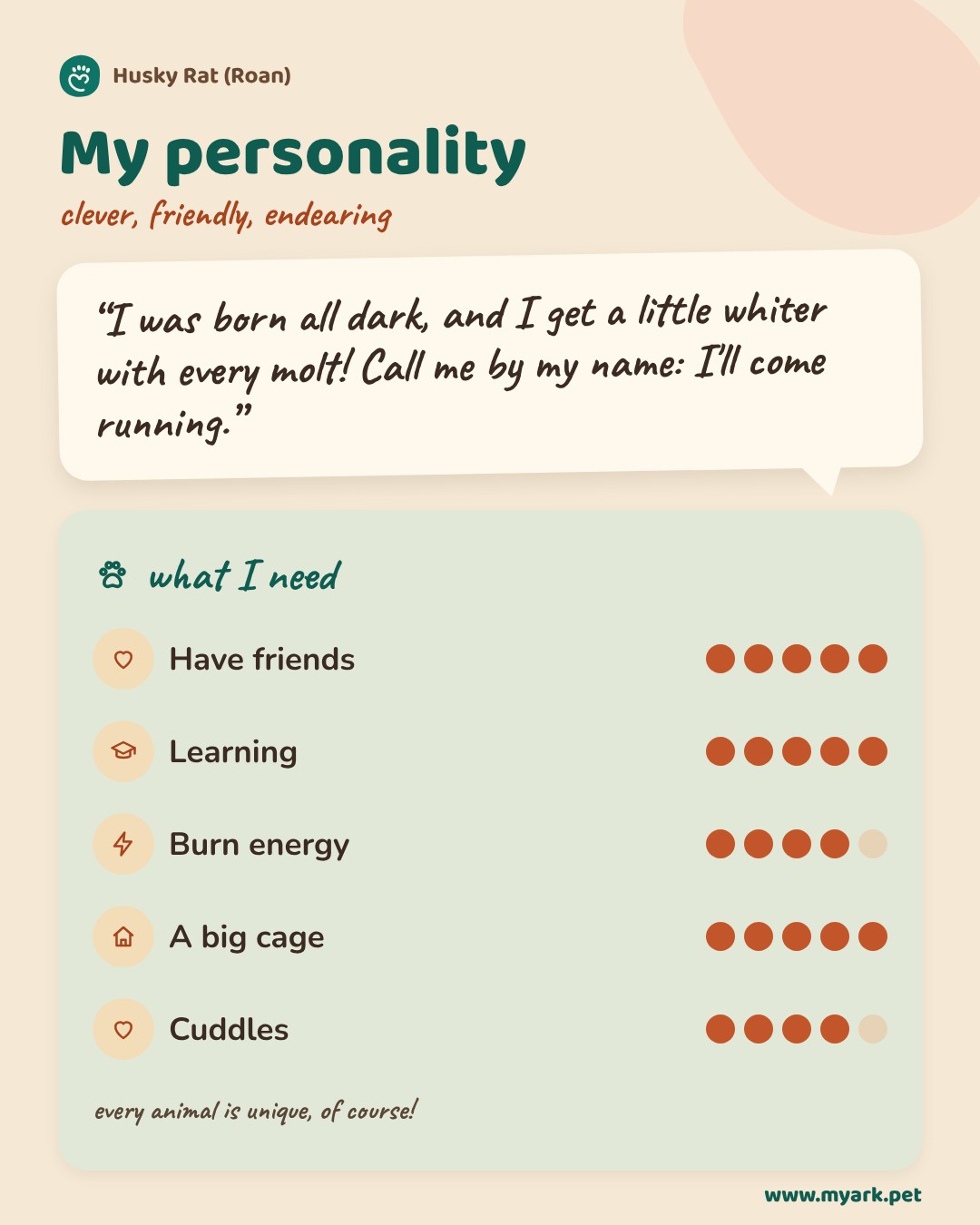
“I was born all dark, and I turn a bit whiter at every moult! Call me by my name: I’ll come running.”
Its needs are high: same-sex companions, a tall cage, daily time out, play and learning.
At a glance
- Company
- 5 out of 5
- Learning
- 5 out of 5
- Exercise
- 4 out of 5
- A big cage
- 5 out of 5
- Cuddles
- 4 out of 5
every rat is unique, of course!
With me, we can go…
- learning tricks
- hunting for hidden treats
- climbing and hammocks
- cuddles on your shoulder
Living with a Husky rat: who does what
The rat is the most interactive rodent and asks for daily contact: time out of the cage, play, a clean cage — and its short life is a real test for young children. Here is the Husky rat’s routine at a glance, and how a household can split it without a single “did anyone…?” message.
The routine at a glance
- every day
- measured complete rat food; fresh vegetables; fresh water; an hour or more out of the cage, with play.
- every week
- a full cage clean with dust-free bedding; a weigh-in; a feel for lumps under the skin.
- every month
- hammocks and toys washed or replaced; claws checked; new games or a new layout.
- every year
- a check-up with a vet used to small mammals.
Sharing it out
- Play time out of the cage shared between named people.
- The weekly clean and weigh-in on a name.
- Children hold them sitting down, with an adult.
Before it arrives, agree on…
- who plays with them every day, and when
- who cleans the cage each week
- who does the weekly weigh-in and lump check
- how children handle them — sitting down, gently
- who looks after them during holidays
How MyArk helps the household keep track
Family pet chores
Food, cleaning and play time on named people.
See the featurePet weight tracker
A weekly weigh-in: rats gain weight fast, and weight loss is a warning sign.
See the featurePet health record
Note breathing noises, lumps and vet visits in one shared record.
See the featurePet sitter instructions
Holiday instructions: measured food, water and daily contact.
See the featureFeeding, grooming and health routine
The coat needs regular brushing, more often during the moult.
What I eat
- a complete rat food
- fresh vegetables
- fresh water at will
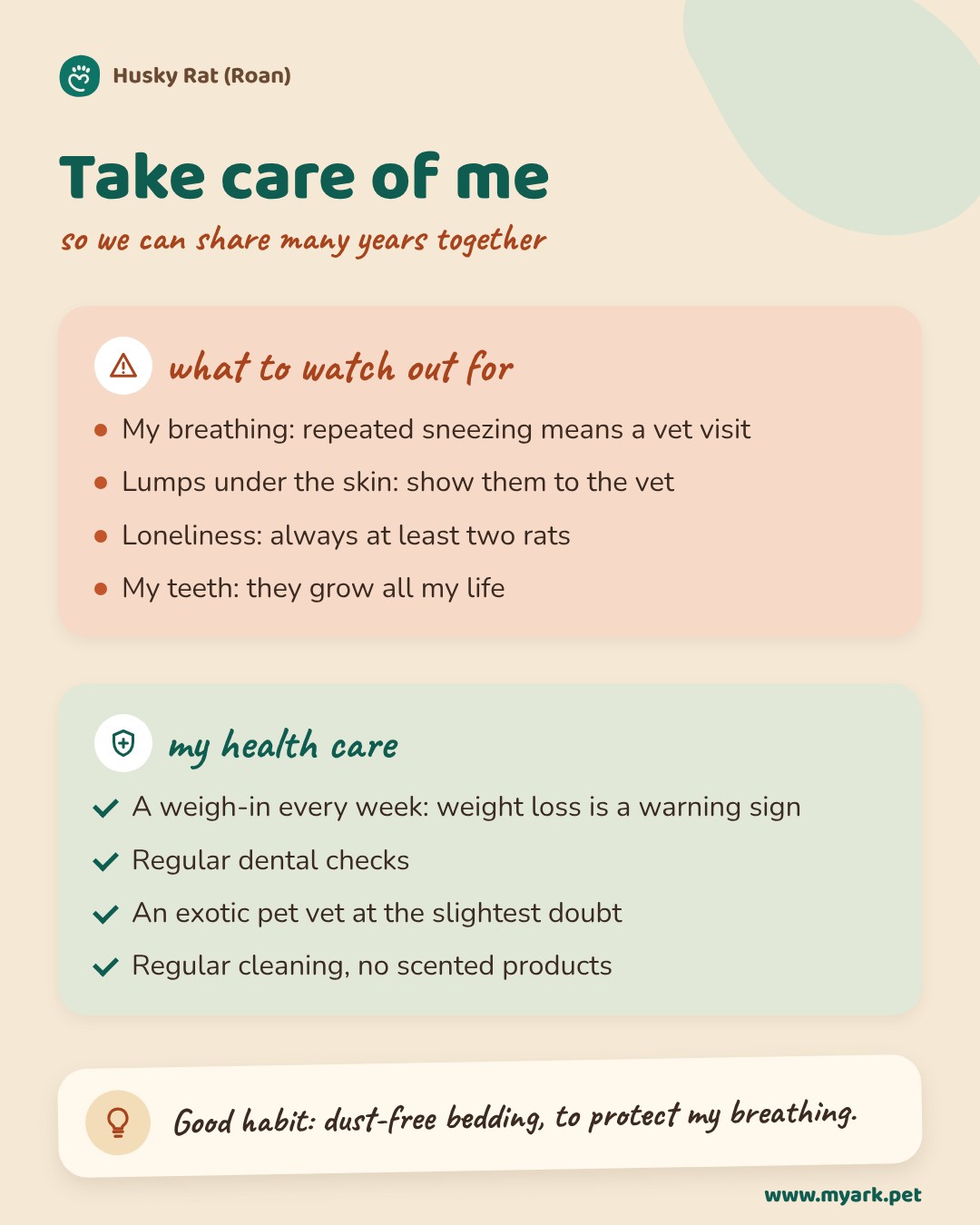
My health routine
- any unusual breathing noise or repeated sneezing is worth a vet visit: respiratory problems are very common
- a weekly feel for lumps under the skin, in females and males alike
- dust-free, unscented bedding only
- a vet used to small mammals, found before there is a problem
The stages of my life
- young
- Gentle handling every day, and learning to come when called.
- adult
- Company, play, measured food and daily time out.
- older
- From about 18 months, closer watch on breathing, lumps and weight.
What to keep an eye on
MyArk describes predispositions through visible body shape and simple checks rather than a list of diseases: it is what you can verify from the outside, and act on when choosing a breeder.
Breathing
Repeated sneezing: see a vet.
Lumps under the skin
Show them to the vet.
Living alone
Always at least two rats.
Teeth
They grow all its life.
And, as for every rat:
- life in a same-sex group: never a rat alone
- a tall cage with levels, and time out every day
- measured food: rats gain weight fast
- interaction: one of the rodents that most need contact
Is it the right rat for your household?
Rats need at least one companion of the same sex, a big cage, daily time out and a vet used to small mammals. They are clever and affectionate, but live only 2 to 3 years: prepare children for that. Rescues often have rats waiting for a home.
- Home
- A tall cage with levels in a calm room, plus a rat-proofed space for time out.
- Children
- Gentle and clever; children handle them sitting down — and need preparing for their short life.
- Other pets
- Keep cats and dogs away; never mix with other rodents.
- First pet
- An excellent first pet for a household ready to give daily time.
- Time
- An hour or more of contact every day.
Husky rat: straight answers
Why does my Husky rat change colour?
It is a roan variety that lightens with each moult.
Can a Husky rat live alone?
No: always keep at least two rats of the same sex.
Do rats come when called?
Many learn their name.
What colours does the Husky rat come in?
The usual colours are black, grey, white and agouti.