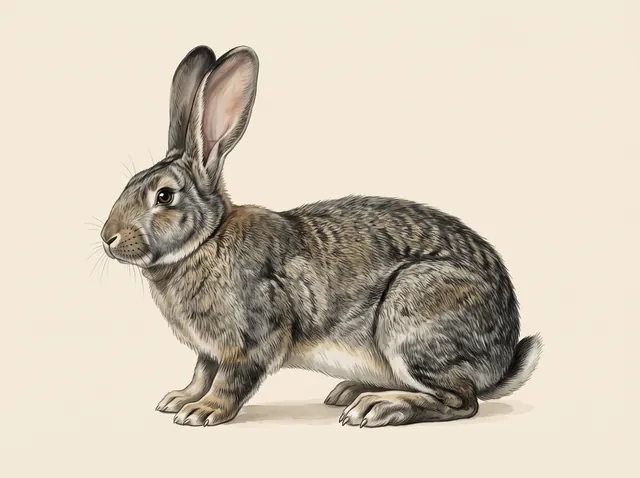
Where the Flemish Giant comes from
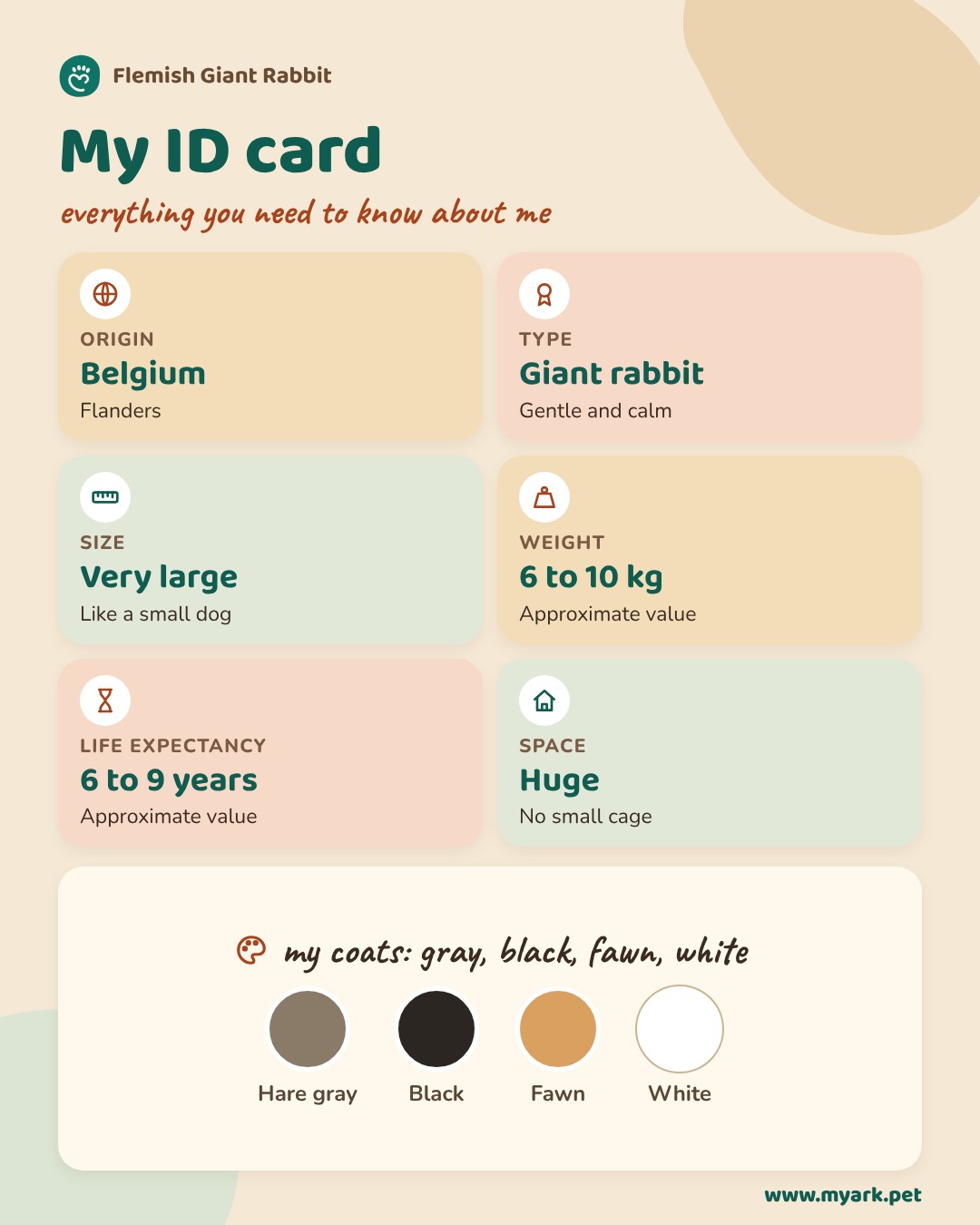
One of the largest rabbit breeds, from Flanders. It can weigh as much as a small dog.
Its size makes it calm and steady, but its joints and soles need protecting.
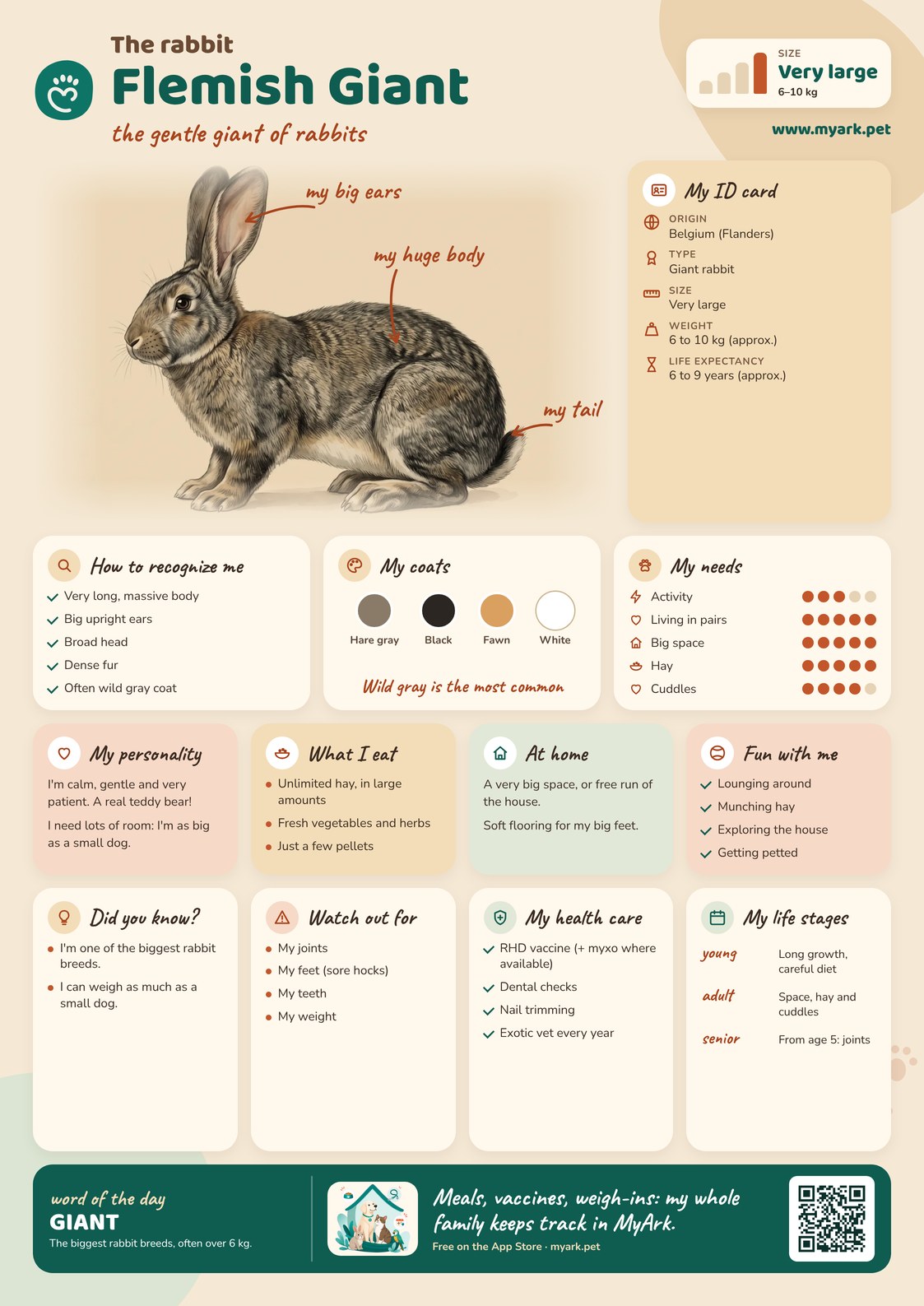
How to recognise me
- very large, long body
- upright ears
- broad head
- short, dense coat
- calm, steady bearing
My colours
- Hare grey
- Black
- Fawn
- White
What a Flemish Giant needs day to day
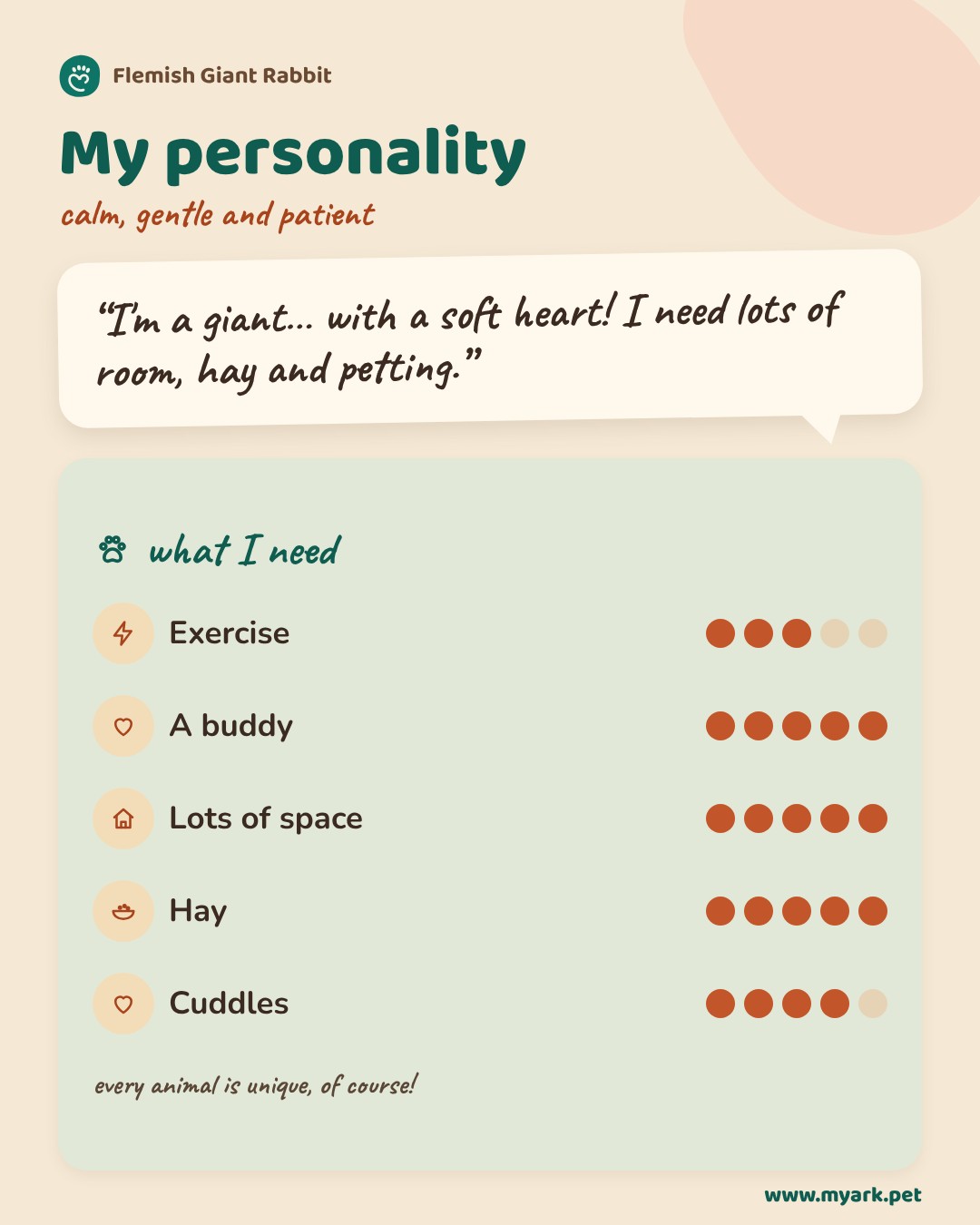
“I’m huge and very calm! I need a lot of room, soft floors and plenty of hay.”
Its exercise needs are moderate: a lot of space to stretch and move every day.
At a glance
- Exercise
- 3 out of 5
- A companion
- 5 out of 5
- Lots of room
- 5 out of 5
- Hay
- 5 out of 5
- Cuddles
- 4 out of 5
every rabbit is unique, of course!
With me, we can go…
- stretching out
- exploring
- gentle strokes
- lying in the cool
Living with a Flemish Giant: who does what
A rabbit’s care is daily and quiet — hay, greens, water, litter, a run — and easy to forget because it rarely complains. Here is the Flemish Giant’s routine at a glance, and how a household can split it without a single “did anyone…?” message.
The routine at a glance
- every day
- unlimited hay; a portion of greens and a few pellets; fresh water; litter tray cleaning; several hours of free running.
- every week
- a teeth check; a check of the fur around the bottom; a brush.
- every month
- a weigh-in; a claw check; a deep clean of the hutch or enclosure.
- every year
- the myxomatosis and RHD booster; a check-up with a rabbit-savvy vet.
Sharing it out
- A big enclosure with soft flooring.
- Pellets measured on one rule.
- Hay and litter on named people.
Before it arrives, agree on…
- who tops up the hay and greens
- who cleans the litter and enclosure
- where it runs free, and who rabbit-proofs the cables
- how children handle it — sitting on the floor
- who looks after it during holidays
How MyArk helps the household keep track
Pet feeding tracker
Log hay, greens and pellets, and notice quickly if it stops eating.
See the featureFamily pet chores
Hay, litter and free-run time on named people.
See the featureRecurring pet care reminders
Never miss the yearly myxomatosis and RHD booster.
See the featurePet weight tracker
A monthly weigh-in: weight loss is an early warning sign.
See the featureFeeding, grooming and health routine
The coat needs regular brushing, more often during the moult.
What I eat
- unlimited hay, all day
- fresh greens and herbs
- only a few pellets
My health routine
- vaccination against myxomatosis and both strains of RHD (rabbit haemorrhagic disease), boosted every year
- a teeth check at every visit: rabbit teeth grow all their life
- claws clipped regularly
- a yearly check-up with a rabbit-savvy vet, and neutering discussed early
The stages of my life
- young
- Gentle handling and getting used to the household.
- adult
- Free time to run, hay and a companion.
- senior
- From about 6 years old, closer watch on legs and teeth.
What to keep an eye on
MyArk describes predispositions through visible body shape and simple checks rather than a list of diseases: it is what you can verify from the outside, and act on when choosing a breeder.
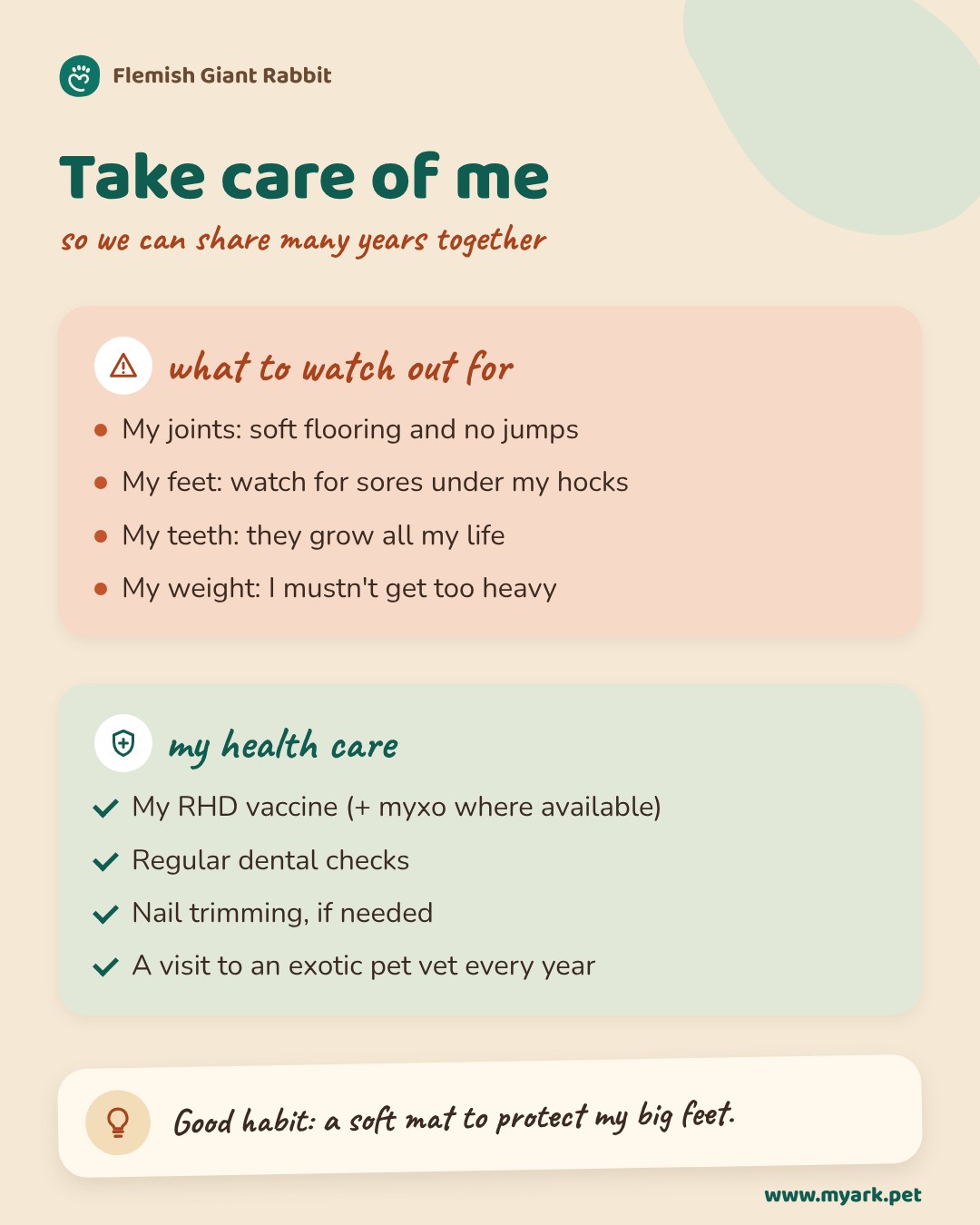
Sore hocks
Heavy rabbits need soft flooring to protect the soles of their feet.
Joints
Soft flooring and no jumps.
Teeth
They grow all its life: plenty of hay, and a check at every vet visit.
Weight
It must not get too heavy.
And, as for every rabbit:
- hay making up most of the diet, every day: it wears the teeth and keeps the gut moving
- a rabbit that stops eating or producing droppings for a few hours is an emergency
- teeth, claws and the fur around the bottom, checked every week (flystrike in summer)
- a companion: rabbits are social and live better in a neutered pair
Is it the right rabbit for your household?
A rabbit lives 8 to 12 years, needs a companion, space to run every day and a rabbit-savvy vet. It is a prey animal that rarely enjoys being carried: the real question is less the breed than the space and time your household has. Rescues have many rabbits waiting for a home.
- Home
- Needs a lot of space: a large room or enclosure with soft flooring.
- Children
- Calm, but too heavy for children to carry.
- Other pets
- Needs a rabbit companion; keep it away from cats and dogs unless introduced carefully.
- First pet
- A good first pet for a household with a lot of space.
- Time
- Daily care and several hours of free running.
Flemish Giant: straight answers
How big is a Flemish Giant?
Very big: often over 6 kg as an adult.
Is a Flemish Giant calm?
Yes: it is famously calm and steady.
Does a Flemish Giant need a big hutch?
It needs far more than a hutch: a room or a large enclosure.
What colours does the Flemish Giant come in?
The usual colours are hare grey, black, fawn and white.