Where the Bouscat Giant comes from
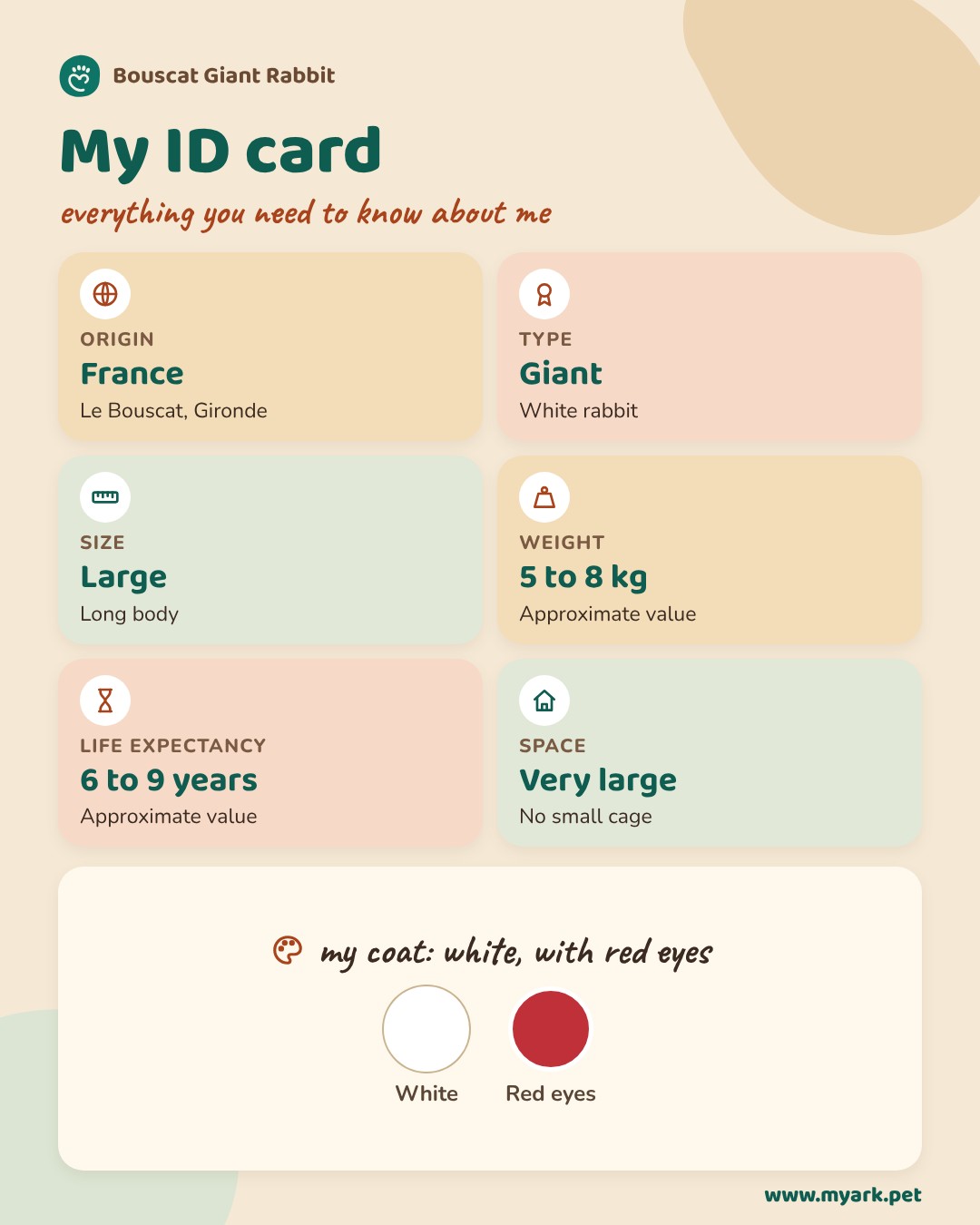
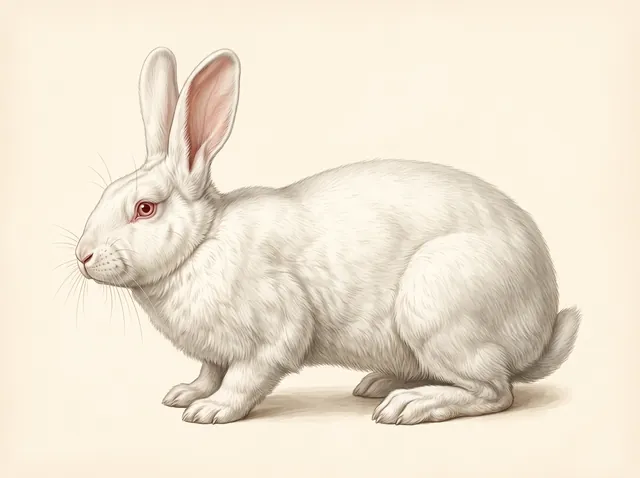
A large French breed, all white, named after the town of Le Bouscat, near Bordeaux.
It is among the largest rabbits in France.
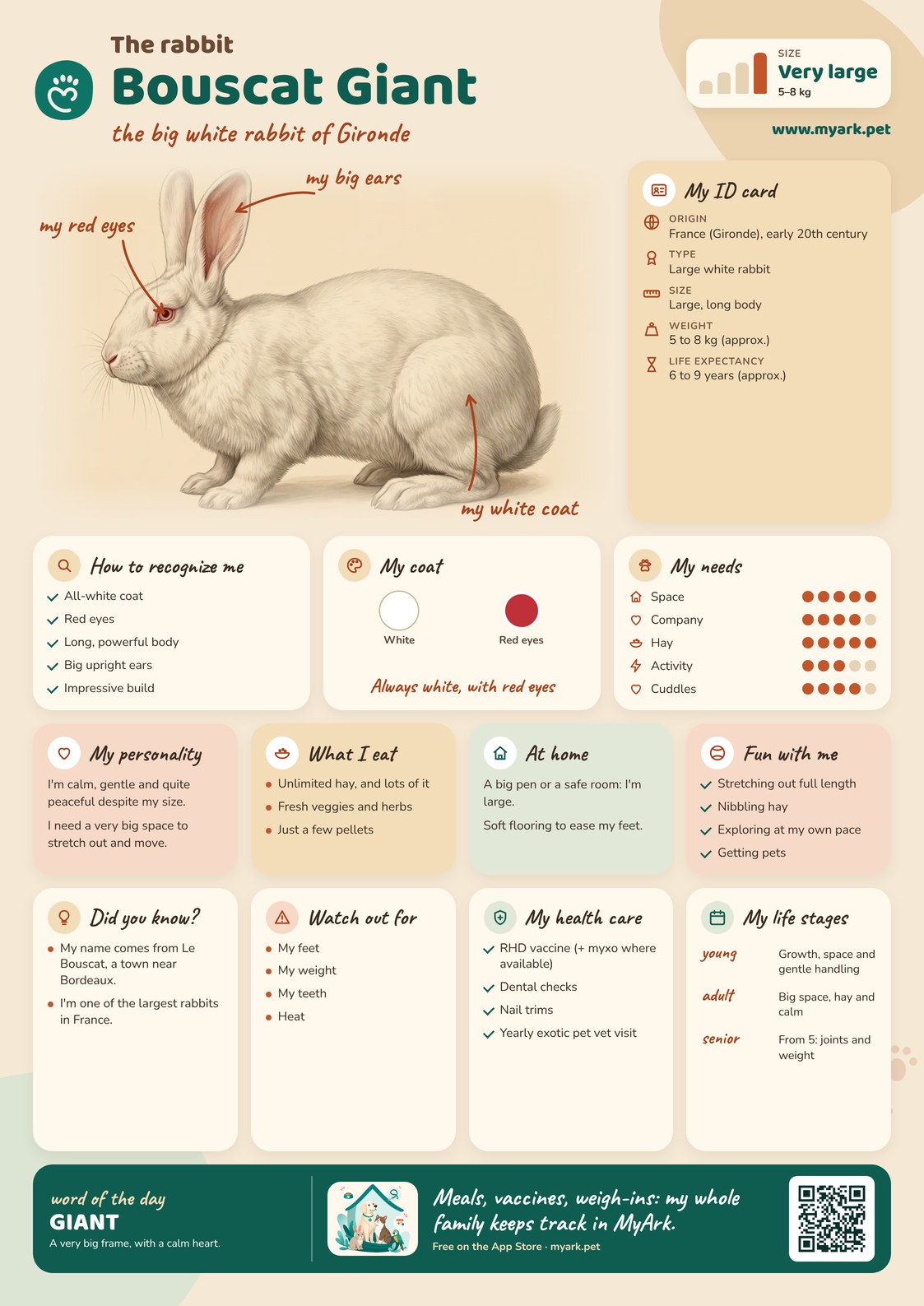
How to recognise me
- all-white coat
- red eyes
- long, powerful body
- large upright ears
- imposing build
My colours
- White
- Red eyes
What a Bouscat Giant needs day to day
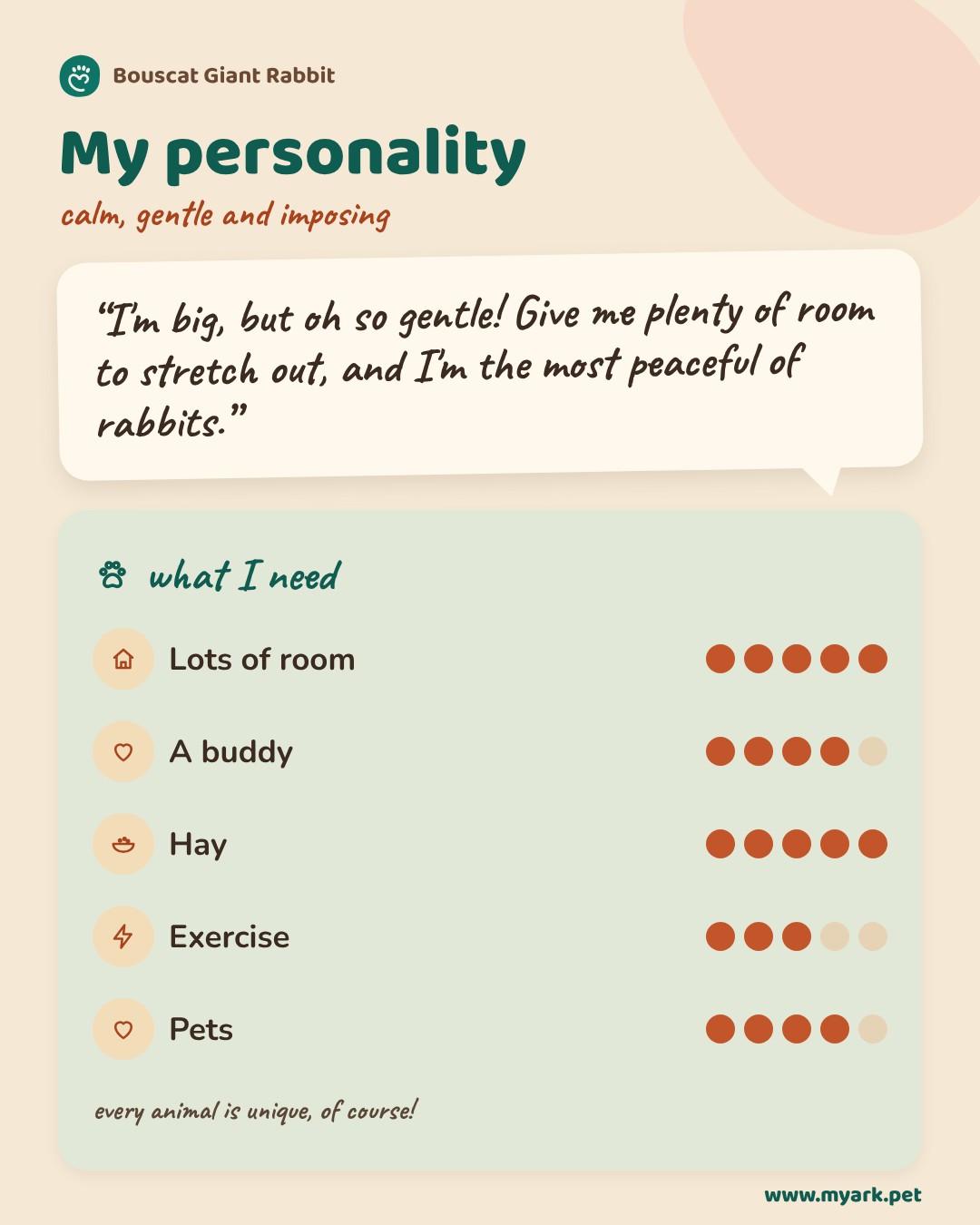
“I’m big, white and calm! I need a lot of room, soft floors and plenty of hay.”
Its exercise needs are moderate: a lot of space to stretch and move every day.
At a glance
- Lots of space
- 5 out of 5
- A companion
- 4 out of 5
- Hay
- 5 out of 5
- Exercise
- 3 out of 5
- Strokes
- 4 out of 5
every rabbit is unique, of course!
With me, we can go…
- stretching out
- exploring
- gentle strokes
- lying in the cool
Living with a Bouscat Giant: who does what
A rabbit’s care is daily and quiet — hay, greens, water, litter, a run — and easy to forget because it rarely complains. Here is the Bouscat Giant’s routine at a glance, and how a household can split it without a single “did anyone…?” message.
The routine at a glance
- every day
- unlimited hay; a portion of greens and a few pellets; fresh water; litter tray cleaning; several hours of free running.
- every week
- a teeth check; a check of the fur around the bottom; a brush.
- every month
- a weigh-in; a claw check; a deep clean of the hutch or enclosure.
- every year
- the myxomatosis and RHD booster; a check-up with a rabbit-savvy vet.
Sharing it out
- A big enclosure with soft flooring.
- Pellets measured on one rule.
- Hay and litter on named people.
Before it arrives, agree on…
- who tops up the hay and greens
- who cleans the litter and enclosure
- where it runs free, and who rabbit-proofs the cables
- how children handle it — sitting on the floor
- who looks after it during holidays
How MyArk helps the household keep track
Pet feeding tracker
Log hay, greens and pellets, and notice quickly if it stops eating.
See the featureFamily pet chores
Hay, litter and free-run time on named people.
See the featureRecurring pet care reminders
Never miss the yearly myxomatosis and RHD booster.
See the featurePet weight tracker
A monthly weigh-in: weight loss is an early warning sign.
See the featureFeeding, grooming and health routine
The coat needs regular brushing, more often during the moult.
What I eat
- unlimited hay, all day
- fresh greens and herbs
- only a few pellets
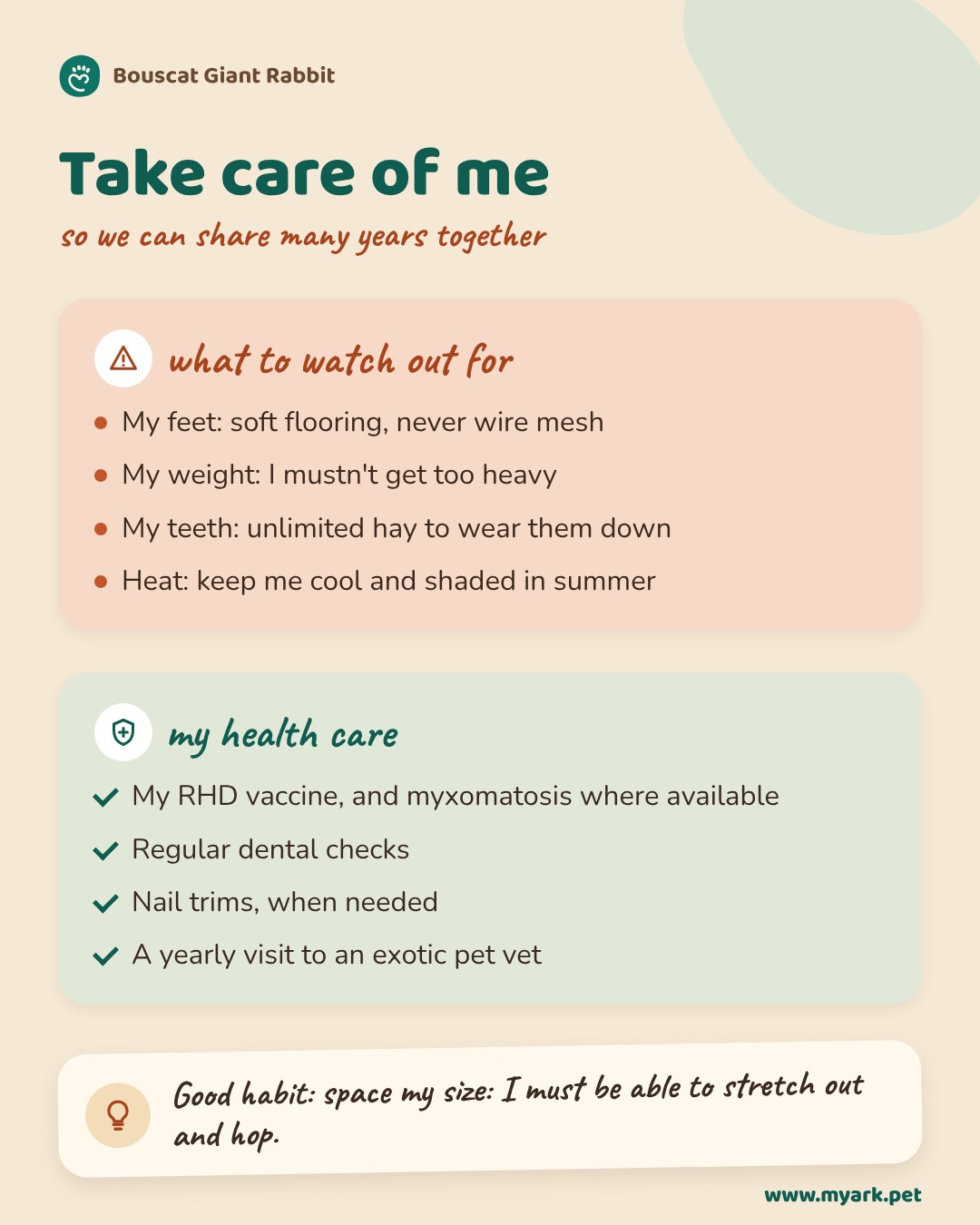
My health routine
- vaccination against myxomatosis and both strains of RHD (rabbit haemorrhagic disease), boosted every year
- a teeth check at every visit: rabbit teeth grow all their life
- claws clipped regularly
- a yearly check-up with a rabbit-savvy vet, and neutering discussed early
The stages of my life
- young
- Gentle handling and getting used to the household.
- adult
- Free time to run, hay and a companion.
- senior
- From about 6 years old, closer watch on legs and teeth.
What to keep an eye on
MyArk describes predispositions through visible body shape and simple checks rather than a list of diseases: it is what you can verify from the outside, and act on when choosing a breeder.
Sore hocks
Heavy rabbits need soft flooring to protect the soles of their feet.
Weight
It must not get too heavy.
Teeth
They grow all its life: plenty of hay, and a check at every vet visit.
Heat
Cool and shaded in summer.
And, as for every rabbit:
- hay making up most of the diet, every day: it wears the teeth and keeps the gut moving
- a rabbit that stops eating or producing droppings for a few hours is an emergency
- teeth, claws and the fur around the bottom, checked every week (flystrike in summer)
- a companion: rabbits are social and live better in a neutered pair
Is it the right rabbit for your household?
A rabbit lives 8 to 12 years, needs a companion, space to run every day and a rabbit-savvy vet. It is a prey animal that rarely enjoys being carried: the real question is less the breed than the space and time your household has. Rescues have many rabbits waiting for a home.
- Home
- Needs a lot of space: a large room or enclosure with soft flooring.
- Children
- Calm, but too heavy for children to carry.
- Other pets
- Needs a rabbit companion; keep it away from cats and dogs unless introduced carefully.
- First pet
- A good first pet for a household with a lot of space.
- Time
- Daily care and several hours of free running.
Bouscat Giant: straight answers
How big is a Bouscat Giant?
Very big: among the largest rabbits in France.
Is a Bouscat Giant calm?
Yes: heavy and calm.
Do Bouscat Giant rabbits need a friend?
Yes: rabbits are social and live better in a neutered pair.
What colours does the Bouscat Giant come in?
The usual colours are white and red eyes.