Where the Scarlet macaw comes from
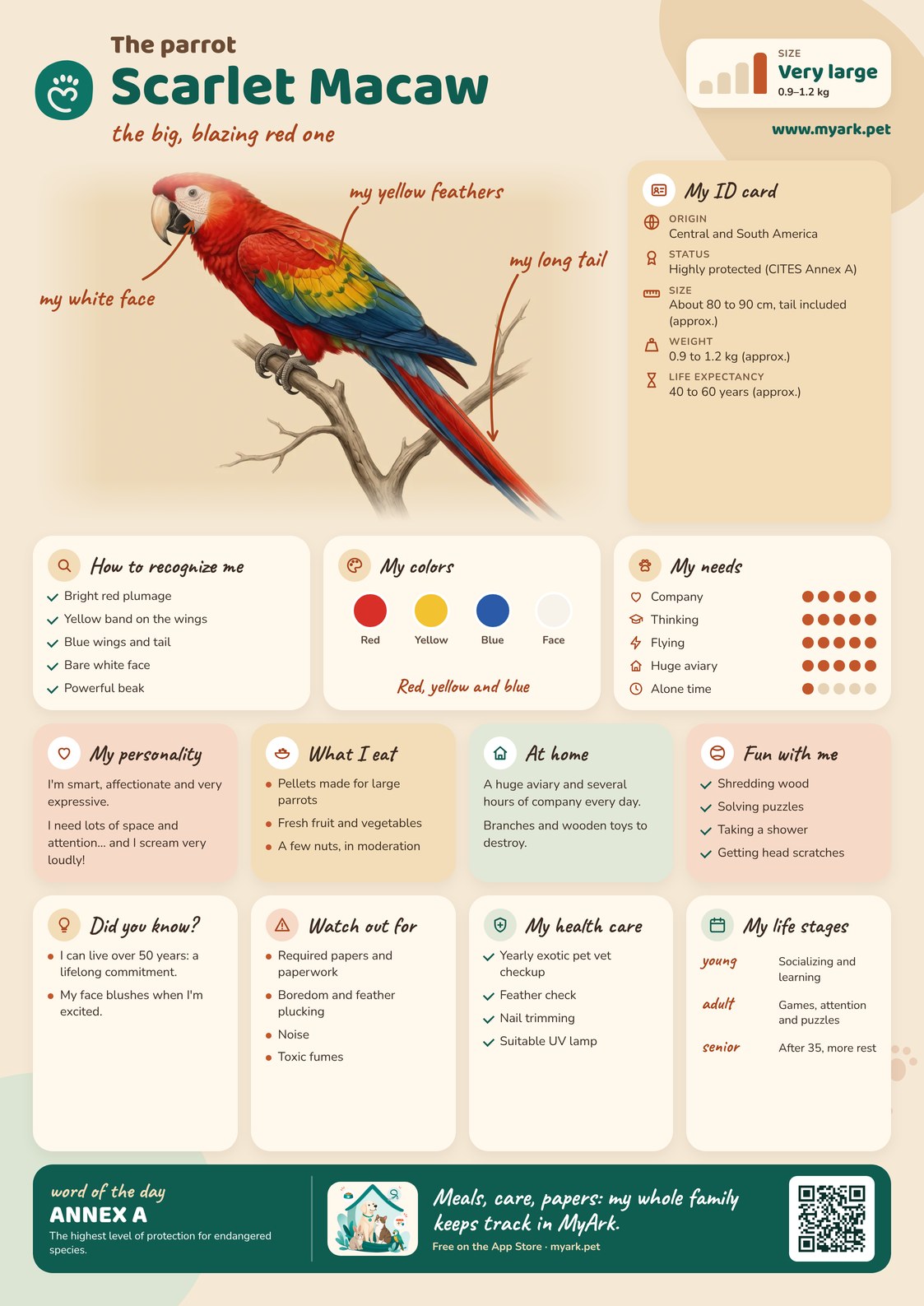
The scarlet macaw lives in the forests of Central and South America.
It has the highest level of protection against trade, and its bare face blushes when it is excited.
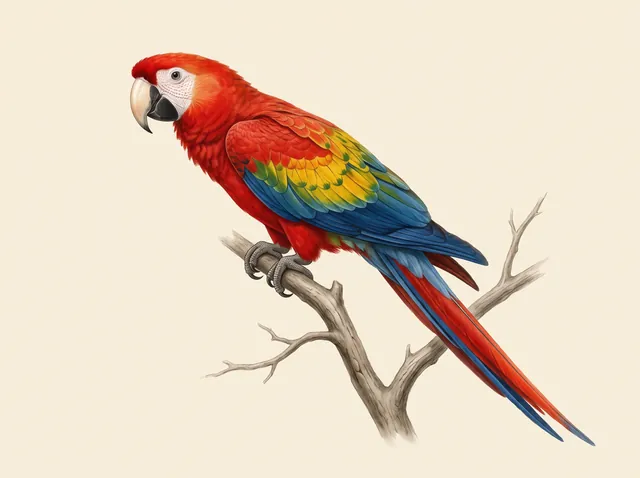
How to recognise me
- bright red plumage
- yellow band on the wings
- blue wings and tail
- bare white face
- powerful beak
My colours
- Red
- Yellow
- Blue
- White bare face
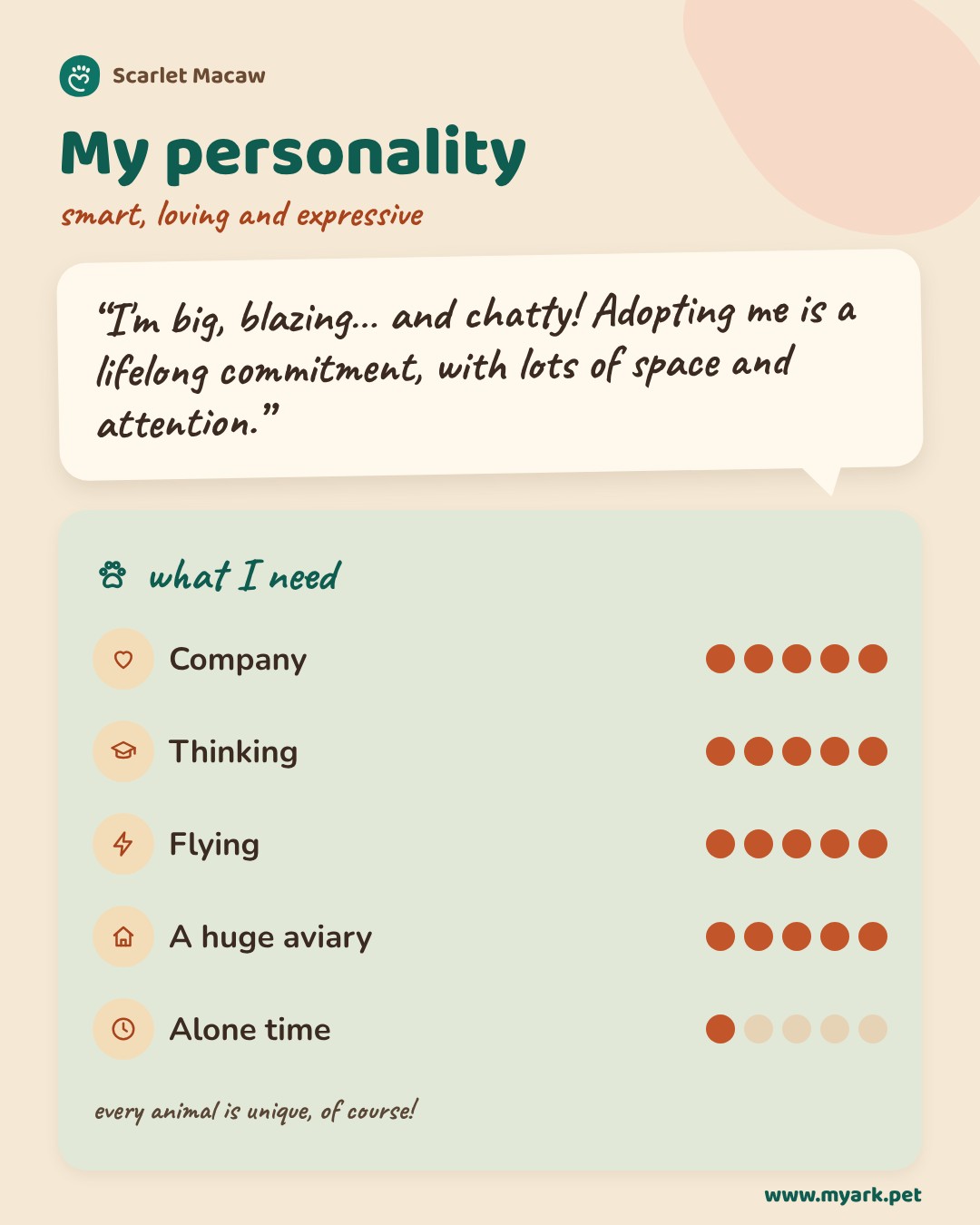
What a Scarlet macaw needs day to day
“I’m big, flamboyant… and talkative! Adopting me is a commitment for life, with lots of space and attention.”
Its needs are very high: a very big aviary, flight, hours of company and wood to chew.
At a glance
- Company
- 5 out of 5
- Thinking
- 5 out of 5
- Flying
- 5 out of 5
- A very big aviary
- 5 out of 5
- Being alone
- 1 out of 5
every parrot is unique, of course!
With me, we can go…
- time out of the cage with you
- foraging for hidden treats
- toys to destroy
- a bath or shower
Living with a Scarlet macaw: who does what
A parrot can live for decades and its care is daily and social — hours out of the cage, fresh food, toys to destroy: plan from day one who would take it on if your life changes. Here is the Scarlet macaw’s routine at a glance, and how a household can split it without a single “did anyone…?” message.
The routine at a glance
- every day
- fresh food: pellets, vegetables and some fruit; fresh water; several hours out of the cage, with company; new toys or foraging to keep its mind busy.
- every week
- a cage clean and perches scrubbed; a bath or misting; toys rotated.
- every month
- a weigh-in; a check of beak, claws and feathers; worn perches and toys replaced.
- every year
- a check-up with an avian vet.
Sharing it out
- Out-of-cage time shared between named people.
- Fresh food prepared on a rota.
- The weekly cage clean on a name.
Before it arrives, agree on…
- who spends time with it every day, and when
- who prepares the fresh food
- who cleans the cage
- the house rules: no non-stick pans, windows shut during free flight
- who would take it on if your life changes
How MyArk helps the household keep track
Family pet chores
Out-of-cage time, fresh food and cleaning on named people.
See the featurePet feeding tracker
Log fresh food, and notice quickly if it eats less.
See the featurePet weight tracker
A monthly weigh-in: weight loss is an early warning sign.
See the featurePet sitter instructions
Instructions for whoever looks after it: food, routine and dangers in the home.
See the featureFeeding, enrichment and health routine
Care is a real commitment: hours of company and enrichment every day, regular baths or misting, and beak and claws checked.
What I eat
- pellets made for large parrots
- fresh fruit and vegetables
- a few nuts, without excess
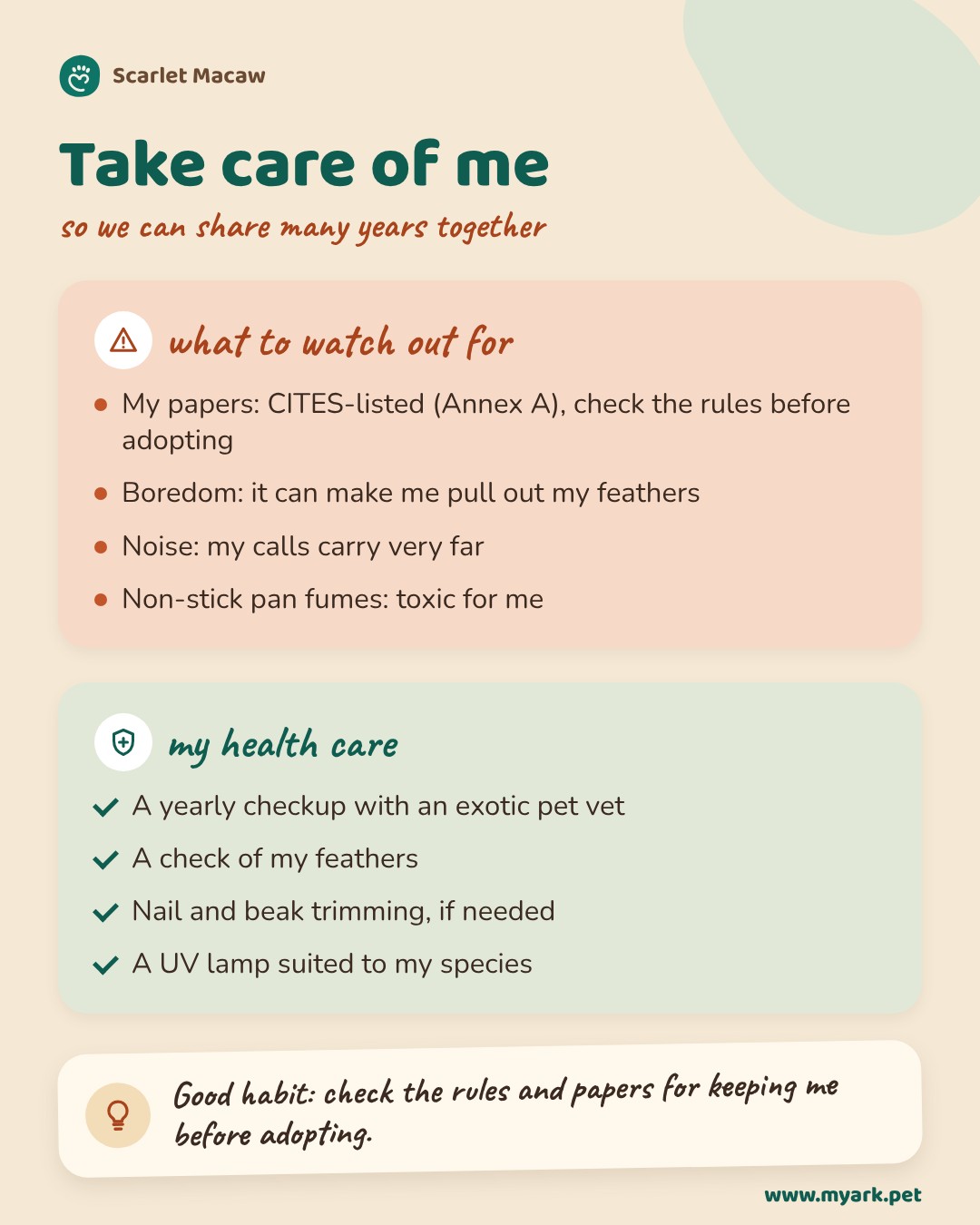
My health routine
- a check-up with an avian vet soon after arrival, then every year
- a weekly look at droppings, feathers, beak and claws
- a regular weigh-in: weight loss is an early warning sign
- no non-stick (PTFE) pans, smoke or aerosols near the bird
The stages of my life
- young
- Gentle socialisation, and learning to play alone too.
- adult
- Company, flight and constant enrichment.
- older
- A closer watch on weight and eyesight, and a calmer routine.
What to keep an eye on
MyArk describes the points to watch through behaviour, feathers and simple checks rather than a list of diseases: it is what you can see every day, and act on before you commit.
Papers
A certificate is mandatory: check what your country requires.
Boredom
It can lead to feather plucking.
Noise
Its calls carry a long way: think of the neighbours.
Non-stick pans
Their fumes are toxic to birds.
And, as for every parrot:
- hours of time out of the cage and company every day: parrots are social
- enrichment that changes: foraging, and toys it is allowed to destroy
- a varied diet of pellets, vegetables and fruit — not seeds alone
- a cage or aviary wide enough to spread its wings
Is it the right parrot for your household?
A parrot needs company for hours every day, room to fly, constant enrichment and an avian vet; many are loud, and most live for decades. Check the CITES papers your country requires, and consider parrot rescues: many birds are waiting for a new home.
- Home
- A very big aviary; not suited to flats.
- Children
- Too big and loud for young children.
- Other pets
- Keep cats and dogs well away: a single scratch or bite can be fatal to a bird.
- First parrot
- Not a first parrot.
- Time alone
- It copes badly with being alone for long.
Scarlet macaw: straight answers
How long do scarlet macaws live?
Often more than 50 years.
Does it need papers?
Yes: it has the highest level of protection.
Is it loud?
Very.
What colours does the Scarlet macaw come in?
The usual colours are red, yellow, blue and white bare face.