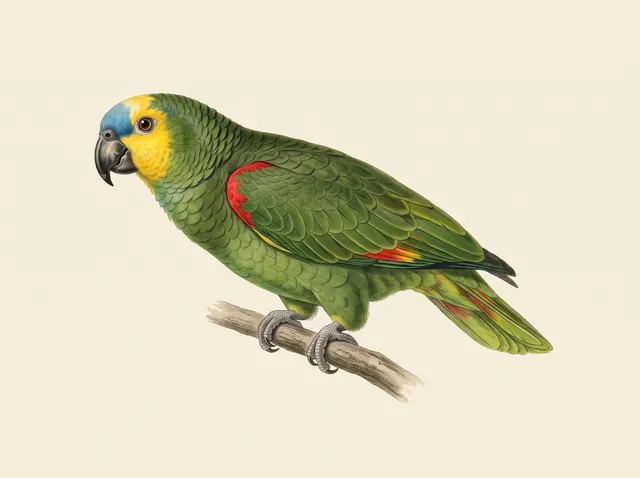
Where the Blue-fronted Amazon comes from
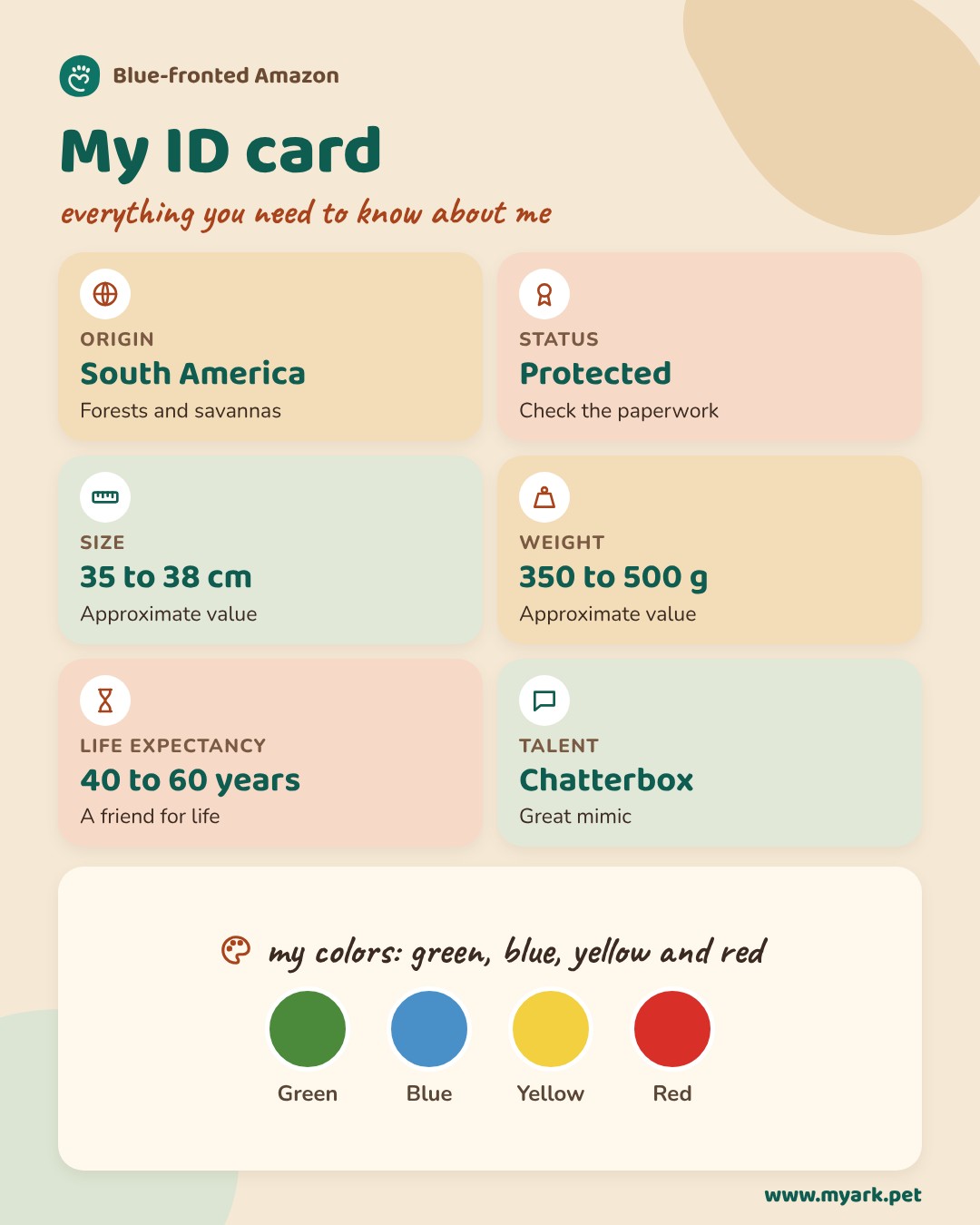
The blue-fronted Amazon comes from central South America.
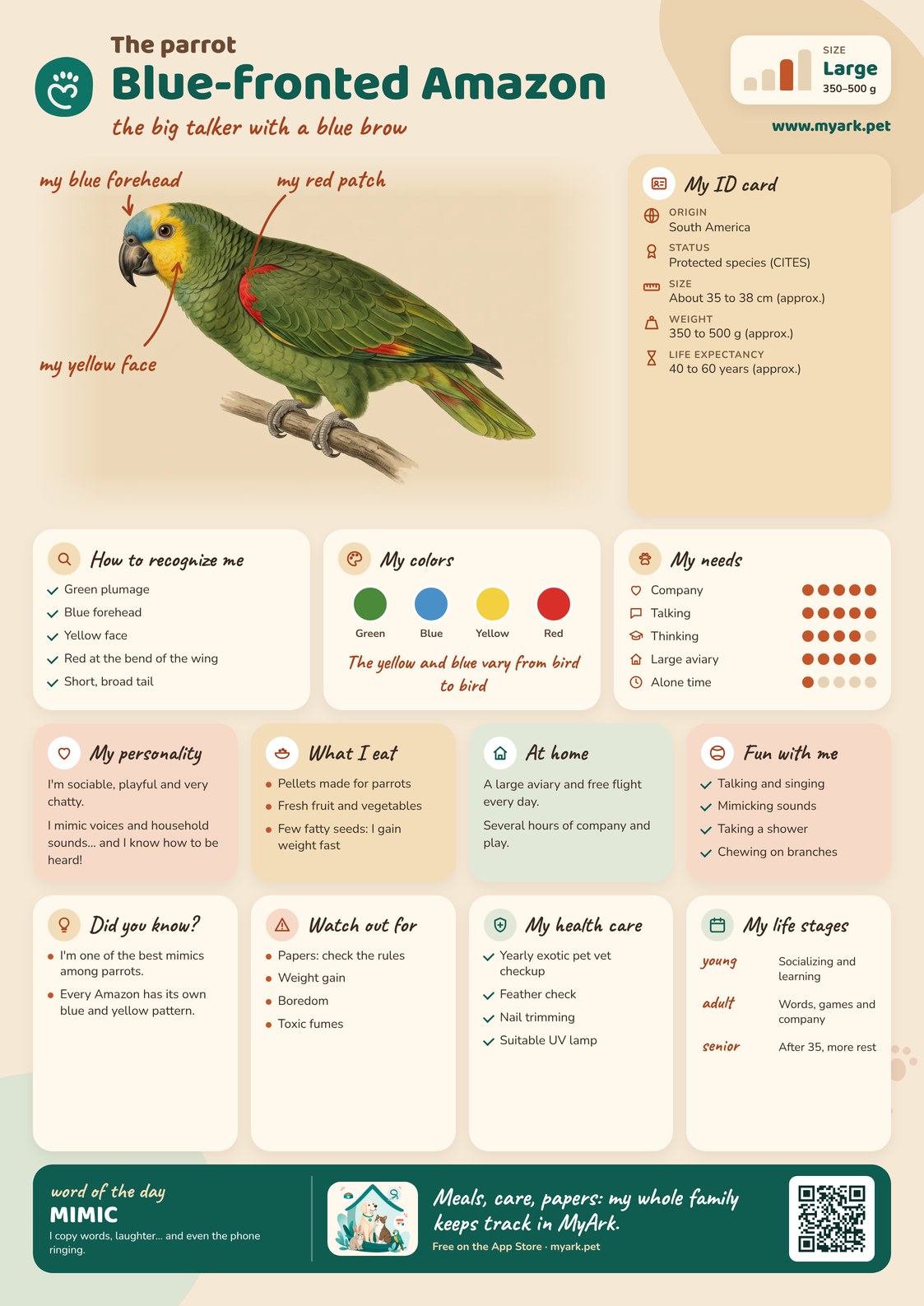
Each bird has its own pattern of blue and yellow on the face.
How to recognise me
- green plumage
- blue forehead
- yellow face
- red at the bend of the wing
- short, broad tail
My colours
- Green
- Blue
- Yellow
- Red
What a Blue-fronted Amazon needs day to day
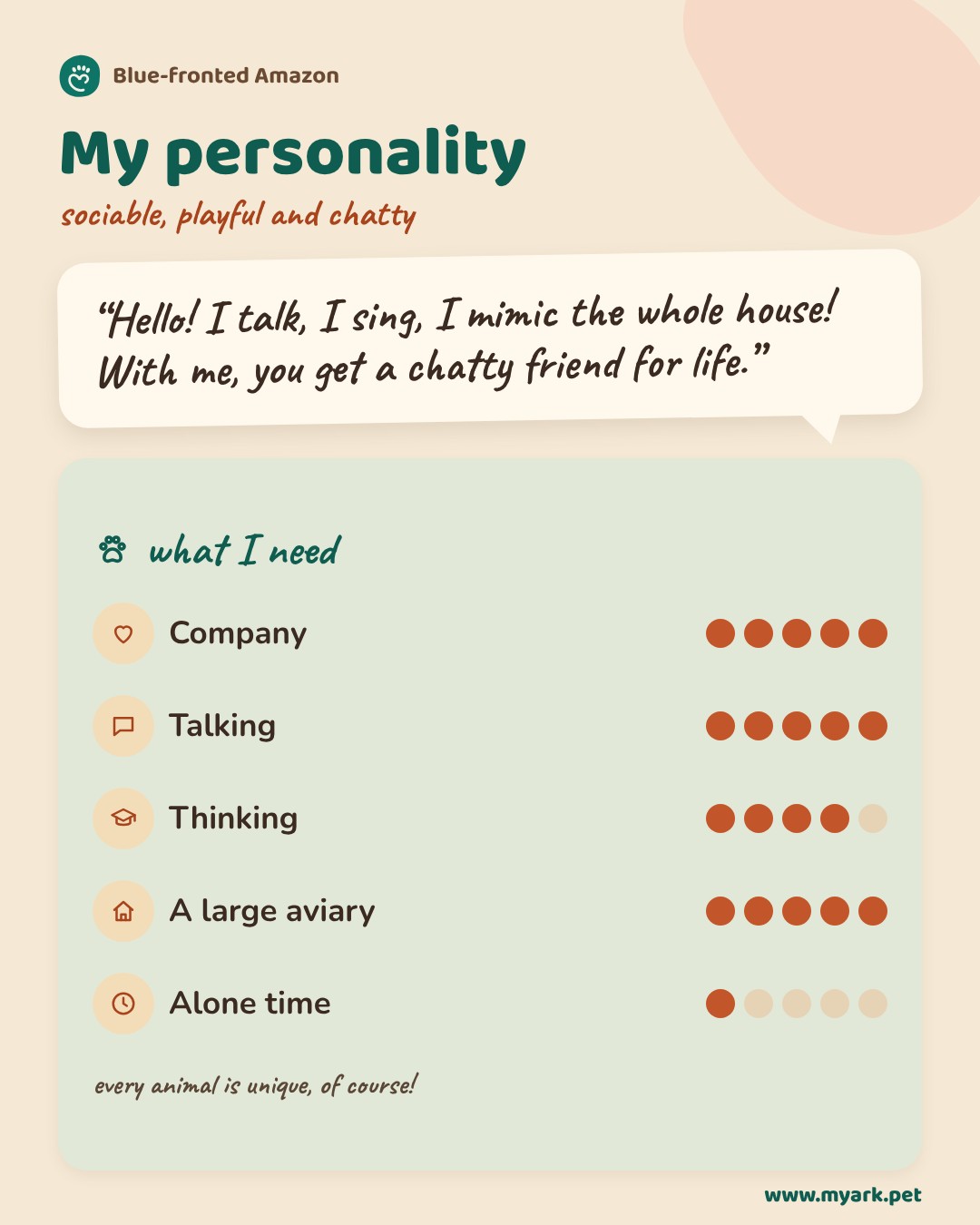
“Hello! I talk, I sing, I imitate the whole house! With me, you have a chatty friend for life.”
Its needs are high: a big aviary, company, talk, games and few fatty seeds.
At a glance
- Company
- 5 out of 5
- Talking
- 5 out of 5
- Thinking
- 4 out of 5
- A big aviary
- 5 out of 5
- Being alone
- 1 out of 5
every parrot is unique, of course!
With me, we can go…
- time out of the cage with you
- foraging for hidden treats
- toys to destroy
- a bath or shower
Living with a Blue-fronted Amazon: who does what
A parrot can live for decades and its care is daily and social — hours out of the cage, fresh food, toys to destroy: plan from day one who would take it on if your life changes. Here is the Blue-fronted Amazon’s routine at a glance, and how a household can split it without a single “did anyone…?” message.
The routine at a glance
- every day
- fresh food: pellets, vegetables and some fruit; fresh water; several hours out of the cage, with company; new toys or foraging to keep its mind busy.
- every week
- a cage clean and perches scrubbed; a bath or misting; toys rotated.
- every month
- a weigh-in; a check of beak, claws and feathers; worn perches and toys replaced.
- every year
- a check-up with an avian vet.
Sharing it out
- Out-of-cage time shared between named people.
- Fresh food prepared on a rota.
- The weekly cage clean on a name.
Before it arrives, agree on…
- who spends time with it every day, and when
- who prepares the fresh food
- who cleans the cage
- the house rules: no non-stick pans, windows shut during free flight
- who would take it on if your life changes
How MyArk helps the household keep track
Family pet chores
Out-of-cage time, fresh food and cleaning on named people.
See the featurePet feeding tracker
Log fresh food, and notice quickly if it eats less.
See the featurePet weight tracker
A monthly weigh-in: weight loss is an early warning sign.
See the featurePet sitter instructions
Instructions for whoever looks after it: food, routine and dangers in the home.
See the featureFeeding, enrichment and health routine
Care is a real commitment: hours of company and enrichment every day, regular baths or misting, and beak and claws checked.
What I eat
- pellets made for parrots
- fresh fruit and vegetables
- few fatty seeds: it gains weight fast
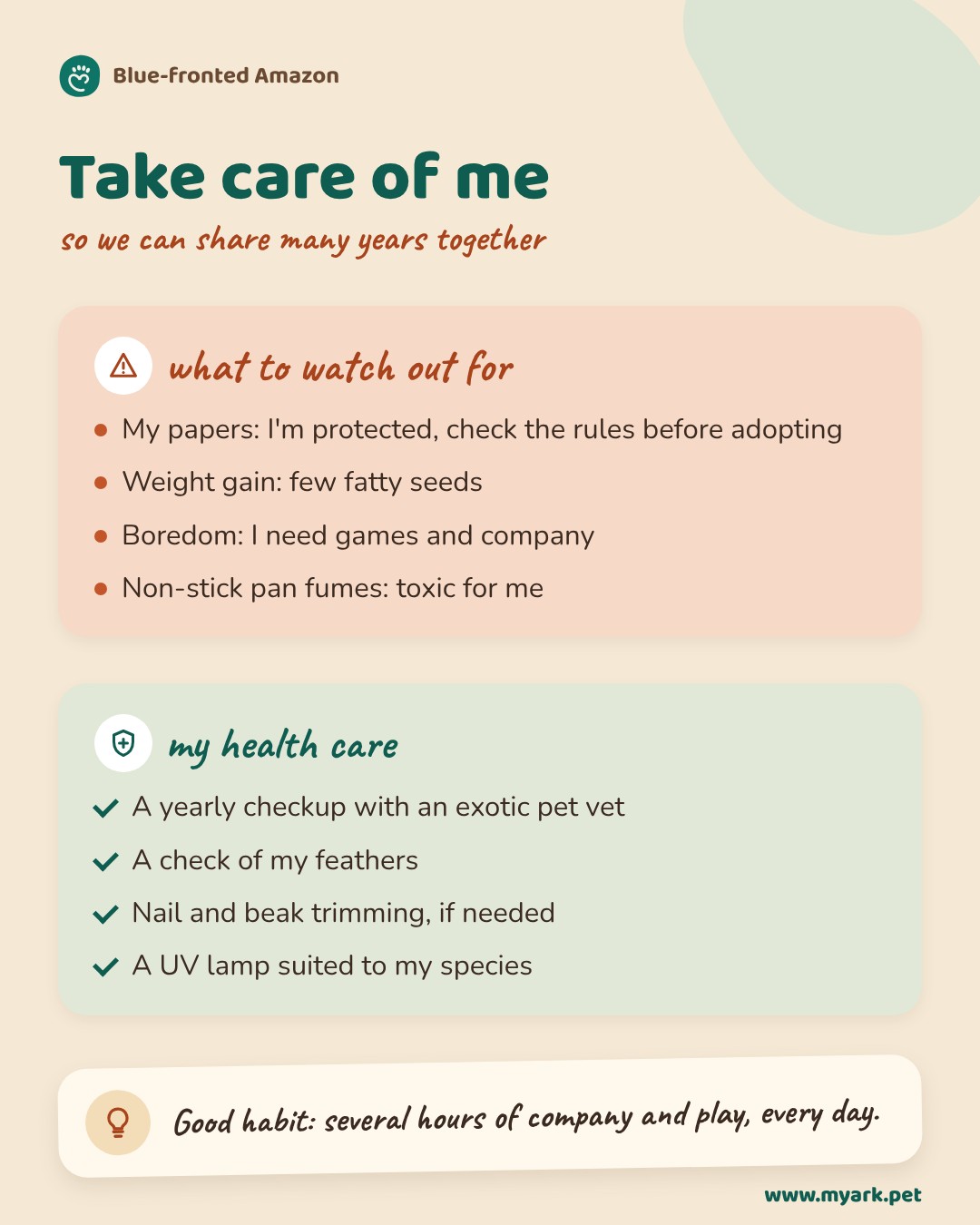
My health routine
- a check-up with an avian vet soon after arrival, then every year
- a weekly look at droppings, feathers, beak and claws
- a regular weigh-in: weight loss is an early warning sign
- no non-stick (PTFE) pans, smoke or aerosols near the bird
The stages of my life
- young
- Gentle socialisation, and learning to play alone too.
- adult
- Company, flight and constant enrichment.
- older
- A closer watch on weight and eyesight, and a calmer routine.
What to keep an eye on
MyArk describes the points to watch through behaviour, feathers and simple checks rather than a list of diseases: it is what you can see every day, and act on before you commit.
Papers
A protected species: check what your country requires.
Weight
Few fatty seeds: it gains weight fast.
Boredom
Toys and company every day.
Non-stick pans
Their fumes are toxic to birds.
And, as for every parrot:
- hours of time out of the cage and company every day: parrots are social
- enrichment that changes: foraging, and toys it is allowed to destroy
- a varied diet of pellets, vegetables and fruit — not seeds alone
- a cage or aviary wide enough to spread its wings
Is it the right parrot for your household?
A parrot needs company for hours every day, room to fly, constant enrichment and an avian vet; many are loud, and most live for decades. Check the CITES papers your country requires, and consider parrot rescues: many birds are waiting for a new home.
- Home
- A big aviary in a lively room.
- Children
- Fun with calm children, with an adult.
- Other pets
- Keep cats and dogs well away: a single scratch or bite can be fatal to a bird.
- First parrot
- Better with some parrot experience.
- Time alone
- It copes badly with being alone for long.
Blue-fronted Amazon: straight answers
Do blue-fronted Amazons talk?
Very well: they are among the best mimics.
How long do Amazons live?
Often more than 50 years.
Do Amazons gain weight easily?
Yes: limit fatty seeds.
What colours does the Blue-fronted Amazon come in?
The usual colours are green, blue, yellow and red.