Where the Turquoise parrot comes from
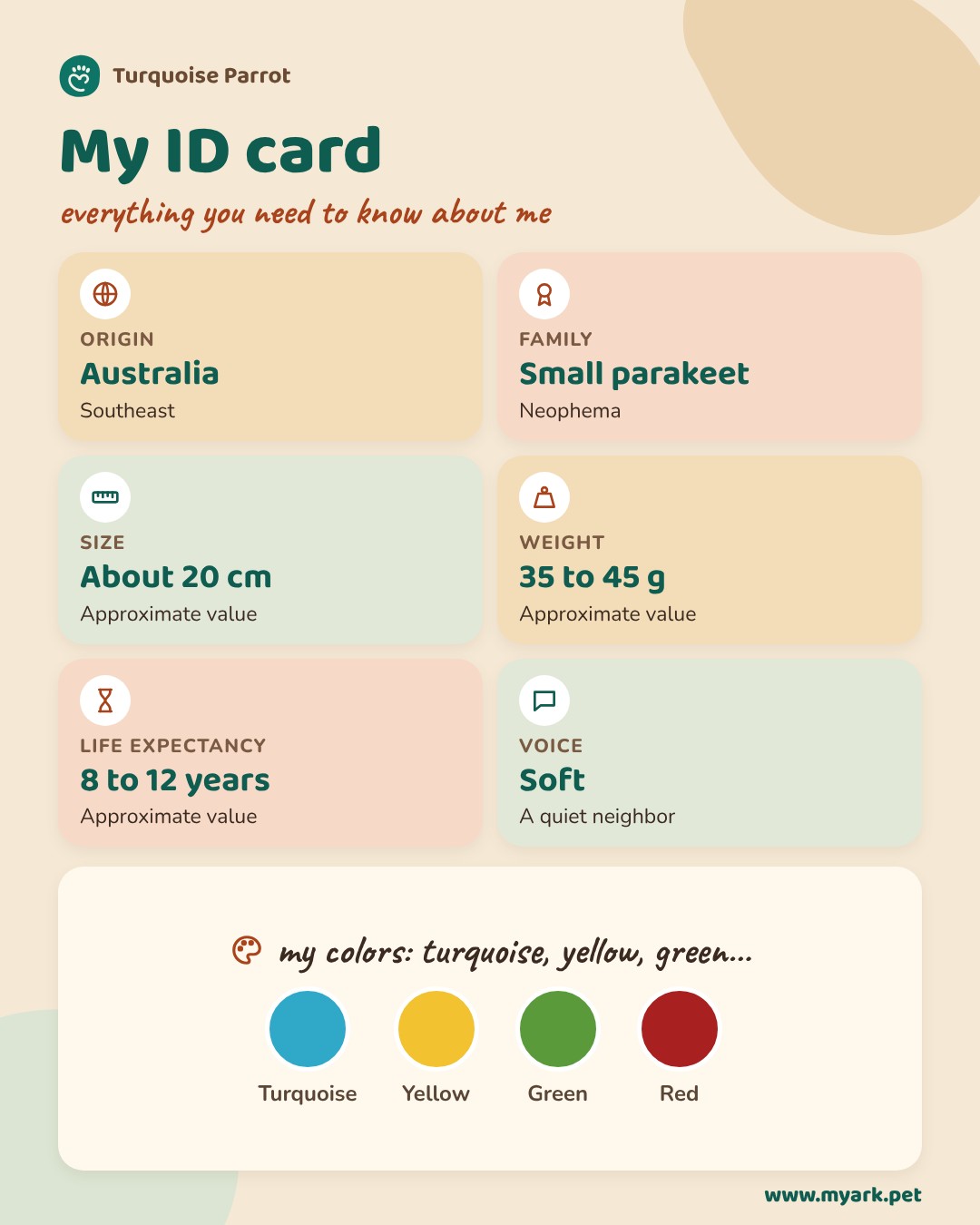
The turquoise parrot lives in the grassy woodlands of south-eastern Australia.
It often feeds on the ground and is most active in the evening light.
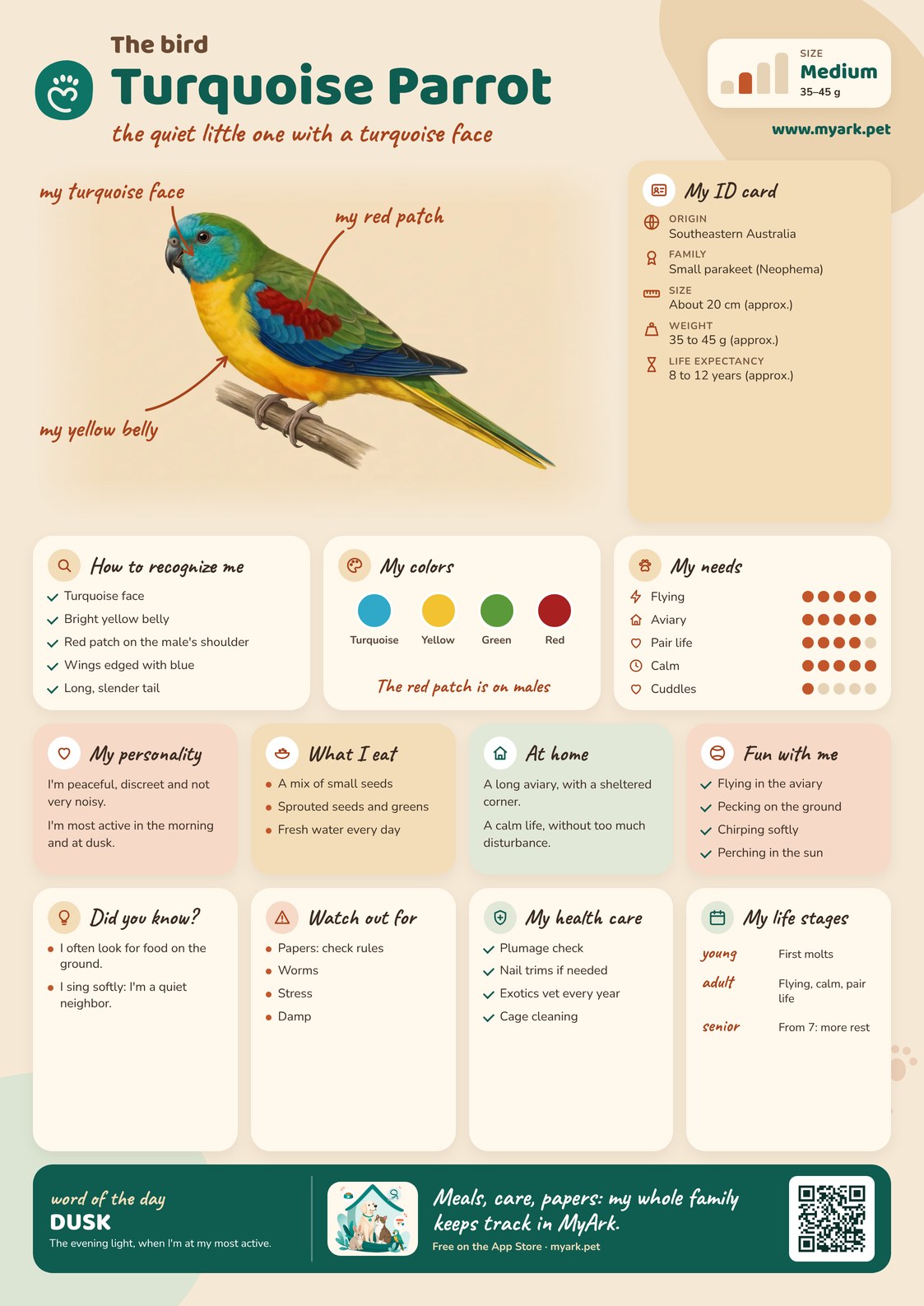
How to recognise me
- turquoise face
- bright yellow belly
- red patch on the male’s shoulder
- wings edged with blue
- long, thin tail
My colours
- Turquoise
- Yellow
- Green
- Red
What a Turquoise parrot needs day to day
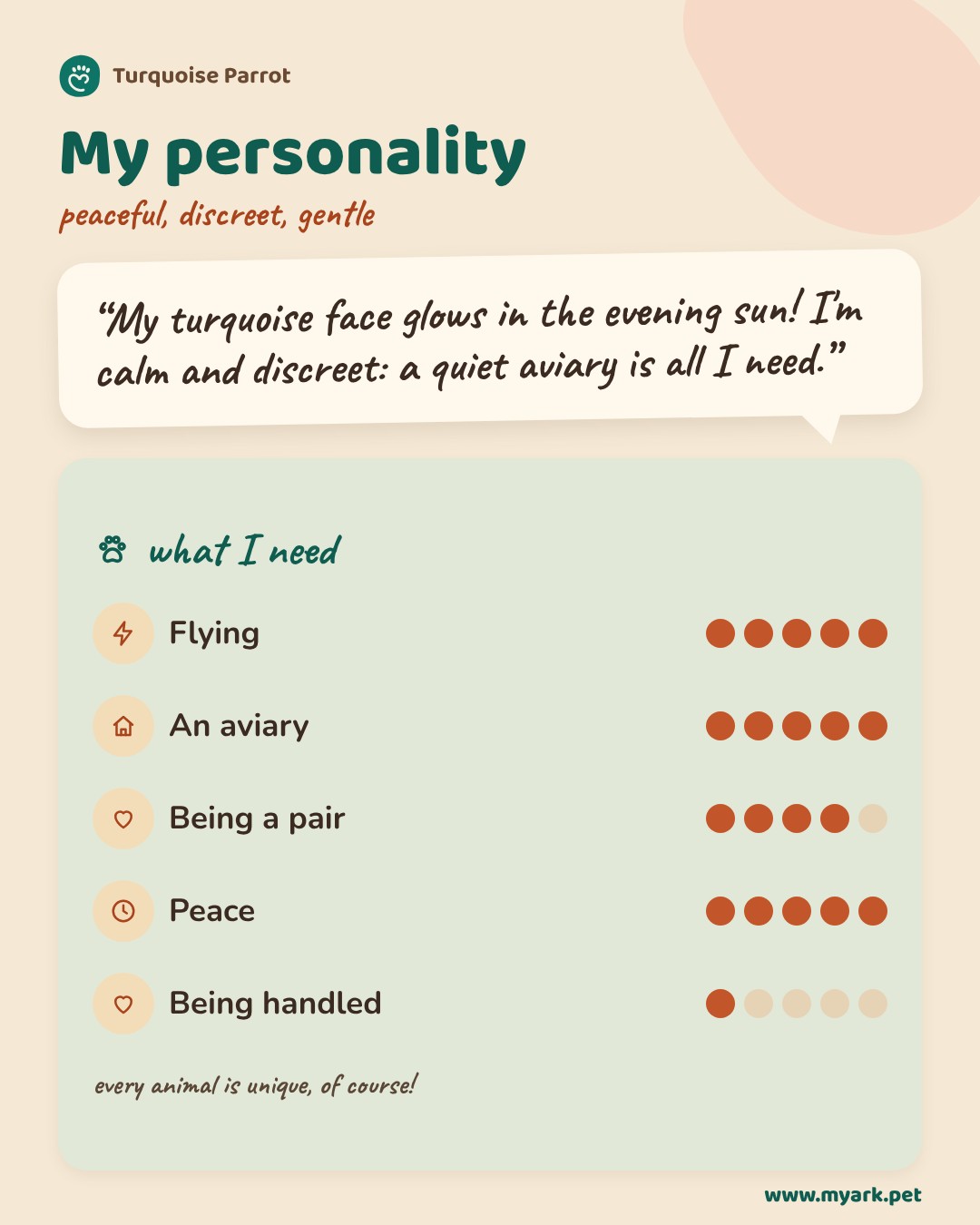
“My turquoise face shines in the evening sun! I’m calm and discreet: a quiet aviary is enough for me.”
Its needs are moderate: a quiet aviary to fly, a companion and a dry shelter.
At a glance
- Flying
- 5 out of 5
- An aviary
- 5 out of 5
- Living in a pair
- 4 out of 5
- Calm
- 5 out of 5
- Being handled
- 1 out of 5
every bird is unique, of course!
With me, we can go…
- flying the length of the aviary
- a bath
- seeding grasses and greens
- watching from a high perch
Living with a Turquoise parrot: who does what
Budgies and parakeets suit calm homes: they are sensitive to noise and handling, and their care is daily — fresh food and water, flight time, a clean cage. Here is the Turquoise parrot’s routine at a glance, and how a household can split it without a single “did anyone…?” message.
The routine at a glance
- every day
- a seed or pellet mix topped up, husks blown off; fresh greens and vegetables; fresh water; flight time in a safe room.
- every week
- a cage clean and perches scrubbed; a bath; a check of droppings, beak and claws.
- every month
- a weigh-in; worn perches and toys replaced; claws trimmed if needed.
- every year
- a check-up with an avian vet.
Sharing it out
- Food and water go on one person each day.
- Free-flight time with a named adult in the room.
- The weekly cage clean on a name.
Before it arrives, agree on…
- who feeds and changes the water every day
- who cleans the cage each week
- the house rules for free flight: windows shut, no hot pans
- how children approach the birds — quietly, without grabbing
- who looks after them during holidays
How MyArk helps the household keep track
Family pet chores
Food, water, cage cleaning and flight time on named people.
See the featurePet feeding tracker
Log fresh food, and notice quickly if a bird eats less.
See the featurePet weight tracker
A monthly weigh-in: birds hide illness, but weight doesn’t lie.
See the featurePet sitter instructions
Holiday instructions: food, water and the dangers in the home.
See the featureFeeding, flight and health routine
Care is regular: a bath, clean perches of different sizes, and beak and claws checked.
What I eat
- a mix of small seeds
- sprouted seeds and greens
- fresh water every day
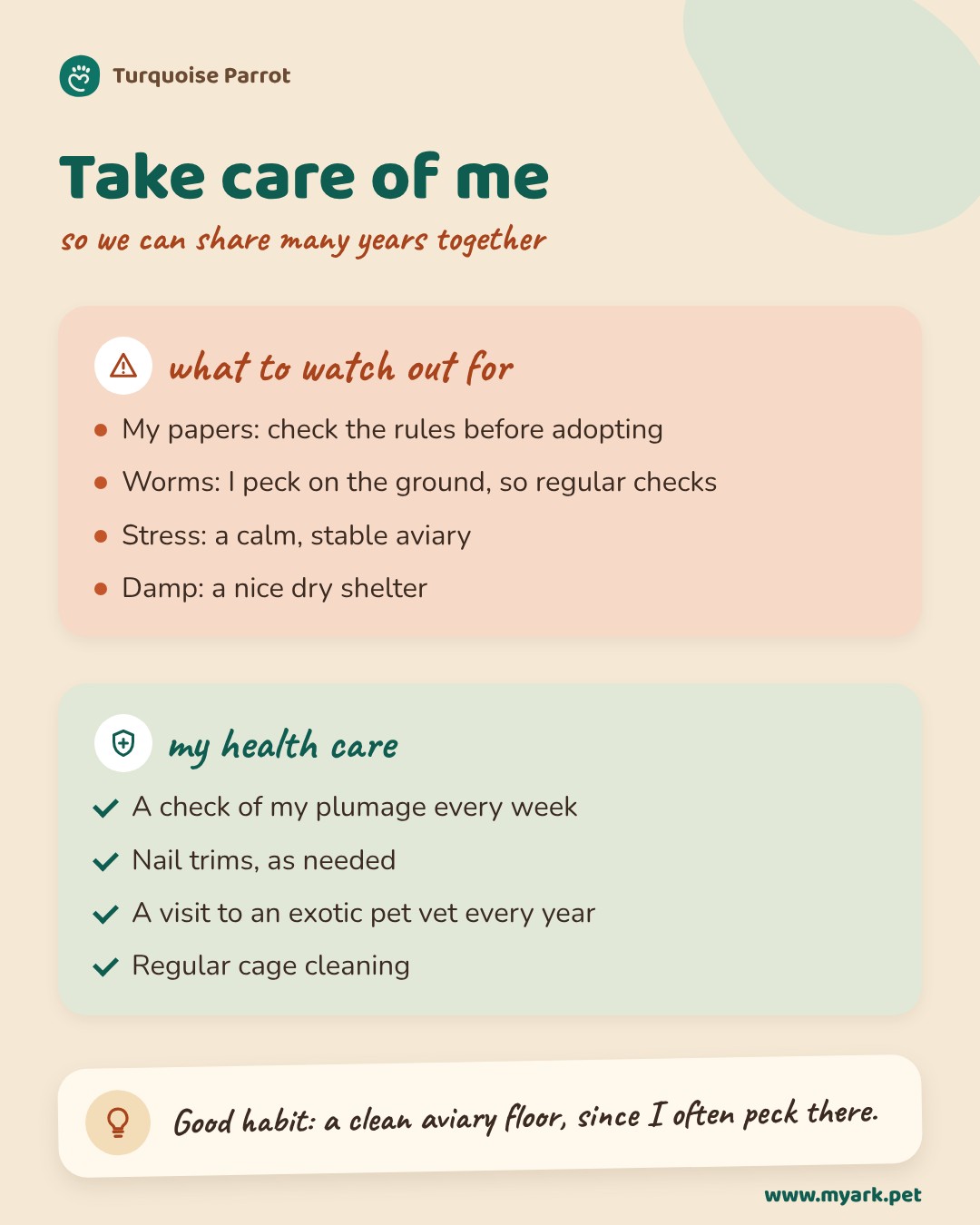
My health routine
- a daily look at the bird: fluffed-up and still is a late sign of illness — see a vet quickly
- a weekly check of droppings, beak and claws
- a check-up with an avian vet soon after arrival, then every year
- no non-stick (PTFE) pans, smoke or aerosols near the birds
The stages of my life
- young
- Gentle taming, at its own pace.
- adult
- A companion, daily flight and a varied diet.
- older
- A closer watch on weight, claws and perches.
What to keep an eye on
MyArk describes the points to watch through behaviour, feathers and simple checks rather than a list of diseases: birds hide illness, so what you notice every day matters most.
Papers
Ask the seller what your country requires.
Worms
I peck on the ground: regular checks.
Stress
A calm, stable aviary.
Damp
A dry shelter.
And, as for every parakeet:
- life in a group: never one bird alone for long
- room to fly horizontally, which matters more than height
- natural wooden perches of different thicknesses
- a varied diet with greens, beyond a seed mix
Is it the right bird for your household?
Budgies and parakeets need a companion of their own kind, room to fly, a calm room and an avian vet. Most prefer watching to being handled — and rescues often have birds waiting for a home.
- Home
- A quiet, dry aviary.
- Children
- Calm to watch; not for handling.
- Other pets
- Keep cats and dogs well away: a scratch or bite can be fatal to a bird.
- First bird
- A good first bird for a calm household.
- Time alone
- Better with a companion of its own kind than alone.
Turquoise parrot: straight answers
Is a turquoise parrot quiet?
Yes: calm and discreet.
Why does it need worming?
It feeds on the ground, so worms are more likely.
Should a turquoise parrot live alone?
No: it is a social bird that lives better with a companion of its own kind.
What colours does the Turquoise parrot come in?
The usual colours are turquoise, yellow, green and red.