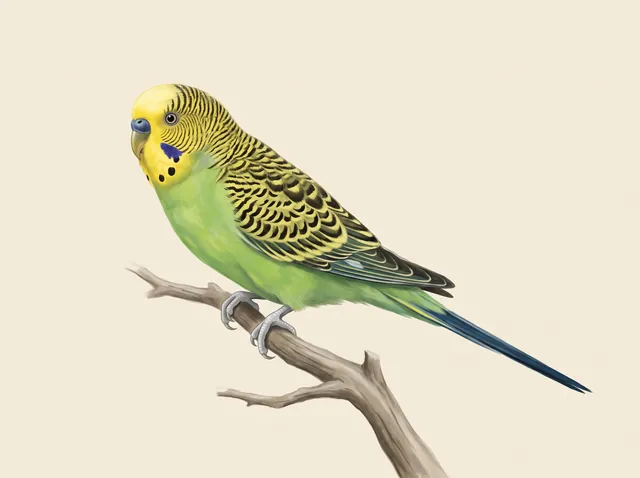
Where the Budgerigar comes from
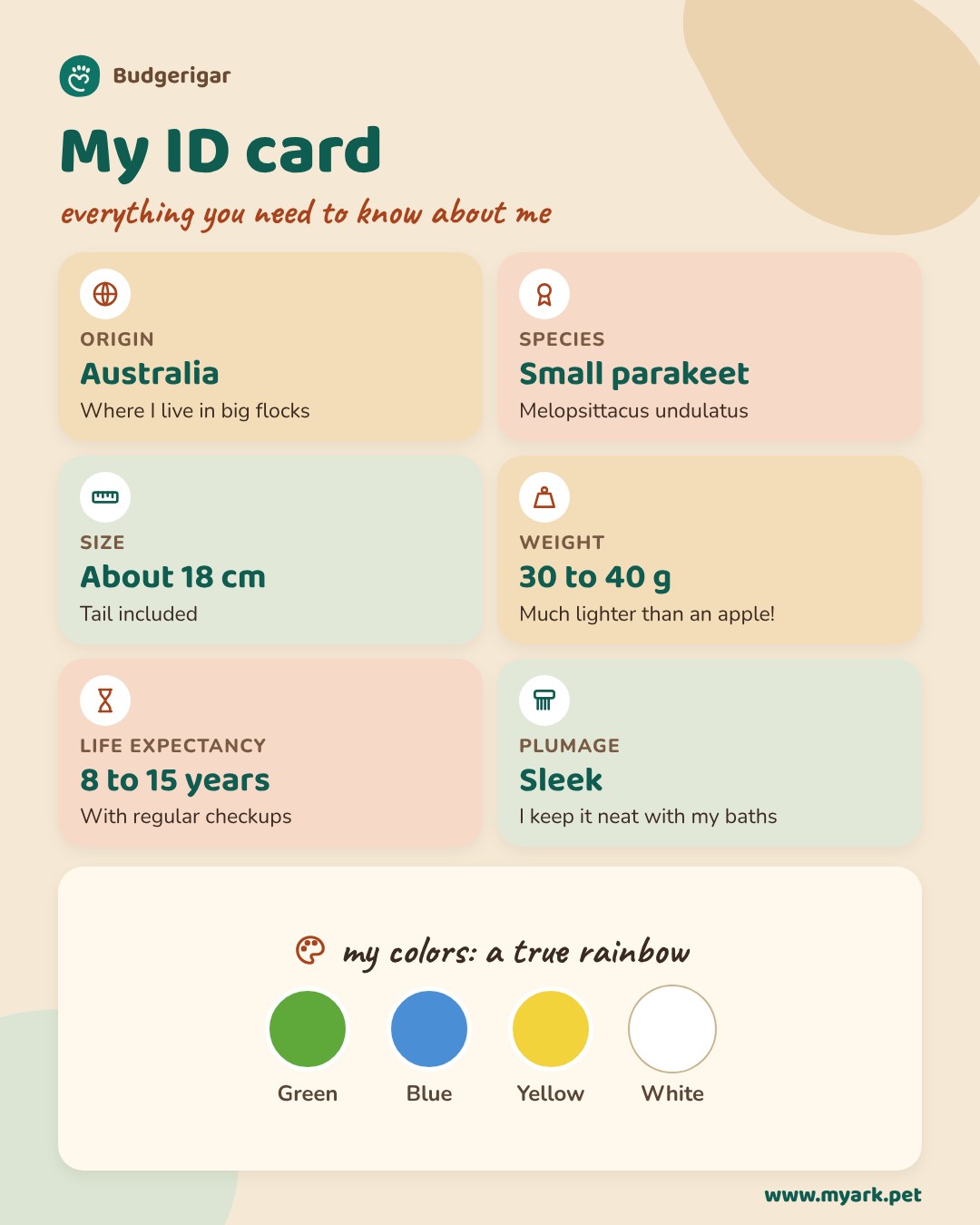
In the wild, budgerigars live in large flocks across inland Australia.
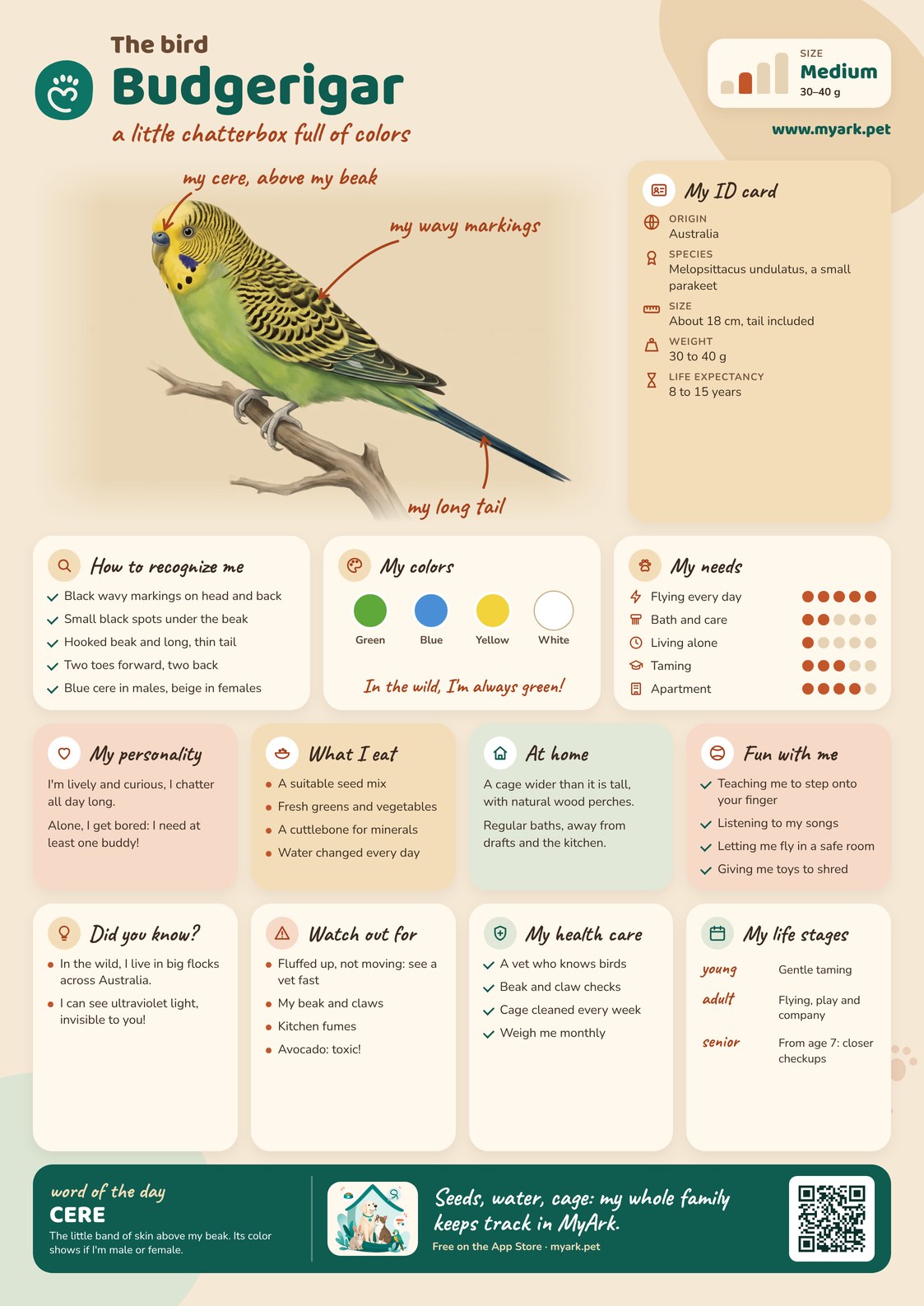
They can see ultraviolet light, invisible to us; the colour of the cere above the beak shows whether a bird is male or female.
How to recognise me
- black wavy markings on the head and back
- small black spots under the beak
- hooked beak and long, thin tail
- two toes forward, two back
- blue cere in males, beige in females
My colours
- Green
- Blue
- Yellow
- White
What a Budgerigar needs day to day
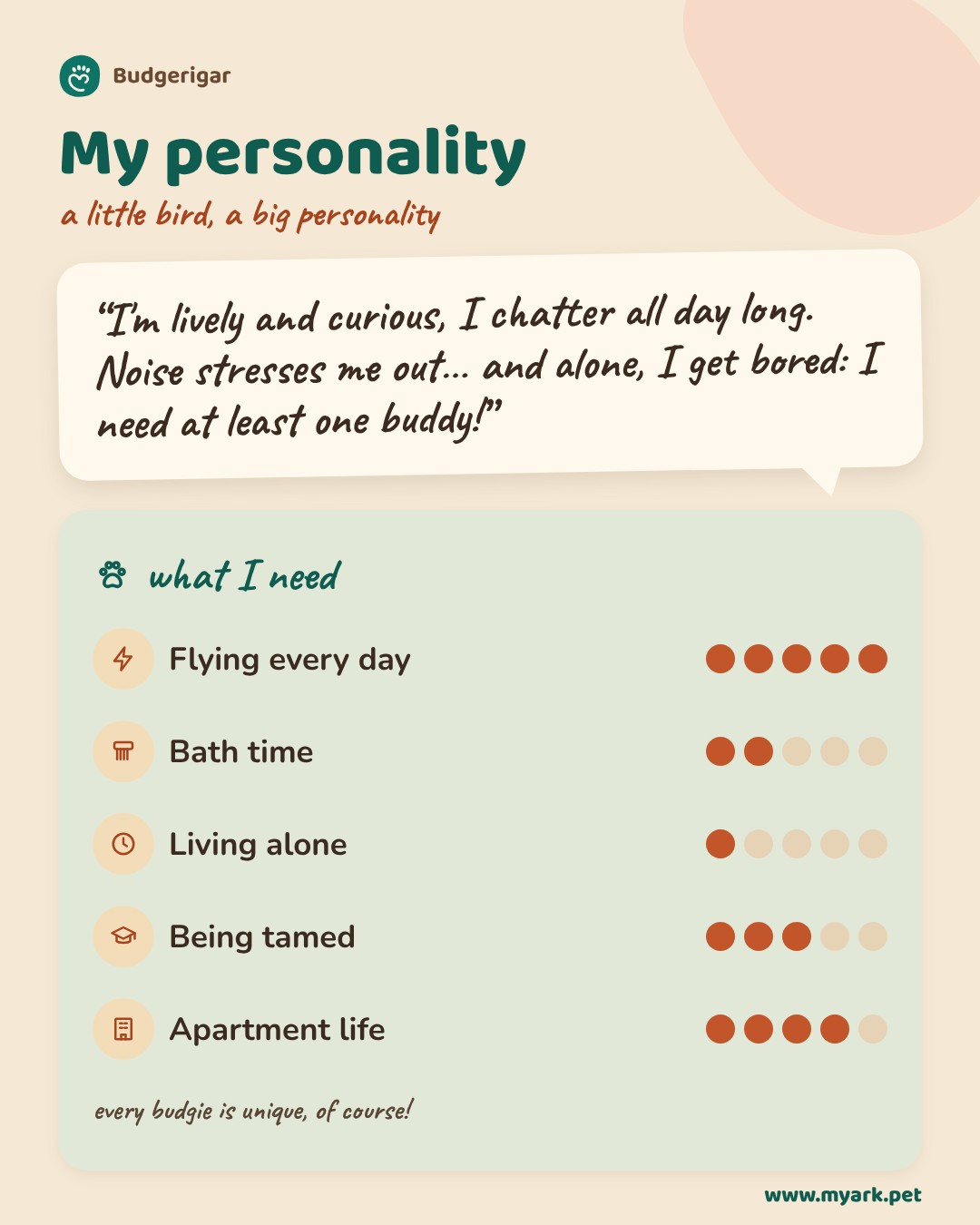
“I’m lively and curious, I chatter all day. Noise stresses me… and alone, I get bored: I need at least one friend!”
Its needs are real: a companion, flight every day, toys and a calm room.
At a glance
- Flying every day
- 5 out of 5
- Bathing
- 2 out of 5
- Living alone
- 1 out of 5
- Taming
- 3 out of 5
- Flat living
- 4 out of 5
every bird is unique, of course!
With me, we can go…
- flying around a safe room
- a bath
- toys and swings
- chattering with its companion
Living with a Budgerigar: who does what
Budgies and parakeets suit calm homes: they are sensitive to noise and handling, and their care is daily — fresh food and water, flight time, a clean cage. Here is the Budgerigar’s routine at a glance, and how a household can split it without a single “did anyone…?” message.
The routine at a glance
- every day
- a seed or pellet mix topped up, husks blown off; fresh greens and vegetables; fresh water; flight time in a safe room.
- every week
- a cage clean and perches scrubbed; a bath; a check of droppings, beak and claws.
- every month
- a weigh-in; worn perches and toys replaced; claws trimmed if needed.
- every year
- a check-up with an avian vet.
Sharing it out
- Food and water go on one person each day.
- Free-flight time with a named adult in the room.
- The weekly cage clean on a name.
Before it arrives, agree on…
- who feeds and changes the water every day
- who cleans the cage each week
- the house rules for free flight: windows shut, no hot pans
- how children approach the birds — quietly, without grabbing
- who looks after them during holidays
How MyArk helps the household keep track
Family pet chores
Food, water, cage cleaning and flight time on named people.
See the featurePet feeding tracker
Log fresh food, and notice quickly if a bird eats less.
See the featurePet weight tracker
A monthly weigh-in: birds hide illness, but weight doesn’t lie.
See the featurePet sitter instructions
Holiday instructions: food, water and the dangers in the home.
See the featureFeeding, flight and health routine
Care is regular: a bath, clean perches of different sizes, and beak and claws checked.
What I eat
- a suitable seed mix
- fresh greens and vegetables
- a cuttlebone for minerals
My health routine
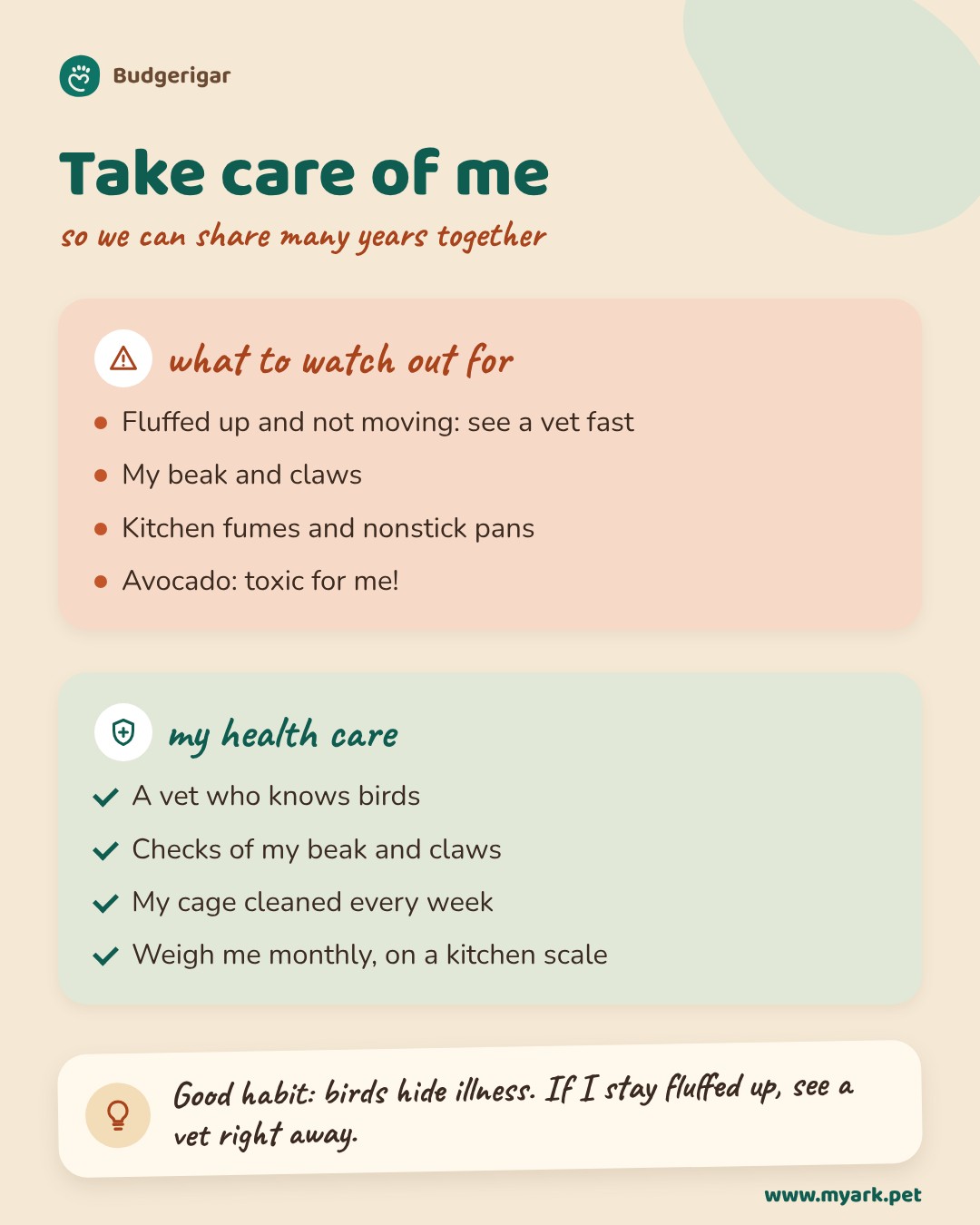
- a daily look at the bird: fluffed-up and still is a late sign of illness — see a vet quickly
- a weekly check of droppings, beak and claws
- a check-up with an avian vet soon after arrival, then every year
- no non-stick (PTFE) pans, smoke or aerosols near the birds
The stages of my life
- young
- Gentle taming, at its own pace.
- adult
- A companion, daily flight and a varied diet.
- older
- A closer watch on weight, claws and perches.
What to keep an eye on
MyArk describes the points to watch through behaviour, feathers and simple checks rather than a list of diseases: birds hide illness, so what you notice every day matters most.
Fluffed up and still
See a vet quickly.
Beak and claws
A weekly check.
Non-stick pans
Their fumes are toxic to birds.
Avocado
Toxic to me!
And, as for every parakeet:
- life in a group: never one bird alone for long
- room to fly horizontally, which matters more than height
- natural wooden perches of different thicknesses
- a varied diet with greens, beyond a seed mix
Is it the right bird for your household?
Budgies and parakeets need a companion of their own kind, room to fly, a calm room and an avian vet. Most prefer watching to being handled — and rescues often have birds waiting for a home.
- Home
- A long cage in a calm room, with daily free flight; fine in a flat.
- Children
- Lovely to watch; children approach it quietly.
- Other pets
- Keep cats and dogs well away: a scratch or bite can be fatal to a bird.
- First bird
- A good first bird.
- Time alone
- It copes badly with living alone: keep at least two.
Budgerigar: straight answers
Should a budgie live alone?
No: keep at least two.
Can budgies talk?
Some males learn a few words.
What do budgies eat?
A seed or pellet mix, plus fresh greens every day.
What colours does the Budgerigar come in?
The usual colours are green, blue, yellow and white.