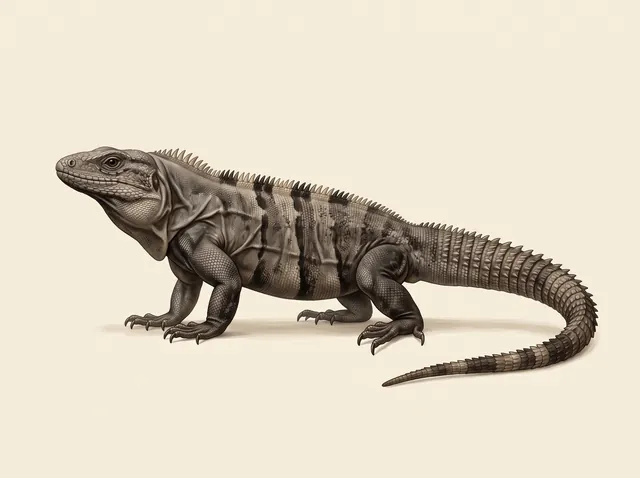
Where the Black spiny-tailed iguana comes from
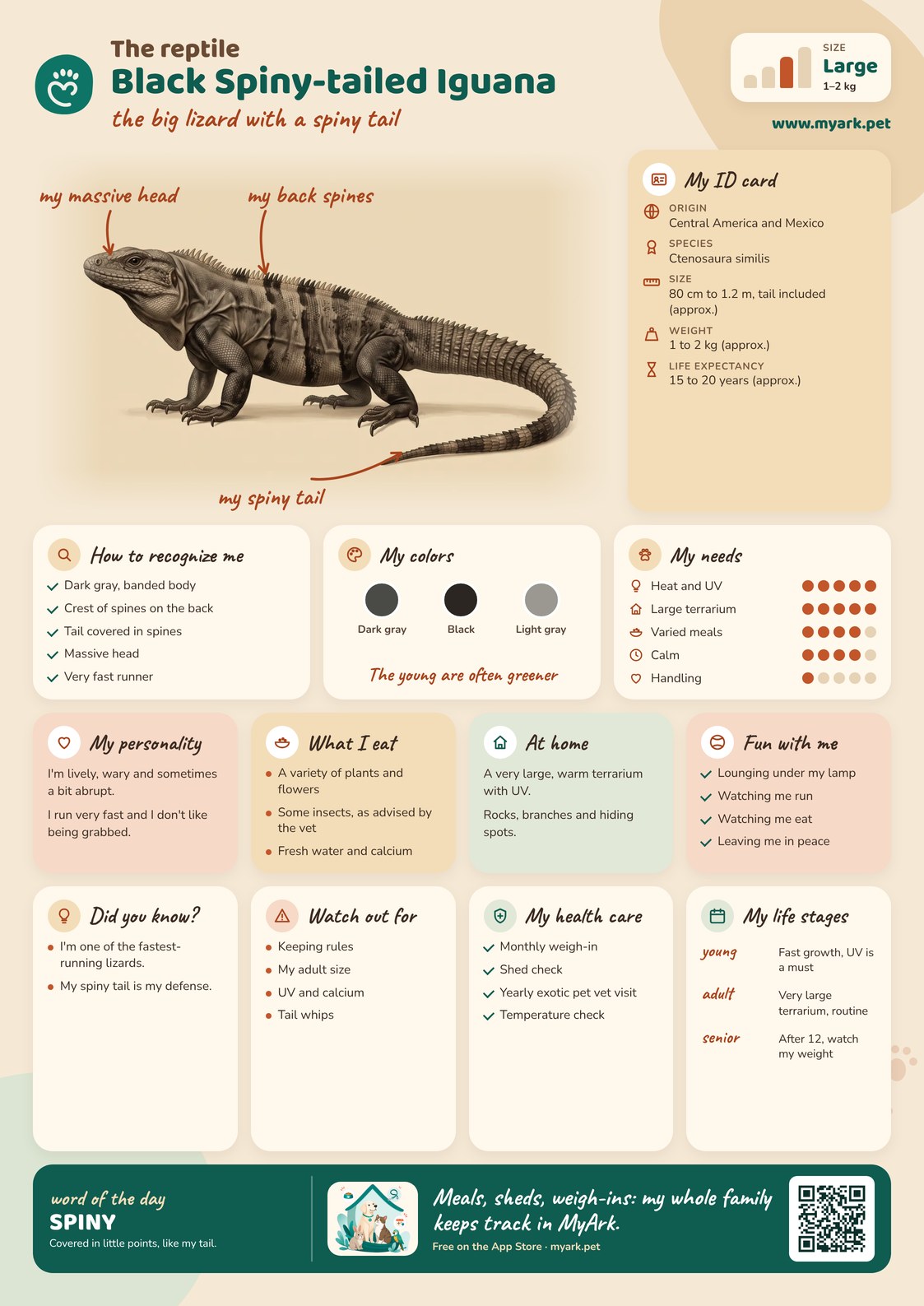
The black spiny-tailed iguana lives in Central America and is one of the fastest-running lizards.
Its spiny tail is a defence.
How to recognise me
- banded dark grey body
- crest of spines on the back
- tail covered in spines
- massive head
- very fast runner
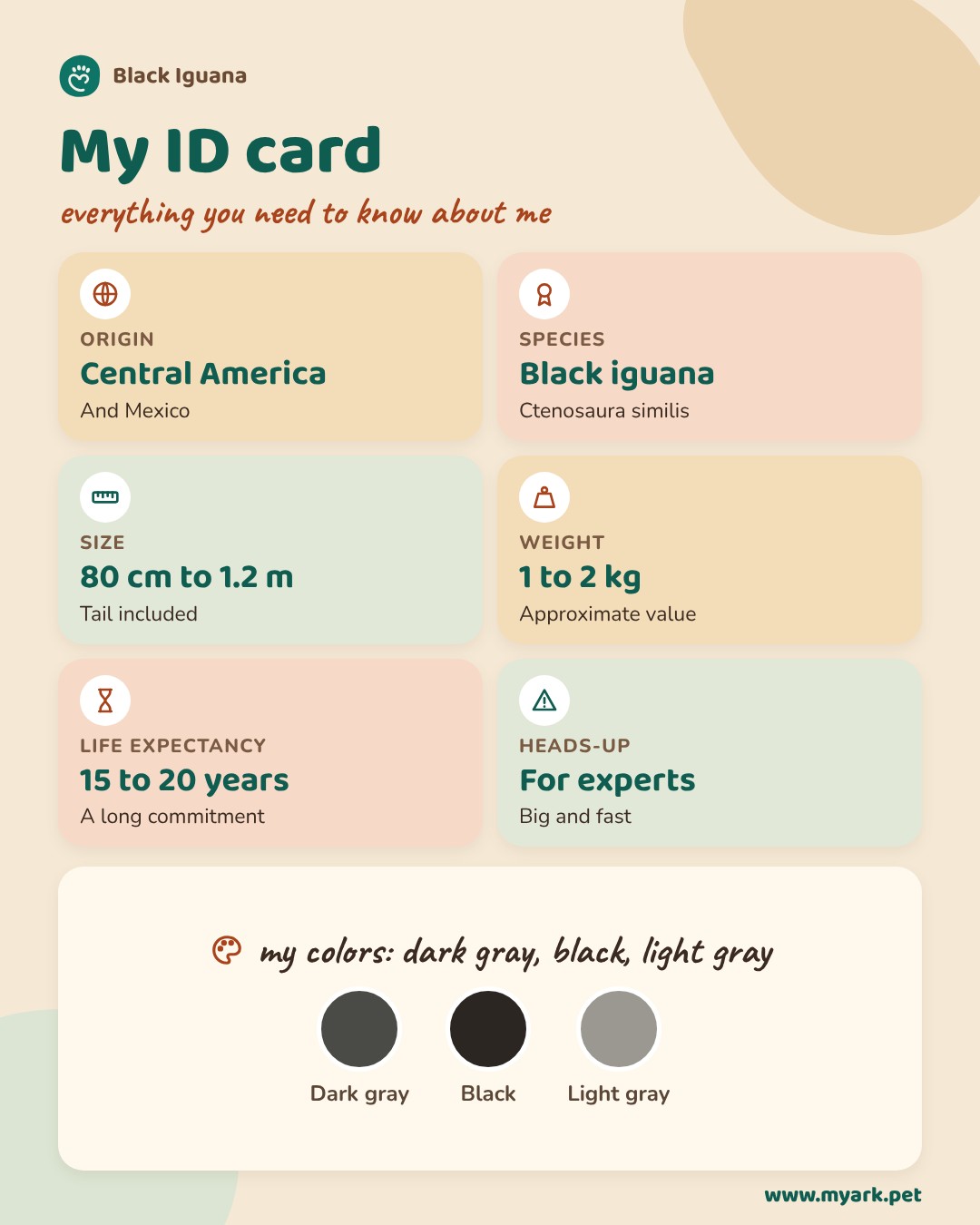
My colours
- Dark grey
- Black
- Pale grey
What a Black spiny-tailed iguana needs day to day
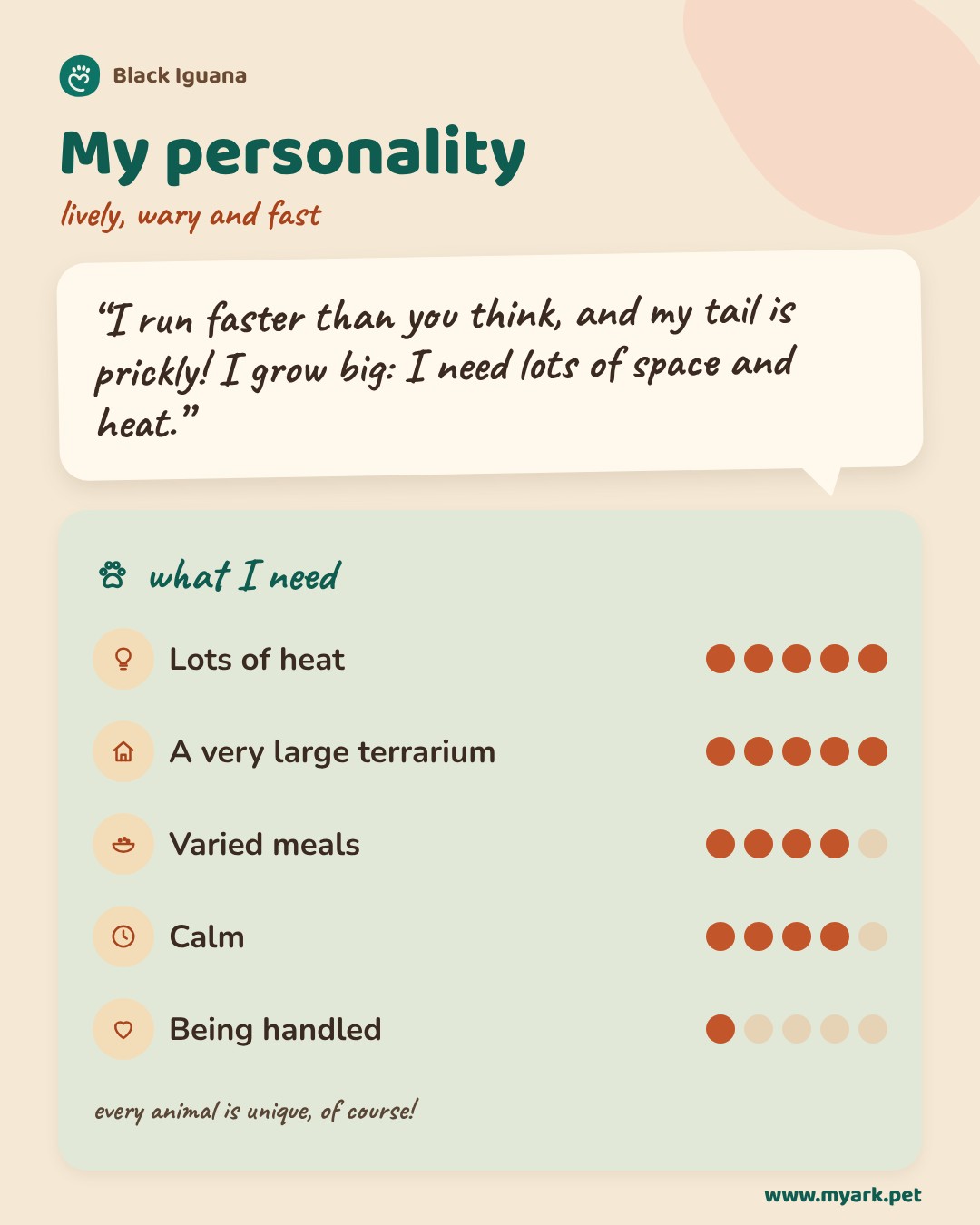
“I run faster than you think, and my tail prickles! I grow big: I need lots of space and heat.”
Its needs are very high: a very large enclosure, heat, UVB and a varied diet.
At a glance
- Lots of heat
- 5 out of 5
- A very big enclosure
- 5 out of 5
- Varied meals
- 4 out of 5
- Calm
- 4 out of 5
- Being handled
- 1 out of 5
every iguana is unique, of course!
With me, we can go…
- basking under the lamp
- climbing sturdy branches
- eating its greens
- a warm bath
Living with a Black spiny-tailed iguana: who does what
An iguana reaches a size and strength few households expect — the main reason iguanas are abandoned. Its routine is daily: fresh greens, heat, UVB, water. Here is the Black spiny-tailed iguana’s routine at a glance, and how a household can split it without a single “did anyone…?” message.
The routine at a glance
- every day
- fresh leafy greens, chopped; fresh water and a bath or misting; heat and UVB checked; a look at the iguana.
- every week
- droppings removed; branches and bowls cleaned; calcium sprinkled on the greens.
- every month
- a weigh-in; UVB and basking lamp checked; claws checked.
- every year
- a check-up with a reptile vet; UVB tubes replaced as the maker advises.
Sharing it out
- Fresh greens prepared on a rota.
- Heat and UVB checks on a name.
- Handling only by a calm adult.
Before it arrives, agree on…
- who prepares the greens every day
- who checks heat and UVB
- who cleans the enclosure
- how it is handled — by a calm adult, supporting its body, never by the tail
- who looks after it during holidays
How MyArk helps the household keep track
Family pet chores
Greens, water and cleaning on named people.
See the featurePet feeding tracker
Log greens and the rare fruit.
See the featurePet weight tracker
A monthly weigh-in: weight loss is an early warning sign.
See the featurePet sitter instructions
Holiday instructions: greens, heat and UVB.
See the featureFeeding, enclosure and health routine
The set-up is demanding: a very large enclosure, strong UVB, a hot basking spot and a varied plant diet.
What I eat
- varied plants and flowers
- some insects, as advised by your vet
- fresh water and calcium
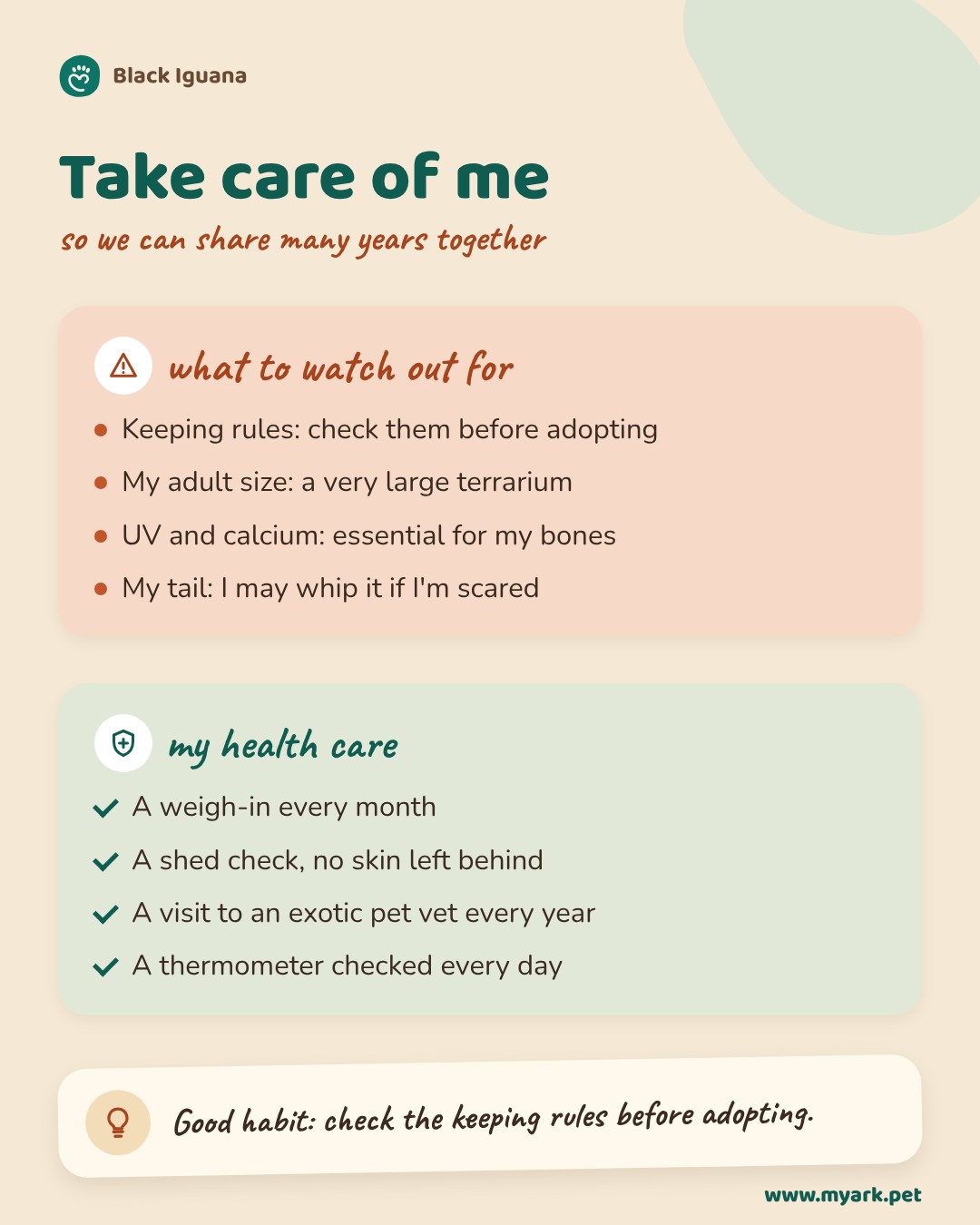
My health routine
- strong UVB, replaced on schedule, and calcium
- fresh water and moist greens: kidney problems start with dehydration
- a regular weigh-in and a look at jaw and limbs
- a reptile vet found before there is a problem
The stages of my life
- young
- Small greens every day, strong UVB and gentle handling.
- adult
- A huge enclosure, heat, UVB and a varied plant diet.
- older
- A closer watch on weight, kidneys and joints.
What to keep an eye on
MyArk describes the points to watch through the set-up, diet and simple checks rather than a list of diseases: most iguana problems start with light, heat or diet.
Keeping rules
Check them before adopting.
Adult size
A very large enclosure.
UV and calcium
Essential for its bones.
Tail
I may lash it if I’m scared.
And, as for every iguana:
- a huge adult enclosure, often a dedicated room
- a strictly plant-based, varied diet, low in oxalates
- strong UVB and a hot basking spot
- sturdy branches to climb and regulate heat
Is it the right iguana for your household?
An iguana needs a very large enclosure, strong UVB, heat and fresh greens every day — and it lives for well over a decade. Plan for its adult size before buying, check your country’s rules, and consider reptile rescues.
- Home
- A very large, hot enclosure.
- Children
- To watch only.
- Other pets
- Keep cats and dogs away.
- First reptile
- Not a first reptile.
- Time
- Daily feeding and a big weekly clean.
Black spiny-tailed iguana: straight answers
Is a spiny-tailed iguana dangerous?
It can lash its spiny tail when afraid: handle as little as possible.
What does it eat?
Mostly plants and flowers, with some insects as advised by a vet.
Is it legal to keep?
Rules vary: check before adopting.
What colours does the Black spiny-tailed iguana come in?
The usual colours are dark grey, black and pale grey.