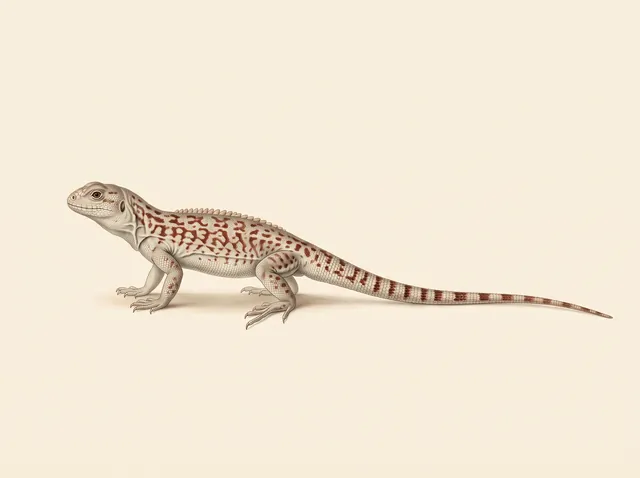
Where the Desert iguana comes from
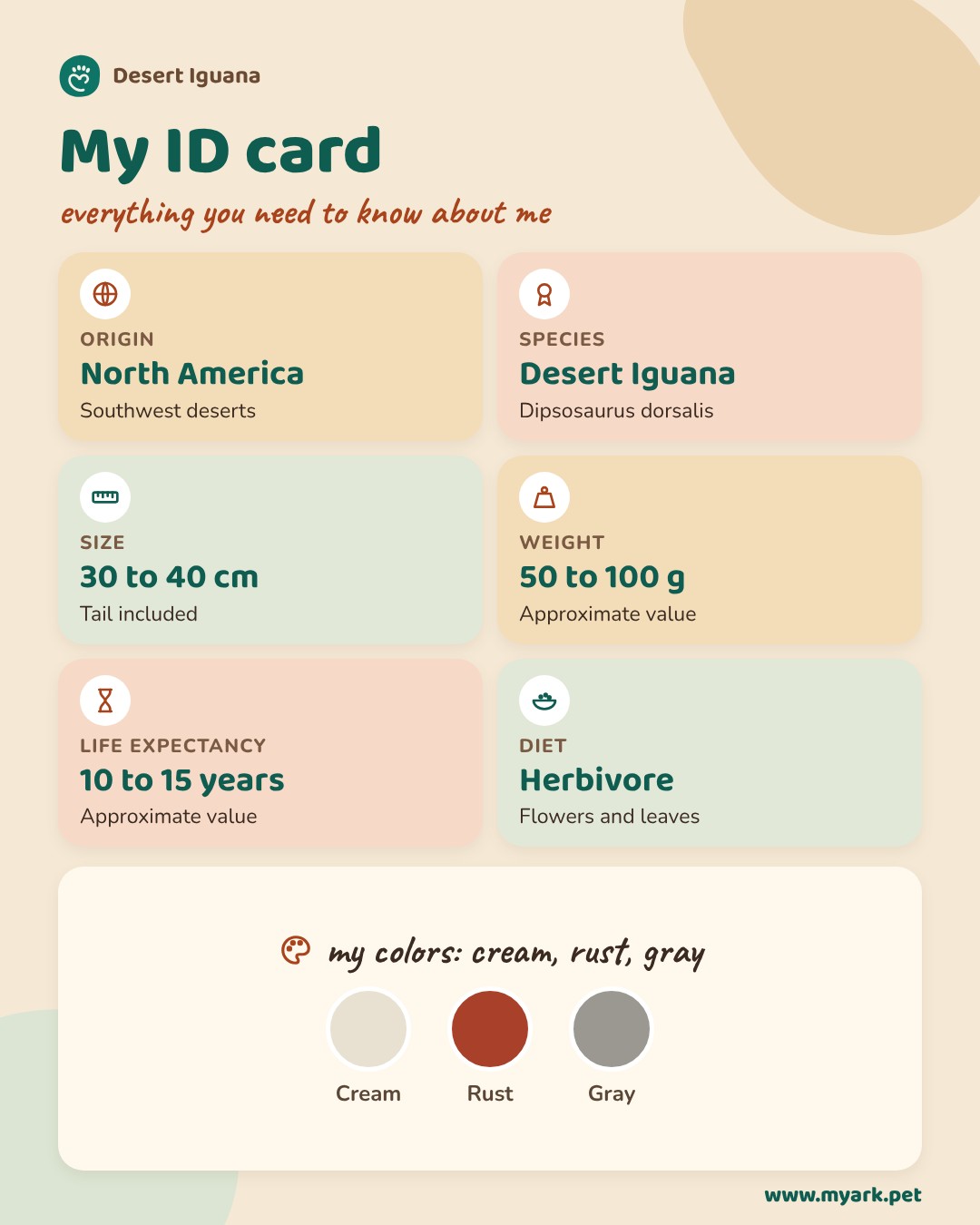
The desert iguana lives in the Mojave and Sonoran deserts.
It stays active at very high temperatures and turns paler to reflect the sun.
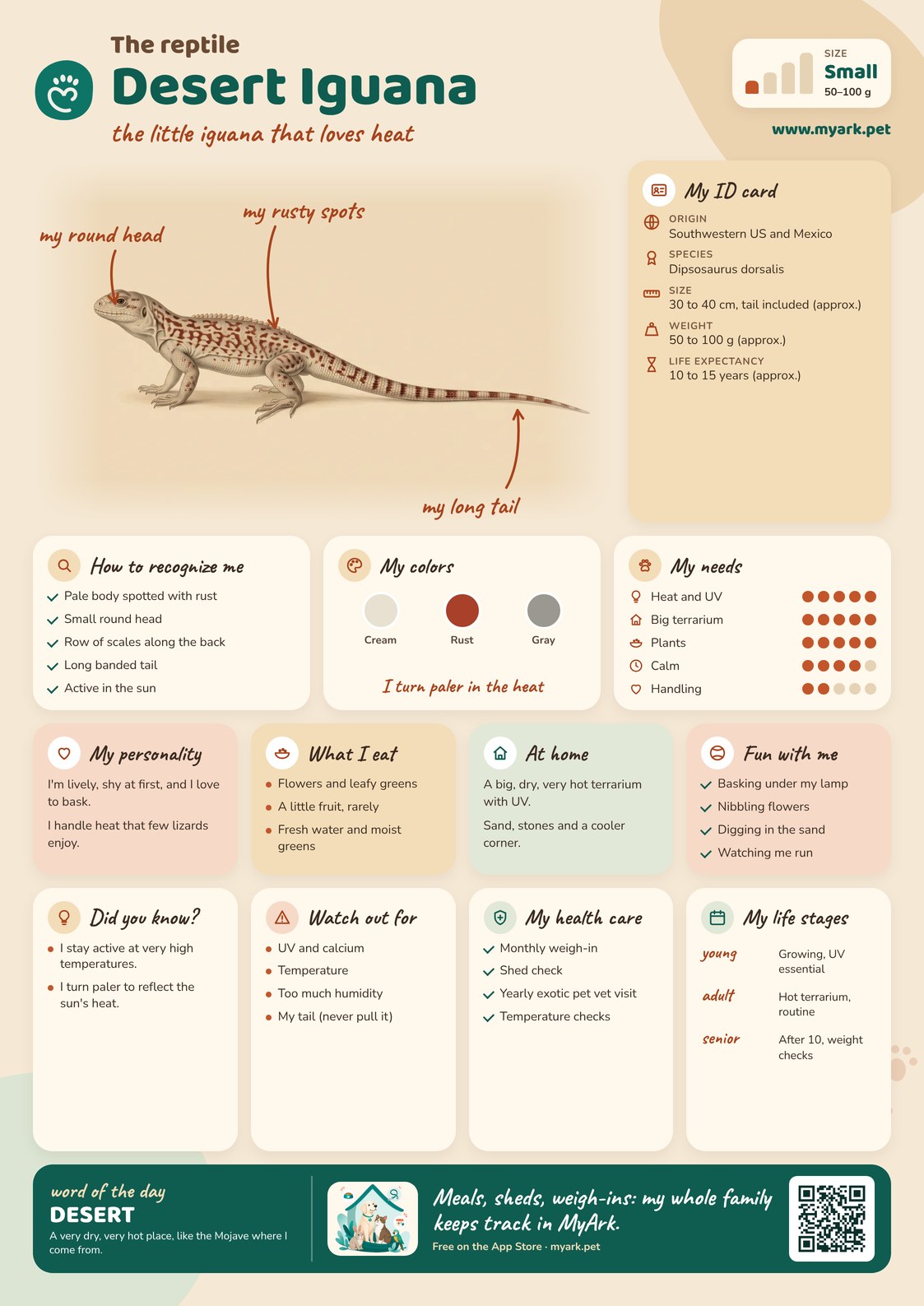
How to recognise me
- pale body spotted with rust
- small round head
- row of scales along the back
- long ringed tail
- active in the sun
My colours
- Cream
- Red-brown
- Grey
What a Desert iguana needs day to day
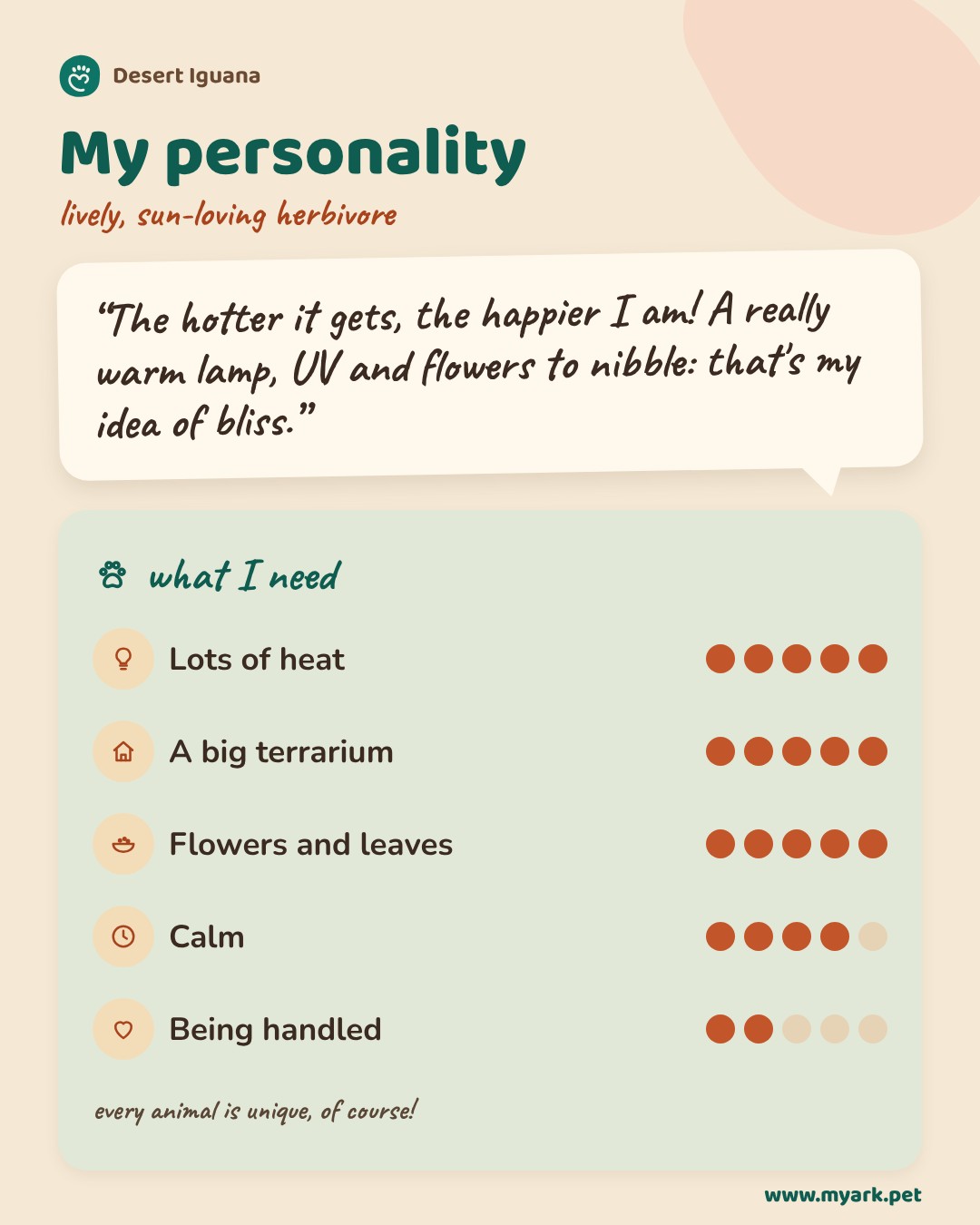
“The hotter it is, the happier I am! A hot lamp, UV and flowers to nibble — that’s my happiness.”
Its needs are real: a large, very hot and dry vivarium, strong UVB, flowers and greens.
At a glance
- Lots of heat
- 5 out of 5
- A big vivarium
- 5 out of 5
- Flowers and leaves
- 5 out of 5
- Calm
- 4 out of 5
- Being handled
- 2 out of 5
every iguana is unique, of course!
With me, we can go…
- basking under the lamp
- climbing sturdy branches
- eating its greens
- a warm bath
Living with a Desert iguana: who does what
An iguana reaches a size and strength few households expect — the main reason iguanas are abandoned. Its routine is daily: fresh greens, heat, UVB, water. Here is the Desert iguana’s routine at a glance, and how a household can split it without a single “did anyone…?” message.
The routine at a glance
- every day
- fresh leafy greens, chopped; fresh water and a bath or misting; heat and UVB checked; a look at the iguana.
- every week
- droppings removed; branches and bowls cleaned; calcium sprinkled on the greens.
- every month
- a weigh-in; UVB and basking lamp checked; claws checked.
- every year
- a check-up with a reptile vet; UVB tubes replaced as the maker advises.
Sharing it out
- Fresh greens prepared on a rota.
- Heat and UVB checks on a name.
- Handling only by a calm adult.
Before it arrives, agree on…
- who prepares the greens every day
- who checks heat and UVB
- who cleans the enclosure
- how it is handled — by a calm adult, supporting its body, never by the tail
- who looks after it during holidays
How MyArk helps the household keep track
Family pet chores
Greens, water and cleaning on named people.
See the featurePet feeding tracker
Log greens and the rare fruit.
See the featurePet weight tracker
A monthly weigh-in: weight loss is an early warning sign.
See the featurePet sitter instructions
Holiday instructions: greens, heat and UVB.
See the featureFeeding, enclosure and health routine
The set-up is demanding: a very large enclosure, strong UVB, a hot basking spot and a varied plant diet.
What I eat
- flowers and leafy greens
- a little fruit, rarely
- fresh water and moist greens
My health routine
- strong UVB, replaced on schedule, and calcium
- fresh water and moist greens: kidney problems start with dehydration
- a regular weigh-in and a look at jaw and limbs
- a reptile vet found before there is a problem
The stages of my life
- young
- Small greens every day, strong UVB and gentle handling.
- adult
- A huge enclosure, heat, UVB and a varied plant diet.
- older
- A closer watch on weight, kidneys and joints.
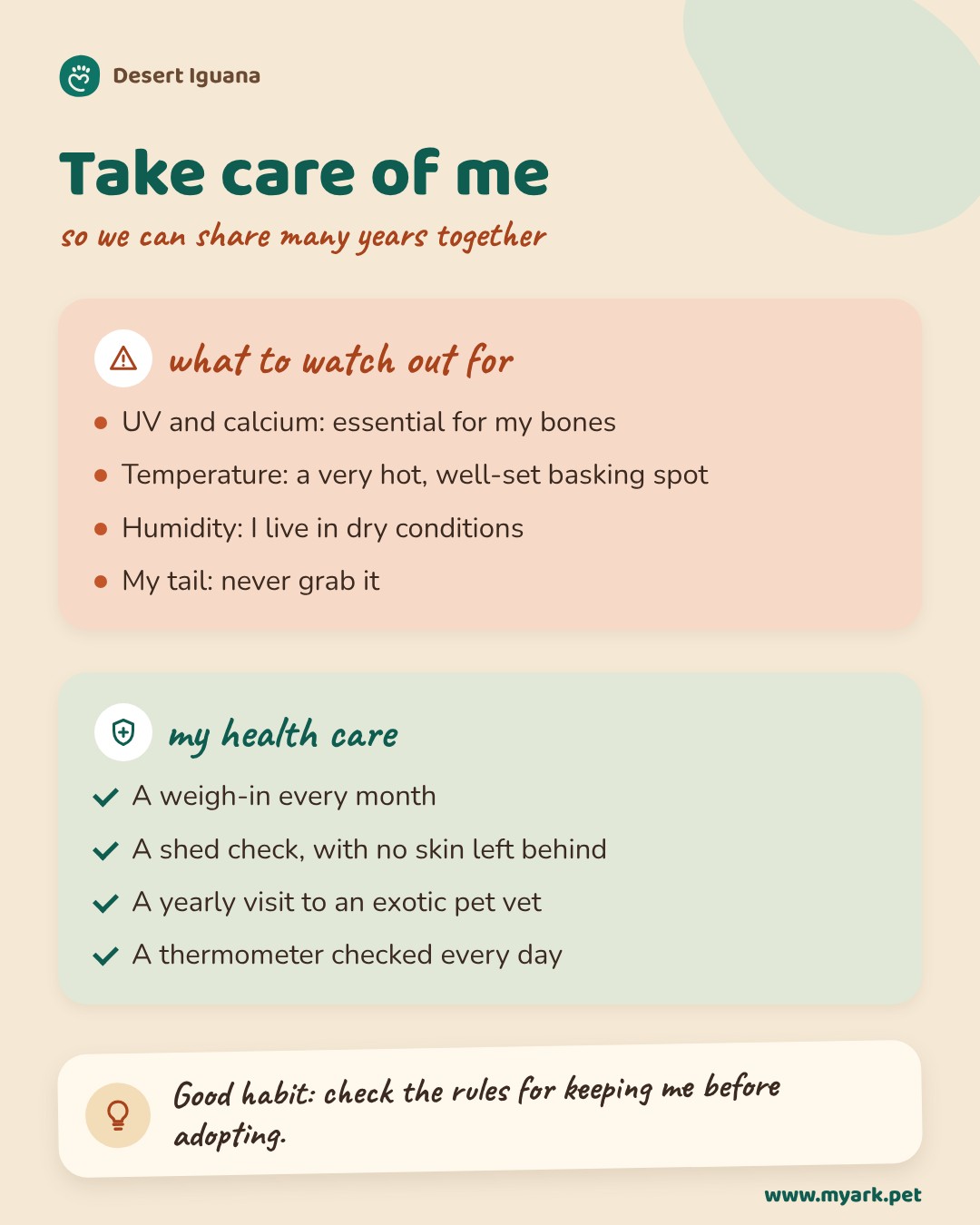
What to keep an eye on
MyArk describes the points to watch through the set-up, diet and simple checks rather than a list of diseases: most iguana problems start with light, heat or diet.
UV and calcium
Essential for its bones.
Temperature
A very hot, well-set basking spot.
Humidity
I live in the dry.
Tail
Never grab it.
And, as for every iguana:
- a huge adult enclosure, often a dedicated room
- a strictly plant-based, varied diet, low in oxalates
- strong UVB and a hot basking spot
- sturdy branches to climb and regulate heat
Is it the right iguana for your household?
An iguana needs a very large enclosure, strong UVB, heat and fresh greens every day — and it lives for well over a decade. Plan for its adult size before buying, check your country’s rules, and consider reptile rescues.
- Home
- A large, very hot and dry vivarium.
- Children
- To watch; handled rarely, with an adult.
- Other pets
- Keep cats and dogs away.
- First reptile
- Better with some reptile experience.
- Time
- Greens every day and a weekly clean.
Desert iguana: straight answers
Does a desert iguana need a lot of heat?
Yes: a very hot basking spot.
What does it eat?
Flowers and leafy greens, rarely fruit.
Is it big?
No: much smaller than the green iguana.
What colours does the Desert iguana come in?
The usual colours are cream, red-brown and grey.