Where the Fat-tailed gerbil (Duprasi) comes from
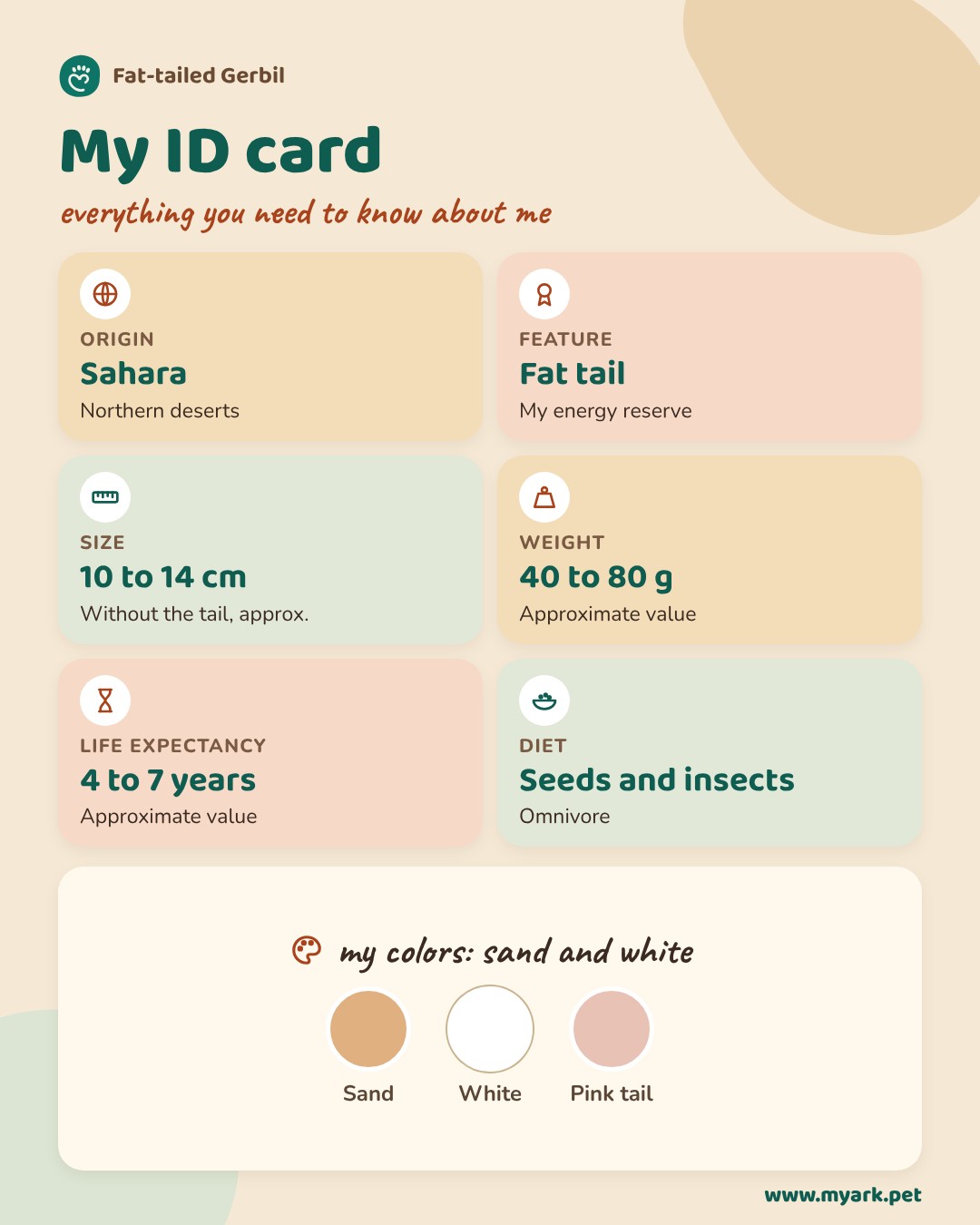
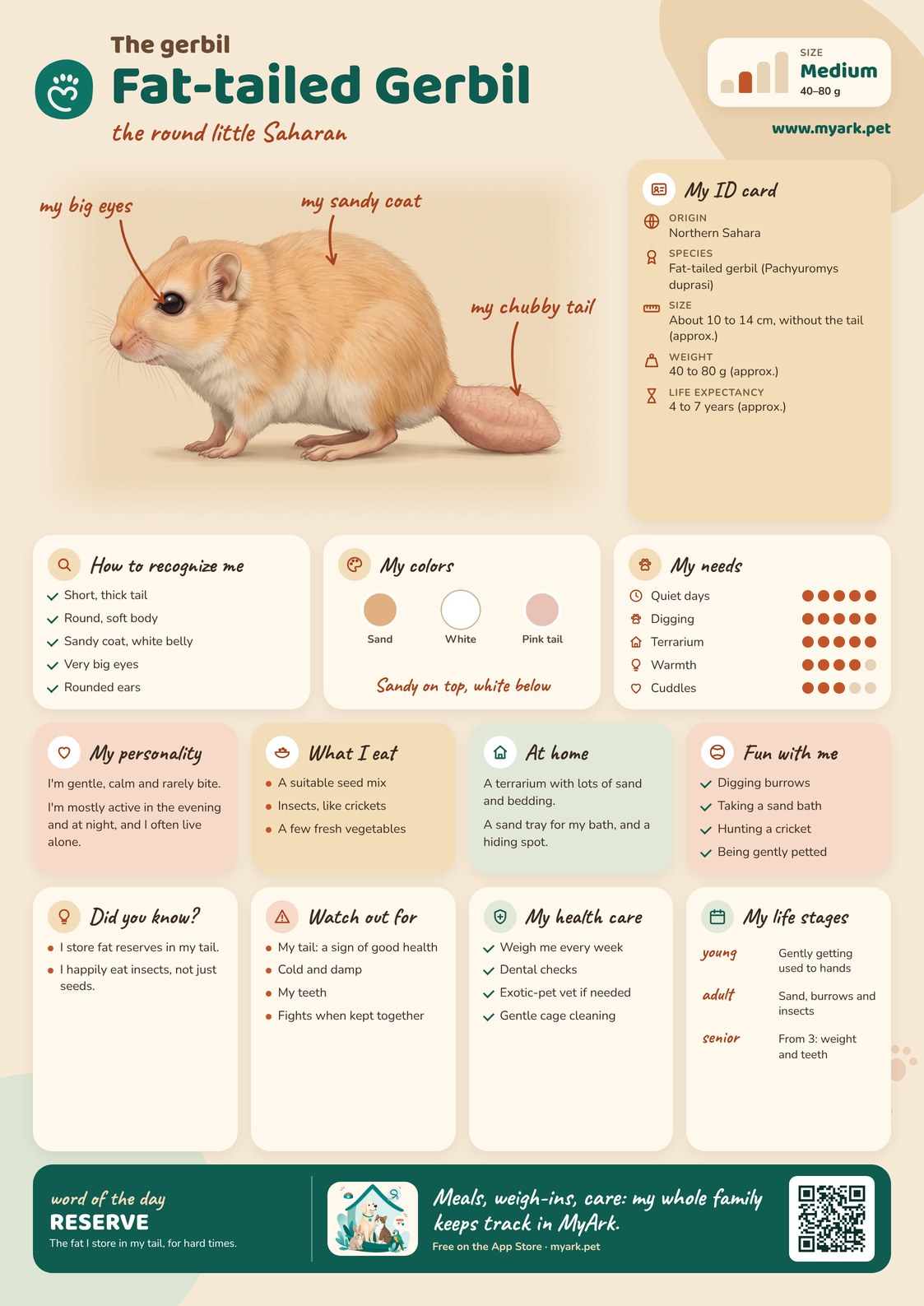
The fat-tailed gerbil (Pachyuromys duprasi) is the only species of its genus, nothing to do with a Mongolian gerbil colour.
It stores fat in its short, thick tail; round and flat-bodied, it recalls a dwarf hamster.
How to recognise me
- short, thick tail
- round, soft body
- sandy coat, white belly
- very large eyes
- rounded ears
My colours
- Sand
- White
- Pink tail
What a Fat-tailed gerbil (Duprasi) needs day to day
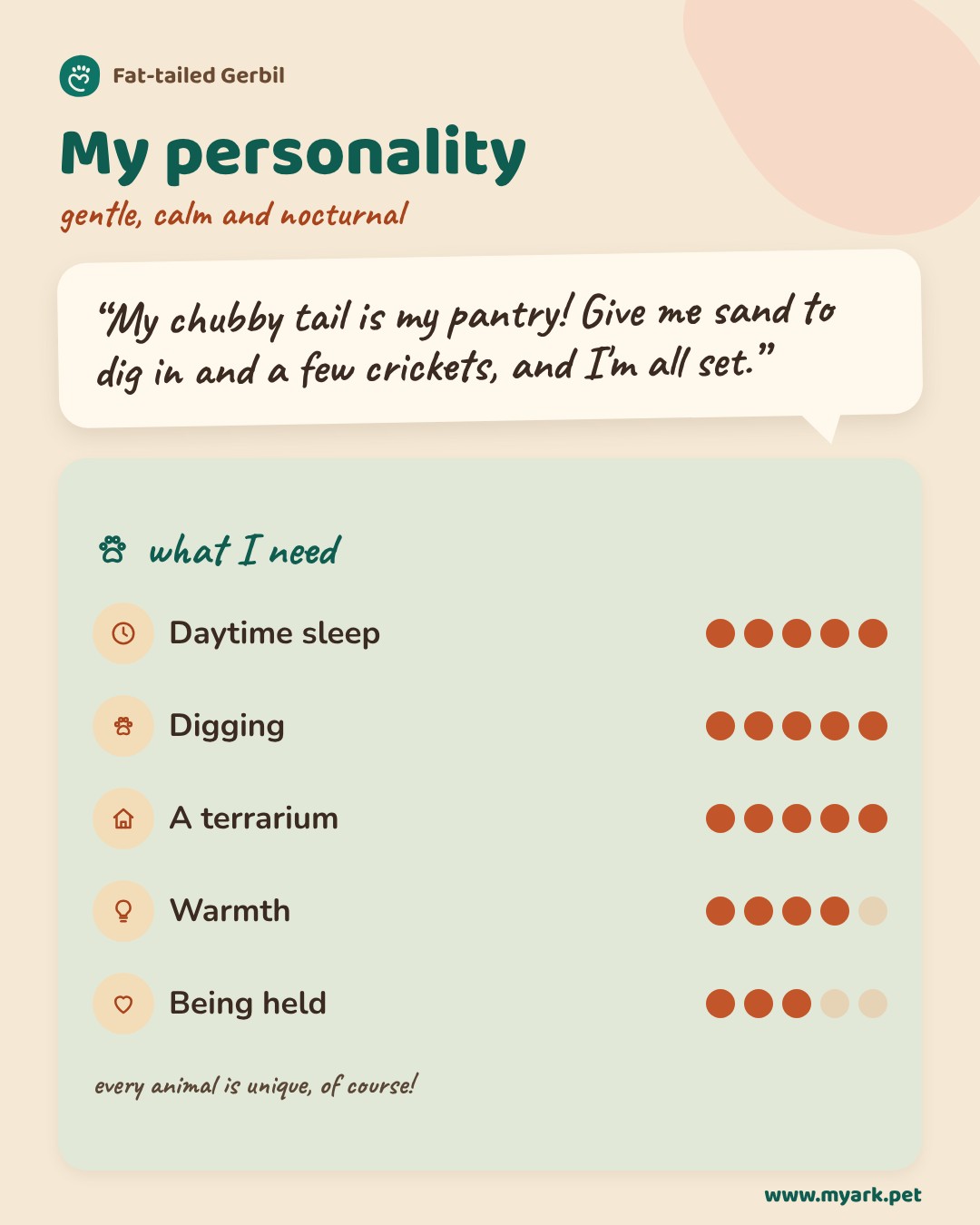
“My chubby tail is my larder! Give me sand to dig and a few crickets, and I’m delighted.”
Its needs are real: a companion, a deep tank to dig in, a sand bath and things to gnaw.
At a glance
- Sleeping by day
- 5 out of 5
- Digging
- 5 out of 5
- A vivarium
- 5 out of 5
- Warmth
- 4 out of 5
- Being carried
- 3 out of 5
every gerbil is unique, of course!
With me, we can go…
- digging in sand
- evening exploring
- hunting a cricket
- a sand bath
Living with a Fat-tailed gerbil (Duprasi): who does what
A gerbil needs a deep tank rather than an ordinary cage — that is what lets it behave normally. Its care is light but regular: food, water, deep bedding, things to gnaw. Here is the Fat-tailed gerbil (Duprasi)’s routine at a glance, and how a household can split it without a single “did anyone…?” message.
The routine at a glance
- every day
- food and fresh water; a little fresh vegetable; a look at each gerbil.
- every week
- soiled corners removed, deep bedding topped up; the sand bath sieved; a weigh-in.
- every month
- a partial clean, keeping some old bedding for familiar smells; gnawing wood and cardboard renewed; teeth checked.
- every year
- a check-up with a vet used to small mammals.
Sharing it out
- Food and water go on one person each day.
- Children hold them close to the floor, with an adult.
- The bedding top-up and weigh-in on a name.
Before it arrives, agree on…
- who does food and water every day
- who tops up the bedding and the sand
- who does the weekly weigh-in
- how children handle them — close to the floor, never by the tail
- who looks after them during holidays
How MyArk helps the household keep track
Family pet chores
Food, bedding and sand on named people.
See the featurePet weight tracker
A weekly weigh-in: weight loss is an early warning sign.
See the featurePet feeding tracker
Log food and fresh vegetables.
See the featurePet sitter instructions
Holiday instructions: food, water and never by the tail.
See the featureFeeding, grooming and health routine
The coat needs regular brushing, more often during the moult.
What I eat
- a suitable seed mix
- insects such as crickets
- a little fresh vegetable
My health routine
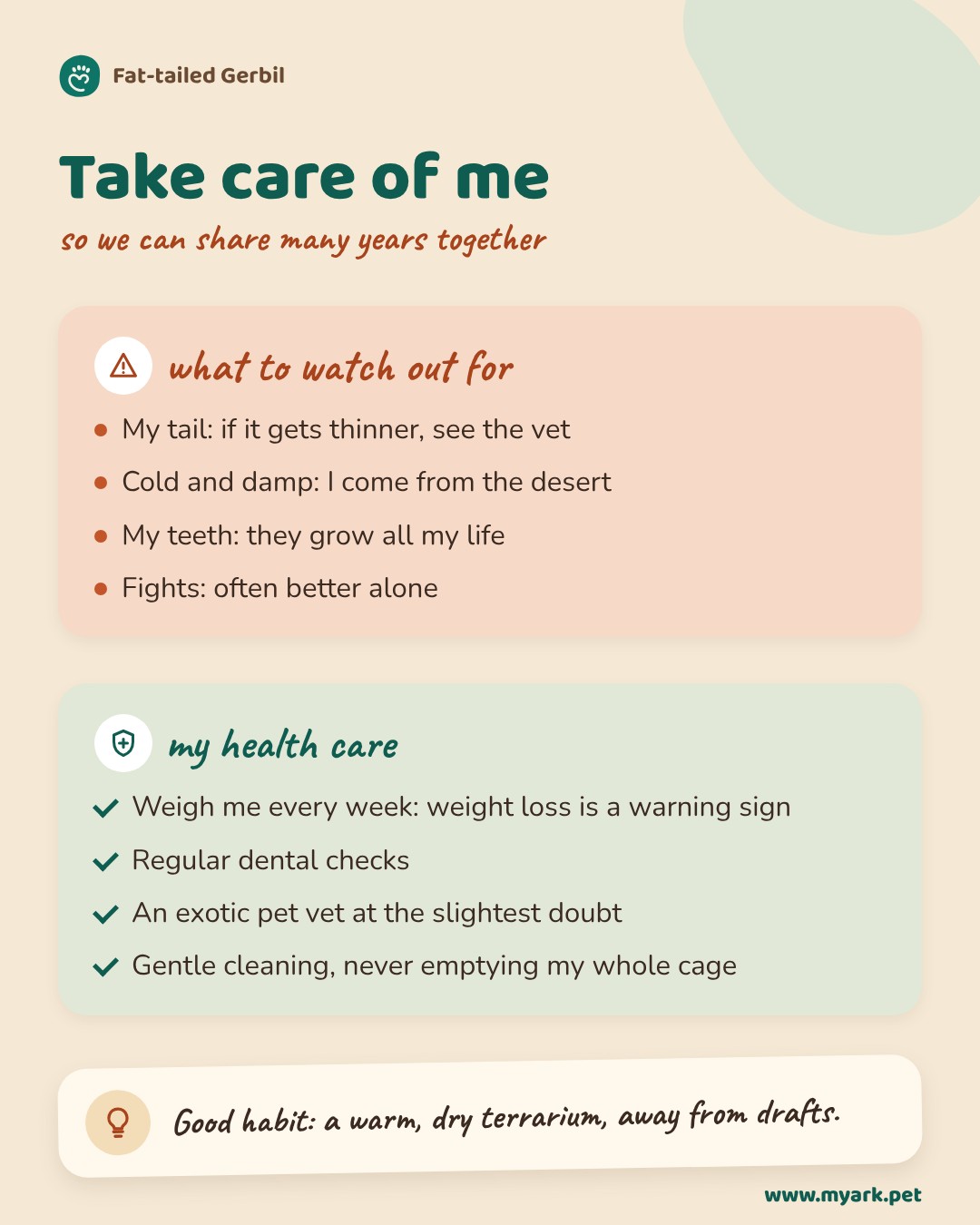
- never lift a gerbil by its tail: the skin can come away
- teeth checked regularly: they grow all its life
- a weekly weigh-in
- a vet used to small mammals, found before there is a problem
The stages of my life
- young
- Gentle taming, close to the floor.
- adult
- A companion, deep bedding and things to gnaw.
- older
- From about 2 years old, closer watch on weight and teeth.
What to keep an eye on
MyArk describes predispositions through visible body shape and simple checks rather than a list of diseases: it is what you can verify from the outside, and act on when choosing a breeder.
Tail
If it gets thin, see a vet.
Cold and damp
I come from the desert.
Teeth
They grow all its life: cardboard and wood to gnaw.
Fights
Often better alone.
And, as for every gerbil:
- very deep bedding: gerbils dig deep
- life in a pair or same-sex siblings
- a sand bath for coat care
- wood to gnaw at all times
Is it the right gerbil for your household?
Gerbils need a deep tank, a companion, sand and things to gnaw; they are lively and curious, and live only a few years. They are better watched than carried by young children — and never picked up by the tail.
- Home
- A warm, dry vivarium with deep sand.
- Children
- Calm; better watched than carried.
- Other pets
- Keep cats and dogs away.
- First pet
- A good first pet for a calm household.
- Time
- A few minutes a day, mostly in the evening.
Fat-tailed gerbil (Duprasi): straight answers
Is the fat-tailed gerbil a Mongolian gerbil?
No: a separate species.
Can fat-tailed gerbils live together?
Often better alone: watch for fights.
What does it eat?
Seeds, plus insects like crickets.
What colours does the Fat-tailed gerbil (Duprasi) come in?
The usual colours are sand, white and pink tail.