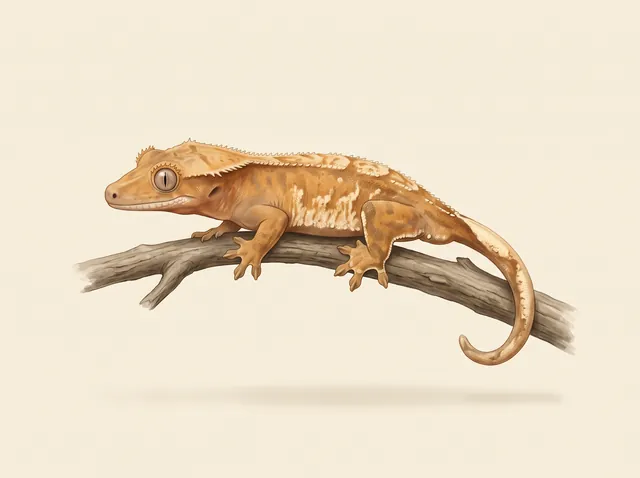
Where the Crested gecko comes from
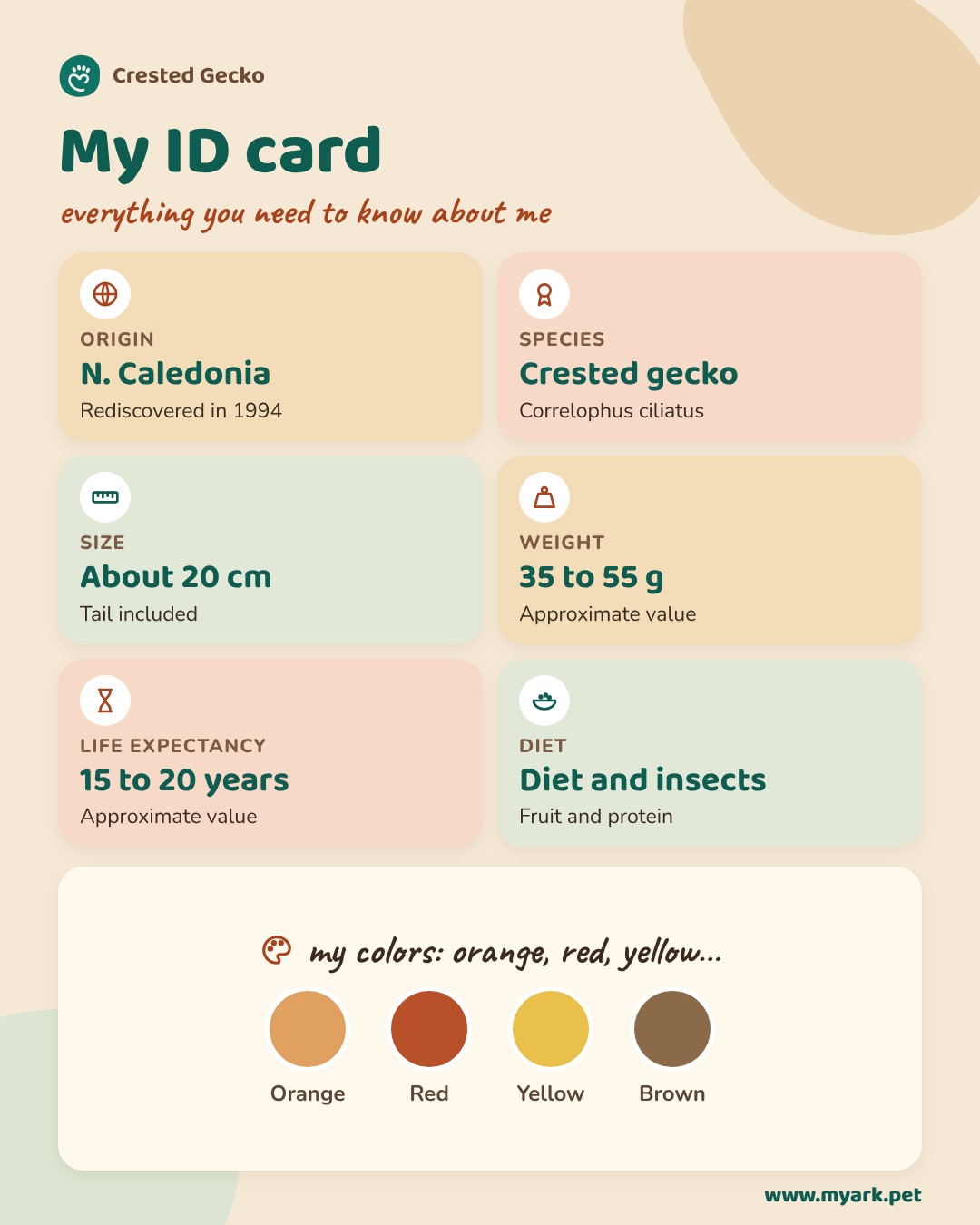
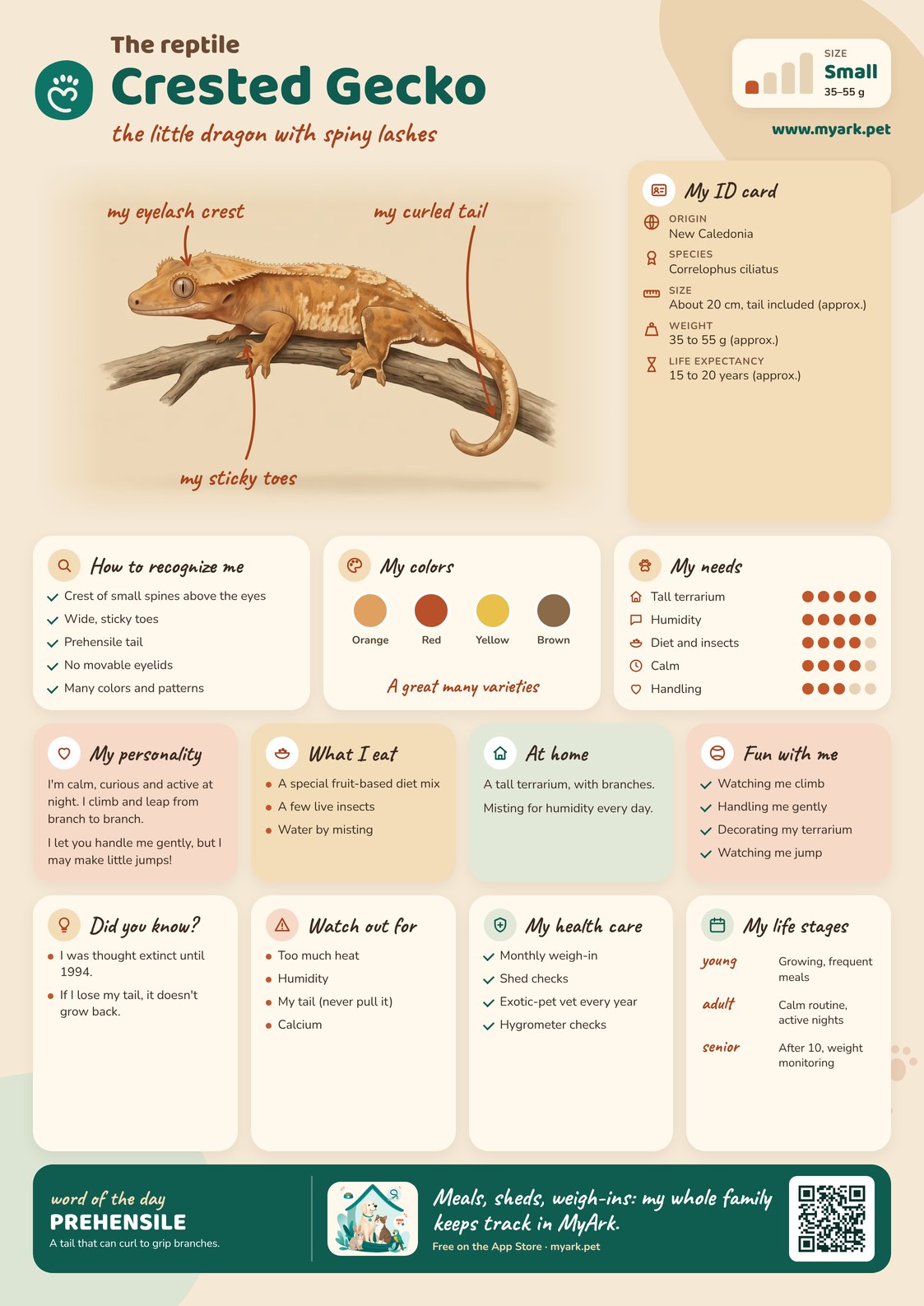
The crested gecko lives only in New Caledonia; it was thought extinct until its rediscovery in 1994.
It climbs with wide, sticky toes and a prehensile tail — which, if lost, does not grow back.
How to recognise me
- crest of small spines above the eyes
- wide, sticky toes
- prehensile tail
- no movable eyelids
- many colours and patterns
My colours
- Orange
- Red
- Yellow
- Brown
What a Crested gecko needs day to day
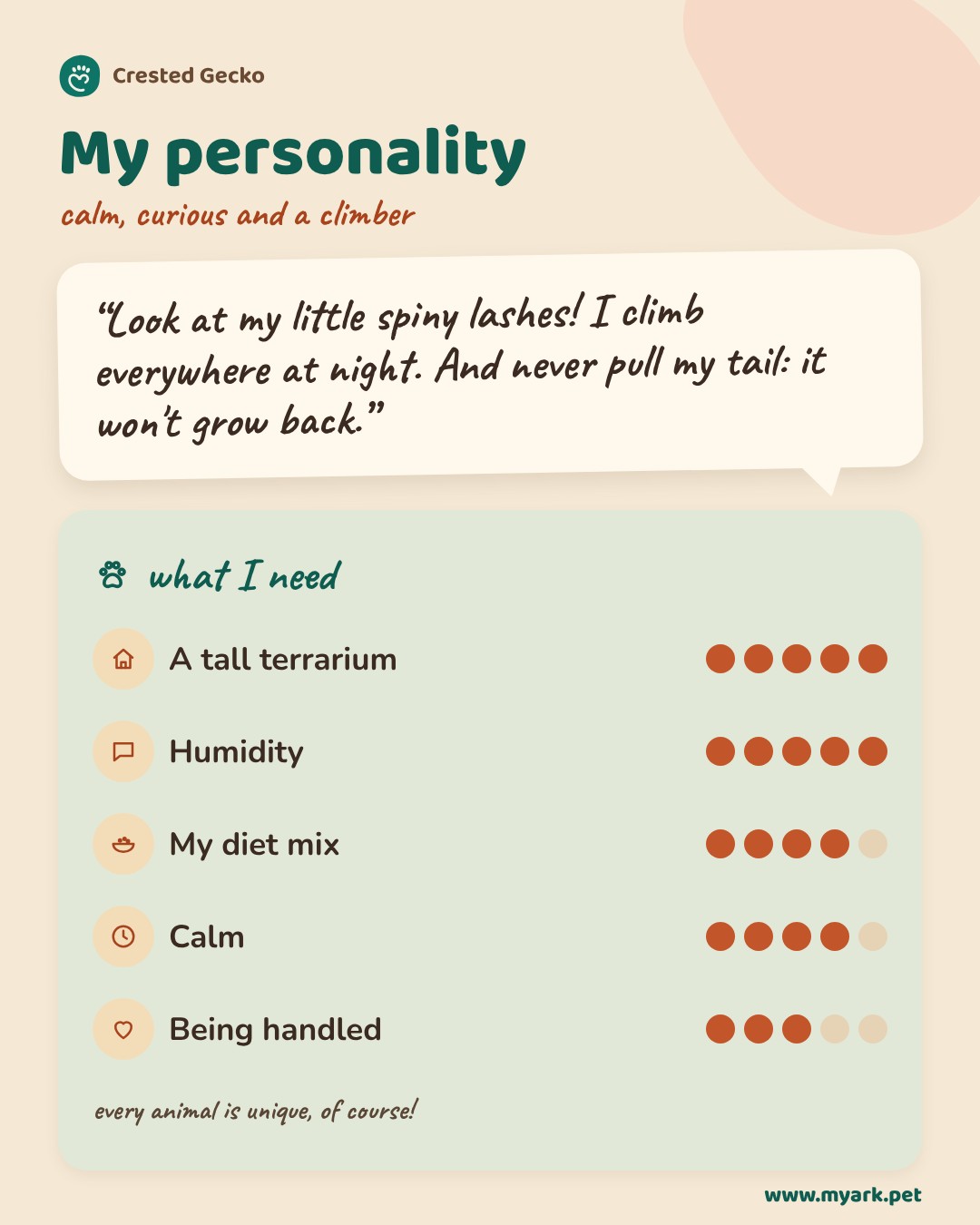
“Look at my little spiky eyelashes! I climb everywhere at night. And never pull my tail: it doesn’t grow back.”
Its needs are simple: a tall vivarium, mild warmth, daily misting and a fruit diet.
At a glance
- A tall vivarium
- 5 out of 5
- Humidity
- 5 out of 5
- Fruit diet
- 4 out of 5
- Calm
- 4 out of 5
- Being handled
- 3 out of 5
every gecko is unique, of course!
With me, we can go…
- hunting its insects
- exploring at dusk
- climbing branches
- watching you from its hide
Living with a Crested gecko: who does what
A gecko suits a calm home: it is an animal to watch, which copes badly with repeated handling. The routine is short — temperatures, misting, insects — but it must never slip. Here is the Crested gecko’s routine at a glance, and how a household can split it without a single “did anyone…?” message.
The routine at a glance
- every day
- temperatures checked at the warm and cool ends; fresh water or misting, depending on the species; a look at the gecko, without disturbing it; the lid checked.
- every week
- insects dusted with calcium, at the right interval; droppings removed; the humid hide refreshed.
- every month
- a weigh-in; a look at toes and tail tip after the shed; thermostat, lamps and UVB checked.
- every year
- a check-up with a reptile vet; UVB tubes replaced as the maker advises; a full clean of the vivarium.
Sharing it out
- Daily temperature checks and misting on a rota.
- Feeding on one named person, logged.
- Children watch; handling only with an adult.
Before it arrives, agree on…
- who checks temperatures and humidity every day
- who feeds and dusts the insects, and on which days
- who buys and keeps the live insects
- the house rule: watch, don’t grab
- who looks after it during holidays
How MyArk helps the household keep track
Pet feeding tracker
Log each meal and the calcium dusting, so nobody doubles up.
See the featurePet weight tracker
A monthly weigh-in: weight loss is an early warning sign.
See the featureFamily pet chores
Temperature checks, misting and insects on named people.
See the featurePet sitter instructions
Holiday instructions: temperatures, misting and feeding.
See the featureFeeding, vivarium and health routine
Care is regular rather than time-consuming: temperatures and humidity checked, insects dusted with calcium, a clean vivarium.
What I eat
- a complete fruit-based gecko diet
- a few live insects
- water by misting
My health routine
- a thermostat on every heat source, checked with a thermometer
- calcium and vitamin D3 dusted on the insects, and UVB lighting where the species needs it
- a regular weigh-in and a look at toes and tail tip after each shed
- a reptile vet found before there is a problem
The stages of my life
- young
- Small insects more often, dusted with calcium.
- adult
- A steady set-up, meals at the right interval and calcium.
- older
- Fewer meals and a closer watch on weight.
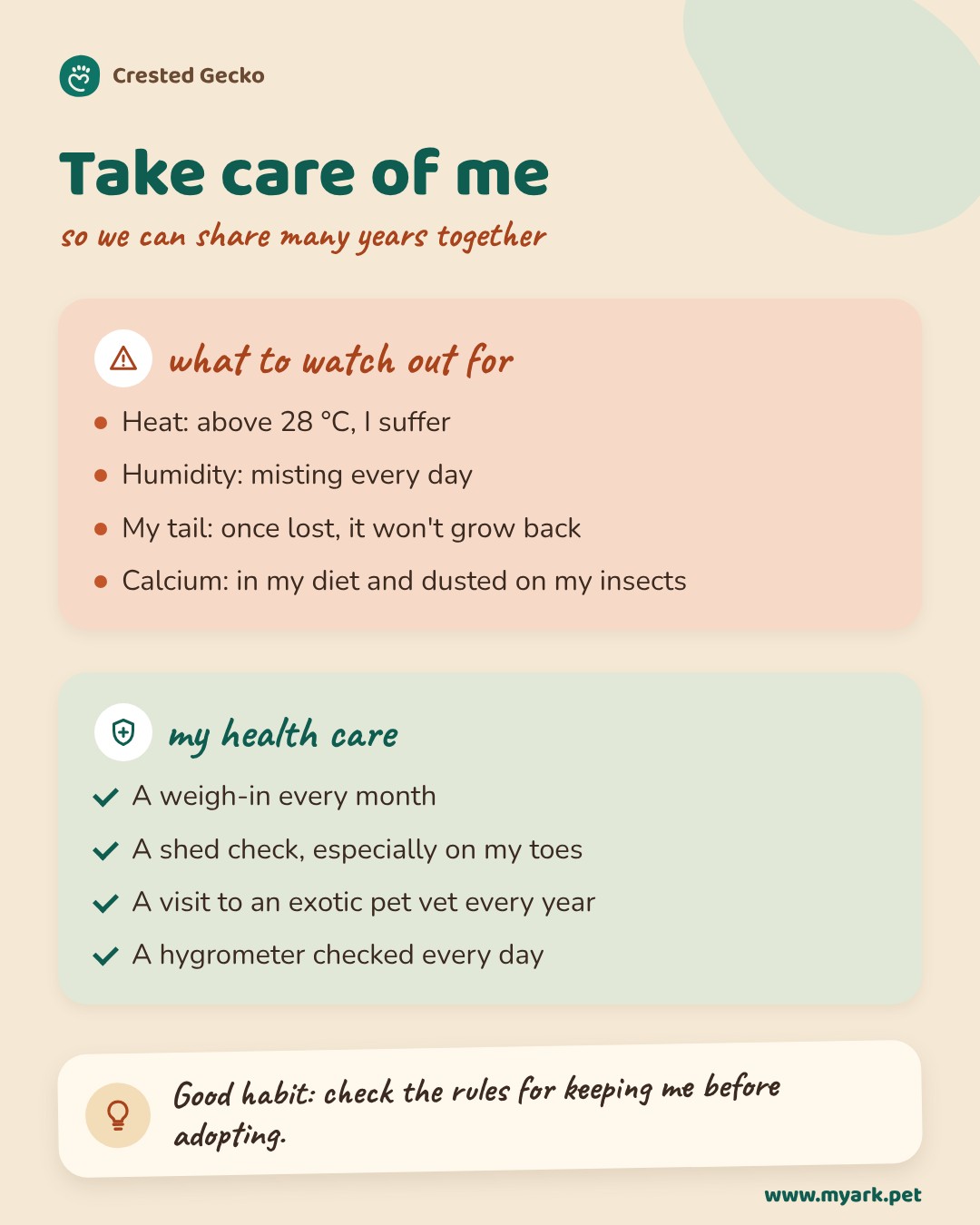
What to keep an eye on
MyArk describes the points to watch through the set-up, the shed and simple checks rather than a list of diseases: most gecko health problems start with heat, humidity or calcium.
Heat
Above about 28 °C, I suffer.
Humidity
Misting every day.
Tail
Lost, it doesn’t grow back.
Calcium
In my fruit diet and on my insects.
And, as for every gecko:
- a temperature gradient and, depending on the species, suitable UVB lighting
- controlled humidity, adjusted by misting
- calcium and vitamin D3 dusted on the prey
- hides, including a humid one for shedding
Is it the right gecko for your household?
A gecko needs a secure vivarium with a thermostat, controlled humidity, live insects dusted with calcium and a reptile vet — and many live for well over a decade. Check the rules and any CITES papers required in your country, and choose captive-bred animals.
- Home
- A tall, planted vivarium with a thermostat, in a calm room.
- Children
- Calm; children watch, handling short and with an adult.
- Other pets
- Keep cats and dogs away from the vivarium.
- First reptile
- An excellent first reptile.
- Time
- A few minutes a day, without fail.
Crested gecko: straight answers
Does a crested gecko need a heat lamp?
Mild warmth only: it suffers in high heat.
What does it eat?
A complete fruit diet, plus a few insects.
Does its tail grow back?
No: once lost, it is gone.
What colours does the Crested gecko come in?
The usual colours are orange, red, yellow and brown.