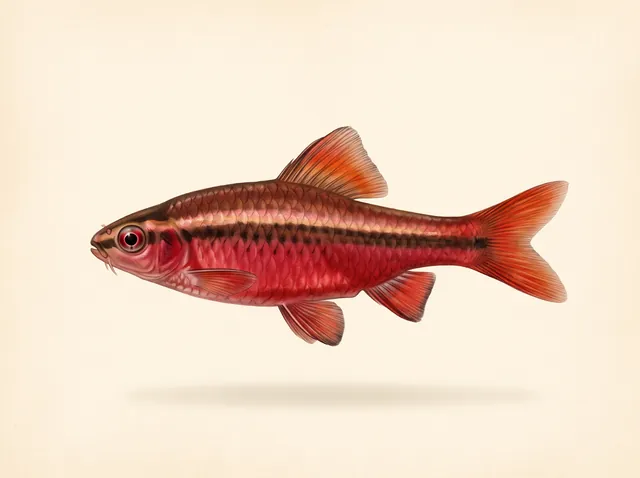
Where the Cherry barb comes from
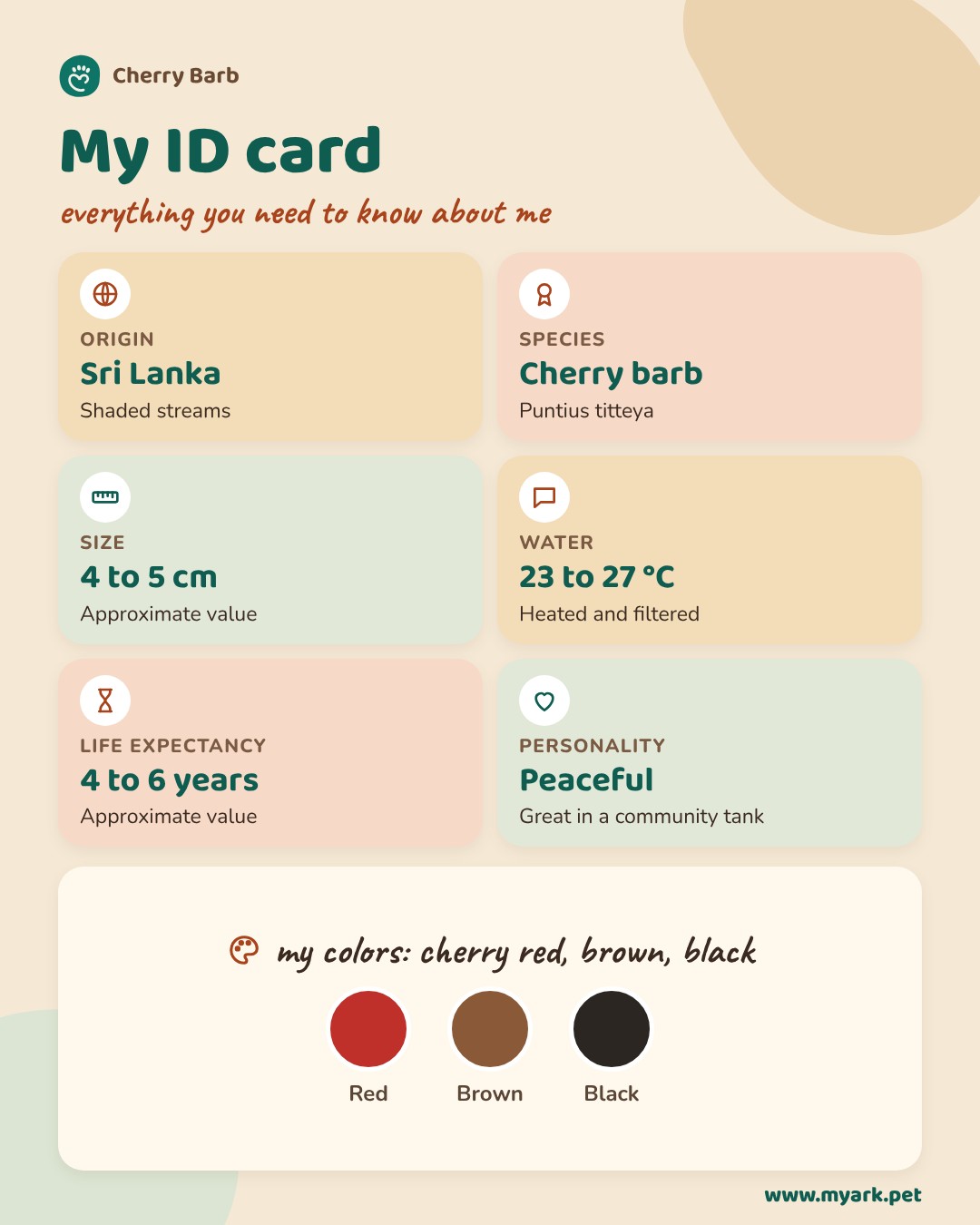
The cherry barb comes from the shaded streams of Sri Lanka.
Unlike some of its cousins, it does not nip fins.
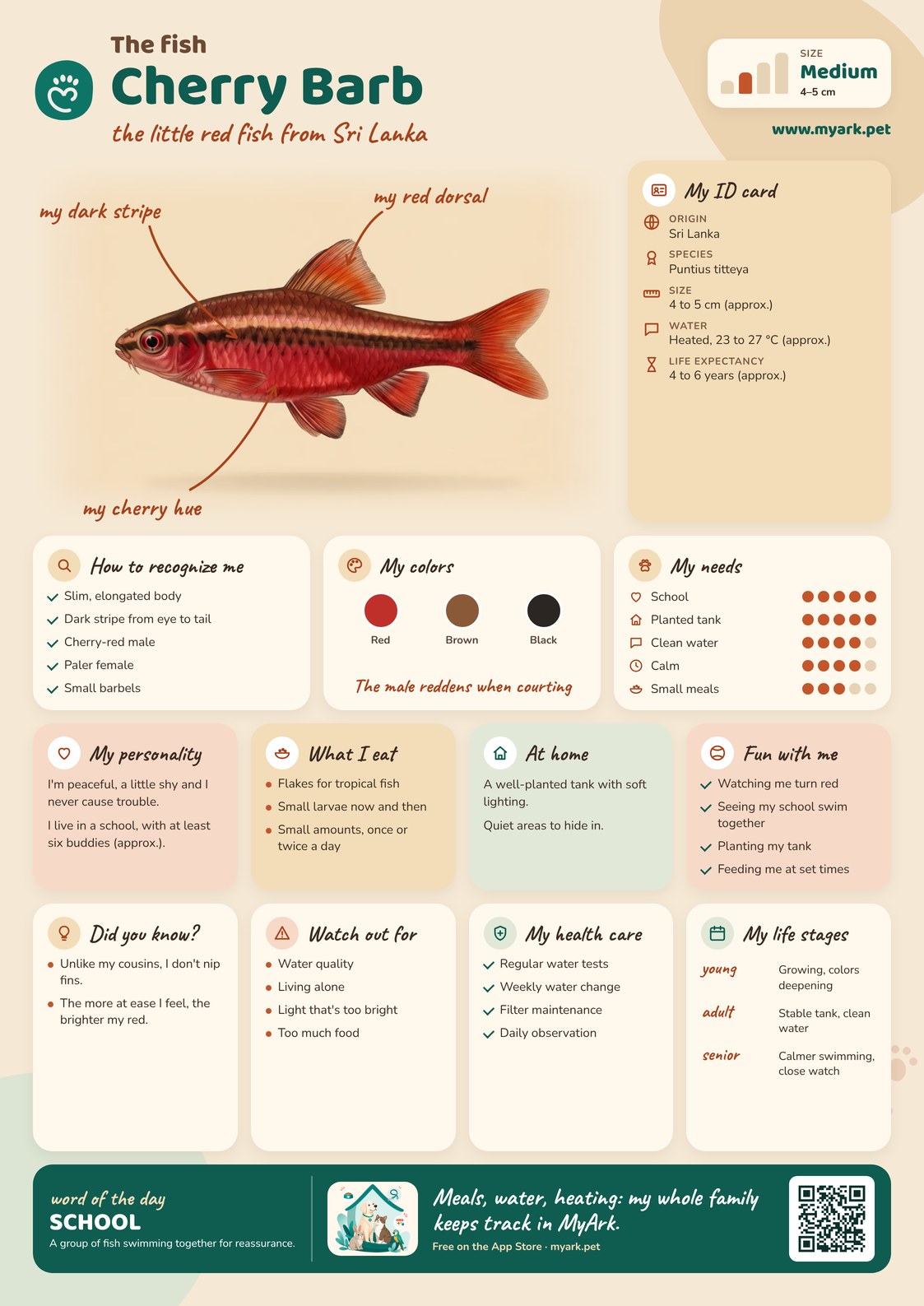
How to recognise me
- slim, elongated body
- dark line from eye to tail
- cherry-red male
- paler female
- small barbels
My colours
- Red
- Brown
- Black
What a Cherry barb needs day to day
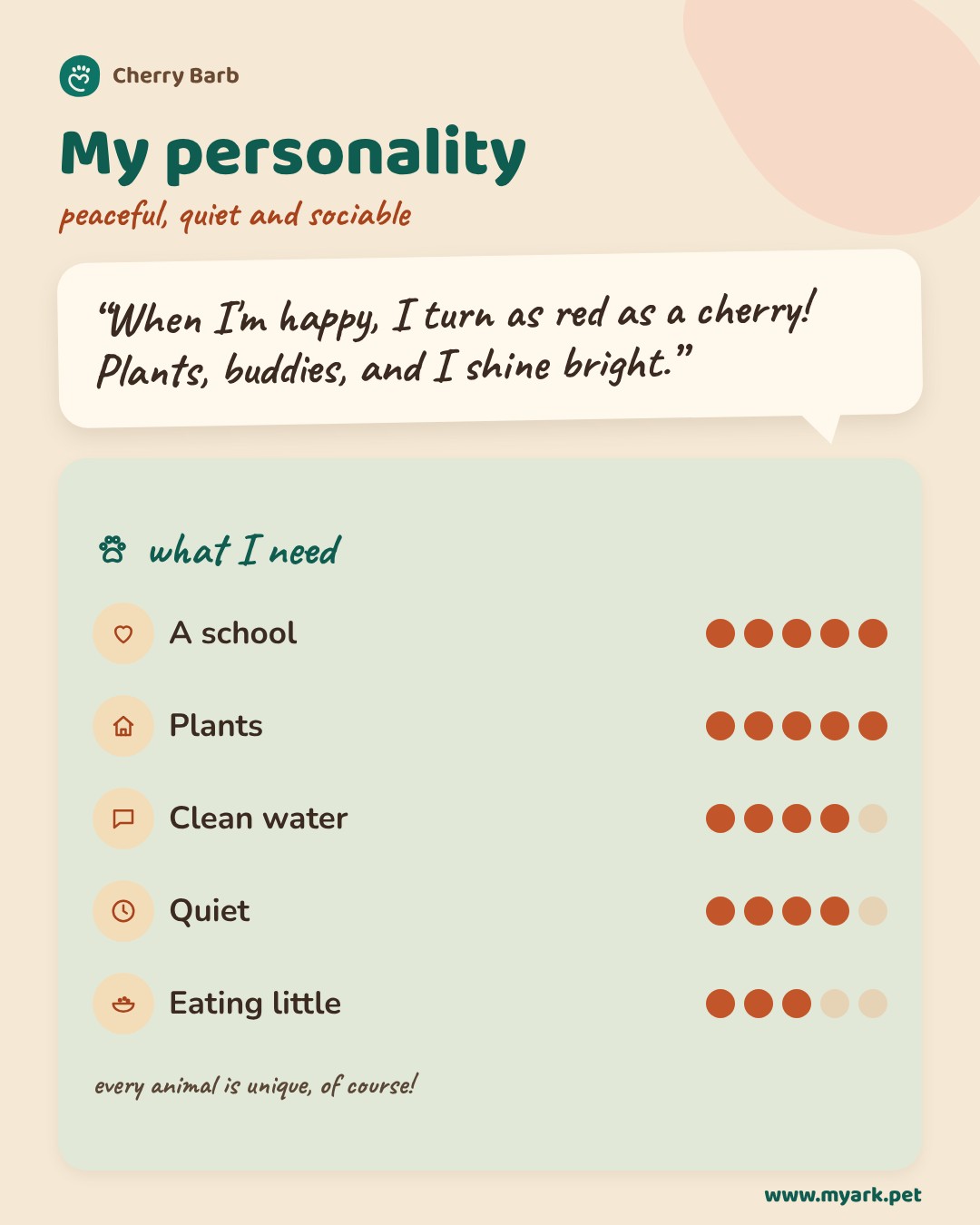
“When I’m happy, I turn red as a cherry! Plants, friends, and I shine.”
It needs a shoal, a densely planted tank, clean water and soft light with shaded areas.
At a glance
- Being in a shoal
- 5 out of 5
- Plants
- 5 out of 5
- Clean water
- 4 out of 5
- Calm
- 4 out of 5
- Small meals
- 3 out of 5
every fish is unique, of course!
With me, we can go…
- watching the males colour up
- feeding time
- spotting them in the plants
- the shoal together
Living with a Cherry barb: who does what
An aquarium takes little time each day but needs unfailing regularity — feeding, a look at every fish, water changes and tests: it is the upkeep, not the set-up, that makes it work. Here is the Cherry barb’s routine at a glance, and how a household can split it without a single “did anyone…?” message.
The routine at a glance
- every day
- one or two small meals, eaten within a couple of minutes; a look at every fish: swimming, fins, breathing; a check that the filter runs and the temperature is right.
- every week
- a partial water change with dechlorinated water; a water test (nitrite, nitrate, pH); uneaten food removed and the glass cleaned.
- every month
- filter media rinsed in old tank water, never under the tap; plants trimmed and decor checked; food and test kits restocked.
- every year
- heater and lights checked or replaced; a review of the stocking: has everyone grown?.
Sharing it out
- Feeding goes on one person a day, with a measured amount.
- The weekly water change goes on a name.
- Test results are noted where everyone can see them.
Before it arrives, agree on…
- who feeds, and how much
- who does the weekly water change
- who tests the water and notes the results
- how children help — feeding with an adult, never alone
- who looks after the tank during holidays, with measured portions
How MyArk helps the household keep track
Pet feeding tracker
Log each meal so no one feeds twice: overfeeding is the most common mistake.
See the featureFamily pet chores
Feeding, the water change and tests on named people.
See the featureShared pet care log
Note each water test and change, so everyone sees the last one.
See the featurePet sitter instructions
Clear, measured feeding instructions for whoever looks after the tank on holiday.
See the featureFeeding, water and health routine
The tank needs regular upkeep: weekly partial water changes, filter care and water tests.
What I eat
- tropical fish flakes
- small larvae now and then
- small amounts, once or twice a day
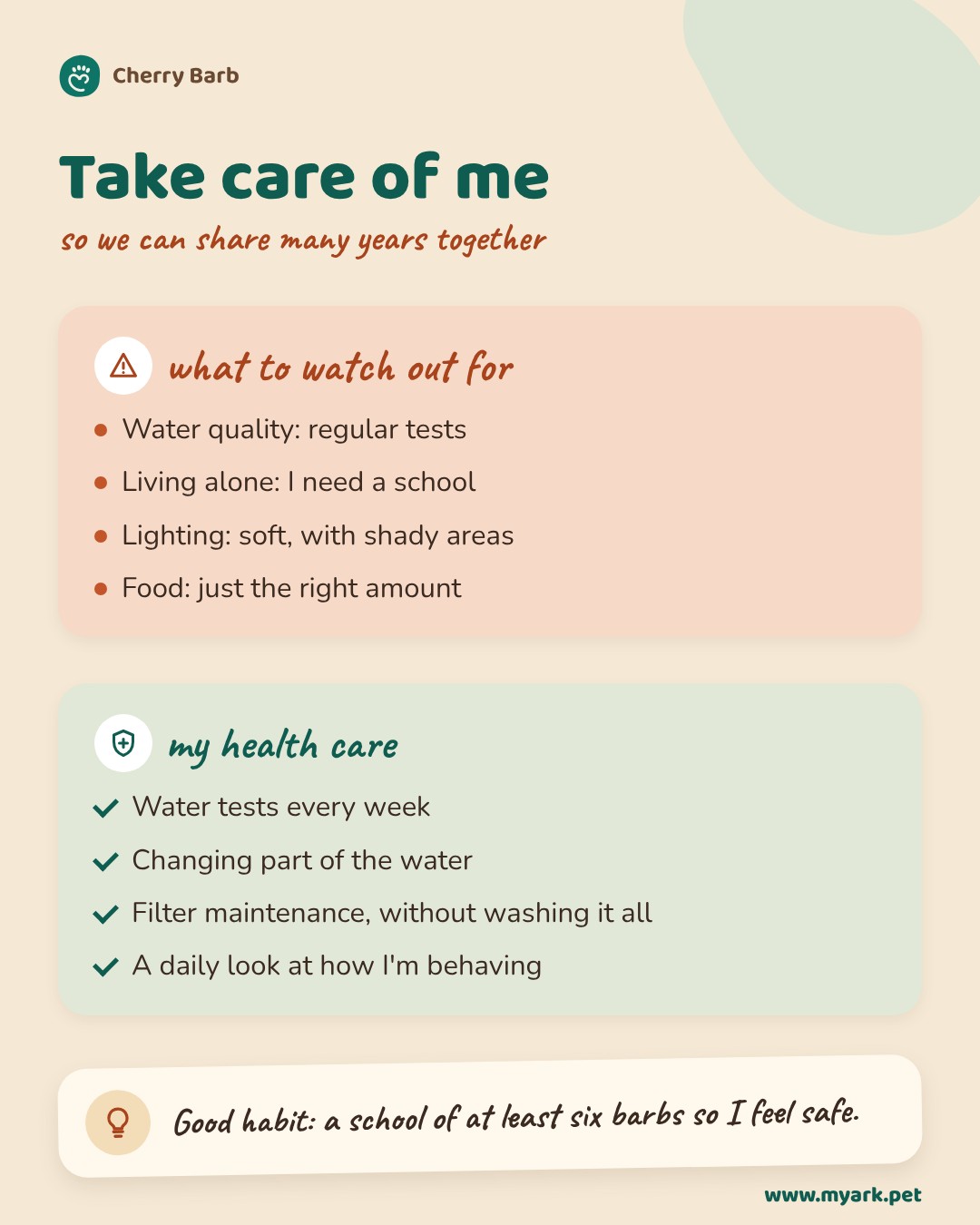
My health routine
- a water test kit (ammonia, nitrite, nitrate, pH), used regularly
- partial water changes with dechlorinated water at the same temperature
- quarantine for any new fish before it joins the tank
- a vet who treats fish, found before there is a problem
The stages of my life
- young
- Small, frequent meals and very stable water.
- adult
- Stable water, a varied diet and the right group.
- older
- Slower moving: watch its appetite and keep the water impeccable.
What to keep an eye on
MyArk describes the points to watch through water quality, behaviour and simple checks rather than a list of diseases: it is what you can verify every day, and act on before you buy.
Water quality
Ammonia and nitrite must stay at zero: test regularly and change part of the water.
Living alone
It needs a shoal.
Light
Soft, with shaded areas.
Food
Just the right amount.
And, as for every aquarium:
- a nitrogen cycle completed before any fish arrives
- a tank volume and number of fish that suit the species, not just the tank
- regular partial water changes and water tests
- decor with places to hide
Is it the right fish for your household?
A fish depends entirely on its water: the tank, the filtration and steady upkeep matter more than the species itself. Check the adult size and the right group before buying — and never release a fish into ponds or rivers.
- Tank
- Warm, filtered water in a cycled, planted tank. Soft light.
- Children
- Peaceful; feeding with an adult.
- Tank-mates
- Small, peaceful fish.
- First fish
- A good first tropical fish.
- Time
- A few minutes a day, and a regular weekly water change.
Cherry barb: straight answers
Do cherry barbs nip fins?
No: unlike some barbs, they are peaceful.
Why is my cherry barb pale?
It colours up when at ease: plants, a shoal and calm help.
How many cherry barbs should I keep?
A shoal of several.
What colours does the Cherry barb come in?
The usual colours are red, brown and black.