Where the Apistogramma comes from
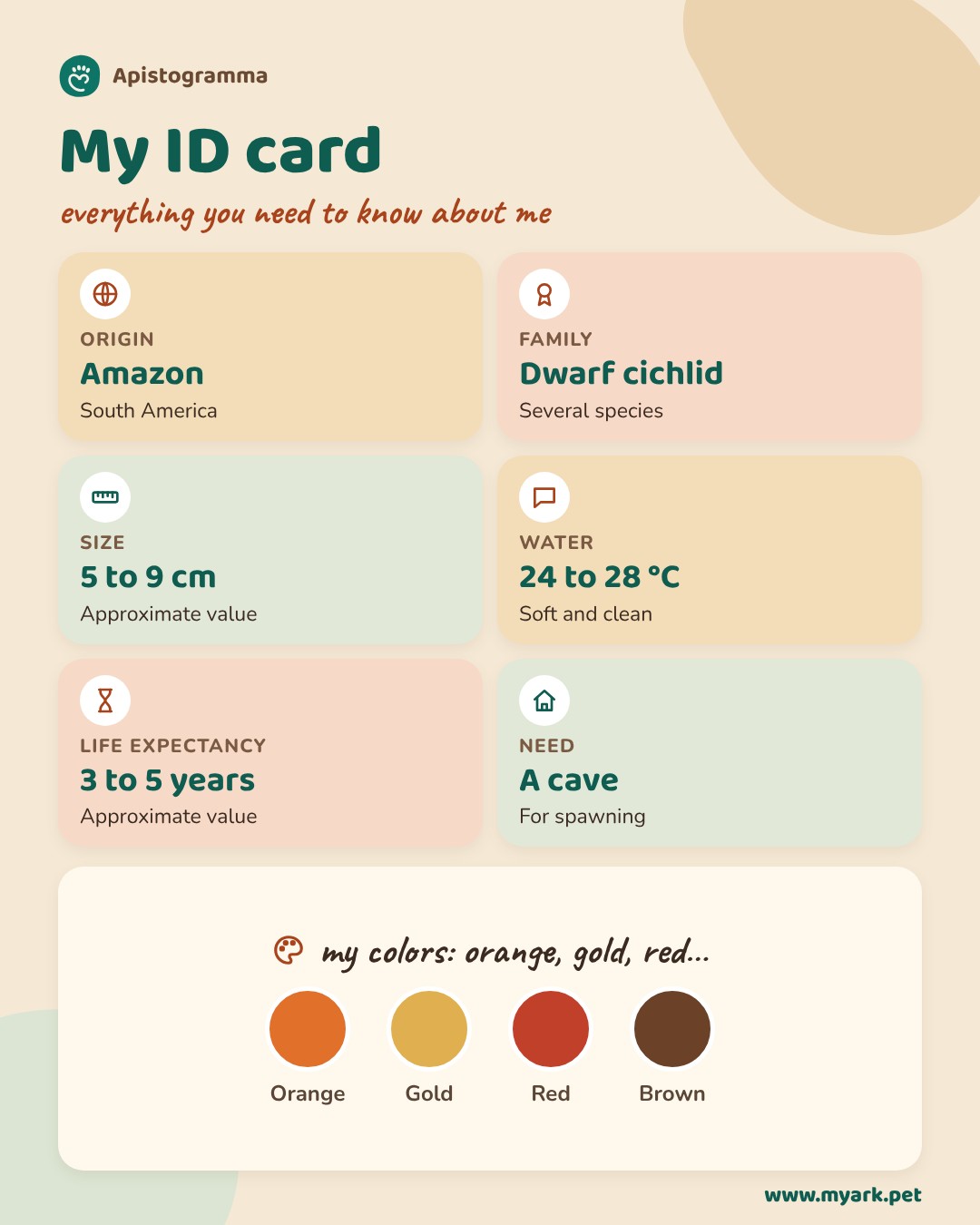
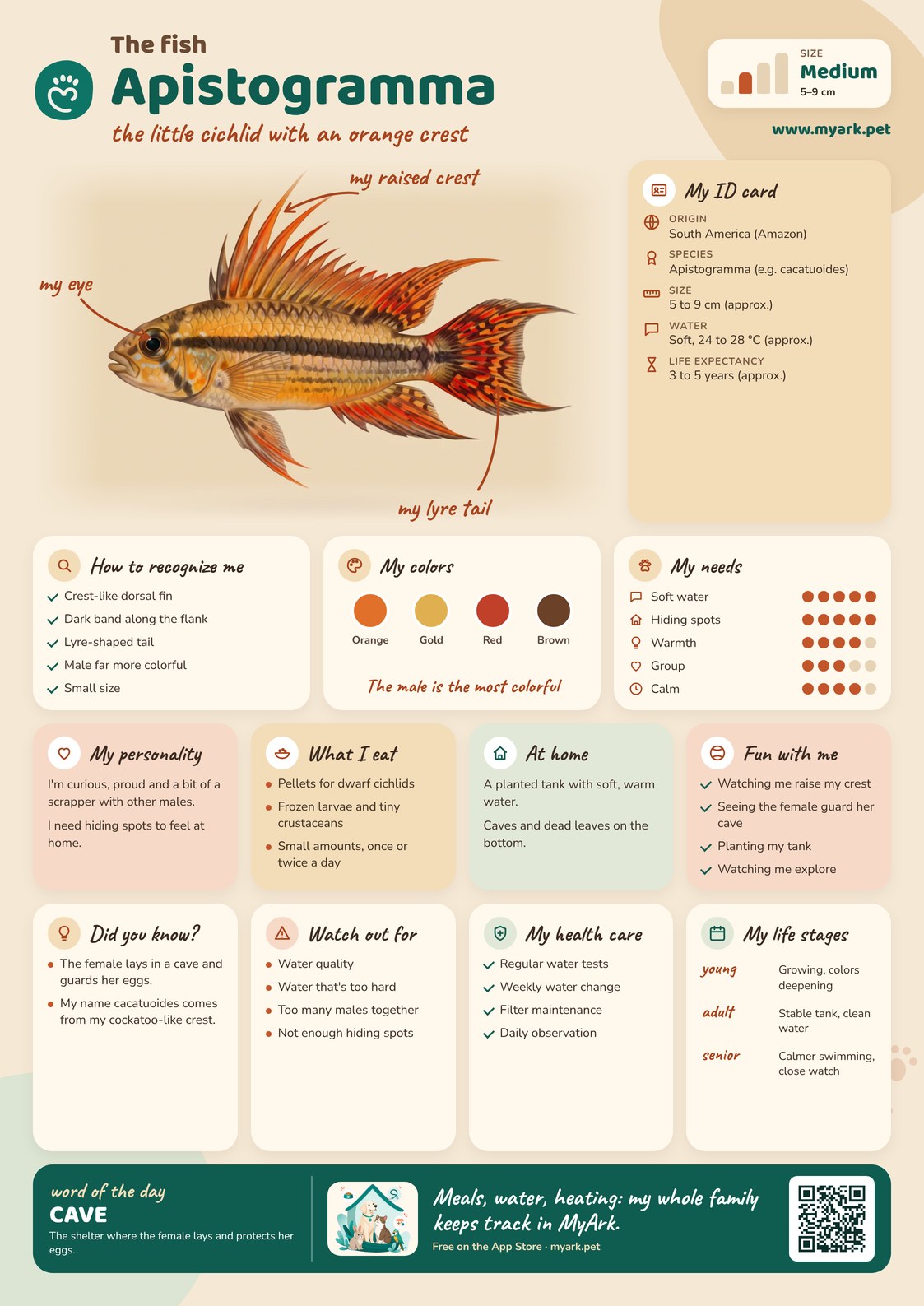
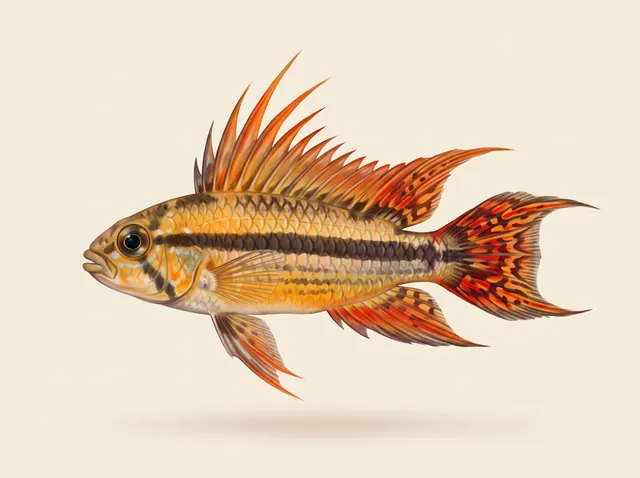
Apistogrammas are dwarf cichlids from the Amazon basin; the cockatoo cichlid owes its name, cacatuoides, to its crest.
The female lays in a cave and guards her eggs.
How to recognise me
- crest-like dorsal fin
- dark band along the side
- lyre-shaped tail
- male far more colourful
- small size
My colours
- Orange
- Golden
- Red
- Brown
What a Apistogramma needs day to day
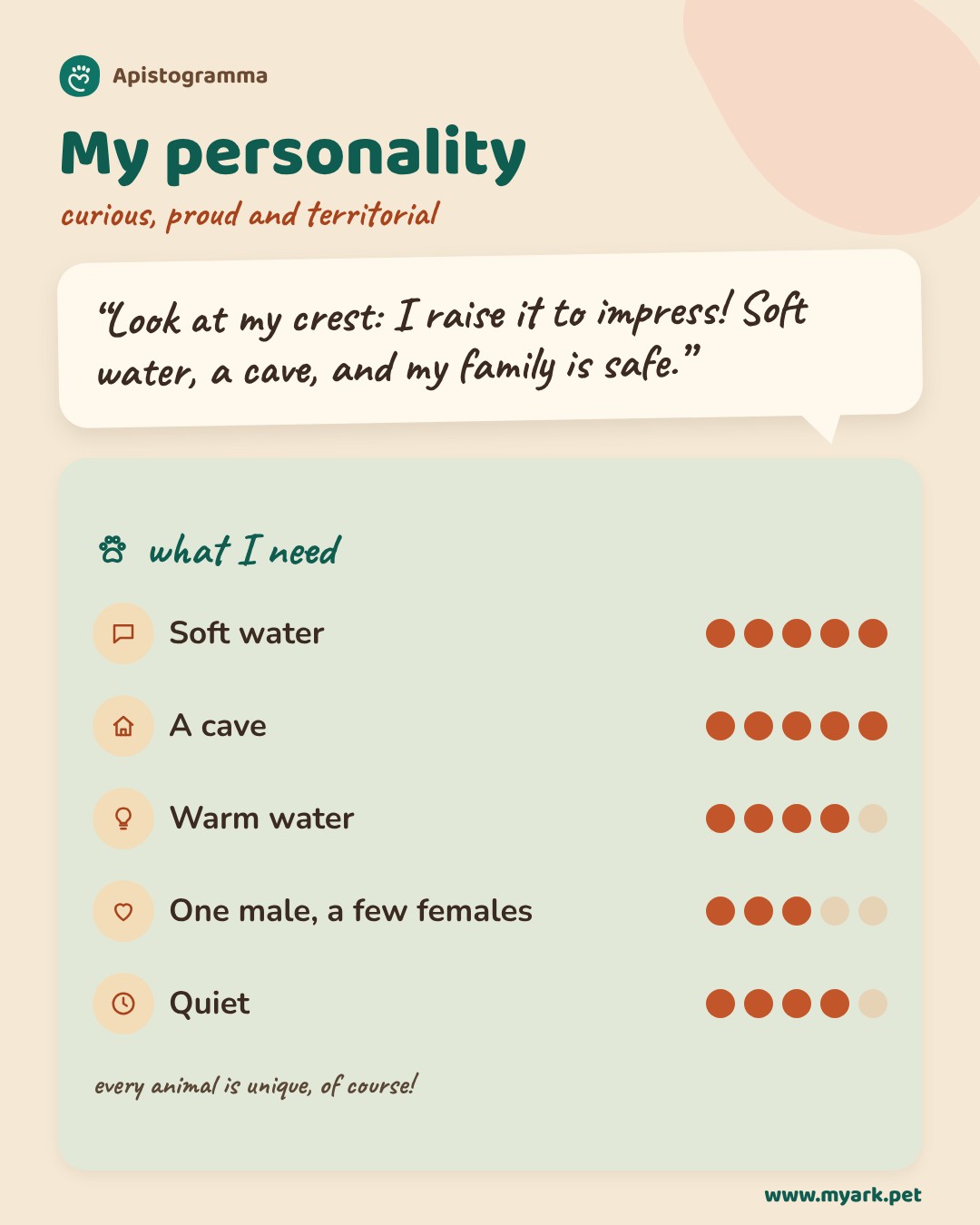
“Look at my crest: I raise it to impress! Soft water, a cave, and my family is safe.”
It needs soft, warm water, caves and dead leaves, calm and one male per group of females.
At a glance
- Soft water
- 5 out of 5
- A cave
- 5 out of 5
- Warm water
- 4 out of 5
- One male, several females
- 3 out of 5
- Calm
- 4 out of 5
every fish is unique, of course!
With me, we can go…
- watching the male display
- spotting the female at her cave
- small meals
- the calm of the tank
Living with a Apistogramma: who does what
An aquarium takes little time each day but needs unfailing regularity — feeding, a look at every fish, water changes and tests: it is the upkeep, not the set-up, that makes it work. Here is the Apistogramma’s routine at a glance, and how a household can split it without a single “did anyone…?” message.
The routine at a glance
- every day
- one or two small meals, eaten within a couple of minutes; a look at every fish: swimming, fins, breathing; a check that the filter runs and the temperature is right.
- every week
- a partial water change with dechlorinated water; a water test (nitrite, nitrate, pH); uneaten food removed and the glass cleaned.
- every month
- filter media rinsed in old tank water, never under the tap; plants trimmed and decor checked; food and test kits restocked.
- every year
- heater and lights checked or replaced; a review of the stocking: has everyone grown?.
Sharing it out
- Feeding goes on one person a day, with a measured amount.
- The weekly water change goes on a name.
- Test results are noted where everyone can see them.
Before it arrives, agree on…
- who feeds, and how much
- who does the weekly water change
- who tests the water and notes the results
- how children help — feeding with an adult, never alone
- who looks after the tank during holidays, with measured portions
How MyArk helps the household keep track
Pet feeding tracker
Log each meal so no one feeds twice: overfeeding is the most common mistake.
See the featureFamily pet chores
Feeding, the water change and tests on named people.
See the featureShared pet care log
Note each water test and change, so everyone sees the last one.
See the featurePet sitter instructions
Clear, measured feeding instructions for whoever looks after the tank on holiday.
See the featureFeeding, water and health routine
The tank needs regular upkeep: weekly partial water changes, filter care and water tests.
What I eat
- dwarf cichlid pellets
- frozen larvae and small crustaceans
- small amounts, once or twice a day
My health routine
- a water test kit (ammonia, nitrite, nitrate, pH), used regularly
- partial water changes with dechlorinated water at the same temperature
- quarantine for any new fish before it joins the tank
- a vet who treats fish, found before there is a problem
The stages of my life
- young
- Small, frequent meals and very stable water.
- adult
- Stable water, a varied diet and the right group.
- older
- Slower moving: watch its appetite and keep the water impeccable.
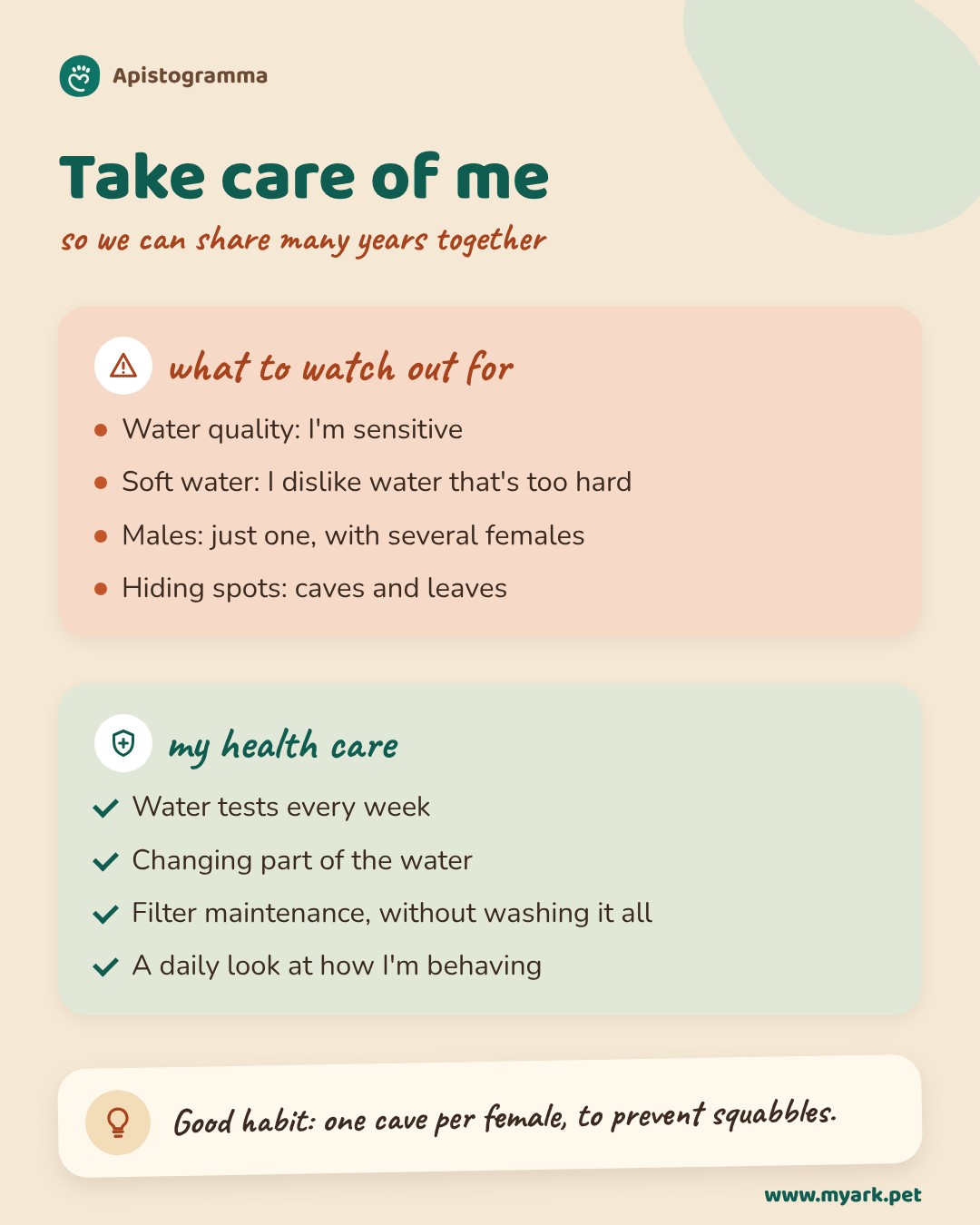
What to keep an eye on
MyArk describes the points to watch through water quality, behaviour and simple checks rather than a list of diseases: it is what you can verify every day, and act on before you buy.
Water quality
It is sensitive.
Soft water
It dislikes very hard water.
Males
One male, with several females.
Hiding places
Caves and leaves.
And, as for every aquarium:
- a nitrogen cycle completed before any fish arrives
- a tank volume and number of fish that suit the species, not just the tank
- regular partial water changes and water tests
- decor with places to hide
Is it the right fish for your household?
A fish depends entirely on its water: the tank, the filtration and steady upkeep matter more than the species itself. Check the adult size and the right group before buying — and never release a fish into ponds or rivers.
- Tank
- A mature, soft-water tank with caves and leaves.
- Children
- Calm to watch; care is for adults.
- Tank-mates
- Small, calm fish.
- First fish
- Better with some experience.
- Time
- A few minutes a day, and a regular weekly water change.
Apistogramma: straight answers
How many males can I keep?
One, with several females.
Does an Apistogramma need a cave?
Yes: the female lays and guards her eggs in it.
Does it need soft water?
Yes: it dislikes very hard water.
What colours does the Apistogramma come in?
The usual colours are orange, golden, red and brown.