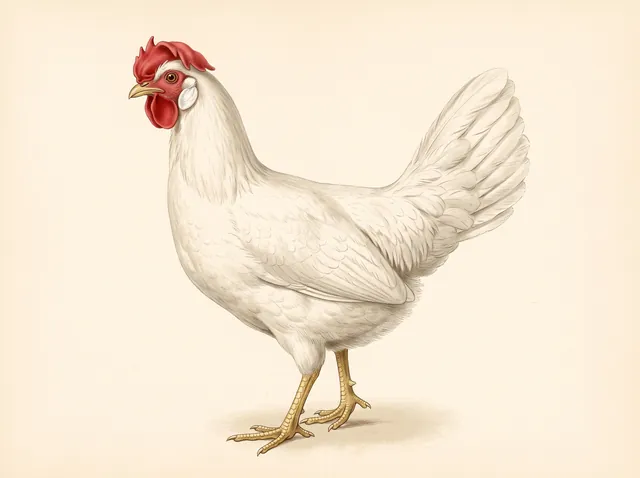
Where the Leghorn comes from
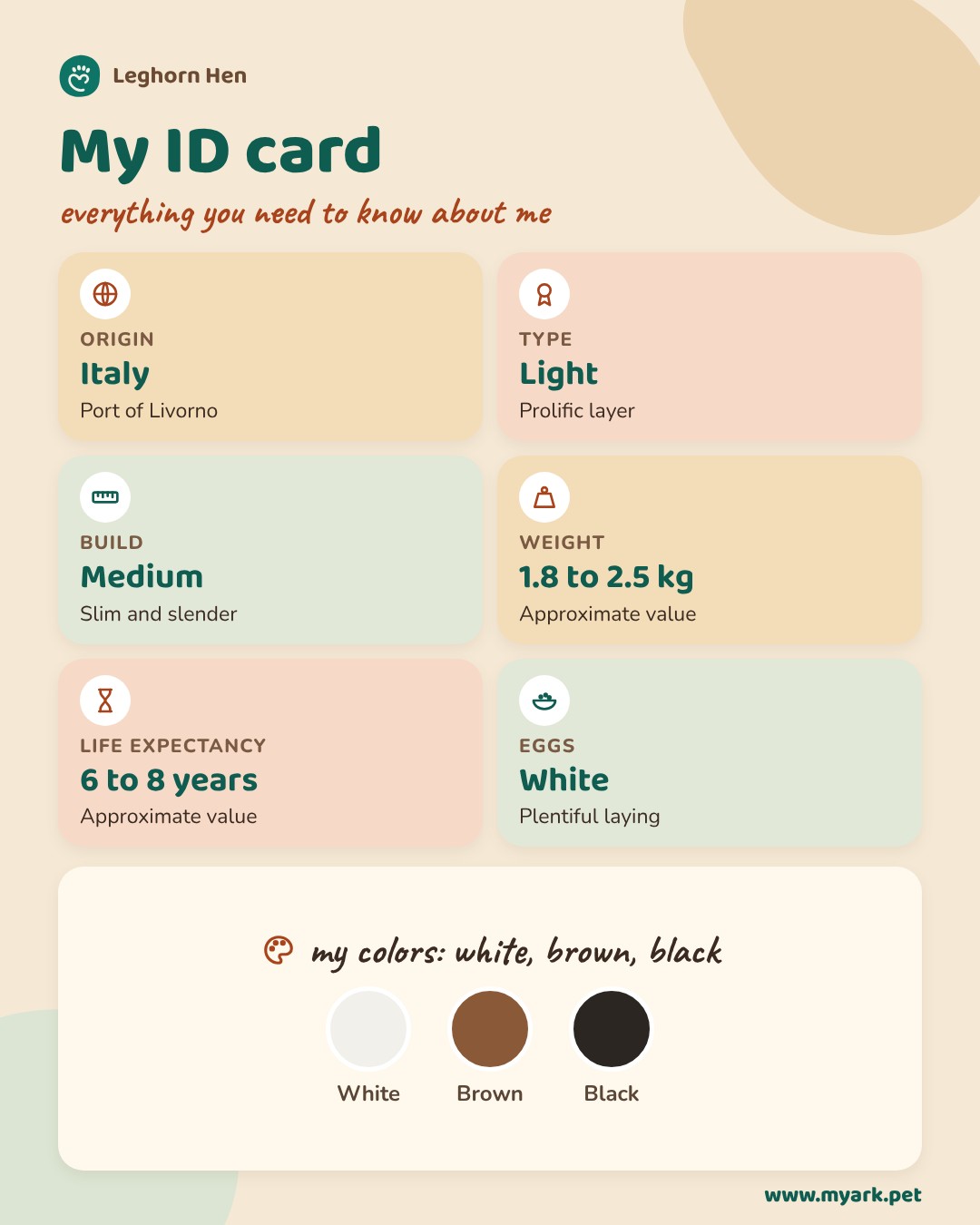
The Leghorn comes from the light country hens of Tuscany; her English name is that of the port of Livorno, from which the first birds left for North America in the 19th century.
The white Leghorn is the basis of many commercial laying strains.
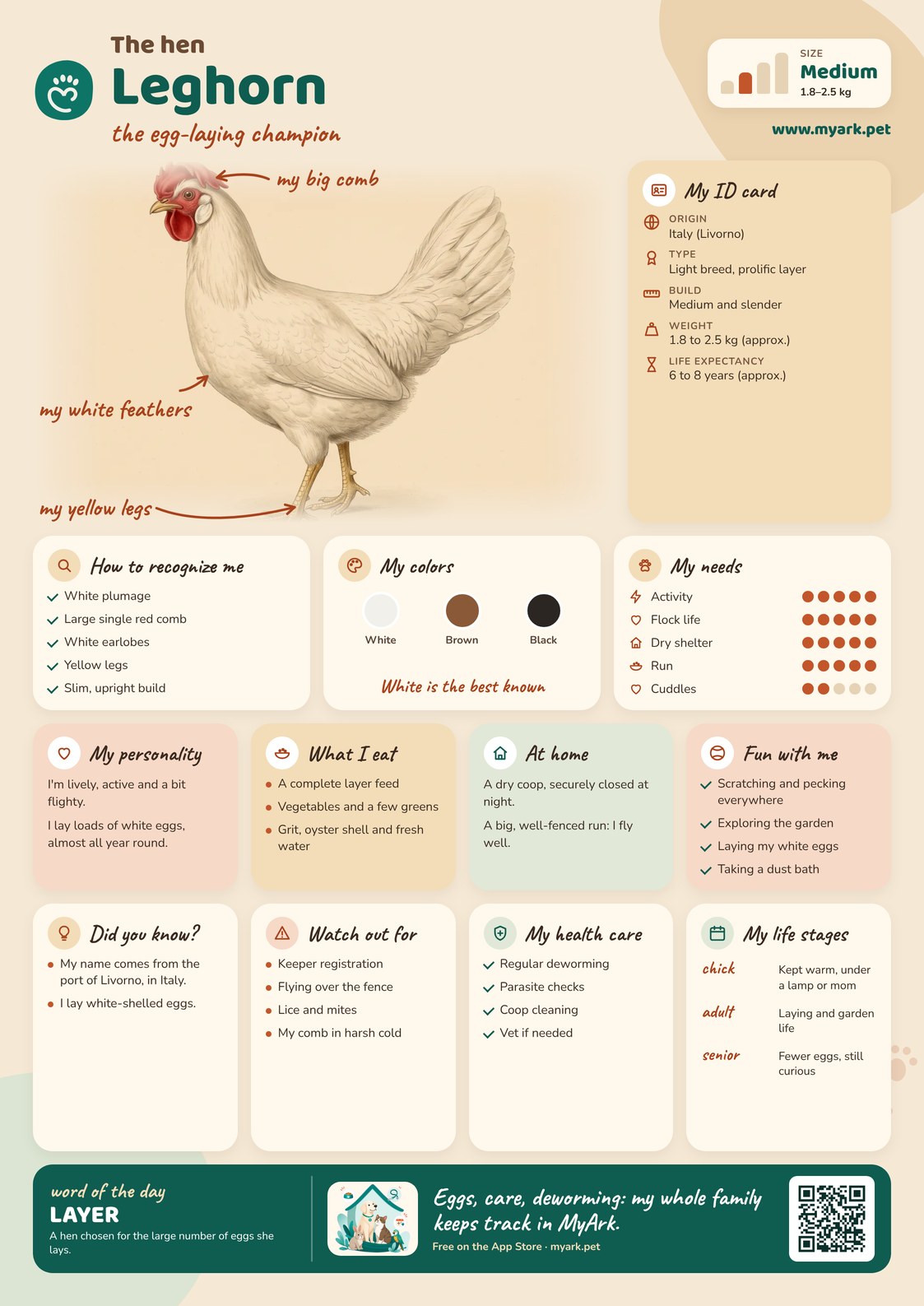
How to recognise me
- white plumage
- large single red comb
- white earlobes
- yellow legs
- slim, upright silhouette
My colours
- White
- Brown
- Black
What a Leghorn needs day to day
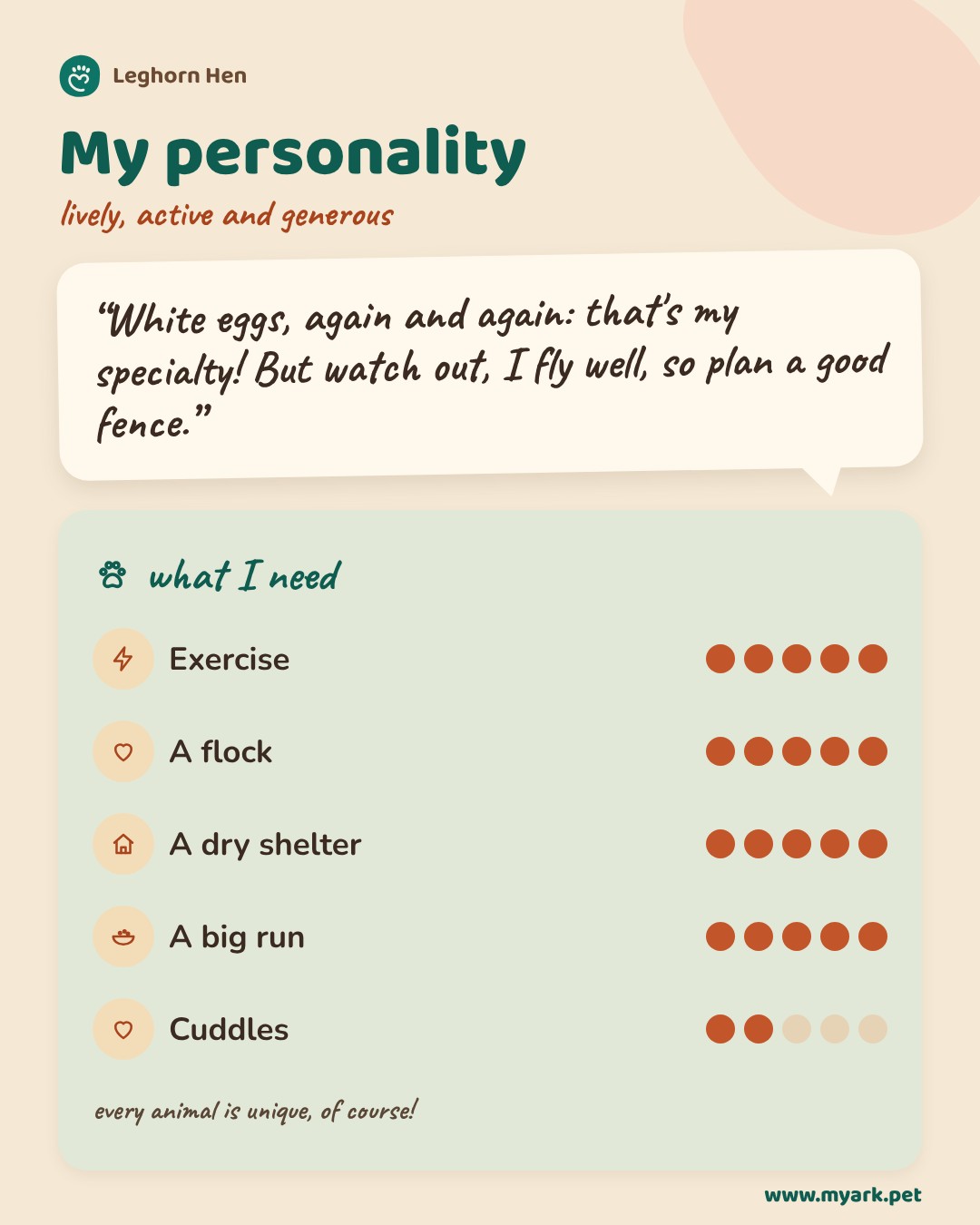
“White eggs, again and again: that’s my speciality! But careful, I fly well, so plan a good fence.”
Her exercise needs are high: a big run, a high fence and her flock.
At a glance
- Exercise
- 5 out of 5
- Living in a flock
- 5 out of 5
- A dry shelter
- 5 out of 5
- A big run
- 5 out of 5
- Cuddles
- 2 out of 5
every hen is unique, of course!
With me, we can go…
- foraging all day
- flying up to perches
- a dust bath
- exploring the garden
Living with a Leghorn: who does what
Hens are easy to keep but never take a day off: the coop opens every morning and shuts every evening, and the food, water and eggs don’t wait. Here is the Leghorn’s routine at a glance, and how a household can split it without a single “did anyone…?” message.
The routine at a glance
- every day
- open the coop in the morning and shut it at dusk; fresh water and complete feed; collect the eggs; a look at every hen: eating, moving, droppings.
- every week
- a coop clean and fresh bedding; a red mite check along the perches; the dust bath topped up.
- every month
- a hands-on check of each hen’s weight and feathers; feeders and drinkers deep-cleaned; fences and latches checked.
- every year
- worming as agreed with your vet; a full coop clean-out and repairs.
Sharing it out
- Morning and evening coop duty on a rota.
- Egg collection goes to the children, with an adult.
- The weekly clean on a name.
Before it arrives, agree on…
- who opens and shuts the coop, every day
- who collects the eggs
- who cleans the coop each week
- how children handle the hens — calmly, with an adult
- who takes over during holidays
How MyArk helps the household keep track
Family pet chores
Opening, shutting and egg collection on named people.
See the featurePet feeding tracker
Feed and water topped up — and how many eggs today.
See the featureRecurring pet care reminders
Never forget the mite checks and the worming.
See the featurePet sitter instructions
Holiday instructions: the evening shut-in can’t be missed.
See the featureFeeding, feathers and health routine
Feather care is simple — a dust bath does most of it — but check regularly under the feathers for mites and lice.
What I eat
- a complete feed for hens
- vegetables and some greens
- grit, oyster shell and fresh water
My health routine
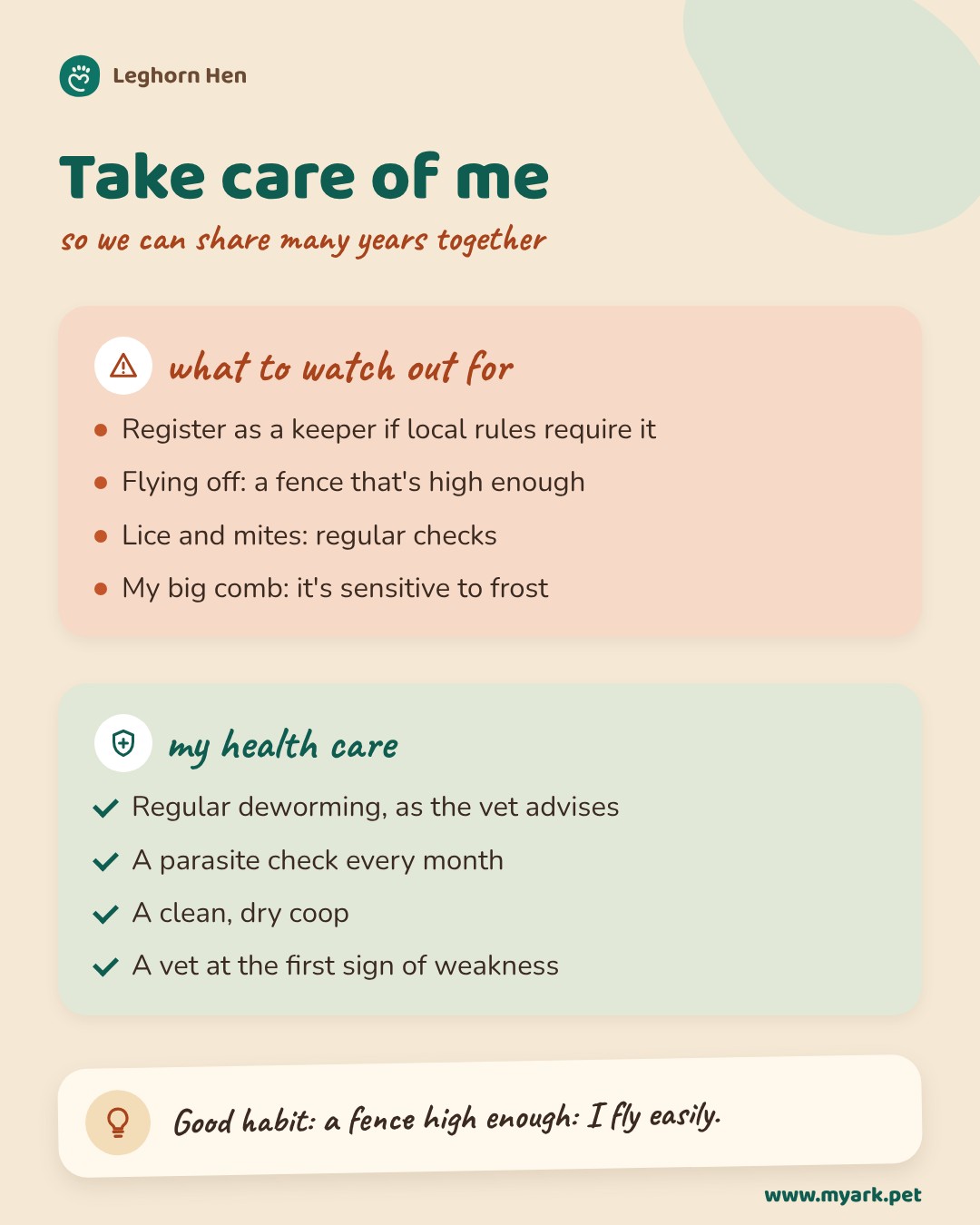
- a weekly check for red mites in the coop, especially in the warm months
- a regular look under the feathers for lice
- worming as agreed with your vet
- a vet who treats poultry, found before there is a problem
The stages of my life
- chick
- A heated brooder and chick crumbs.
- laying hen
- Layers’ feed, extra calcium and a quiet nest box.
- retired hen
- She stops laying but lives on for years: the same care, fewer eggs.
What to keep an eye on
MyArk describes predispositions through visible body shape and simple checks rather than a list of diseases: it is what you can verify from the outside, and act on when choosing a breeder.
Local rules
Check whether poultry must be registered where you live, and follow bird-flu housing orders.
Flying
A fence high enough.
Mites and lice
Check the perches and under the feathers regularly.
Large comb
It can be damaged by frost.
And, as for every hen:
- a coop shut every night against predators, and a run by day
- a flock: never a hen on her own
- a dust bath, essential for feather care
- a complete feed suited to her age, plus calcium for layers
Is it the right chicken for your household?
Hens need a flock of at least three, a secure coop, a run and someone to shut them in every single evening — and they live for years after they stop laying. Check local rules (poultry registration, bird-flu housing orders), and consider rehoming ex-commercial hens.
- Garden
- A big run with a high fence.
- Children
- Lively; less keen on being handled.
- Other animals
- Keep dogs and cats away until they are calm around the flock; foxes are the main threat.
- First hens
- A good first hen for a household that wants eggs.
- Time
- A few minutes morning and evening, every day, and a weekly clean.
Leghorn: straight answers
Are Leghorns good layers?
Excellent layers of white eggs.
Can Leghorns fly?
Yes, well: plan a high fence.
Do Leghorns like being handled?
Usually less than calmer breeds.
What colours does the Leghorn come in?
The usual colours are white, brown and black.