Where the Coucou de Rennes comes from
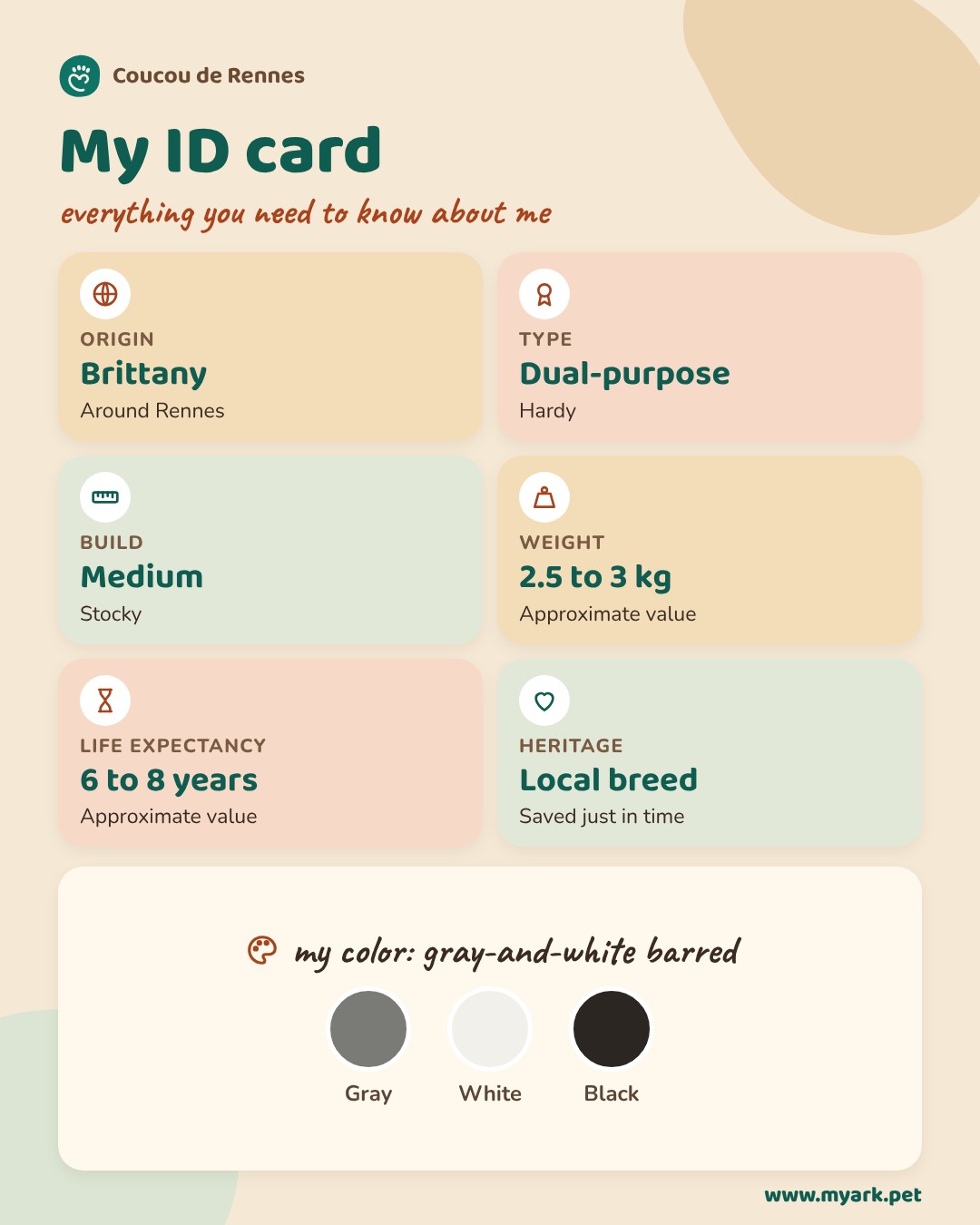
The Coucou de Rennes is a historic Breton breed that almost disappeared in the late 20th century.
Her revival began in 1988, when the Écomusée de la Bintinais in Rennes launched a programme to rebuild it.
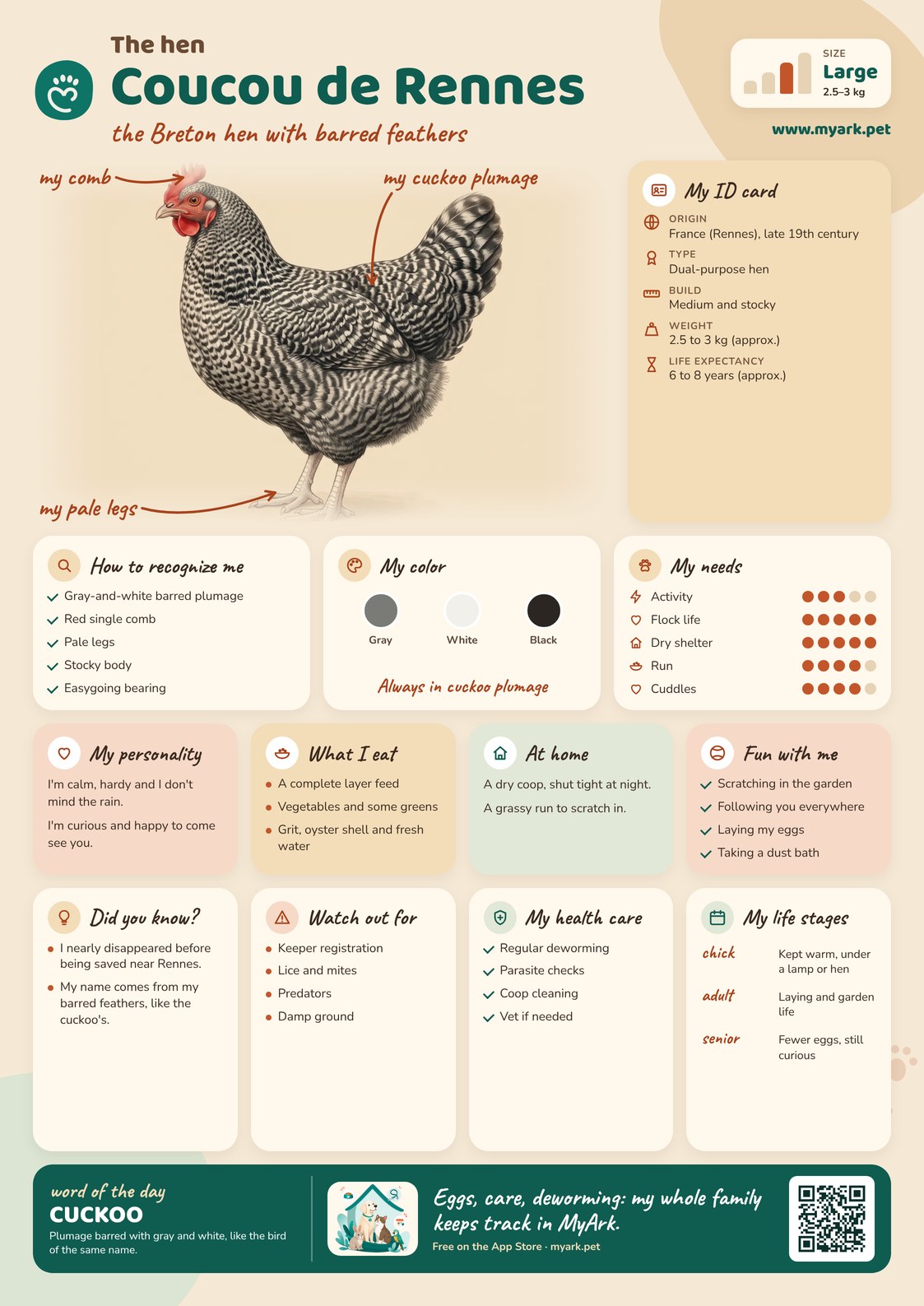
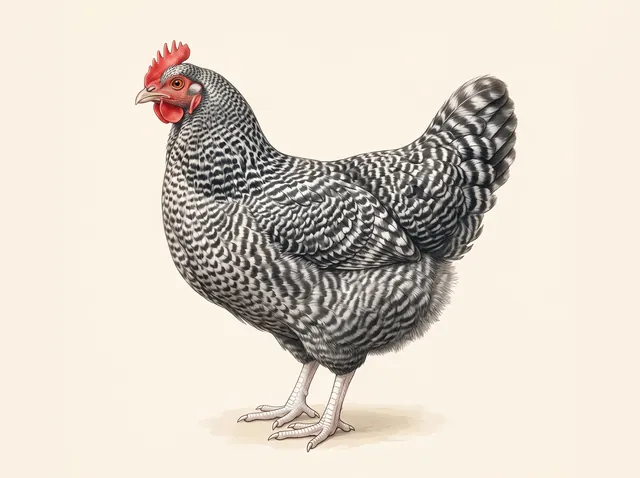
How to recognise me
- grey and white barred plumage
- single red comb
- pale legs
- stocky body
- calm bearing
My colours
- Grey
- White
- Black
What a Coucou de Rennes needs day to day
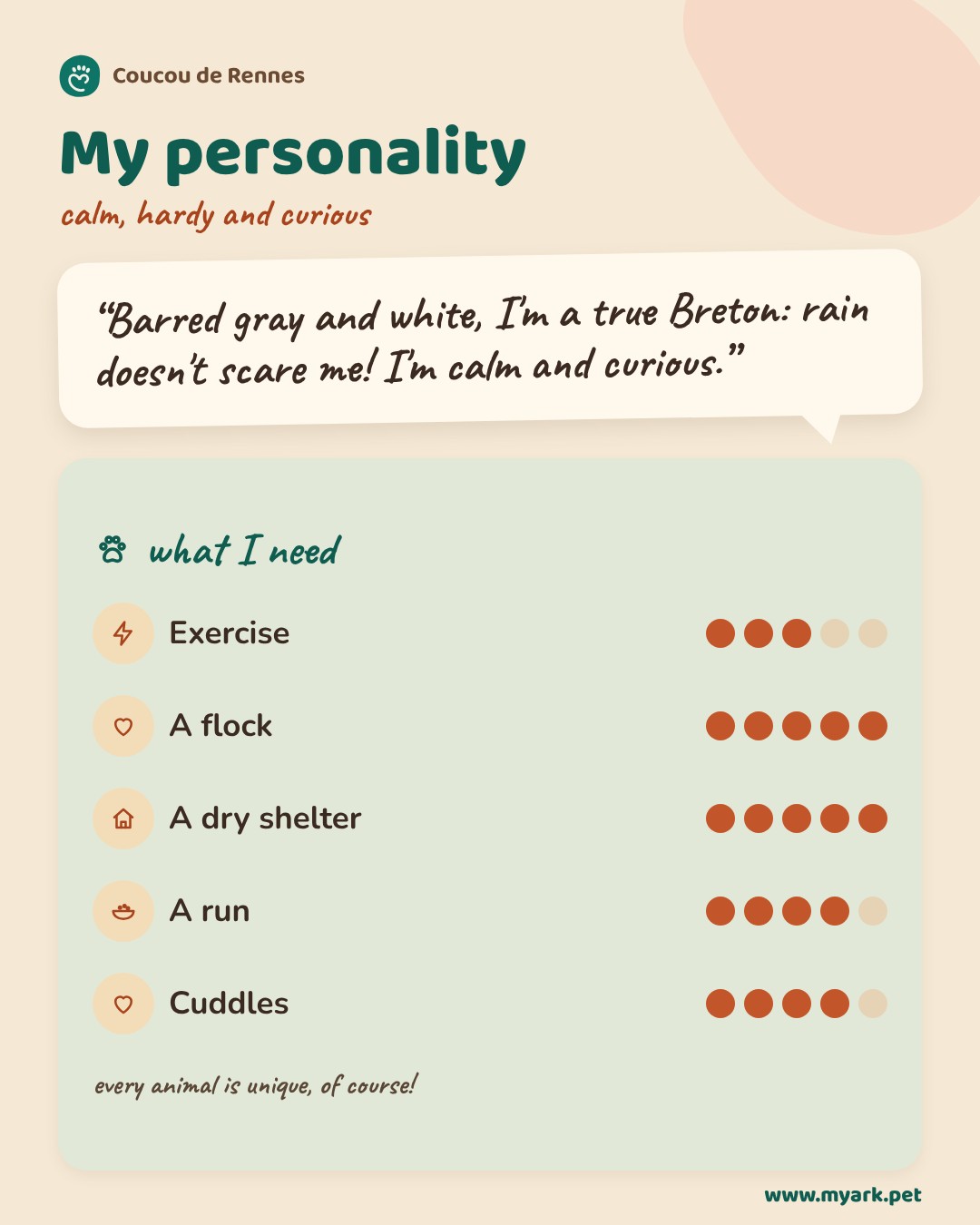
“Striped grey and white, I’m a true Breton: rain doesn’t scare me! I’m calm and curious.”
Her exercise needs are moderate: a run, a dry shelter and her flock.
At a glance
- Exercise
- 3 out of 5
- Living in a flock
- 5 out of 5
- A dry shelter
- 5 out of 5
- A run
- 4 out of 5
- Cuddles
- 4 out of 5
every hen is unique, of course!
With me, we can go…
- scratching and foraging in the run
- a dust bath in the sun
- treats from the hand
- perching together at dusk
Living with a Coucou de Rennes: who does what
Hens are easy to keep but never take a day off: the coop opens every morning and shuts every evening, and the food, water and eggs don’t wait. Here is the Coucou de Rennes’s routine at a glance, and how a household can split it without a single “did anyone…?” message.
The routine at a glance
- every day
- open the coop in the morning and shut it at dusk; fresh water and complete feed; collect the eggs; a look at every hen: eating, moving, droppings.
- every week
- a coop clean and fresh bedding; a red mite check along the perches; the dust bath topped up.
- every month
- a hands-on check of each hen’s weight and feathers; feeders and drinkers deep-cleaned; fences and latches checked.
- every year
- worming as agreed with your vet; a full coop clean-out and repairs.
Sharing it out
- Morning and evening coop duty on a rota.
- Egg collection goes to the children, with an adult.
- The weekly clean on a name.
Before it arrives, agree on…
- who opens and shuts the coop, every day
- who collects the eggs
- who cleans the coop each week
- how children handle the hens — calmly, with an adult
- who takes over during holidays
How MyArk helps the household keep track
Family pet chores
Opening, shutting and egg collection on named people.
See the featurePet feeding tracker
Feed and water topped up — and how many eggs today.
See the featureRecurring pet care reminders
Never forget the mite checks and the worming.
See the featurePet sitter instructions
Holiday instructions: the evening shut-in can’t be missed.
See the featureFeeding, feathers and health routine
Feather care is simple — a dust bath does most of it — but check regularly under the feathers for mites and lice.
What I eat
- a complete feed for hens
- vegetables and some greens
- grit, oyster shell and fresh water
My health routine
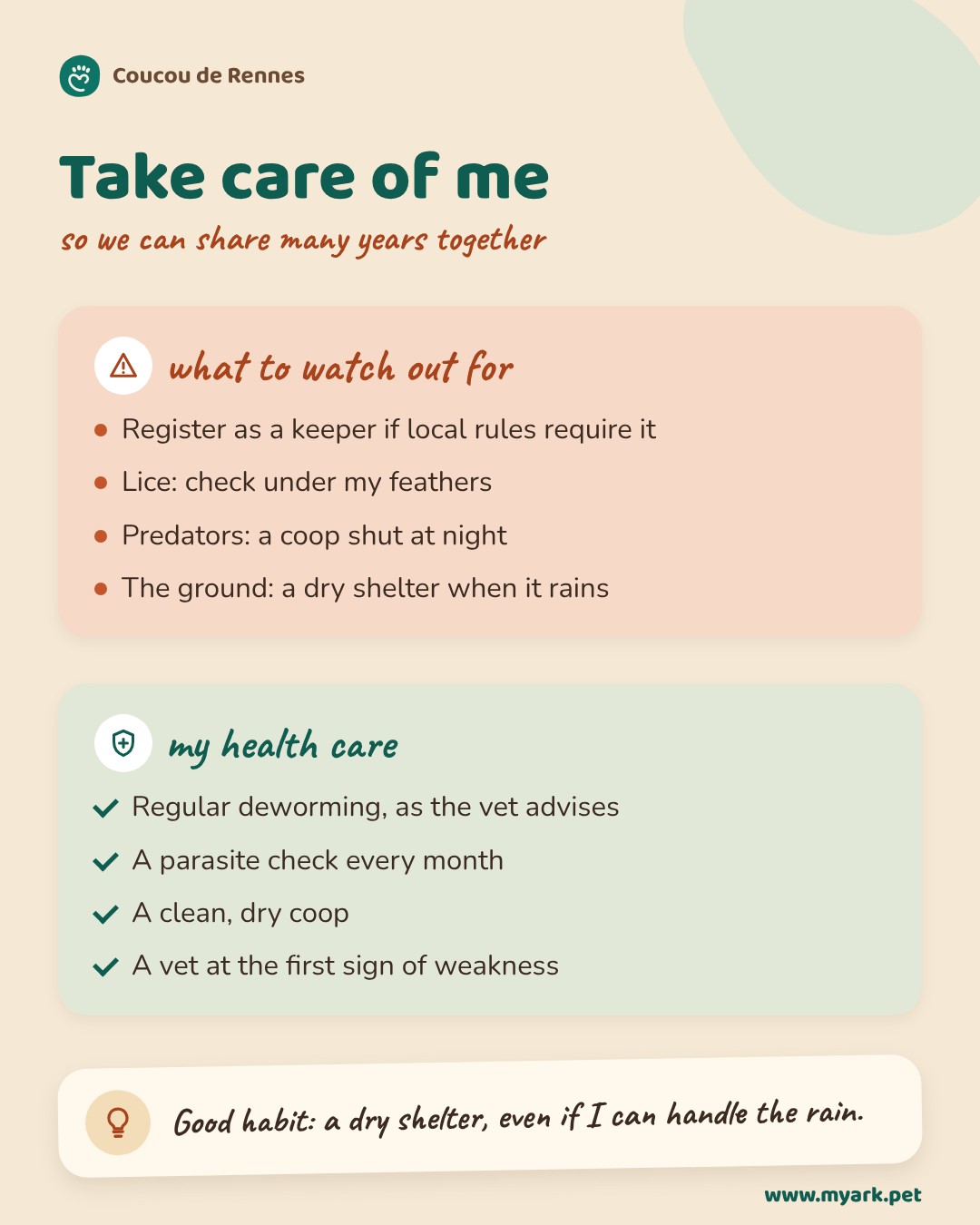
- a weekly check for red mites in the coop, especially in the warm months
- a regular look under the feathers for lice
- worming as agreed with your vet
- a vet who treats poultry, found before there is a problem
The stages of my life
- chick
- A heated brooder and chick crumbs.
- laying hen
- Layers’ feed, extra calcium and a quiet nest box.
- retired hen
- She stops laying but lives on for years: the same care, fewer eggs.
What to keep an eye on
MyArk describes predispositions through visible body shape and simple checks rather than a list of diseases: it is what you can verify from the outside, and act on when choosing a breeder.
Local rules
Check whether poultry must be registered where you live, and follow bird-flu housing orders.
Lice
Look under my feathers.
Predators
A coop securely shut every night.
Ground
A dry shelter when it rains.
And, as for every hen:
- a coop shut every night against predators, and a run by day
- a flock: never a hen on her own
- a dust bath, essential for feather care
- a complete feed suited to her age, plus calcium for layers
Is it the right chicken for your household?
Hens need a flock of at least three, a secure coop, a run and someone to shut them in every single evening — and they live for years after they stop laying. Check local rules (poultry registration, bird-flu housing orders), and consider rehoming ex-commercial hens.
- Garden
- A garden with a run and a dry coop.
- Children
- Calm and curious with children.
- Other animals
- Keep dogs and cats away until they are calm around the flock; foxes are the main threat.
- First hens
- An excellent first hen.
- Time
- A few minutes morning and evening, every day, and a weekly clean.
Coucou de Rennes: straight answers
Where does the Coucou de Rennes come from?
From the Rennes area, in Brittany.
Is she hardy?
Very: she copes well with the Breton climate.
Do Coucou de Rennes hens need company?
Yes: hens live in a flock, never alone — at least three.
What colours does the Coucou de Rennes come in?
The usual colours are grey, white and black.