
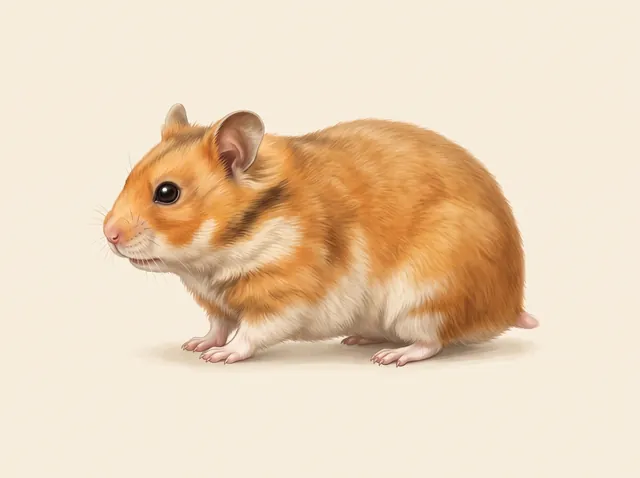
An omnivore, not a seed eater
In the wild, hamsters eat greenery, seeds, fruit and a little animal food such as insects. According to the MSD Veterinary Manual, a pelleted food containing 15 to 20% protein meets their needs, and extra vitamins are usually unnecessary.
The PDSA and the MSD Manual advise against muesli-style mixes: the hamster picks out its favourite pieces, often the sugariest, and leaves the rest. Its diet becomes unbalanced, which encourages weight gain and dental problems.
Building the daily diet
- Hamster pellets
- The everyday staple. Scatter them on the cage floor or put them in a heavy, shallow bowl: according to the MSD Manual, a hamster’s broad muzzle often stops it eating from a hopper-style feeder.
- Hay
- The PDSA recommends offering it: high in fibre, it keeps the hamster busy and gives it something to chew.
- Vegetables and herbs
- A little every day, well washed: carrot, broccoli, cabbage, cauliflower, chicory, pepper, cucumber, watercress, courgette, parsley, basil or coriander, according to the PDSA. Introduce each new vegetable gradually.
- Fruit
- In small amounts only: apple, pear, peach, melon.
- Protein
- Now and then: a piece of hard-boiled egg or a few mealworms. According to the MSD Manual, a lack of protein can make a hamster lose its fur.
According to the MSD Manual, treats should make up no more than 10% of the diet. Avoid sudden changes of diet: they upset the digestion, the RSPCA reminds owners.
Foods to avoid
- Grapes and rhubarb: the RSPCA lists them as poisonous to rodents.
- Citrus fruit (orange, lemon, grapefruit): the PDSA advises against it.
- Sugary mixes and treats: they encourage obesity and overgrown teeth.
- Wet or mushy food, unless your vet recommends it, for example for a dental problem: it goes mouldy quickly. If it is prescribed, remove leftovers at least twice a day.
Hoarding in the cheek pouches
Hamsters carry food in their cheek pouches, large pockets that reach back behind the shoulders, then hide it in their nest. According to the MSD Manual, full pouches can double the width of the head: don’t mistake them for a lump. Hamsters also eat some of their own droppings, which is normal.
- Check the hoard when you clean the cage: remove vegetables, fruit and fresh food that are going off.
- Scattering or hiding some of the pellets around the cage keeps your hamster busy and lets it forage, according to the RSPCA.
Dwarf hamsters: go easy on sugar
You often read that dwarf hamsters are particularly prone to diabetes. The veterinary manuals we consulted do not say so; the Dutch pet information centre LICG simply notes that diabetes occurs in hamsters. One thing is certain: sugar already encourages obesity and dental problems.
For a dwarf hamster as for a Syrian, keep fruit and sugary treats to very small portions, and rely mainly on pellets and vegetables.
Water, always available
Fresh, clean water must be available at all times, ideally from a bottle with a metal spout. The RSPCA advises checking every day that the bottle isn’t leaking or blocked: hamsters can’t suck hard, especially when young, old or ill.
When to ask for advice
Know who gave what
When the whole family looks after the hamster, treats soon add up. In MyArk, everyone in the household logs meals and extras in a shared care log: you can all see what has already been given, and a hamster that is eating less is spotted sooner.
- Meals, vegetables and treats logged by everyone in the household
- A shared reminder to change the water and check the bottle
- Weigh-ins on a chart in the weight tracker
- Feeding instructions on the pet sitter sheet
Common questions
What does a hamster eat every day?
A complete pelleted hamster food, a few fresh washed vegetables, some hay and fresh water at all times. Now and then, a small source of protein such as a piece of hard-boiled egg.
Is a seed mix good for a hamster?
Vets advise against it as the main food: the hamster picks out its favourite pieces, often the sugariest, and its diet becomes unbalanced. Pellets prevent this selective feeding.
Which fruit and vegetables can hamsters eat?
The PDSA lists carrot, broccoli, cauliflower, cucumber, courgette and pepper among others, and in small amounts apple, pear, peach and melon. Introduce each new food gradually.
Which foods are dangerous for hamsters?
Grapes and rhubarb, listed as poisonous by the RSPCA, and citrus fruit, which the PDSA advises against. Avoid sugary treats too.
Why does my hamster hide its food?
It is natural behaviour: it fills its cheek pouches and builds a store in its nest. Simply remove fresh food from the hoard before it goes off.
Can dwarf hamsters eat fruit?
Yes, but only in very small amounts: sugar encourages obesity and dental problems. If your hamster starts drinking much more than usual, see your vet.
Sources
Benchmarks checked on 25 October 2026 in the documents below, then rewritten in plain English. They do not replace an examination and advice from your vet, who adapts care to your pet and to where you live.
- MSD Veterinary Manual, Providing a Home for a Hamster (2026)
- MSD Veterinary Manual, veterinary edition, Hamsters (2026)
- MSD Veterinary Manual, Description and Physical Characteristics of Hamsters (2026)
- RSPCA, What to feed hamsters
- PDSA, The ideal diet for your hamster
- PDSA, Hamster health
- LICG (Dutch national pet information centre), Huisdierenbijsluiter hamster, summary (2024, in Dutch)