
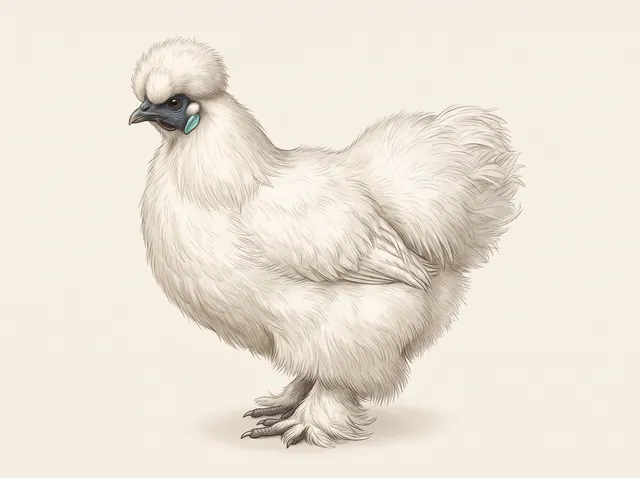
Registering your birds
Until 2024, only keepers of 50 or more birds had to register. Since then, according to Defra, all bird keepers in Great Britain must register, regardless of flock size: the legal deadline was 1 October 2024 in England and Wales, and Scotland has its own Scottish Kept Bird Register. In England and Wales, you must register within one month of keeping poultry at any premises, and this includes birds kept as pets.
- Without a County Parish Holding (CPH) number, you register online with the APHA poultry registration service.
- You give your contact details, the owner’s details, where the birds are kept, and their species, number and purpose.
- You confirm your details every 12 months, and tell APHA within 30 days of a change, for example if you stop keeping birds or reach 50 birds.
- Below 50 birds, you do not need to update your record each time your numbers change.
Why it matters
According to GOV.UK, APHA will contact you with updates and guidance if there is a disease outbreak, such as bird flu, in your area. Registered poultry keepers receive these alerts without signing up separately. Registration helps stop disease spreading and protects all kept birds, including backyard flocks.
Bird flu zones and housing measures
Bird flu rules change through the year. When the risk rises, the government can declare an Avian Influenza Prevention Zone (AIPZ), with strict biosecurity rules by law, and sometimes housing measures. Around an infected premises, disease control zones are declared, such as a 3 km protection zone and a 10 km surveillance zone. For example, the AIPZ in England was lifted in June 2026, then new cases were confirmed in October 2026 in Scotland and Northumberland. Check the “Bird flu (avian influenza): latest situation in England” page and the disease zone map before relying on any rule.
- In an AIPZ
- You must follow strict biosecurity rules, including keeping ducks and geese apart from other birds, preventing contact with wild birds and rodents, and cleaning housing, equipment and footwear.
- When housing measures apply
- You must keep your birds housed, or in fully netted areas where the rules allow it, so they have no contact with wild birds. GOV.UK advises netting with a mesh of 25 mm at most.
- In a protection zone
- Birds must be housed, and you must not move birds on or off your premises without a licence (there are exceptions for pets), nor spread poultry litter or manure.
In every disease control zone, bird gatherings such as shows, fairs and sales are not allowed.
Biosecurity all year round
GOV.UK asks every keeper, including backyard flocks, to take these basic precautions:
- Keep feed, water and bedding covered, where wild birds and rodents cannot reach them.
- Make your birds’ area unattractive to wild birds: deterrents, repaired gaps, wild bird droppings removed.
- Fence off ponds and standing water, and net them if you can.
- Wear clean footwear and clothing when you go into the coop, or keep a pair of boots just for it.
- Keep the coop and equipment clean, and limit visitors to those who really need to come.
Kitchen scraps and eggs
- According to APHA, it is illegal to feed catering waste, kitchen scraps, meat or meat products to farmed animals, including poultry kept only as pets, and this includes scraps from vegetarian kitchens.
- According to the UK Health Security Agency, bird flu is mainly a disease of birds and the risk to the public is very low.
- The Food Standards Agency says bird flu poses a very low food safety risk: properly cooked poultry and eggs are safe to eat.
Sick or dead birds: what to do
Your flock’s paperwork in one place
Note in the MyArk health record the date you registered, the number of birds and your vet’s contact details: everyone in the household can find them, and coop chores are shared with recurring reminders.
- Your registration date, yearly confirmation and number of birds, noted in the health record
- Your vet’s contact details, for the whole family
- The daily check and the coop clean as shared chores
- The pet sitter sheet with your biosecurity routine, for when you are away
Common questions
Do I need to register three backyard hens?
Yes. Since 2024, all poultry keepers in Great Britain must register, whatever the size of the flock, within one month of getting their birds. Only certain pet birds kept entirely indoors, such as budgies or canaries, are exempt.
How do I register my chickens?
In England and Wales, online with the APHA poultry registration service, which takes about 10 minutes, or by email or phone to APHA. In Scotland, use the Scottish Kept Bird Register. You then confirm your details every 12 months.
Do I have to keep my chickens in because of bird flu?
Only when housing measures apply to where you live, for example in a protection zone. The rules change with the risk: check the bird flu disease zone map and the latest situation page on GOV.UK.
Is it safe to eat my hens’ eggs during a bird flu outbreak?
According to the Food Standards Agency, bird flu poses a very low food safety risk for UK consumers, and properly cooked poultry and eggs are safe to eat. Usual kitchen hygiene still applies.
What should I do if one of my chickens dies suddenly?
A single death is not always a cause for concern, but if several birds fall ill or die, or you see signs of bird flu, speak to your vet and report it to APHA immediately. Not reporting suspected bird flu is against the law.
Can I feed kitchen scraps to my chickens?
No. According to APHA, it is illegal to feed catering waste or kitchen scraps to farmed animals, including poultry kept as pets, even from a vegetarian kitchen.
Sources
Benchmarks checked on 25 October 2026 in the documents below, then rewritten in plain English. They do not replace an examination and advice from your vet, who adapts care to your pet and to where you live.
- GOV.UK (APHA and Defra), Register as a keeper of less than 50 poultry or other captive birds (updated 30 September 2026)
- GOV.UK (Defra), New measures to help protect poultry industry from bird flu (19 March 2024)
- GOV.UK, Bird flu (avian influenza): latest situation in England (updated 21 October 2026)
- GOV.UK, Bird flu: rules in disease control zones in England
- GOV.UK, Bird flu (avian influenza): housing your birds safely
- GOV.UK, Bird flu (avian influenza): how to prevent it and stop it spreading
- GOV.UK, Bird flu (avian influenza): how to spot and report it in poultry or other captive birds
- GOV.UK, Report dead wild birds
- GOV.UK (APHA), APHA warns not to feed kitchen scraps to farm animals because of disease risk (2017)
- DAERA (Northern Ireland), Identification, registration and movement of birds