
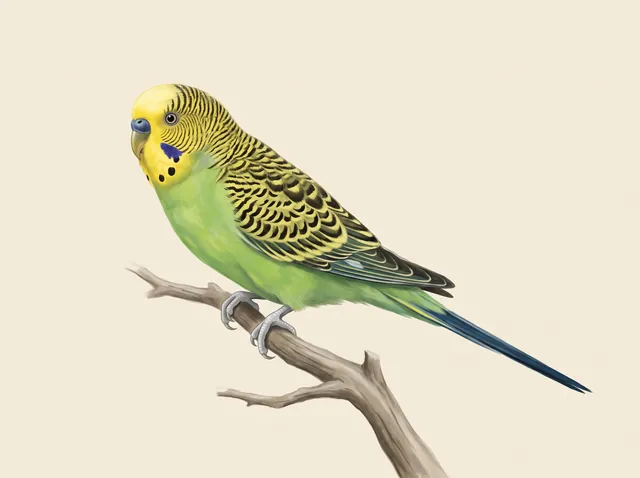
What the record should contain
- Identity: name, ring number, hatch or arrival date, sex, colour.
- Weights in grams, with the date.
- Usual diet and diet changes.
- Moults, and egg laying in females.
- Vet visits, treatments and test results.
- Your avian vet’s details.
The leg ring
Many bred budgies wear a closed ring fitted in the nest, with a number and the year of hatching. Note it down: it helps identify the bird. A ring that is too tight or damaged should be removed by a vet, never with pliers at home.
Weigh-ins
Kitchen scales that weigh in grams are enough. Weight loss is one of the first signs of illness in birds: a weight curve says more than an impression.
Useful observations
- Droppings, especially after a diet change.
- Fluffed-up feathers, sleeping in the day.
- An unusually long moult or bald patches.
- Changes in behaviour or chatter.
Registering birds in Great Britain
To help control bird flu, keepers of poultry and other captive birds in Great Britain must register their birds. GOV.UK explains that budgies and canaries are exempt when they are fully housed in a dwelling with no access to the open air; if you take them outdoors, for example to exercise them, you must register.
Your budgies’ records, in your pocket
Ring number, weights, visits, treatments: MyArk keeps each bird’s record, shared with the household and ready to show your vet.
- A record for each bird, with its ring number
- A weight curve in grams
- Visits and treatments kept in the record
- Shared with the household and the sitter
Common questions
What should I note in my budgie’s health record?
Its identity, weights, diet, moults, vet visits and treatments.
What is the leg ring for?
Its number and year of hatching help identify the bird.
My budgie’s ring is too tight: what should I do?
See a vet: do not cut it yourself.
How often should I weigh my budgie?
Ideally every week, in grams.
Do I need to register my budgies?
Not in Great Britain if they are fully housed indoors with no access to the open air; you must register if you take them outdoors.
Should I note droppings?
Yes, a lasting change in their appearance can signal illness.
Sources
Benchmarks checked on 12 November 2026 in the documents below, then rewritten in plain English. They do not replace an examination and advice from your vet, who adapts care to your pet and to where you live.
- GOV.UK, Register as a keeper of less than 50 poultry or other captive birds
- MSD Veterinary Manual, Illness in pet birds
- VCA Animal Hospitals, Recognizing the signs of illness in pet birds
- World Parrot Trust, PsittaScene, Signs of illness
- Royal Veterinary College, Beaumont Sainsbury Animal Hospital, Caring for your budgie